



Table of Contents
- The Real Cost of Organic Linen: Breaking Down the Investment
- Benefits of Organic Linen Clothing and Bedding
- Durability and Longevity: How Long Does Organic Linen Actually Last?
- Sustainability and Environmental Impact
- How to Care for Organic Linen to Maximize Its Lifespan
- Alpaca Fiber vs Linen: Which Natural Material Offers Better Value?
- Is Organic Certification Necessary for Linen Quality?
- Frequently Asked Questions
Last Updated: September 18, 2026
The Real Cost of Organic Linen: Breaking Down the Investment
When you're shopping for sheets or clothing, organic linen commands a premium. A queen-size set runs between $250 and $400, which can feel steep compared to conventional cotton. But the real question isn't whether organic linen costs more upfront, it does. The question is whether is organic linen worth the investment and if that investment actually pays off over time.
The global linen market is valued at $1.22 billion in 2026, with 62% of consumer preference driven by demand for eco-friendly fabrics, according to Business Research Insights. Organic linen specifically represents a growing segment within this market. But growth alone doesn't justify the price tag. What matters is durability, longevity, and cost-per-use, the metrics that actually determine whether expensive bedding becomes a bargain or an expensive mistake.
Here's what most guides miss: organic linen's value isn't just about comfort or sustainability. It's a financial calculation. When you divide the upfront cost by the years you'll actually use the product, the math shifts dramatically in linen's favor. A $300 sheet set that lasts 15 years costs just $20 per year. Most conventional cotton sheets last 3-5 years, pushing their annual cost to $40-80.
At Purely Alpaca, we focus on natural fiber products that deliver genuine durability and performance. While we specialize in alpaca fiber, we understand the broader conversation around premium natural textiles and investment-quality bedding. This guide breaks down whether organic linen is actually worth your money.
Benefits of Organic Linen Clothing and Bedding
Organic linen delivers tangible functional benefits that justify its premium positioning. The fiber itself offers natural moisture-wicking properties that synthetic fabrics simply can't replicate.
Linen is inherently breathable and thermoregulating. It absorbs up to 20% of its weight in moisture without feeling damp, making it ideal for hot sleepers or warm climates. This moisture management keeps your skin dry while you sleep, which reduces nighttime temperature fluctuations. Unlike synthetic blends that trap heat, linen actively moves moisture away from your body.
Hypoallergenic properties make organic linen particularly valuable for people with sensitive skin. The pesticide-free cultivation process means fewer chemical residues on the fiber itself. When flax is grown organically, it requires significantly less water, pesticides, and energy compared to conventional cotton, according to Spoonflower's sustainable textile analysis. This matters for skin contact, fewer chemicals on the fiber means fewer potential irritants against your skin.
Linen also demonstrates genuine durability advantages. Research from The New York Times Wirecutter testing confirmed linen's superior breathability and texture retention compared to cotton alternatives. The fiber's tensile strength means it actually strengthens slightly when wet, unlike cotton which weakens. This is why linen has been used in medical applications for centuries, linen fibers support natural stages of wound healing and demonstrate high functional utility in clinical settings, according to the National Center for Biotechnology Information (2022).
Durability and Longevity: How Long Does Organic Linen Actually Last?
Organic linen isn't just durable, it's built to last decades. This is where the investment thesis becomes compelling.
A well-maintained organic linen sheet set will last 10-15 years or longer. Some users report their linen outlasting two or three sets of conventional cotton in the same timeframe. The fiber actually improves with age. Repeated washing softens the fabric naturally, creating that coveted lived-in texture without any loss of structural integrity.
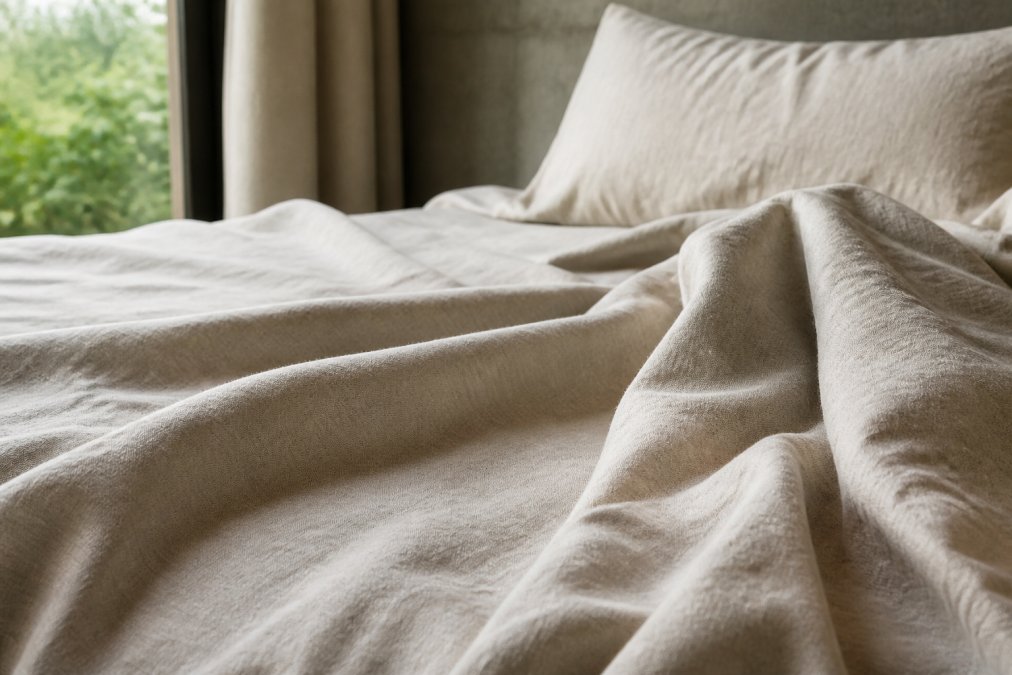
The reason linen lasts so long comes down to fiber structure. Linen fibers have naturally high tensile strength, meaning they resist breaking under stress. When you wash linen, the fibers don't pill or break down the way cotton fibers do after repeated cycles. LeafScore's testing determined that organic linen sheets are durable enough to last for decades, directly justifying the higher upfront investment. This finding matters because it transforms the purchase from a luxury expense into a practical long-term asset.
Wear and tear on linen appears differently than on cotton. You won't see the progressive thinning and pilling that degrades cotton sheets. Instead, linen develops a softer hand feel while maintaining its structural integrity. The fabric may show some fading or slight color variation, but these are aesthetic changes, not functional degradation.
Cost-per-use calculations reveal the true financial advantage. If you pay $300 for sheets and use them 300 nights per year for 12 years, your cost per use is approximately $0.08 per night. Compare that to $80 cotton sheets lasting 4 years at $0.17 per night. Over a decade, the organic linen option costs less than half as much per night of use.
Sustainability and Environmental Impact
This is where organic linen's investment value extends beyond your household budget.
Flax cultivation requires dramatically fewer resources than conventional cotton. Organic flax needs significantly less water, pesticides, and energy compared to conventional cotton production. The crop is naturally hardy, requiring minimal chemical intervention. This low-impact growing method means organic linen carries a smaller environmental footprint from farm to factory.
The biodegradable lifecycle of linen adds another sustainability layer. When organic linen eventually reaches the end of its life, it decomposes naturally without leaving microplastics or toxic residue in landfills. Synthetic blends and petroleum-based fabrics persist for decades. Organic linen returns to soil within months.
Pure linen is projected to hold approximately 54.3% market share in 2026, attributed to its natural breathability and moisture management properties compared to synthetic alternatives, according to Persistence Market Research. This market concentration reflects genuine consumer recognition of linen's environmental advantages.
The organic certification requirement ensures that the flax was grown without synthetic pesticides, herbicides, or GMO seeds. While some argue that organic certification for linen may be unnecessary, since flax is naturally hardy and requires fewer chemicals than other crops, the certification provides transparent verification. It gives you documented proof that your sheets weren't produced using harmful chemicals.
The global linen market is expected to expand from $1.098 billion in 2026 to $2.826 billion by 2035, driven by increasing consumer awareness of sustainable textiles. This growth trajectory reflects a genuine market shift toward natural fibers, not just marketing hype.
How to Care for Organic Linen to Maximize Its Lifespan
Proper maintenance is what separates a 5-year linen set from a 15-year one. The good news: linen care is simpler than most premium fabrics.
Wash in cold or warm water with mild detergent. Hot water can damage the fibers and cause excessive fading. Machine washing on a gentle cycle is fine, linen is tougher than it feels. Avoid bleach and fabric softeners, which break down the fiber structure over time.
Dry on low heat or air dry. High heat accelerates fiber degradation. Line drying in sunlight naturally softens the fabric and provides gentle UV sanitization. If you use a dryer, remove sheets while slightly damp and hang to finish drying. This prevents the excessive heat that causes brittleness.
Wash separately or with similar colors for the first few washes to prevent dye bleeding. After that, linen can be washed with other light colors. The fabric is resilient enough to withstand regular machine washing without degradation.
Here's what most guides miss about linen care: the fabric actually improves with proper washing. Each wash cycle softens the fibers slightly, creating the luxurious hand feel that makes expensive linen feel worth the price. You're not fighting against wear, you're working with the fabric's natural aging process.
Alpaca Fiber vs Linen: Which Natural Material Offers Better Value?
Both organic linen and alpaca fiber represent premium natural textile investments. They serve different purposes, which makes direct comparison tricky.
Alpaca fiber excels in warmth and insulation. Alpaca is hypoallergenic, it lacks the lanolin that triggers wool sensitivities, making it ideal for people with sensitive skin. Alpaca products also resist pilling and maintain their structure. For cold-weather clothing and layering, alpaca delivers unmatched performance.
Linen dominates in breathability and moisture management.
Is Organic Certification Necessary for Linen Quality?
This is where the conventional wisdom breaks down.
Organic certification provides transparent verification that flax was grown without synthetic pesticides, herbicides, or GMO seeds. It's a documented guarantee of production methods. However, high-quality conventional linen can also be excellent. The certification matters less than the fiber quality itself.
What actually determines linen quality:
- Fiber length: Longer fibers create stronger, more durable yarn
- Thread count: Higher thread counts indicate tighter weaves and greater durability
- Processing method: Retting and combing processes affect final softness
- Finishing treatments: Some manufacturers use harsh chemicals in finishing; others don't
Frequently Asked Questions
Does it matter if linen is organic?
Organic certification for linen indicates pesticide-free cultivation and lower chemical processing, but flax (the source of linen) naturally requires fewer chemicals than cotton. High-quality conventional linen can offer similar durability and performance. The choice depends on your environmental values and sensitivity to residual chemicals. Organic linen typically costs 15-25% more, so weigh whether the premium aligns with your priorities.
How does organic linen compare to alpaca fiber in terms of durability and comfort?
Organic linen excels in breathability and moisture-wicking, making it ideal for warm climates and summer bedding. Alpaca fiber offers superior warmth, hypoallergenic properties, and softness without the itchiness of wool, making it better for sensitive skin and cold-weather apparel. Choose linen for bedding and summer wear; alpaca for winter clothing and those with wool sensitivity.
Is organic linen more sustainable than cotton?
Yes. Flax (linen's source) requires significantly less water, pesticides, and energy than conventional cotton. The global linen market is projected to expand from $1.1 billion in 2026 to $2.8 billion by 2035, driven by consumer demand for sustainable textiles. Linen is fully biodegradable and produces minimal waste during cultivation. Organic linen amplifies these benefits by eliminating synthetic pesticides, making it one of the most eco-friendly fiber options available.
How can you tell if linen is truly organic?
Look for third-party certifications such as GOTS (Global Organic Textile Standard) or OEKO-TEX labels, which verify pesticide-free cultivation and chemical-free processing. Check product descriptions for fiber sourcing and manufacturing details. Reputable brands disclose certification status on product pages or packaging. Be skeptical of 'natural' or 'eco-friendly' claims without certification backing. Certified organic linen costs more but guarantees compliance with strict environmental and safety standards.