


Table of Contents
- Why Alpaca Fiber Is Hypoallergenic: The Lanolin-Free Difference
- Alpaca Wool vs Sheep Wool for Allergies: What the Science Says
- Is Alpaca Wool Itchy for Sensitive Skin? Fiber Diameter Explained
- Benefits of Alpaca Fiber for Eczema and Contact Dermatitis
- Moisture-Wicking and Thermal Comfort for Allergy-Prone Skin
- Choosing the Right Alpaca Grade and Caring for Your Garments
- Conclusion: Adding Alpaca Fiber to Your Sensitive Skin Routine
- Frequently Asked Questions
Last Updated: September 6, 2026
For anyone with sensitive skin, the search for comfortable natural fibers often ends in frustration. While wool is prized for warmth, the itching and rashes it triggers send many people back to synthetics. The good news is that alpaca fiber offers a different story, and this guide from Purely Alpaca breaks down exactly why it works for allergy-prone individuals. We'll examine the science of fiber structure, compare it directly to sheep's wool, and help you decide if it deserves a place in your wardrobe.
Why Alpaca Fiber Is Hypoallergenic: The Lanolin-Free Difference
The primary reason alpaca fiber is considered hypoallergenic comes down to the absence of lanolin. Lanolin is a natural wax found on sheep's wool that acts as a waterproofing agent, but for many people, it is a significant trigger for allergic contact dermatitis. In fact, the American Contact Dermatitis Society has historically recognized lanolin as a top allergen, and its absence in alpaca is the cornerstone of the fiber's skin-friendly reputation GetCurex analysis of textile contact allergens.
This distinction is crucial because it separates a true chemical allergy from a physical reaction. Many people who believe they are "allergic to wool" are actually reacting to lanolin, not the wool itself. Because alpaca fleece lacks this natural wax, it eliminates the primary chemical irritant found in sheep's wool, making it a safer choice for those with known sensitivities The Cambridge Sock Company guide on alpaca vs. wool for skin.
However, it is important to note that "hypoallergenic" does not mean "irritation-proof." The conversation doesn't end with lanolin, as the physical structure of the fiber plays an equally important role.
Alpaca Wool vs Sheep Wool for Allergies: What the Science Says
When comparing alpaca wool vs sheep wool for allergies, the science points to structural differences that significantly impact comfort. The key lies not just in chemistry, but in the microscopic architecture of the fibers themselves. Research from the Northeast Alpaca Owners and Breeders Association indicates that skin irritation is often caused by coarse hairs stimulating pain receptors, which is a mechanical issue rather than a purely chemical one NEAOBA textile research on fiber irritation.
Alpaca fibers have shorter, smoother microscopic scales compared to sheep's wool. These smaller scales create a much smoother surface, which reduces friction against the skin and minimizes the "prickle factor" that causes discomfort Alpaka Shop analysis of fiber scale structure. This is a fundamental advantage that sets alpaca apart in the hypoallergenic conversation.
| Feature | Sheep's Wool | Alpaca Fiber |
|---|---|---|
| Lanolin Content | Present (common allergen) | Absent |
| Fiber Scale Structure | Larger, more projecting scales | Smaller, smoother scales |
| Primary Irritation Risk | Chemical (lanolin) & Mechanical | Mechanical (only if coarse) |
| Typical Itch Factor | High for sensitive skin | Low |
This comparison highlights why the fiber's physical properties matter. Even if a fiber is lanolin-free, a rough texture can still cause problems, which is why fiber diameter is the next critical factor to consider.
Is Alpaca Wool Itchy for Sensitive Skin? Fiber Diameter Explained
The question of whether alpaca wool is itchy for sensitive skin ultimately comes down to fiber diameter, measured in microns. The general rule is that the finer the fiber, the less likely it is to cause mechanical irritation. For sensitive skin, the threshold for comfort is often cited as a fiber diameter below 21 micrometers, a standard that premium alpaca easily meets GetCurex analysis of fiber diameter and skin irritation.
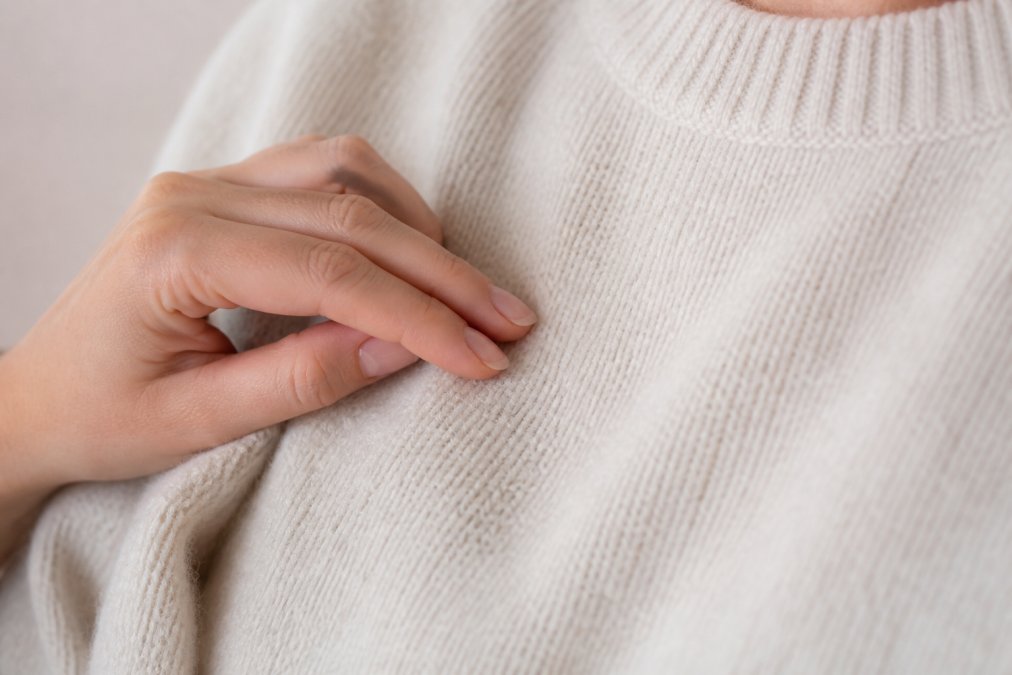
A common mistake is assuming all wool behaves the same. Coarse fibers, regardless of their animal source, will bend and press into the skin, triggering nerve endings and causing itch. The exceptional fineness of alpaca means the fibers are more pliable and bend rather than poke, which is why many people with sensitive skin can wear it comfortably when they cannot tolerate sheep's wool.
In practice, this means the grade of alpaca matters tremendously. Lower-grade, coarser alpaca can still cause physical irritation, so understanding these grades is essential for making a purchase that won't end up at the back of your closet.
Benefits of Alpaca Fiber for Eczema and Contact Dermatitis
For individuals managing eczema and contact dermatitis, the benefits of alpaca fiber extend beyond simple comfort. The fiber's negligible lanolin content effectively removes the primary Type IV contact-allergen risk associated with sheep's wool, offering a proactive option for those looking to avoid flare-ups GetCurex clinical perspective on alpaca for contact allergies. This makes it a valuable material for clothing and bedding that comes into direct contact with sensitive skin.
The physical smoothness of the fiber is equally important for managing these conditions. By reducing friction and mechanical irritation, alpaca helps prevent the scratching cycle that can worsen eczema outbreaks. This combination of chemical purity and physical gentleness creates an environment where skin is less likely to react.
Moisture-Wicking and Thermal Comfort for Allergy-Prone Skin
Beyond its hypoallergenic properties, alpaca fiber excels at maintaining a stable, dry microclimate next to the skin. A 2026 market report notes that alpaca provides 30% higher thermal insulation efficiency and 18% lower moisture retention than sheep's wool Business Research Insights 2026 Alpaca Fiber Market report. This is a significant advantage for those with skin conditions, as moisture buildup can exacerbate irritation.
The fiber's structure allows for superb moisture-wicking, pulling sweat away from the body where it can evaporate. This keeps the skin dry and reduces the friction that causes chafing. For people with sensitive skin, staying dry is not just a matter of comfort; it is a critical step in preventing the damp conditions that can trigger irritation or fungal issues.
Furthermore, this moisture management works in tandem with temperature regulation. Alpaca keeps you warm without overheating, preventing the sweatiness that often accompanies synthetic thermal layers. This combination of breathability and insulation means your skin stays comfortable across a range of temperatures and activity levels, making it an ideal base layer for outdoor enthusiasts.
Choosing the Right Alpaca Grade and Caring for Your Garments
To fully enjoy the benefits of alpaca, you need to select the right grade and care for it properly. Not all alpaca is created equal, and understanding the grading system is essential for avoiding the mechanical irritation that can be confused with an allergic reaction.
Understanding Alpaca Fiber Grades
Alpaca fiber is graded by micron count, which measures the diameter of individual fibers. The lower the micron count, the finer and softer the fiber. This is the single most important factor in determining whether a garment will feel comfortable against sensitive skin.
| Grade | Micron Range | Typical Use | Suitability for Sensitive Skin |
|---|---|---|---|
| Royal | < 19 microns | Luxury garments, scarves, next-to-skin wear | Excellent, finest and softest |
| Baby | 19-22 microns | Sweaters, socks, base layers | Excellent, very soft and comfortable |
| Fine | 22-25 microns | Sweaters, blankets | Good, may be acceptable for many, but can be slightly more textured |
| Medium | 25-28 microns | Outerwear, jackets | Fair, better for outer layers, not direct skin contact |
| Coarse | > 28 microns | Rugs, upholstery, outerwear | Poor, can cause mechanical irritation |
For individuals with sensitive skin, the "royal" and "baby" grades are the safest choices. They are fine enough to bend rather than poke the skin, minimizing the prickle sensation. Coarser grades, while still lanolin-free, can still cause physical irritation, which is often misattributed to an allergy. When shopping, look for the micron count on the label or product description. If it is not listed, contact the seller and ask. A reputable brand will be transparent about the fiber grade.
Why Grade Matters for Allergy Sufferers
The confusion between a true allergy and mechanical irritation is common. Many people who believe they are "allergic to wool" are actually reacting to coarse fibers that trigger nerve endings. This is why selecting a fine-grade alpaca is not just about luxury, it is about ensuring the fiber is physically gentle enough to avoid the scratch reflex that can lead to redness and discomfort. Even with alpaca, a coarse-grade garment can cause problems, so the grade is not a marketing detail; it is a functional specification.
Caring for Alpaca to Maintain Its Hypoallergenic Properties
Proper care is critical to ensuring your alpaca garments remain gentle on your skin. The goal is to preserve the fiber's natural smoothness and moisture-wicking properties, while avoiding the buildup of residues that can cause irritation.
- Hand-wash in cool or lukewarm water (below 86°F / 30°C). Hot water can cause felting and damage the fiber's structure.
- Use a gentle, pH-neutral detergent specifically designed for wool or delicate fabrics. Avoid detergents with optical brighteners, enzymes, or strong fragrances, as these can leave residues that irritate sensitive skin.
- Do not use fabric softeners or chlorine bleach. Fabric softeners coat the fibers with a chemical layer that can trap moisture and reduce breathability, while bleach damages the protein structure of the fiber.
- Gently squeeze out excess water, do not wring or twist. Wringing can distort the garment and cause felting.
- Lay flat to dry on a clean towel, reshaping the garment to its original dimensions. Avoid hanging, as the weight of the water can stretch the fiber. Keep it away from direct heat and sunlight.
Detergent Residue and Skin Irritation
A common issue for allergy sufferers is not the fiber itself, but the detergent residue left behind after washing. Standard laundry detergents can leave a film on natural fibers, which can then come into contact with the skin and cause irritation. To avoid this, use a detergent that is free of dyes and perfumes, and ensure you rinse the garment thoroughly. Some people find that a second rinse cycle helps remove any lingering residue.
Storage and Maintenance
- Store alpaca garments folded in a cool, dry place. Avoid hanging them for long periods, as this can stretch the shoulders.
- Use cedar blocks or lavender sachets to deter moths, which are attracted to natural fibers. Avoid mothballs, as their chemical fumes can be absorbed by the fiber and cause skin irritation later.
- De-pill gently with a fabric comb or sweater stone. Pilling is a natural occurrence with any soft fiber, but removing it keeps the surface smooth and prevents friction against the skin.
By choosing the right grade and following these care instructions, you can ensure that your alpaca garments remain a comfortable, hypoallergenic addition to your wardrobe for years to come.
Conclusion: Adding Alpaca Fiber to Your Sensitive Skin Routine
Making the switch to alpaca fiber requires a shift in mindset from the "itchy wool" experience many of us have had. The evidence points to a fiber that is fundamentally different from sheep's wool, both in its lack of lanolin and its smooth, fine structure. It offers a rare combination of chemical gentleness and mechanical comfort that is hard to find in other natural materials.
At Purely Alpaca, we've spent years curating products that showcase these benefits, from Soft Touch Therapeutic Alpaca Slouchy Socks designed for sensitive feet to Natural Alpaca Bed Pillows that bring hypoallergenic comfort to your sleep. Our family-owned business has specialized in high-quality alpaca products since 2002, ensuring that every item meets the standard your skin deserves.


If you're ready to experience warmth and softness without the irritation, explore our full range of natural alpaca clothing and home goods. Get started with Purely Alpaca and find out how comfortable sensitive skin can be.
Frequently Asked Questions
Can people with lanolin allergies wear alpaca fiber?
Yes. Alpaca fiber is naturally lanolin-free, so it eliminates the primary chemical trigger for most wool allergies. Lanolin, a natural wax found in sheep's wool, was named 'Allergen of the Year' by the American Contact Dermatitis Society. Because alpaca lacks this substance, it is considered a safe option for those who experience contact dermatitis or itching from traditional wool.
Is alpaca fiber suitable for eczema-prone skin?
Alpaca fiber offers several benefits for eczema-prone skin. Its lanolin-free composition removes a common irritant, while its smooth, fine fibers cause less mechanical irritation than coarse sheep's wool. Additionally, alpaca's moisture-wicking properties help keep skin dry, reducing the risk of flare-ups triggered by sweat. For best results, choose garments made from finer alpaca grades with a lower micron count.
Does alpaca wool cause itching like regular sheep's wool?
Generally, no. Itching from wool is often caused by coarse fibers stimulating pain receptors or by lanolin triggering an allergic reaction. Alpaca fibers have shorter, smoother microscopic scales than sheep's wool, which reduces the 'itch factor.' Research indicates that alpaca fiber with a diameter below 21 micrometers causes significantly less mechanical skin irritation.
What makes alpaca fiber different from other natural fibers for sensitive skin?
Alpaca's key difference is its combination of being lanolin-free and having a fine fiber diameter. Unlike cotton, alpaca provides thermal regulation and moisture-wicking, keeping you warm without overheating. Compared to sheep's wool, it lacks the allergy-triggering lanolin. Its structure, with shorter microscopic scales, results in a smoother texture that is less likely to cause mechanical irritation on sensitive skin.