




Table of Contents
- Alpaca Clothing Lifespan: What to Expect
- Alpaca Fiber Durability vs Sheep Wool: Key Differences
- Step 1: How to Wash Alpaca Sweaters at Home
- Step 2: Drying and De-Pilling Done Right
- Step 3: How to Store Alpaca Clothing for Maximum Longevity
- Signs Your Alpaca Garment Needs Repair or Retirement
- When to Invest in Durable Alpaca Basics
- Conclusion
- Frequently Asked Questions
Last Updated: September 7, 2026
Alpaca Clothing Lifespan: What to Expect
Alpaca clothing is prized for its softness and warmth, but how long it lasts determines whether it is a smart investment or a splurge. With proper care, a well-constructed alpaca sweater can serve you for five to seven years, and accessories like socks and scarves can last even longer. That figure comes from comparative garment testing by Purely Alpaca's garment maintenance research, which found alpaca maintains its appearance for that duration versus two to three years for cashmere.
The longevity is not accidental. Alpaca fiber can bend up to 20,000 times before breaking, a durability metric reported by American Wool's fiber integrity testing. This tensile strength resists the fiber breakage that causes thinning and holes in lesser natural fibers.
Since 2002, Purely Alpaca has specialized in alpaca products. Below, we break down the exact routine that extends the life of your alpaca clothing.
Alpaca Fiber Durability vs Sheep Wool: Key Differences
Most people assume all wool behaves alike. That assumption leads to ruined garments. Alpaca fiber differs from sheep wool in three structural ways that directly affect durability.
First, alpaca is hollow, giving it superior thermal regulation and making it lighter, but also more elastic and less prone to the crimp that causes sheep wool to felt and shrink. Second, alpaca contains no lanolin, making it naturally hypoallergenic and easier to clean without harsh chemicals. Third, its smooth scale structure resists pilling better than fine merino.
The global alpaca fiber market was valued at USD 1.1 billion in 2026, with the apparel segment accounting for roughly 32% of that total, according to Business Research Insights' 2026 market report. That growth reflects a functional advantage: alpaca is water-resistant, odor-resistant, and moisture-wicking without chemical treatment.
One honest caveat comes from Backpacking Light's durability field testing: alpaca fiber can be less durable than Merino if it is not knitted tightly. Construction matters as much as fiber. A loosely woven alpaca scarf will not survive the way a dense, tightly knit sock will.
| Fiber Property | Alpaca | Sheep Wool (Merino) |
|---|---|---|
| Lanolin content | None (hypoallergenic) | Present (can irritate) |
| Fiber structure | Hollow, elastic | Solid, crimped |
| Pilling resistance | High | Moderate |
| Typical garment life | 5-7 years | 3-5 years |
| Shrinkage risk | Low | High if washed warm |
Step 1: How to Wash Alpaca Sweaters at Home
The number one killer of alpaca clothing is the washing machine. Even on a delicate cycle, the agitation causes fiber breakage and felting. Hand-washing is the only method that preserves garment longevity.
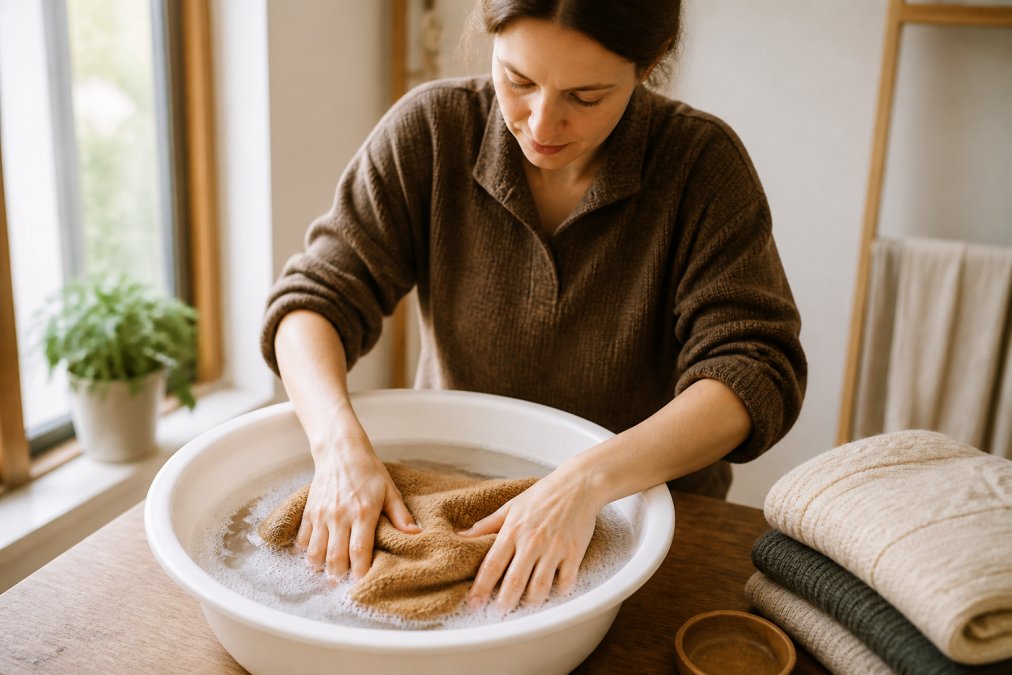
Fill a basin with lukewarm water, never hot. Add a small amount of wool-specific detergent. Submerge the folded sweater and gently press it down, letting the water move through the fibers. Do not scrub, twist, or wring. Soak for ten minutes, then drain and refill with clean water to rinse.
A common mistake is using fabric softener. Alpaca does not need it, and the chemicals coat the hollow fibers, reducing their moisture-wicking ability. Cold water wash alone preserves the natural fiber's elasticity.
Washing frequency matters just as much as method. Alpaca is naturally odor-resistant and self-cleaning. A sweater worn over a base layer needs washing only two to three times per season. Fewer washes mean a longer life.
Step 2: Drying and De-Pilling Done Right
After rinsing, lay the sweater flat on a clean, dry towel. Roll the towel with the sweater inside, pressing gently to absorb excess water. Never hang a wet alpaca garment. The weight of the water stretches the wet fibers and permanently distorts the shape.
Air drying is the only safe method. Lay the sweater flat on a drying rack away from direct sunlight and heat sources. Direct heat causes the hollow fibers to become brittle and break. Drying typically takes 24 to 48 hours at room temperature.
Pilling is not a sign of poor quality. It is surface friction from wear. What matters is how you remove it. A fabric comb or de-piller removes the loose balls without cutting the base fibers. Electric shavers can nick the surface if pressed too hard, so use a light hand.
Shrinkage prevention starts at the washing stage, but drying completes it. A sweater that survives washing can still be ruined by a dryer's heat. If you consistently air dry your alpaca clothing, you eliminate the most common cause of premature fiber breakage.
Step 3: How to Store Alpaca Clothing for Maximum Longevity
Proper storage is where most people unknowingly shorten their garment's life. Alpaca is a natural protein fiber, which means moths consider it dinner. Moth protection must be your first priority, but the right approach depends entirely on where you live.
The Universal Rules
Fold alpaca sweaters rather than hanging them. Hangers create shoulder bumps and stretch the knit over time. Store folded garments in a cedar chest, cotton storage bag, or drawer with cedar blocks or lavender sachets. Avoid plastic bins, which trap moisture and can cause mildew. Always wash and completely dry a garment before storing it for the season, even trace body oils attract moths.
Climate-Specific Storage Protocols
Humid Climates (Gulf Coast, Southeast, Pacific Northwest)
Humidity above 60% creates two threats: mildew and moth larvae. Mildew thrives in damp, dark spaces, and moth eggs hatch faster in warm, humid air. In these regions:
- Add a silica gel packet or a small rechargeable dehumidifier canister to your storage drawer or bin. Replace or recharge it monthly during the humid season.
- Use breathable cotton storage bags, not plastic. Plastic traps the moisture that condenses when temperatures drop at night.
- Avoid storing alpaca in basements or garages where humidity fluctuates. A climate-controlled closet or bedroom drawer is safer.
- Check garments monthly during peak humidity months (June through September in most of the Southeast). Run your hand over the fabric, if it feels damp or smells musty, air it out immediately.
Dry Climates (Southwest, Mountain West, Interior California)
Low humidity is kinder to alpaca fiber, but it introduces a different problem: static and brittleness. In very dry air, the fiber's natural moisture content drops, making it more prone to breakage when handled roughly.
- Do not store alpaca near heat vents, fireplaces, or radiators. Forced-air heating can drop indoor humidity below 20%, which dries the fiber.
- If your home regularly sits below 30% humidity in winter, consider a small humidifier in the room where you store woolens. Keeping the room at 40-50% humidity preserves fiber elasticity.
- Cedar blocks work well in dry climates because they do not risk mildew. Replace or sand them annually to refresh the scent.
Seasonal Transition Storage
When you pack away alpaca for the summer (in cold climates) or the winter (in warm climates), follow this protocol:
- Wash and dry the garment completely using the hand-wash method described earlier.
- Fold it loosely, tight folds create permanent creases in the knit.
- Place it in a breathable cotton or muslin bag. Add one cedar block and one lavender sachet per garment.
- Store in a dark, cool, dry place. Light exposure can fade natural dyes over time.
- Check the storage container every 6-8 weeks. Moths are opportunistic; a quick visual inspection catches an infestation before it spreads.
The Moth Prevention Question
Moths are the single greatest threat to stored alpaca. The larvae eat the protein fiber, not the adult moths. You will not see the adults, they are small, gray, and avoid light. What you will see is the damage: small holes, often in hidden areas like under the collar or in folds.
Prevention is straightforward:
- Cedar repels moths but loses potency over time. Sand the surface annually to release new oils.
- Lavender is a natural deterrent. Replace sachets every 3-4 months.
- Freezing kills larvae. If you suspect an infestation, seal the garment in a zip-top bag and freeze it for 72 hours, then thaw for 24 hours, then freeze again for another 72 hours. This double-freeze cycle kills eggs and larvae at all stages.
- Avoid mothballs and paradichlorobenzene crystals. They contain chemicals that can damage natural fibers and leave a persistent odor that is nearly impossible to remove.
The Environmental Case for Storage
The production stage accounts for 70% of CO2e emissions in the alpaca fiber lifecycle, with distribution adding 14%, per a ScienceDirect cradle-to-grave lifecycle analysis. That means the environmental cost is already paid by the time you own the garment. Storing it well so it lasts is the most sustainable choice you can make, and the storage method that protects it from moths, mildew, and brittleness is the one that keeps it out of a landfill.
Signs Your Alpaca Garment Needs Repair or Retirement
Here is how to read the warning signs and act before a small issue becomes a lost garment.
The Four Stages of Fiber Fatigue
Stage 1: Surface Fuzz (Normal Wear)
After several wears, you will notice a soft haze on high-friction areas like the inner elbows and cuffs. This is not damage. It is loose surface fibers that have not yet broken. A fabric comb or a pumice stone gently passed over the surface removes this fuzz and restores the crisp hand-feel.
Stage 2: Persistent Pilling (Friction Alert)
When pills form and return within a few wears, the yarn is experiencing more abrasion than it can shed. This often happens where a sweater rubs against a seatbelt, a backpack strap, or a handbag. The fix is not just de-pilling, it is reducing the friction source. Try wearing a smooth-shelled jacket over the sweater or adjusting how the bag sits.
Stage 3: Light Scatter (Thinning)
Hold the garment up to a bright window.
Stage 4: Snags and Small Holes (Structural Breach)
A Practical Mending Kit for Alpaca
You do not need professional equipment. A basic kit includes:
- A darning needle (blunt tip, large eye)
- Matching thread or yarn (save the extra yarn that comes with your garment)
- A small crochet hook (for pulling snags back)
- A fabric comb or pumice stone
- A piece of lightweight fusible interfacing (for stabilizing thin spots before stitching)
How to Darn a Small Hole
When to Patch Instead of Darn
The Retirement Test
Ask yourself three questions before deciding a garment is beyond saving:
- Is the fiber still elastic? Gently stretch a section of the fabric.
- Is the thinning localized or widespread? Localized thinning at elbows or cuffs is repairable. Widespread translucency is not.
- Does it still hold its shape after washing?
If the answer to all three points toward failure, the garment has served its life.
When to Invest in Durable Alpaca Basics
For socks, look for reinforced heels and toes. The OutdoorAdventure Alpaca Sock at $29.95 features a cushioned interior and reinforced heel and toes for exactly this reason. The Survival Sock at $31.95 adds a tough nylon outer layer with a terry loop-lined interior for diverse outdoor conditions.

For everyday wear, the 100% Alpaca American Traveler Socks at $24.95 offer a balance of comfort and durability, while the Classic Alpaca Socks at $21.50 work for both casual and dress occasions.


The global alpaca apparel market is projected to grow at a CAGR of 7.73% through 2034, per Fortune Business Insights' market forecast. That growth reflects buyers recognizing what alpaca offers: warmth without bulk, softness without itch, and durability without chemical treatment.
Conclusion
Alpaca clothing lasts five to seven years with proper care, and accessories can last far longer. The difference between a garment that survives one season and one that survives a decade comes down to hand-washing, air drying, and smart storage.
The environmental footprint of your alpaca garment is concentrated in production and distribution, not the use phase. Every season you extend its life reduces the per-wear impact. That makes proper care a sustainability practice.
At Purely Alpaca, we have specialized in alpaca products since 2002 and offer free shipping on orders of $100 or more with hassle-free returns. Get started with Purely Alpaca and experience how long well-cared-for alpaca clothing can truly last.
Frequently Asked Questions
How many years can a well-cared-for alpaca sweater last?
With proper care, an alpaca sweater can last five to seven years while maintaining its appearance. Some accessories like hats and scarves last even longer, often decades. The fiber's ability to bend up to 20,000 times without breaking contributes to this longevity. Compare that to cashmere, which typically shows wear after two to three years. Regular gentle washing, correct storage, and prompt repair of small issues extend the garment's life significantly.
Does alpaca wool pill easily compared to other fibers?
Alpaca fiber pills less than sheep wool because its scales are smoother and less prone to interlocking. However, pilling depends heavily on knit tightness and construction. A loosely knitted alpaca garment will pill faster than a tightly woven one. De-pilling with a fabric comb removes surface fuzz without damaging the fiber. Choosing dense, well-constructed alpaca items reduces pilling and extends the life of your clothing.
Is it okay to put alpaca wool in the dryer?
No, never put alpaca wool in a dryer. The tumbling action and heat cause felting, shrinkage, and fiber breakage. Air drying is the only safe method. After washing, roll the garment in a clean towel to remove excess water, then lay it flat on a drying rack away from direct sunlight and heat sources. This preserves the fiber's natural elasticity and ensures your alpaca clothing lasts for years.
Are alpaca clothes worth the investment compared to sheep wool?
Yes, alpaca clothing justifies its higher price through superior durability and performance. Alpaca fiber is stronger than sheep wool, resists odors, and repels water naturally. It contains no lanolin, making it hypoallergenic for sensitive skin. While a sweater costs more upfront, its five-to-seven-year lifespan with proper care means you replace it less often than cheaper wool alternatives. The environmental impact also decreases per wear over time.