



Table of Contents
- Why Alpaca Wool Is Worth the Price: The Economics and Performance
- Alpaca Wool vs Cashmere for Warmth and Durability
- Is Alpaca Wool Itchy? Understanding Hypoallergenic Fiber
- How to Care for Alpaca Wool Garments and Maximize Lifespan
Last Updated: August 18, 2026
Why Alpaca Wool Is Worth the Price: The Economics and Performance
A $150 alpaca sweater costs three times more than a $50 wool alternative, but the economics justify the premium. The global alpaca fiber market is projected to grow from $1.1 billion in 2026 to $1.42 billion by 2035 at a compound annual growth rate of 2.82% according to Business Research Insights' 2026 Alpaca Fiber Market Report. This growth reflects consumer understanding that alpaca's durability, thermal performance, and longevity outperform conventional fibers.
A single alpaca produces enough fiber for 4-5 sweaters, while four Kashmir goats create just one cashmere garment. Beyond supply constraints, alpaca resists pilling far better than cashmere, maintaining appearance for five to seven years versus two to three seasons for cashmere. Alpaca fiber is up to eight times warmer than traditional wool due to hollow fibers that trap air effectively. When calculated over five years of wear, the premium price becomes genuine value.
Alpaca Wool vs Cashmere for Warmth and Durability
Alpaca is 1.3 to 1.5 times warmer than merino wool of the same weight. Its hollow-core fiber structure creates superior insulation compared to cashmere's solid structure, allowing lighter garments with equivalent warmth, critical for layering in cold climates.
Durability separates these fibers most dramatically. Alpaca maintains appearance through years of regular wear while cashmere shows visible degradation within 2-3 seasons. Processing infrastructure drives cost differences: shearing an alpaca costs approximately $32 per animal versus $2-$4 for sheep. Manufacturers pay about $2 per ounce for alpaca fleece compared to $0.11 per ounce for sheep fleece.
| Characteristic | Alpaca | Cashmere |
|---|---|---|
| Warmth vs Weight | 1.3-1.5x warmer than merino | Excellent but requires more weight |
| Pilling Resistance | Superior; maintains appearance 5-7 years | Visible wear within 2-3 seasons |
| Fiber Diameter | 22.5 microns or finer for baby alpaca | 14-16 microns (finer but less durable) |
| Processing Location | Primarily Peru; no US mills | Multiple global processors |
| Thermal Efficiency | Hollow fibers trap air effectively | Solid structure, good insulation |
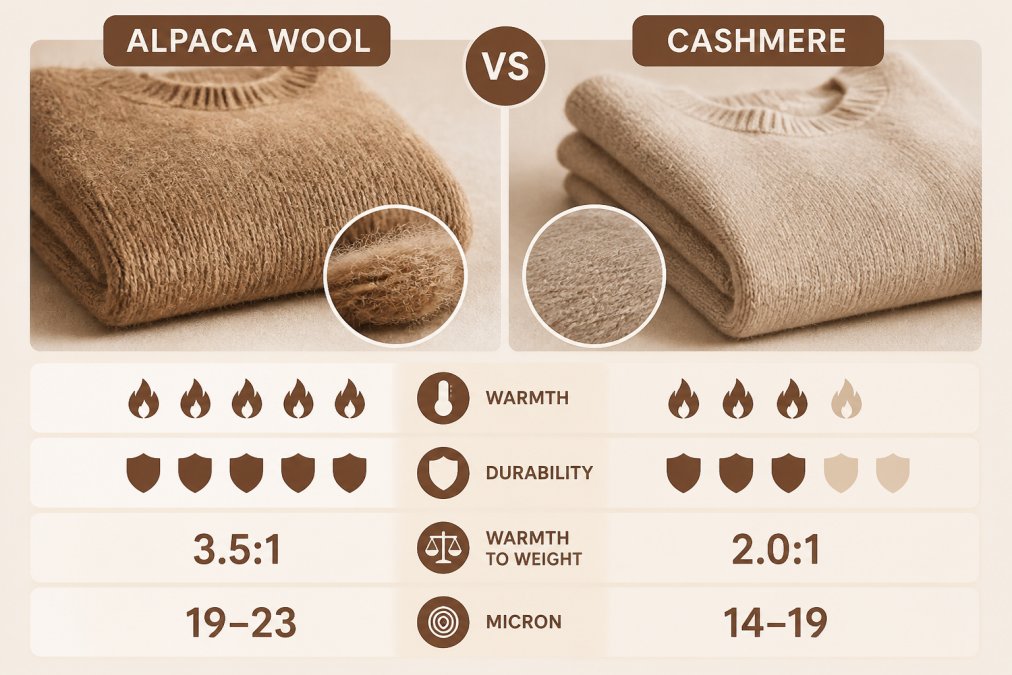
Alpaca delivers thermal performance and durability that justifies its price against cashmere, you're paying for fiber that performs longer and warmer per unit weight.
Is Alpaca Wool Itchy? Understanding Hypoallergenic Fiber
Alpaca is hypoallergenic because it lacks lanolin, the natural grease in sheep's wool that triggers allergic reactions. Sheep's wool lanolin causes itching and irritation in sensitive individuals; alpaca fiber contains virtually none, eliminating this irritation source entirely.
"Baby alpaca" refers to fleece measuring approximately 22.5 microns or finer in average fiber diameter. This fineness contributes to genuine softness against skin. For individuals with eczema or dermatological sensitivities, alpaca offers relief that justifies premium pricing.
How to Care for Alpaca Wool Garments and Maximize Lifespan
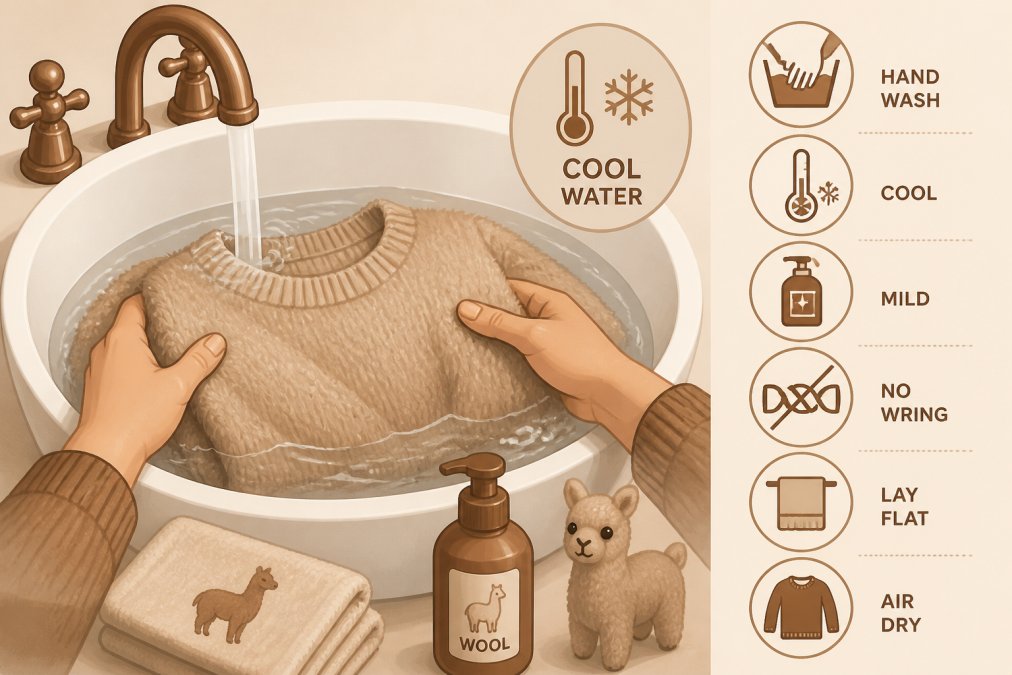
Alpaca's durability advantage only materializes with proper care. Wash in cool water (below 65°F) using mild detergent designed for delicate fibers. Hot water shrinks garments by tightening protein structure. Hand washing provides maximum protection; machine washing on gentle cycle is acceptable. Gently squeeze excess water out and lay flat to dry on a clean towel.
Never use a dryer, heat damages alpaca fiber irreversibly. Lay garments flat away from direct sunlight; most pieces dry completely within 24-48 hours. When pilling occurs, use a soft-bristled brush or fabric comb to gently remove pills; never pull them off with your fingers.
Store folded rather than hung to prevent stretching. Use cedar blocks or lavender sachets for natural moth prevention. Garments cared for properly maintain appearance and performance for five to seven years. Alpaca fiber is 100% biodegradable within 12 months under composting conditions, and alpaca farming uses 18% less water than sheep wool production.
According to Future Market Insights' USA Alpaca Fiber Market Outlook, market expansion is driven by consumers prioritizing traceability and ethical sourcing. Purely Alpaca's commitment to quality fiber since 2002 reflects this philosophy, delivering products that perform well and align with values around durability and environmental responsibility.
| Care Step | Method | Frequency | Impact on Lifespan |
|---|---|---|---|
| Washing | Cool water, gentle detergent, hand or gentle cycle | Every 4-6 wears | Prevents fiber degradation |
| Drying | Lay flat on towel, away from heat/sun | After each wash | Maintains shape and elasticity |
| Pilling removal | Soft brush or fabric comb | As needed (typically 1-2x annually) | Restores appearance |
| Storage | Folded with cedar/lavender, cool dry location | Year-round | Prevents stretching and moths |
Alpaca wool's price reflects genuine performance advantages: superior warmth-to-weight ratio, exceptional durability spanning five to seven years, hypoallergenic properties eliminating irritation for sensitive skin, and environmental benefits from sustainable farming. Cost-per-wear calculations over actual garment lifespan show alpaca delivers value cheaper alternatives cannot match. Purely Alpaca's curated selection demonstrates how quality natural fiber combines warmth, comfort, and functional fashion. Shop all Purely Alpaca products and experience the durability and performance that justify the investment.
Frequently Asked Questions
What makes alpaca wool worth paying 2-3 times more than regular wool?
Alpaca wool delivers superior warmth (1.3 to 1.5 times warmer than merino wool at the same weight), exceptional durability (5-7 years or longer with proper care versus 2-3 seasons for cashmere), and hypoallergenic properties since it lacks lanolin. The cost reflects labor-intensive production, limited domestic processing infrastructure, and the fiber's rare combination of performance benefits. When calculated on a cost-per-wear basis over a garment's lifespan, alpaca typically outperforms cheaper alternatives.
Will alpaca wool irritate my sensitive skin like regular wool does?
No. Alpaca fiber is naturally hypoallergenic because it contains no lanolin, the natural grease in sheep's wool that triggers allergic reactions and itching in sensitive individuals. Baby alpaca (fleece measuring 22.5 microns or finer) is especially soft and gentle on skin. Many customers with eczema and sensitive skin find alpaca significantly more comfortable than merino or traditional wool products.
How does alpaca wool actually stay dry during physical activity?
Alpaca fiber is naturally moisture-wicking, meaning it pulls sweat away from your skin and releases it into the air rather than trapping moisture against your body. This moisture management keeps you dry and comfortable during hiking, winter sports, and other active pursuits. Additionally, alpaca's odor-resistant properties mean garments require less frequent washing, reducing your water and energy footprint while maintaining freshness.
Can I wash alpaca wool garments at home, or do they require expensive dry cleaning?
Alpaca wool can be hand-washed at home in cool water with a gentle detergent, making care simple and affordable. Lay the garment flat to dry, never wring or hang-dry, as this can distort the shape. Because alpaca is naturally odor-resistant and moisture-wicking, you'll wash it far less frequently than other sweaters, saving time and money. Proper home care extends garment life to 5-7 years or longer, eliminating the need for costly professional cleaning.
This article was written using GrandRanker