



Table of Contents
- The Three-Layer System for Non-Bulky Warmth
- Merino Wool vs Synthetic Base Layers: Which Delivers Real Warmth
- How to Layer Clothes for Winter Without Looking Bulky
- Lightweight Down Jackets for Layering: Performance Without Bulk
Last Updated: August 16, 2026
The Three-Layer System for Non-Bulky Warmth
The three-layer system combines moisture-wicking, insulation, and wind protection without unnecessary bulk. Your base layer pulls sweat away from skin, your mid-layer traps warm air, and your outer shell blocks wind and moisture. Thickness doesn't equal warmth, a thin, dense material often outperforms a puffy one because it traps air more efficiently while taking up less space.
At Purely Alpaca, we've seen how the right base layer changes everything. When you start with a material that naturally regulates temperature and resists odor, the entire layering system becomes more effective. Your mid-layer doesn't have to work as hard, and you can skip the oversized outer jacket altogether.
Merino Wool vs Synthetic Base Layers: Which Delivers Real Warmth
Merino wool base layers provide natural temperature regulation and odor resistance, while synthetic base layers offer durability and lower cost.
Merino wool excels at moisture-wicking because its fiber structure naturally pulls sweat away from skin and releases it into the air. It also regulates temperature and resists odor, allowing you to wear a merino base layer multiple days without washing.
Synthetic base layers (polyester, nylon blends) wick moisture faster than merino in high-intensity activity and are more affordable and durable. For people with sensitive skin or eczema, synthetics are sometimes better because they lack the lanolin that can irritate some individuals.
Alpaca fiber occupies a unique middle ground. It has the temperature-regulating properties of merino without the itchiness that bothers some people. Alpaca is naturally hypoallergenic and finer than merino, which means it feels softer while still providing superior insulation.
How to Layer Clothes for Winter Without Looking Bulky
Effective non-bulky layering starts with fitted pieces in each layer rather than oversized items. The mistake most people make is adding bulk at every level, an oversized base layer, a puffy mid-layer, and a large outer jacket.
Start with a fitted base layer that hugs your body without being tight. It should be snug enough to move moisture efficiently but not so tight it restricts circulation.
For your mid-layer, choose something designed for a fitted silhouette. A lightweight quilted vest or thin fleece works better than a chunky cardigan. A fitted vest over your base layer adds serious warmth without bulk.
Your outer shell should be tailored, not oversized. A fitted puffer jacket or lightweight technical shell keeps wind and moisture out while maintaining a clean line. If your base and mid-layers are fitted, you don't need much extra room.
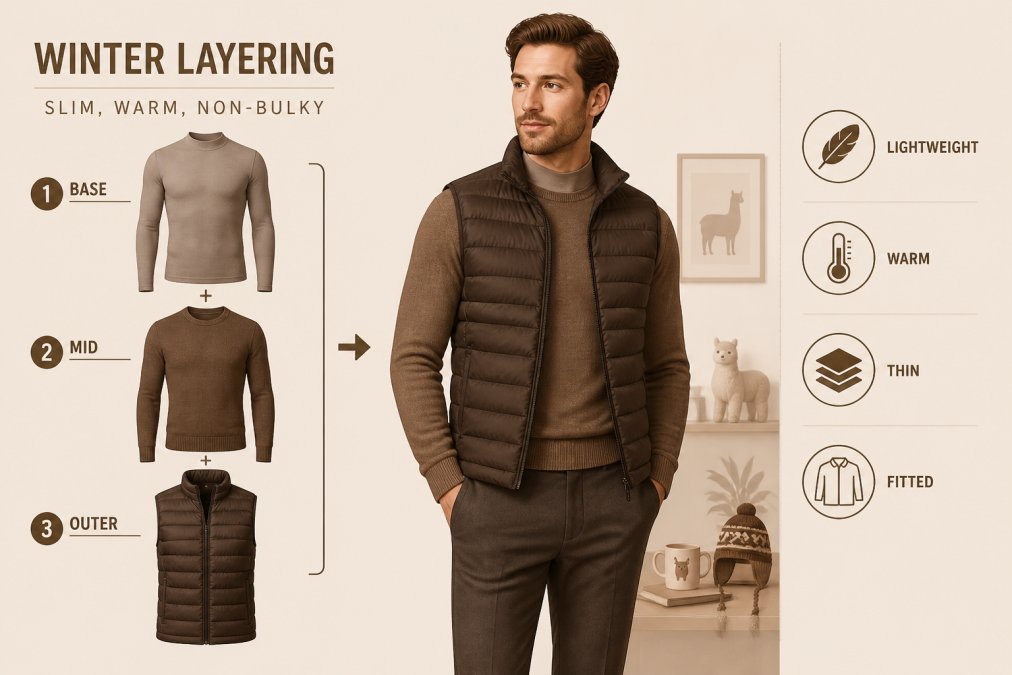
Layer from thinnest to thickest material density, not from thinnest to thickest volume. A thin, dense alpaca base layer under a lightweight synthetic mid-layer and a fitted shell creates a warmer system than loose, bulky pieces.
For office or professional settings, wear a fitted alpaca base layer under your regular work clothes, add a slim vest if needed, and remove it indoors. You maintain your professional appearance while staying warm.
Lightweight Down Jackets for Layering: Performance Without Bulk
Lightweight down jackets provide exceptional warmth-to-weight ratio, making them ideal for layering systems where bulk matters. A quality lightweight down jacket weighs less than two pounds while providing warmth equivalent to much heavier synthetic alternatives.
Down's effectiveness comes from its ability to trap air in tiny pockets created by the feather structure. Watch for fill power, which measures how much space an ounce of down occupies. Higher fill power (800+) means better insulation with less weight. For layering, look for jackets with 600-800 fill power.
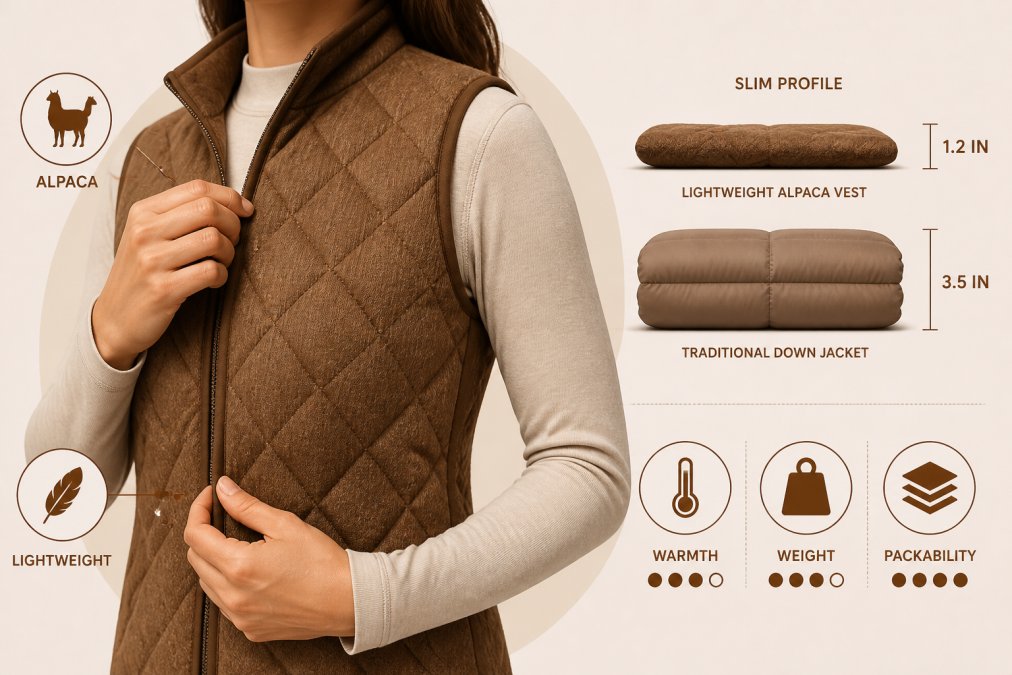
Purely Alpaca's Alpafill Puffer jackets and vests use natural alpaca fiber as an insulating layer, offering warmth benefits similar to down in a more sustainable package. Alpaca traps air similarly to down but with better moisture management. The Women's Alpafill Puffer Alpaca Jacket at $279.95, Men's Alpafill Puffer Alpaca Jacket at $279.95, Women's Alpafill Puffer Alpaca Vest at $179.95, and Men's Alpafill Puffer Alpaca Vest at $179.95 deliver the warmth-to-weight ratio serious cold-weather enthusiasts need.

For layering, a lightweight down or alpaca-insulated vest works better than a full jacket. A vest provides core warmth where you need it most while leaving arms free for movement. The Women's Alpafill Puffer Alpaca Vest ($179.95) and Men's Alpafill Puffer Alpaca Vest ($179.95) offer the same insulating benefits as a full jacket in a more versatile form factor.
When choosing a lightweight down jacket for layering, prioritize fit over size. A jacket that's too large defeats the purpose, you want it fitted enough to work as a mid-layer under your shell. The warmth comes from trapped air, not volume.
Staying warm without bulk comes down to choosing the right materials and fitting each layer properly. A fitted alpaca or merino base layer, a lightweight mid-layer vest, and a tailored outer shell create a system that outperforms oversized pieces. For serious cold-weather performance, Purely Alpaca's Alpafill collection delivers the warmth-to-weight ratio you need without the restrictive feeling of traditional heavy jackets. Learn more about technical fabric care to ensure your layers last through multiple seasons.
Frequently Asked Questions
What is the warmest non-bulky winter layer material?
Alpaca fiber outperforms merino wool and synthetics in warmth-to-weight ratio. Alpaca provides superior insulation while remaining lightweight and breathable, making it ideal for layering without bulk. Its natural crimp structure traps warm air efficiently. For those with sensitive skin, alpaca is hypoallergenic and less irritating than traditional wool, making it a practical choice for all-day wear in harsh winters.
How do merino wool and synthetic base layers compare for winter warmth?
Merino wool offers excellent moisture-wicking and temperature regulation, but can pill over time and requires careful washing. Synthetic fibers dry faster and resist odor, but lack the natural breathability and thermal efficiency of merino. Alpaca fiber bridges these strengths: it wicks moisture like merino, resists odor naturally, and maintains its structure better than either option. Alpaca's superior insulating properties mean you need thinner layers to achieve the same warmth.
What's the three-layer rule for winter clothing?
The system works as follows: Base layer (moisture-wicking to pull sweat away), mid-layer (insulation to trap warmth), and outer shell (wind and water protection). This approach prevents moisture buildup that causes heat loss. With quality non-bulky materials like alpaca in your base and mid-layers, you can stay warm in extreme cold without the heavy, restrictive feel of traditional winter gear. Each layer should fit close to the body to maximize efficiency.
How do I keep from looking bulky when wearing multiple winter layers?
Choose slim-fit base and mid-layers in lightweight, high-performance materials. Alpaca fibers compress without sacrificing warmth, allowing you to wear thinner pieces that fit closer to your body. Avoid oversized garments; proper fit is essential. Layer strategically: wear a fitted alpaca base layer, add a lightweight sweater or vest, then top with a slim puffer jacket. This creates a streamlined silhouette suitable for office settings or casual outings while maintaining full thermal protection.
Are lightweight down jackets effective for layering in extreme cold?
Yes, lightweight down jackets work well as mid or outer layers in extreme cold when paired with proper base layers. Down provides exceptional warmth-to-weight ratio. However, down loses insulating power when wet, so pair it with a water-resistant or hydrophobic outer shell. Alpaca-filled lightweight vests and jackets offer an alternative: they maintain insulation even if damp and provide better breathability, making them superior for active outdoor use or variable conditions.
How should I care for technical alpaca layers to ensure they last?
Alpaca fiber is naturally durable and resistant to pilling when properly cared for. Hand wash in cool water with mild detergent or use a delicate machine cycle. Lay flat to dry to prevent stretching. Avoid fabric softeners and bleach. Quality alpaca pieces maintain their shape and insulating properties for years with basic care, outperforming merino wool and many synthetics in longevity. This durability justifies the investment, especially for items you'll wear throughout multiple winters.
Will alpaca fiber irritate sensitive skin like regular wool does?
Alpaca is naturally hypoallergenic and significantly softer than sheep's wool, making it ideal for sensitive skin and conditions like eczema. Its smooth fiber structure doesn't cause the itching and irritation common with wool. Many customers with wool sensitivity find alpaca comfortable for all-day wear. The fiber's natural properties mean no chemical treatments are needed to achieve its hypoallergenic benefits, making it a genuinely skin-friendly choice for winter layering.
This article was written using GrandRanker