


Table of Contents
- Alpaca vs Sheep Wool: Quick Comparison Table
- Fiber Structure: Why Alpaca Feels Different on Sensitive Skin
- Lanolin-Free Wool Alternatives: Why Alpaca Eliminates a Major Irritant
- Is Alpaca Wool Itchy? What the Science Shows
- Moisture-Wicking and Temperature Regulation for Eczema Flare-Up Prevention
- Best Clothing Materials for Eczema: How Alpaca and Merino Compare
- Washing and Chemical Residue: How Care Practices Affect Eczema
- Alpaca Fiber Grades: Baby vs. Royal Alpaca for Sensitive Skin
Last Updated: August 8, 2026
Alpaca vs Sheep Wool: Quick Comparison Table
| Feature | Alpaca Fiber | Sheep Wool | Winner for Eczema |
|---|---|---|---|
| Lanolin Content | None (lanolin-free) | Contains lanolin | Alpaca |
| Fiber Diameter | 20-30 microns (finer) | 24-40 microns (coarser) | Alpaca |
| Fiber Scales | Smooth, minimal barbs | Pronounced scales, barbs | Alpaca |
| Moisture-Wicking | Excellent | Good | Alpaca |
| Temperature Regulation | Superior | Good | Alpaca |
| Contact Dermatitis Risk | Minimal | Higher (lanolin allergen) | Alpaca |
| Hypoallergenic | Yes | No (contains allergens) | Alpaca |
| Itchiness Factor | Rare | Common complaint | Alpaca |
Alpaca vs sheep wool for eczema comes down to fiber structure and chemical composition. Alpaca eliminates the primary irritant found in traditional wool while offering superior comfort for sensitive skin.
Fiber Structure: Why Alpaca Feels Different on Sensitive Skin
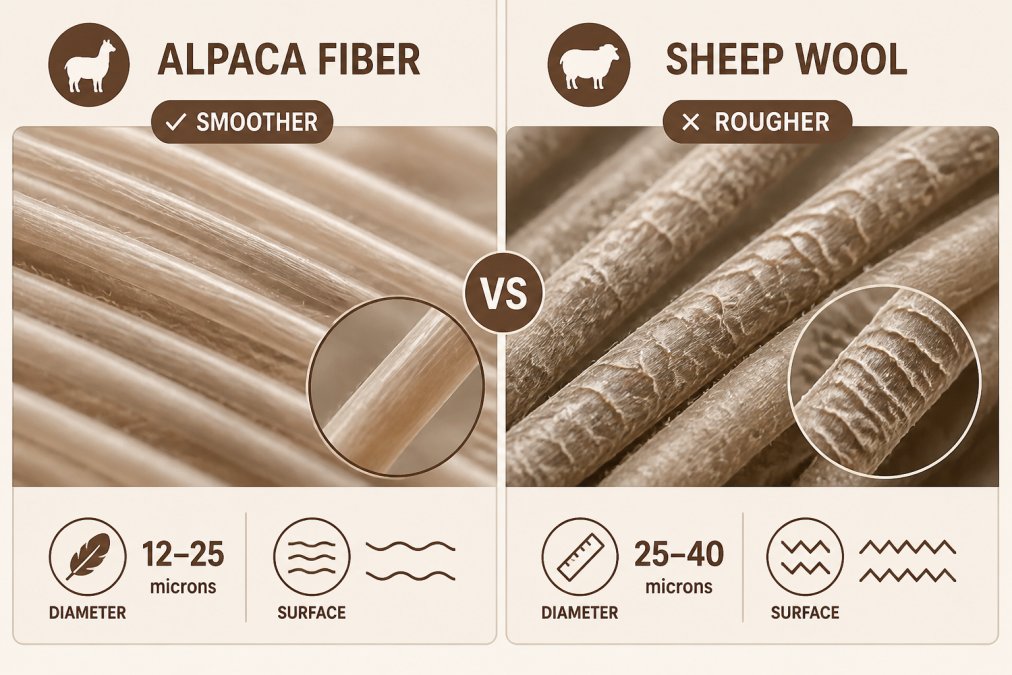
Alpaca fiber has a naturally smooth surface with minimal barbs or scales. When these fibers contact your skin, they glide across without friction. Sheep wool has pronounced fiber scales that catch and irritate sensitive skin, triggering the itching and discomfort that people with eczema experience.
Fiber Diameter and Micron Count
Fiber diameter, measured in microns, directly correlates with softness and irritation risk. Alpaca fiber typically ranges from 20-30 microns, with premium grades (Baby Alpaca) as fine as 20-22 microns. Sheep wool ranges from 24-40 microns, with merino wool around 18.5 microns at its finest.
For eczema sufferers, consistency matters most. Alpaca fiber within a single garment has remarkably uniform diameter, meaning every fiber has similar fineness. Sheep wool batches vary more widely, creating unpredictable irritation. Even superfine merino wool still contains lanolin, the waxy substance that triggers contact dermatitis in many people with sensitive skin.
Fiber Scales and Surface Smoothness
Under a microscope, alpaca fiber has an almost smooth cuticle layer with minimal scale structure. Sheep wool is covered in overlapping scales that create a rough, textured surface. When you wear sheep wool against sensitive skin, those scales catch on the skin's outer layer, creating micro-abrasions and friction. Alpaca's smooth surface minimizes this mechanical irritation entirely.
:::pro-tip When evaluating alpaca products, check the micron count if available. Baby Alpaca (20-22 microns) is softest for extremely sensitive skin. Royal Alpaca (23-27 microns) offers excellent softness with slightly more durability. Avoid anything over 30 microns if you have active eczema. :::
Lanolin-Free Wool Alternatives: Why Alpaca Eliminates a Major Irritant
Lanolin is a waxy, oily substance that occurs naturally in sheep wool as a protective coating. In finished wool garments worn against human skin, it's a common allergen that triggers contact dermatitis, itching, and rashes.
Alpaca fiber contains zero lanolin. This single difference explains why many people with wool sensitivity can wear alpaca without problems. They're not reacting to the fiber itself, they're reacting to lanolin embedded in processed sheep wool.
Lanolin's Role in Contact Dermatitis
Contact dermatitis from lanolin is well-documented. The waxy substance accumulates on the skin surface, blocking moisture and trapping sweat. For people with eczema, this creates intense itching, redness, and flare-ups.
Even "lanolin-free" sheep wool products often contain residual lanolin from processing. Complete removal requires additional washing and chemical treatment, which introduces other potential irritants. Alpaca fiber requires no lanolin removal because it never contained lanolin.
This is why Purely Alpaca products appeal to people with eczema: the fiber's natural composition eliminates this entire category of irritation risk.
Is Alpaca Wool Itchy? What the Science Shows
Alpaca is rarely itchy for people with eczema, while sheep wool is frequently itchy for the same population. This is a practical outcome of fiber structure and composition. Alpaca's smooth surface and fine, uniform diameter mean minimal mechanical irritation. The absence of lanolin means no chemical irritation.
Not every person with eczema tolerates alpaca perfectly. Individual sensitivities vary. Some people react to dyes, finishing chemicals, or specific fiber grades. But the fiber itself, pure alpaca, triggers far fewer reactions than sheep wool does.
Moisture-Wicking and Temperature Regulation for Eczema Flare-Up Prevention
Eczema flare-ups often spike in response to moisture imbalance. Too much sweat trapped against skin creates an ideal environment for irritation. Too little moisture causes the skin barrier to crack and become more reactive.
Alpaca fiber excels at both moisture-wicking and temperature regulation. The fiber's hollow core structure allows it to wick moisture away from skin while maintaining breathability. Sheep wool traps moisture more readily, especially when you sweat.
Temperature regulation matters just as much. Alpaca naturally insulates without overheating, a critical feature for people with eczema, who often find that overheating triggers intense itching. For people with eczema, this means you can wear alpaca in a wider range of conditions without triggering irritation.
Best Clothing Materials for Eczema: How Alpaca and Merino Compare
When choosing materials for eczema, you're weighing fiber properties, chemical composition, and practical durability. Alpaca and merino wool are the two most commonly recommended natural fiber options.
Alpaca: Hypoallergenic and Lanolin-Free
Alpaca fiber offers the complete package for eczema management: fine, smooth fibers with zero lanolin content. The fiber is naturally hypoallergenic and durable, resisting pilling and maintaining its shape better than merino wool over extended wear.
For people with moderate to severe eczema, alpaca is often the first choice. The combination of mechanical gentleness and chemical safety creates minimal irritation risk. Purely Alpaca has specialized in these products since 2002, offering products that emphasize warmth, comfort, and functional fashion.
The trade-off: alpaca typically costs more than sheep wool or merino. But for people with eczema, the cost difference reflects the genuine dermatological advantage.
Merino Wool: Superfine but Still Contains Lanolin
Merino wool is genuinely softer than standard sheep wool. At 18.5 microns or finer, merino fibers approach alpaca's fineness. For some people with mild eczema, merino works reasonably well.
The problem: merino still contains lanolin and can trigger contact dermatitis in people with lanolin sensitivity. Merino is also less durable than alpaca, pilling more easily and losing shape faster with repeated washing. For people with eczema who need reliable, long-lasting garments, alpaca's durability is a practical advantage.
Washing and Chemical Residue: How Care Practices Affect Eczema
Even the perfect fiber can trigger eczema if processing chemicals remain in the finished garment. Alpaca fiber requires less chemical processing than sheep wool because it's naturally lanolin-free and has a smooth surface.
When you wash alpaca garments at home, use lukewarm water and mild, fragrance-free detergent. Avoid fabric softeners and bleach entirely, as these leave chemical residues that irritate eczema-prone skin. Many people find that alpaca garments feel less irritating after a few washes as residual chemicals wash out.
Sheep wool requires more careful washing because lanolin can reactivate and accumulate with repeated washing, creating buildup that traps moisture and irritants. Alpaca doesn't have this problem. You can wear alpaca more frequently and wash it more regularly without worrying about chemical accumulation triggering flare-ups.
Alpaca Fiber Grades: Baby vs. Royal Alpaca for Sensitive Skin
Not all alpaca is the same. The fiber is graded by fineness and quality.
Baby Alpaca is the finest grade, typically 20-22 microns. This is the softest option, ideal for people with severe eczema. The trade-off is cost and availability.
Royal Alpaca ranges from 23-27 microns, still very fine by any standard. Royal Alpaca offers an excellent balance of softness, durability, and cost-effectiveness. For most people with moderate eczema, Royal Alpaca provides the comfort of Baby Alpaca with better durability and lower cost.
Standard Alpaca (28-32 microns) is still softer than sheep wool but coarser than Baby or Royal grades. Standard Alpaca works well for people with mild sensitivity or those who prioritize durability.
Purely Alpaca offers a curated selection of luxurious, naturally unique clothing, home goods, and gifts crafted from high-quality alpaca fiber.
Layering Strategies for Eczema Sufferers
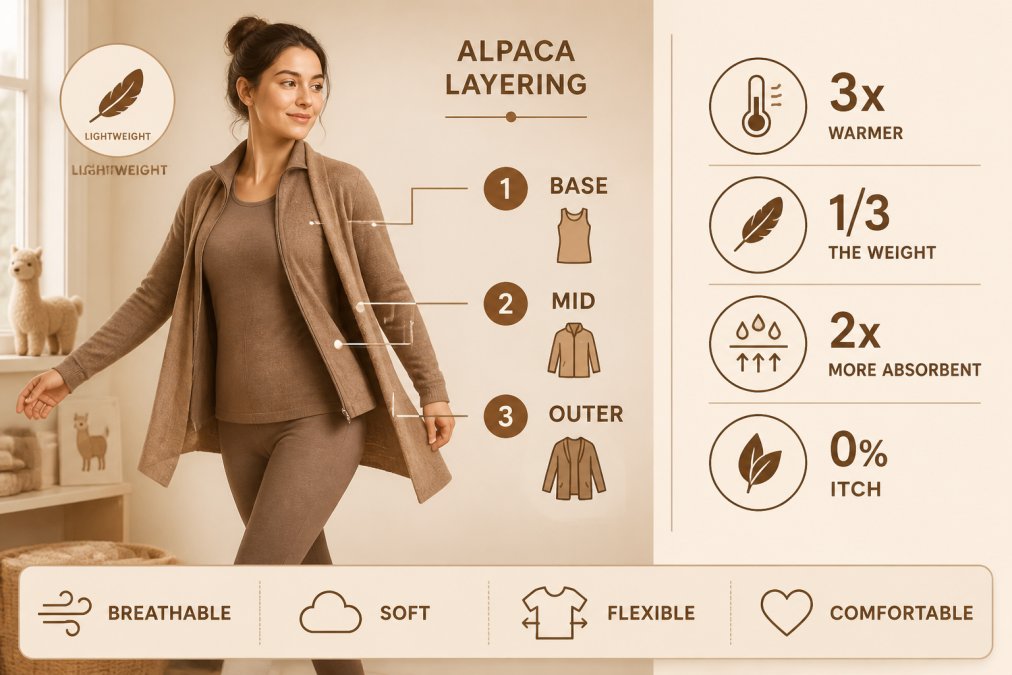
Strategic layering gives you precise temperature and moisture control. Rather than relying on a single thick garment, layer lightweight alpaca pieces.
Start with a thin alpaca base layer. Add a lightweight alpaca sweater or cardigan as your second layer. This combination provides substantial warmth without the bulk that causes overheating and sweating. You can adjust layers as your body temperature changes throughout the day. Overheating is a major eczema trigger for many people. With layering, you remove the cardigan when you warm up, instantly reducing skin temperature and preventing sweat-triggered flare-ups.
Layering also distributes the weight of insulation across multiple thin pieces rather than concentrating it in one heavy garment, improving air circulation and keeping your skin microclimate stable.
For travel or outdoor activities, pack two or three lightweight alpaca pieces rather than one heavy sweater. You'll have more flexibility, better comfort, and fewer eczema triggers.
If you have eczema and struggle with wool irritation, alpaca fiber offers a genuine alternative that eliminates the primary irritants while delivering superior comfort. The lanolin-free composition, smooth fiber structure, and moisture-wicking properties combine to create an environment where your skin can actually heal rather than constantly react.
Purely Alpaca has specialized in these products since 2002, offering alpaca clothing and home goods. With free shipping on orders over $100 and hassle-free returns, you can try alpaca without the risk. Start with a lightweight piece, their Natural Alpaca Bed Pillow at $199.95 or Natural Alpaca Travel Pillow at $99.95 offer excellent ways to experience the comfort difference and discover whether alpaca is the eczema solution you've been searching for.


Frequently Asked Questions
Is alpaca wool safe for eczema?
Yes, alpaca wool is generally safe and well-suited for eczema. Unlike sheep wool, alpaca is naturally lanolin-free, eliminating a common trigger for contact dermatitis. The fibers are smoother with fewer barbs, reducing friction on sensitive skin. Alpaca's moisture-wicking properties help keep skin dry, preventing the dampness that can worsen eczema flare-ups. However, individual responses vary; if you have severe sensitivities, test a small item first.
Does lanolin in sheep wool trigger eczema?
Lanolin, a waxy substance naturally present in sheep wool, can trigger eczema and contact dermatitis in susceptible individuals. It accumulates on the fiber surface and can cause itching, redness, and irritation. People with eczema often find sheep wool irritating precisely because of lanolin content. Alpaca wool contains virtually no lanolin, making it a safer alternative for those with documented sensitivities or a history of wool-related flare-ups.
What are the best clothing materials for eczema?
The best materials for eczema are breathable, moisture-wicking, and free from common irritants. Alpaca wool ranks highly because it's lanolin-free, hypoallergenic, and has smooth fibers that don't irritate skin. Superfine Merino wool (18.5 microns or less) is also effective, though it still contains lanolin in smaller amounts. Organic cotton and silk blends are alternatives, though they lack alpaca's thermal properties. The key is testing individual tolerance and avoiding synthetic fibers that trap moisture.
Will alpaca fiber keep my skin dry during physical activity?
Yes. Alpaca fiber has excellent moisture-wicking properties, pulling sweat away from the skin and moving it to the fabric's outer layer where it evaporates. This prevents the damp microclimate that triggers eczema flare-ups during exercise or outdoor activities. The fiber also breathes well, allowing air circulation without overheating. This combination of moisture management and breathability makes alpaca superior to standard sheep wool for active individuals with eczema.
This article was written using GrandRanker