



Table of Contents
- Why Choose Alpaca Alternatives
- Alpaca vs Cashmere Blankets: Fiber Comparison
- How to Care for Alpaca
- Best Alpaca to Consider
Last Updated: August 9, x.com/@purelyalpacax
Why Choose Alpaca Alternatives
Alpaca fiber delivers exceptional warmth without bulk, making it ideal for layering in harsh climates. But alternatives like cashmere, merino wool, and ethically-sourced blends each solve different problems. Some cost less. Others perform better in specific conditions.
At Purely Alpaca, we've spent over two decades helping customers find the perfect natural fiber for their lifestyle. The best choice isn't always the most popular one, it's the one that matches what you actually need.
Below, we'll walk you through how alpaca compares to its strongest competitors, which alternatives make sense for different situations, and how to care for natural textiles so they last.
Alpaca vs Cashmere Blankets: Fiber Comparison
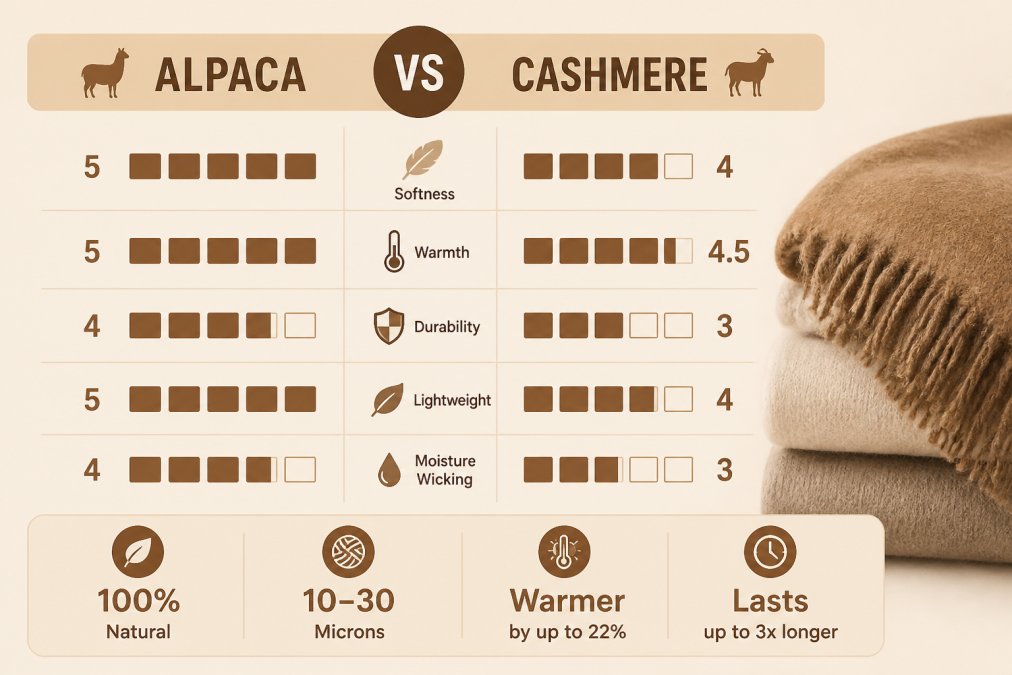
Alpaca and cashmere are both luxury natural fibers, but they perform differently. Alpaca comes from South American herds; cashmere comes from goats in Mongolia, China, and Central Asia.
(https://purelyalpaca.myshopify.com/blogs/purelyalpaca-blog/alpaca-wool-vs-cashmere-for-warmth-which-wins): Fiber Comparison]
Fiber Characteristics and Softness
Cashmere has a finer micron count (14-16 microns vs. alpaca's 22-24 microns), giving it a slightly smoother feel. However, alpaca offers superior hypoallergenic properties, it lacks lanolin, the oil in sheep wool that triggers allergies. For sensitive skin or eczema, alpaca is often the better choice.
Thermal Performance and Durability
Alpaca fiber has superior insulation and moisture-wicking capability, regulating temperature better in fluctuating conditions. Cashmere excels in stable, dry environments but can feel clammy during active use.
Alpaca resists pilling far better than cashmere. Cashmere garments show visible wear within two to three seasons; properly cared-for alpaca pieces maintain their appearance for five to seven years or longer.
Price and Value
Cashmere typically costs 30-50% more than comparable alpaca pieces. For the price of one cashmere sweater, you can own two or three alpaca alternatives. Over five years, alpaca usually delivers better value.
How to Care for Alpaca Wool
Proper care determines whether natural fiber alpaca last one season or seven.
Hand wash in cool water (around 60°F) with gentle detergent, or use a machine delicate cycle with a mesh bag. Avoid agitation and heat. Never wring or twist; gently squeeze out excess water and lay flat to dry on a clean towel. Most pieces dry completely within 24-48 hours.
Storage and Pilling Prevention
Store folded rather than hung to prevent stress points that accelerate pilling. Use breathable storage containers, never plastic bags. When pilling occurs, use a gentle fabric comb or specialized pilling tool rather than picking by hand.
Washing Frequency
Natural fiber garments need less frequent washing than synthetics. Alpaca and cashmere have natural antimicrobial properties. A light sweater can go 5-7 wears between washes; heavy-use items might need washing every 2-3 wears.
Best Alpaca to Consider
Purely Alpaca stands out as the top choice for authentic alpaca fiber and proven longevity. Since 2002, this family-owned business has focused exclusively on high-quality alpaca products. The Ebel Alpaca Sweater ($139.95) features two side pockets for genuine functionality. The Women's Ridgeport Zip Alpaca Vest ($209.95) has been their bestseller for nearly a decade with heavy-washed, double-faced construction. The Men's Bucksport Zip Alpaca Vest ($219.95) delivers exceptional warmth with minimal weight. Free shipping on orders over $100 and hassle-free returns remove friction and risk.

Frequently Asked Questions
Is alpaca wool really hypoallergenic compared to regular wool?
Yes, alpaca wool is naturally hypoallergenic and significantly gentler than sheep wool. Alpaca fiber lacks lanolin, the oil in sheep wool that triggers itching and irritation in people with sensitive skin or eczema. The fiber is smoother and less likely to cause the scratchy feeling associated with traditional wool. This makes alpaca an excellent choice for anyone with wool sensitivity, though individual reactions vary. Always check product composition to ensure 100% alpaca or high-percentage blends if you have very sensitive skin.
What makes alpaca worth the higher price compared to department store alternatives?
Alpaca commands premium prices due to superior performance and durability. Alpaca fiber provides exceptional thermal regulation, moisture-wicking, and odor resistance naturally, without synthetic treatments. It resists pilling better than merino wool and lasts significantly longer with proper care. A quality alpaca sweater like the Ebel Alpaca Sweater at $139.95 from Purely Alpaca will outlast cheaper alternatives by years. Additionally, ethical alpaca production supports fair wages and sustainable farming practices, making the investment support responsible sourcing alongside personal quality.
How do I care for alpaca wool to prevent damage and pilling?
Alpaca wool requires gentle care to maintain its quality. Hand wash in cool water with mild detergent, or use a delicate machine cycle. Avoid hot water, which can damage fibers. Never use a dryer; instead, lay flat to dry on a clean towel. Store folded rather than hung to prevent stretching. Alpaca resists pilling better than merino wool, but gentle handling extends longevity. For stubborn pilling, use a fabric comb or pill remover gently. Most alpaca items don't require frequent washing; airing them outside removes odors naturally.
This article was written using GrandRanker