





Table of Contents
- Why Alpaca Clothing Excels in Extreme Cold Weather
- Alpaca Wool vs Merino Wool Warmth: What Sets Them Apart
- How to Layer Alpaca Clothing for Winter Performance
- Alpaca Wool Care Instructions for Long-Lasting Performance
Last Updated: August 10, 2026
Why Alpaca Clothing Excels in Extreme Cold Weather
Alpaca fiber's hollow-core structure contains microscopic air pockets that trap heat while wicking moisture away from your skin. Unlike most insulation that traps sweat against your body, cooling you down, alpaca prevents this problem entirely.
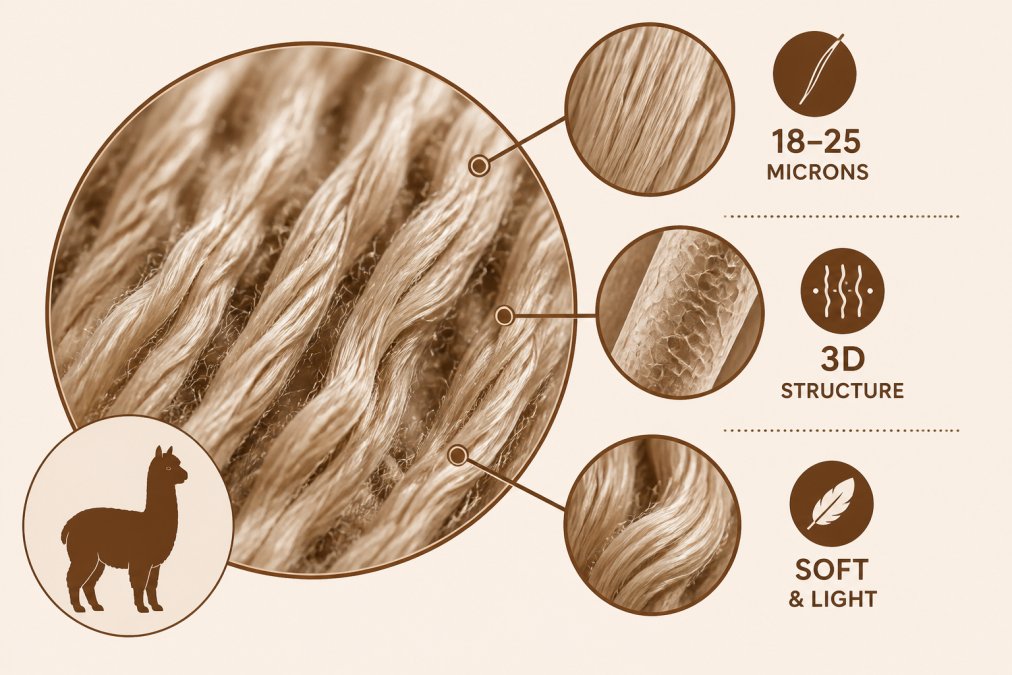
At Purely Alpaca, we've worked with outdoor enthusiasts and winter athletes since 2002. The pattern is consistent: people who switch to alpaca report staying warmer while wearing fewer layers, improving mobility and temperature management throughout the day.
Alpaca fiber is naturally hypoallergenic and lanolin-free. Its finer structure, typically 20-25 microns compared to sheep wool's 25-40 microns, sits comfortably against skin without itching.
Alpaca Wool vs Merino Wool Warmth: What Sets Them Apart
Merino wool excels in moderate conditions, but alpaca outperforms it in extreme cold. In sub-zero temperatures where you're stationary or moving slowly, alpaca's superior insulating properties dominate. Alpaca fiber retains more heat because of its higher loft and better air-trapping capability.
Alpaca is also stronger than merino, maintaining shape and insulating properties longer after repeated compression. Merino tends to pill and lose loft faster under harsh conditions.
In extreme cold, breathability becomes less critical, sweat freezes before it can evaporate. In that environment, alpaca's superior heat retention becomes the priority.
Quality alpaca garments cost more upfront but last longer and perform better in sub-zero conditions.
How to Layer Alpaca Clothing for Winter Performance
Layering strategy makes the difference between staying warm and staying dangerously cold. The right system uses alpaca's unique properties at each layer.
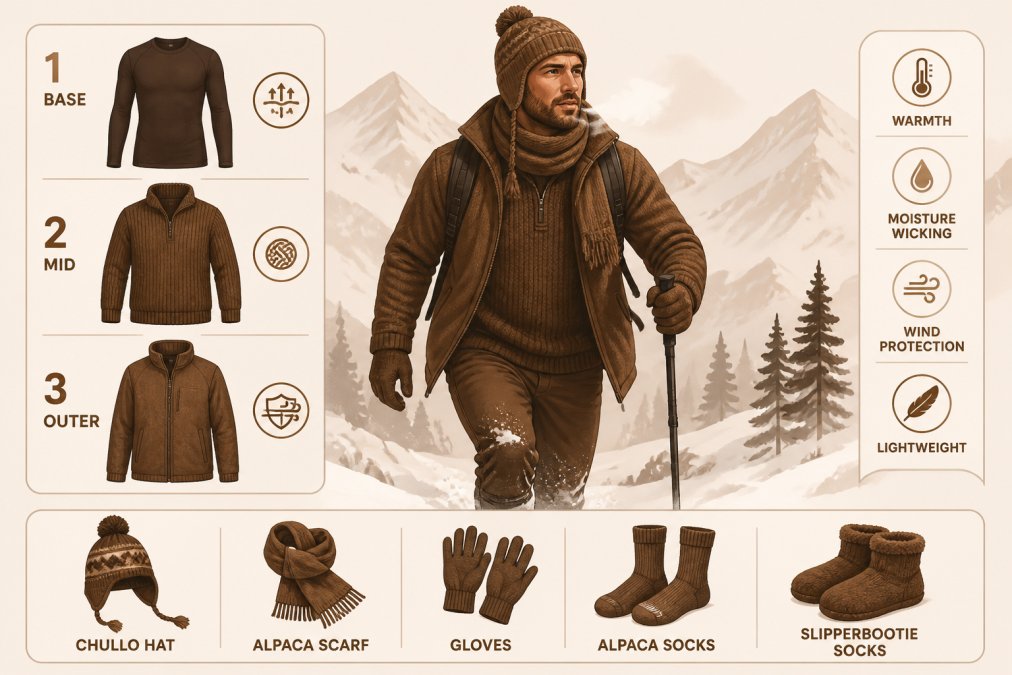
Start with a fitted alpaca base layer that handles moisture transport. Alpaca's moisture-wicking capability pulls sweat away before it cools you down. Fit matters, loose layers trap air unevenly and create cold spots. Purely Alpaca's Thermal Alpaca Baselayer Bottoms ($52.95) are engineered for this purpose with mid-weight construction.

Your mid-layer provides primary insulation. A thick alpaca sweater creates substantial loft without synthetic weight. This layer should be looser than your base layer to maximize air space between layers.
For your outer layer, pure alpaca lacks wind resistance that extreme cold demands. Alpaca-blend jackets (alpaca with nylon or wind-resistant fibers) provide warmth with technical protection. If using pure alpaca outer wear, layer it under a windproof shell.
Extremities require special attention. The Iditarod 100% Alpaca Double-Thick Reversible Gloves ($41.95) use double-thickness construction. The Survival Over-the-Calf Sock ($38.95) protects the vulnerable ankle area. The Iditarod 100% Alpaca Beanie Hat ($41.95) provides full-head coverage, significant body heat escapes through your head in wind.
| Layer | Purpose | Alpaca Garment Type | Fit |
|---|---|---|---|
| Base Layer | Moisture management | Fitted thermal bottoms/tops | Snug against skin |
| Mid-Layer | Primary insulation | Thick sweater or fleece | Loose, allows air space |
| Outer Layer | Wind/weather protection | Alpaca-blend jacket or shell | Comfortable over mid-layer |
| Extremities | Targeted warmth | Gloves, socks, hat | Specific to body part |
Alpaca Wool Care Instructions for Long-Lasting Performance
How you care for alpaca garments determines whether they maintain thermal properties for years or degrade after one season. Alpaca requires less intensive care than merino or regular wool.
Hand washing is safest. Use cool water with gentle wool-specific detergent and submerge for 10-15 minutes. Agitate gently without wringing. Rinse thoroughly with cool water until clear. Never use regular laundry detergent, which damages fiber and reduces insulating efficiency.
Machine washing on delicate cycle with cold water and wool detergent is acceptable for some items, but hand washing extends garment life. Never use heat when drying. Lay flat on a clean towel, reshape to original dimensions, and air dry completely, typically 24-48 hours.
Store clean garments in cool, dry places in breathable fabric bags, never plastic. Avoid compression storage that crushes loft. Cedar or lavender sachets naturally repel moths.
Pilling sometimes occurs in friction areas but doesn't indicate poor quality. Use a pilling comb or fabric shaver to gently remove surface pills.
Blot fresh stains immediately, never rub. For set-in stains, create a paste with cool water and wool detergent, apply gently, let sit 15 minutes, then rinse thoroughly.
Alpaca clothing for extreme cold weather represents a shift from treating winter gear as disposable to investing in performance pieces that last. The combination of superior thermal properties, natural moisture management, and durability makes alpaca the practical choice for anyone serious about staying warm in sub-zero conditions. Start with one foundational piece, perhaps the Iditarod Beanie or Thermal Baselayer Bottoms from Purely Alpaca, and experience the difference hollow-core fiber structure makes in real conditions. Get started with Purely Alpaca and discover why serious winter athletes choose alpaca for their most demanding cold-weather activities.
Frequently Asked Questions
Is alpaca wool warmer than sheep's wool for extreme cold?
Yes. Alpaca fiber's hollow-core structure traps more air than sheep wool, providing superior insulation in extreme cold. Alpaca also has lower moisture regain, meaning it stays drier and maintains warmth even in wet conditions. Sheep wool tends to absorb more moisture, which reduces its insulating properties when damp. For sub-zero temperatures, alpaca clothing for extreme cold weather consistently outperforms standard wool.
How do you care for alpaca wool clothing to ensure longevity?
Hand wash alpaca garments in cool water with mild detergent, avoiding hot water and harsh chemicals. Never use a washing machine, dryer, or dry cleaning, as these damage the fiber's structure. Rinse thoroughly until water runs clear, gently squeeze out excess moisture, and lay flat to dry on a clean towel. Store in a cool, dry place away from direct sunlight. With proper alpaca wool care instructions, quality pieces last 10+ years without pilling or deterioration.
Is alpaca wool hypoallergenic and safe for sensitive skin?
Yes. Alpaca fiber is naturally hypoallergenic and lanolin-free, making it ideal for people with eczema or sensitive skin. Unlike sheep wool, which contains lanolin and coarse fibers that irritate, alpaca has a smooth surface and minimal allergens. The fiber diameter is finer than most wools, reducing skin irritation. Many customers with wool sensitivity find alpaca clothing comfortable and non-irritating.
What makes alpaca clothing worth the higher price compared to synthetic alternatives?
Alpaca delivers superior performance that justifies the investment. It provides exceptional warmth without bulk, moisture-wicking that synthetics can't match, and durability that lasts decades with proper care. Alpaca is a natural, sustainable fiber that regulates body temperature better than polyester or acrylic blends. For extreme cold environments, the weight-to-warmth ratio and breathability of alpaca outweigh the upfront cost through years of reliable performance.
This article was written using GrandRanker