



Table of Contents
- Why Alpaca Sweaters Pill and How Fiber Quality Matters
- How to Wash Alpaca Wool Without Causing Damage
- Drying, Storage, and Daily Care to Prevent Pilling
- Best Tools for Removing Sweater Pills Safely
Last Updated: August 11, 2026
Why Alpaca Sweaters Pill and How Fiber Quality Matters
Pilling occurs when short fibers break free and tangle together, forming small balls that cling to garments. Alpaca sweaters aren't immune, but the cause often lies in how the sweater is made and cared for rather than the fiber itself.
Fiber length plays a critical role in pilling resistance. Long-staple alpaca fibers naturally resist pilling because they're less likely to break free from the yarn structure, while short fibers shed more readily. Yarn twist, how tightly fibers are wound together, also determines durability. Most pilling happens during the first few wears as loose fibers naturally shed; a well-made alpaca sweater typically stabilizes after that initial period.
How to Wash Alpaca Wool Without Causing Damage
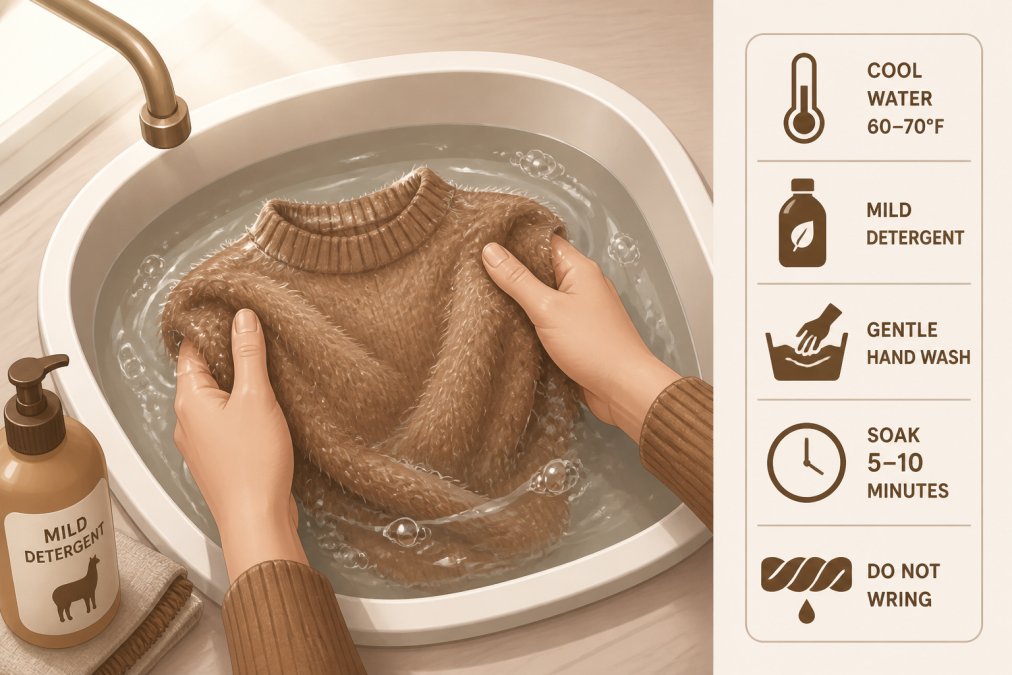
Hand washing is the gentlest method for alpaca sweaters and significantly reduces friction that causes pilling. Fill a sink with cool water, heat weakens alpaca fibers and causes them to shed more readily. Add a small amount of lanolin-free detergent designed for delicate fibers; regular detergent is too harsh and strips protective natural oils. Submerge your sweater and gently agitate for about five minutes without scrubbing or wringing.
Rinse thoroughly in cool water until all soap residue is gone. For the final rinse, add a tiny drop of white vinegar to help remove residual detergent and soften fibers slightly. If you prefer machine washing, use a delicate cycle with cold water and place your sweater inside a mesh laundry bag to reduce agitation.
Wash your sweater only when necessary, typically after three to five wears. Between washes, air out your sweater on a hanger in a well-ventilated space to refresh it naturally.
Drying, Storage, and Daily Care to Prevent Pilling
Lay your alpaca sweater flat on a clean, dry towel immediately after washing. Flat drying prevents gravity from stretching wet fibers, which can cause distortion and increased surface friction. Allow the sweater to air dry completely in a well-ventilated area away from direct heat sources and sunlight. The drying process typically takes 24 to 48 hours.
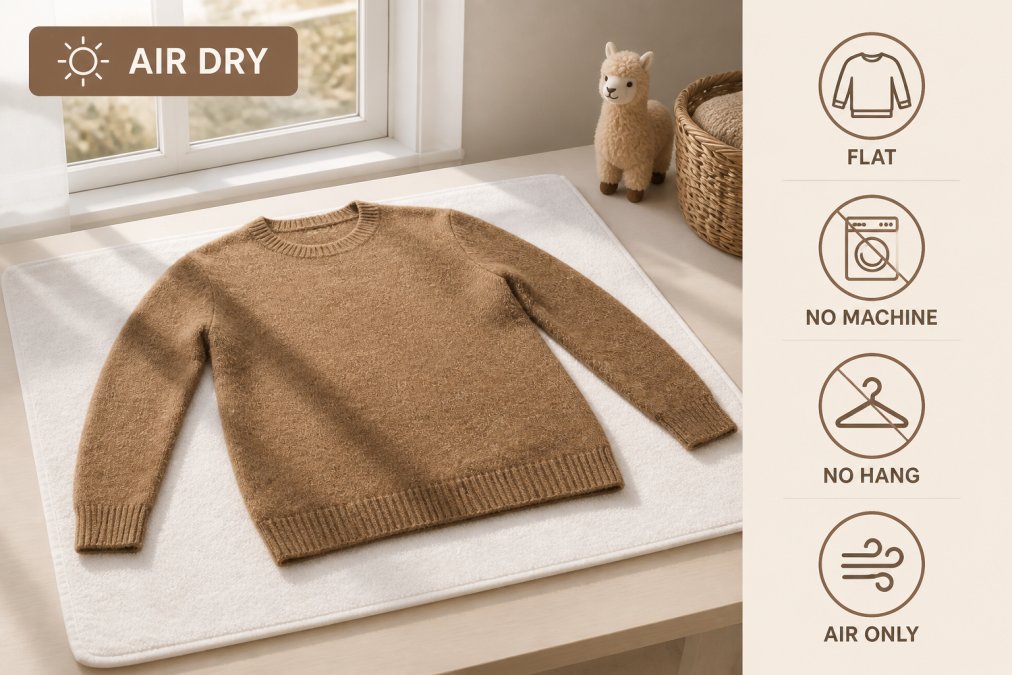
Store your alpaca sweater folded rather than hung, as hanging stretches fibers over time and creates stress points where pilling is more likely. Use a breathable storage container or drawer and avoid plastic bags, which trap moisture. Cedar blocks or lavender sachets naturally repel moths without harsh chemicals that damage alpaca fiber.
Rotation is one of the most underrated pilling prevention strategies. Wearing the same sweater repeatedly creates cumulative friction that accelerates pilling. Minimize friction during wear by avoiding rough surfaces like backpack straps and rough jacket linings.
Best Tools for Removing Sweater Pills Safely
Despite your best efforts, some pilling may still occur, especially during the first few wears. A fabric shaver is a battery-operated device with a small rotating blade that carefully cuts surface pills without harming the sweater beneath. A sweater stone is a pumice-like tool that works through gentle abrasion. A wool comb features fine, closely-spaced teeth that catch and remove surface pills, offering the gentlest method for light pilling on fine alpaca fibers.
For larger-scale pilling prevention, consider alpaca dryer balls when laundering similar items. Purely Alpaca's Wet Felted Alpaca Dryer Balls are made from 100% alpaca fiber and naturally soften fabrics while reducing static electricity during the drying cycle.

Never use a razor blade or regular kitchen knife to remove pills, as these tools are too aggressive and will damage the sweater's surface. Similarly, avoid lint rollers, which can pull fibers and create new damage.
| Removal Tool | Best For | Gentleness Level | Time Required |
|---|---|---|---|
| Fabric Shaver | Moderate to heavy pilling | Moderate | 5-10 minutes |
| Sweater Stone | Light to moderate pilling | High | 10-20 minutes |
| Wool Comb | Light pilling, delicate fibers | Very High | 15-25 minutes |
| Alpaca Dryer Balls | Prevention during drying | N/A (preventive) | Ongoing |
The best approach combines prevention with occasional removal. Proper washing, drying, storage, and wearing practices prevent most pilling from occurring in the first place. When pills do appear, use the gentlest effective tool for your situation.
Alpaca sweaters represent a significant investment in comfort and warmth. Protect that investment by understanding both fiber science and practical care. Start with proper washing in cool water with gentle detergent, always dry flat away from heat, rotate your sweaters to minimize friction, and store them folded in breathable containers. When pilling does occur, remove it gently with appropriate tools. With these practices in place, your alpaca sweater will maintain its appearance and performance for years. Explore Purely Alpaca's collection of premium alpaca pieces and accessories designed to support your care routine, including natural dryer balls that help protect your knitwear during every wash cycle.
Frequently Asked Questions
Does alpaca pill easily compared to other fibers?
Alpaca can pill, but high-quality alpaca sweaters with longer fibers and tighter yarn twist resist pilling better than lower-grade alternatives. Pilling occurs when short fibers work loose from friction during wear and washing. Premium alpaca fiber, like what Purely Alpaca offers, minimizes this issue through superior fiber length and construction. Proper care, gentle washing, flat drying, and reduced friction, further protects against pilling.
Will an alpaca sweater eventually stop pilling?
Yes. Most pilling occurs in the first few months of wear as loose surface fibers shed naturally. Once these fibers are removed, pilling typically slows significantly. Using de-pilling tools early and following proper washing techniques speeds this process. Well-maintained alpaca sweaters from quality sources generally stabilize after the initial pilling phase and last for years with minimal further issues.
Can washing alpaca sweaters incorrectly cause pilling?
Absolutely. Hot water, harsh detergents, vigorous scrubbing, and machine drying all weaken alpaca fibers and trigger excessive pilling. Hand washing in cold water with lanolin-free detergent, laying flat to dry, and avoiding the dryer are essential. Even one incorrect wash can damage fibers and accelerate pilling. Following proper washing techniques preserves fiber integrity and extends your sweater's lifespan significantly.
What's the best way to remove pills from alpaca wool?
Specialized tools like fabric shavers, sweater stones, and wool combs safely remove pills without damaging underlying fibers. A fabric shaver works quickly for larger areas, while a sweater stone offers gentler control. Wool combs work well for delicate fibers. Always test on a hidden area first. Remove pills gently and regularly, catching them early prevents matting and fiber breakage that can weaken your sweater's structure.
This article was written using GrandRanker