





Table of Contents
- Why Luxury Wool Sweaters Need Specific Long-Term Storage
- How to Clean Wool Sweaters Before Storage
- Fold, Don't Hang: Preserving Shape in Storage
- Best Containers for Storing Wool Clothes
- How to Protect Wool Sweaters From Moths
- How Long Can Wool Sweaters Stay in Storage?
- Managing Moisture, Humidity, and Temperature Year-Round
- Conclusion
- Frequently Asked Questions
Last Updated: October 15, 2026
Why Luxury Wool Sweaters Need Specific Long-Term Storage
Learning how to store luxury wool sweaters long term protects an investment that can easily run several hundred dollars per piece. Wool, cashmere, and alpaca fibers are protein-based, which makes them vulnerable to moths, moisture, and stretching if you pack them wrong. At Purely Alpaca, we have shipped natural fiber knitwear since 2002.
The stakes are higher than most people assume. A single moth larvae hatch can chew through a whole stack of knitwear in one season. Stored damp, wool can grow musty and weak. Hung on a wire hanger, a heavy sweater stretches at the shoulders and never recovers its shape.
Below, we walk through the full process, from cleaning to packing to inspection, so your sweaters come out of storage looking the way they went in.
How Alpaca, Cashmere, and Fine Wool Differ in Storage
Alpaca fiber is naturally hypoallergenic and has a smooth, hollow structure that resists moisture better than many other wools.
Alpaca and sturdy wool can handle a slightly firmer fold. All three share the same basic enemy list: moths, damp, and weight.
How to Clean Wool Sweaters Before Storage
Cleaning wool sweaters before storage is not optional. Food stains, sweat, and body oils attract moths and break down fibers over months of sitting. Even a sweater that looks clean can carry invisible residue that draws pests.
Check the care label first. Most luxury knitwear calls for hand washing or dry cleaning, and the label is the final word. When hand washing, use cold or lukewarm water with a gentle detergent made for wool. Never use regular laundry soap, which strips natural oils.
Steps for hand washing:
- Fill a basin with cool water and a capful of wool detergent.
- Submerge the sweater and gently press it down. Do not rub or wring.
- Let it soak for a few minutes, then rinse in clean cool water.
- Press water out against the basin wall. Never twist the fabric.
- Lay the sweater flat on a towel, reshape it, and let it air dry fully.
Hand Washing vs. Dry Cleaning: What the Care Label Tells You
If the label says dry clean only, follow it. Structured or embellished pieces often cannot handle water without losing shape. For everything else, hand washing at home is safe and cheaper over time.
The FTC care labeling rule for textiles requires manufacturers to list at least one safe cleaning method on the label. That label is your best guide, not a generic rule of thumb.
Drying Flat and Checking for Damage Before You Pack
Never hang a wet sweater to dry. Water weight pulls the fibers down and stretches the shoulders. Always dry flat on a clean towel, away from direct heat or sun.
Before packing, inspect for small holes, loose seams, or pilling. Repair minor damage now. A tiny hole left alone becomes a large one by the time you unpack.
Fold, Don't Hang: Preserving Shape in Storage
Folding is the right call for nearly every wool sweater. Hanging stretches the shoulders and distorts the body, especially with heavier knits like alpaca. The weight of the garment pulls against the hanger over months.
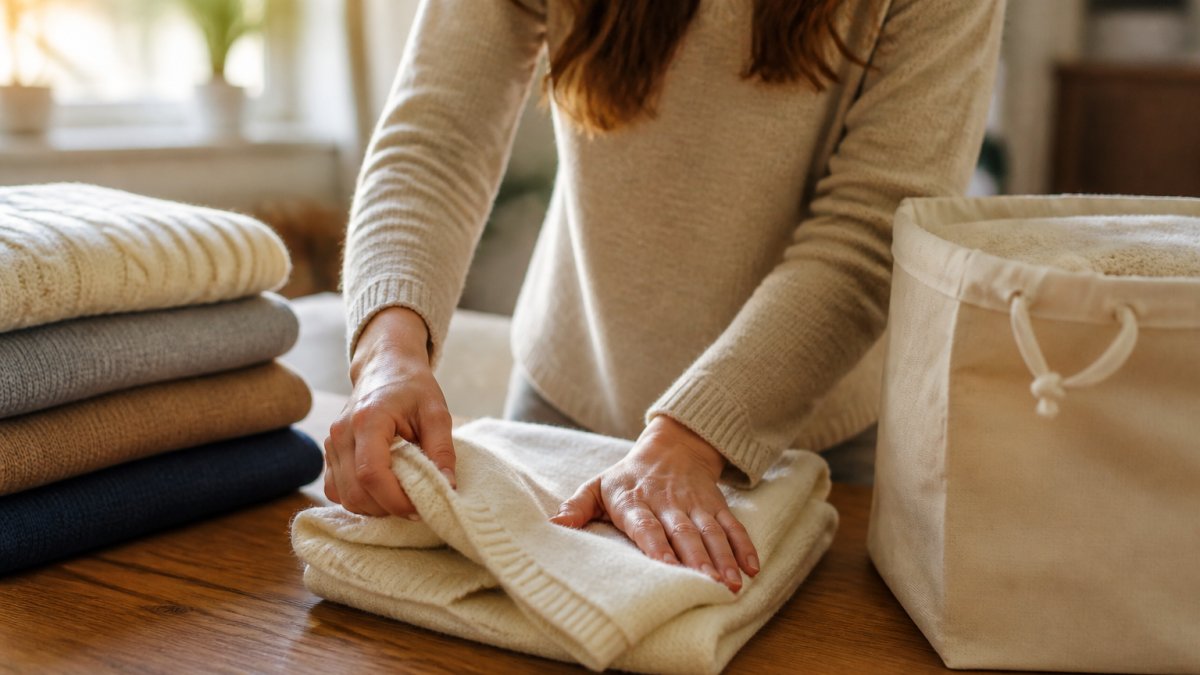
To fold for storage:
- Lay the sweater flat and smooth out wrinkles.
- Fold each sleeve across the chest toward the center.
- Fold the sweater in half or thirds, matching the shoulders.
- Roll instead of folding for extra-soft cashmere to avoid creases.
- Place the folded sweater in the container with the fold facing up.
If you must hang a lighter knit on a padded hanger, use one wide enough to support the full shoulder. But for long-term storage, folding wins.
Best Containers for Storing Wool Clothes
The best container for long-term wool storage is the one that keeps pests out without trapping moisture in. Those two goals pull in opposite directions, and that tension is the whole decision. Breathable containers let air move, which prevents musty odor and mildew, but fabric walls are not a barrier to a determined moth.
Here is how the main options compare:
| Container | Breathability | Pest Protection | Best For |
|---|---|---|---|
| Cotton or linen bag | High | Medium | Most homes, short to mid-term storage |
| Cedar chest or lined box | Medium | High | Long-term storage in a dry, climate-controlled room |
| Airtight plastic bin | None | High | Fully dry garments in a climate-controlled space |
| Vacuum-sealed bag | None | High | Space saving, short term only |
| Cardboard box | Medium | Low | Temporary use only |
Breathable cotton and linen bags. These are the safest default for most homes because they let the garment breathe. The trade-off is that moths can chew through fabric, so a breathable bag only works if the sweater inside is clean and the bag is stored with a repellent such as cedar or in a closet that is already monitored. Cotton and linen also absorb and release moisture slowly, which buffers small humidity swings rather than sealing them in.
Airtight plastic bins. A sealed bin is the strongest pest barrier you can buy at a retail price. It is also the fastest way to ruin a sweater if you get one thing wrong: the garment must be bone-dry and the room must be climate-controlled. Seal a slightly damp sweater in a bin and you have created a small, dark, humid chamber, ideal conditions for mildew and a musty odor that is very hard to remove.
Vacuum-sealed bags. Vacuum bags compress a sweater to a fraction of its size, which is useful for shipping or a single season in a tight closet. They are a poor choice for genuinely long-term storage of luxury knitwear. Compression crushes the loft that gives wool its warmth, and the plastic film traps any residual moisture against the fibers. Use them only for short-term, fully dry storage, and never for cashmere you plan to keep for years.
Cedar chests and lined boxes. A cedar chest offers moderate breathability and strong pest resistance, which is why it has been a standard for wool storage for generations. Cedar's repellent effect fades as the wood ages, so plan to refresh the surface periodically and to crack the lid for a few minutes each month so the interior does not trap damp air.
Cardboard boxes. Cardboard is breathable but offers almost no pest protection, and it can absorb moisture from a damp basement or garage. Use it for temporary moves, not for a season of storage.
Whichever container you choose, label it. Write the fiber, the date it went in, and the date of the next inspection on a card taped to the outside. That single habit turns a pile of bags into a storage system you can actually maintain.
How to Protect Wool Sweaters From Moths
Protecting wool sweaters from moths starts with a clean garment and ends with a sealed, monitored container. Moth larvae eat protein fibers, and they are drawn to any trace of sweat, food, or skin oil. A dirty sweater in a clean closet will still attract them.
Use these steps:
- Wash or dry clean every sweater before storage.
- Add cedar blocks or cedar sachets to the container.
- Refresh cedar every few months by lightly sanding it.
- Store sweaters in a cool, dark place away from daylight.
- Check the container every few weeks for signs of pests.
Cedar does not kill moths. It repels them, and only while the scent is strong. That is why monitoring matters as much as the cedar itself.
How Long Can Wool Sweaters Stay in Storage?
Wool sweaters can stay in storage for a full off-season, roughly six to eight months, without harm if they are clean, dry, and protected. Beyond that window, plan to inspect and air them out periodically.
For long-term storage of a year or more, follow a maintenance schedule:
| Timeframe | Action |
|---|---|
| Every 4-6 weeks | Check for pests and moisture |
| Every 3 months | Air sweaters for a few hours |
| Every 6 months | Refresh cedar and refold |
| Annually | Wash, inspect, and repack |
Refolding matters more than people expect. A sweater left in the same fold for a year develops permanent creases along the fold line.
Managing Moisture, Humidity, and Temperature Year-Round
Moisture is the quiet killer of stored wool. Damp fibers grow mildew, attract pests, and lose strength. The ideal storage spot stays cool, dry, and dark, with steady conditions all year.
Aim for these conditions:
- Temperature: cool and stable, away from radiators and sunny windows.
- Humidity: low, ideally below 50 percent.
- Light: dark, since sunlight fades natural dyes over time.
- Airflow: some movement, which is why breathable bags beat sealed ones for most homes.
Avoid basements and attics. Basements run damp, and attics swing from hot to freezing. A closet shelf in a climate-controlled room is usually the safest spot.
Conclusion
Storing luxury wool sweaters long term takes a little effort up front and a few minutes of checking along the way. Clean each piece, dry it flat, fold it, and choose a container that balances airflow with pest protection. Get those steps right and your knitwear will come out of storage ready to wear.
At Purely Alpaca, we have spent more than two decades helping people care for natural fiber clothing. Our collection includes cozy socks, elegant apparel, and soft home goods, all crafted from high-quality alpaca fiber. We offer free shipping on orders of $100 or more and hassle-free returns, so you can try a piece with confidence.
Get started with Purely Alpaca and give your wardrobe the warmth and comfort only natural fiber can deliver.
Frequently Asked Questions
Should wool sweaters be folded or hung for long-term storage?
Fold them. Hanging a wool sweater on a standard hanger causes shoulder stretching and distorts the knit over months of storage. Use a padded hanger only for very lightweight knits, and even then, fold the garment over the bar rather than hanging it by the shoulders. Folding keeps the shape intact and prevents the fibers from pulling under their own weight. Store folded sweaters in a breathable cotton or linen bag or a clean drawer, and avoid stacking more than three high so the bottom pieces do not crush.
Can wool sweaters be stored in plastic bags?
Skip sealed plastic bags for anything longer than a few weeks. Plastic traps moisture against the fibers, which encourages musty odor and mildew, and it blocks airflow that natural fibers need. If you want extra protection from moths, use a breathable cotton or linen bag instead. For short-term transport, a zip-lock bag works fine, but open it and air the sweater out once you get home. Airtight bins are acceptable only when the sweater is completely dry and you add a desiccant pack to control humidity.
How do you protect wool sweaters from moths without harsh chemicals?
Clean the sweater first, since moths are drawn to food residue and body oils left on the fibers. Then store it in a breathable cotton or linen bag with cedar blocks, lavender sachets, or dried rosemary. Cedar and lavender do not kill existing larvae, so inspect the garment for small holes or webbing before packing. Refresh cedar by lightly sanding it every few months. For long-term storage, check the bag every 8 to 12 weeks and re-inspect the sweater for any signs of pest activity.
How long can wool sweaters stay in storage before they need attention?
Most wool and cashmere sweaters stay in good condition for 6 to 12 months in proper storage, but they need a check every 2 to 3 months. Look for moth damage, musty odor, or moisture inside the bag. After 12 months, air the sweater outdoors in indirect sunlight for a few hours, then refold along different crease lines to prevent permanent fold marks. Alpaca fiber still benefits from periodic inspection and re-folding.