



Table of Contents
- Alpaca Wool vs Synthetic Insulation for Warmth: The Short Answer
- Alpaca Wool Insulation Properties That Decide Warmth
- Synthetic Insulation Warmth When Wet: Where It Wins and Loses
- Alpaca Wool vs Down Insulation: Loft, Weight, and Wet-Weather Gaps
- Side-by-Side: Warmth, Weight, and Durability Compared
- How to Care for Alpaca Wool Clothing (and Synthetic Fill)
- Which Insulation Fits Your Cold-Weather Use Case?
- Frequently Asked Questions
Last Updated: October 17, 2026
Alpaca Wool vs Synthetic Insulation for Warmth: The Short Answer
Alpaca wool wins on warmth-to-weight ratio, breathability, and odor resistance in cold, dry conditions. Synthetic insulation wins on cost, easy washing, and consistent performance in soaking wet weather.
Here is the part most comparisons skip: the two materials fail in different ways. Synthetics fail by losing loft over time. Alpaca fails only if you buy it poorly made.
Below, we break down fiber structure, wet-weather behavior, care, and use cases so you can choose with confidence.
Alpaca Wool Insulation Properties That Decide Warmth
Alpaca wool is a natural fiber from the alpaca fleece, and its insulation value comes from structure rather than bulk. The fiber has a smooth, semi-hollow core, which is why it traps warmth efficiently without the heft of conventional wool.
Three properties matter most: hollow fiber structure, natural loft, and fiber fineness. Together they explain why alpaca feels warm for its weight.
Hollow Fiber, Loft, and Trapped Air
Warmth in any insulation comes down to trapped air. Alpaca's hollow fiber creates tiny air pockets along each strand, and the crimp in the fleece adds loft, the springy thickness that holds those air pockets in place.
That loft is what makes an insulation layer work. Compress it flat and you lose warmth. Alpaca resists compression better than many natural fibers, so a thin garment keeps insulating where a flatter fill would collapse.
Softness, Breathability, and Moisture Wicking
Alpaca fiber is notably fine, and finer fibers bend more easily against skin. That is the practical reason alpaca rarely triggers the itch people associate with coarse wool.
Breathability and moisture wicking follow from the same structure. Alpaca moves moisture vapor away from skin instead of trapping it, which keeps you dry during active use. For anyone with sensitive skin, that combination of softness and moisture management is the real selling point.
Synthetic Insulation Warmth When Wet: Where It Wins and Loses
Synthetic insulation keeps insulating when wet, and that is its strongest claim. Polyester-based fills absorb almost no water, so a soaked jacket still holds most of its warmth. Down, by contrast, collapses when wet. But the keyword asks about alpaca versus synthetic, and that comparison is where most guides go quiet. Here is the mechanism-level version.
Why synthetics hold warmth when wet
Synthetic fills are made from continuous or short-staple polyester filaments bonded into a batt or structured into a continuous-filament sheet. The polymer itself is hydrophobic, it does not swell with water the way a natural fiber can. Water sits in the spaces between filaments rather than inside them, so the fill keeps most of its loft and therefore most of its trapped air.
What actually happens to alpaca when it gets wet
Alpaca fiber is not waterproof, and it does absorb some moisture, but far less than cotton and less than many conventional wools. The fiber's smooth, semi-hollow structure means water moves along the surface and through the hollow core rather than saturating the fiber wall. In practice, a damp alpaca layer still traps air and still insulates, which is why alpaca has a long history in cold, humid climates.
Drying time and warmth recovery after saturation
This is the practical test most comparisons skip. A thin synthetic fill, the kind used in a liner or a lightweight puffer, sheds surface water quickly and can be wrung out and worn damp with most of its warmth intact. A thicker synthetic batt holds more water in its void spaces and takes longer to dry, even though the polymer itself does not absorb water.
Where synthetics lose
Synthetics are bulkier for the same warmth, they pack down less efficiently, and continuous compression gradually reduces loft. A synthetic fill that has lived in a stuff sack for years will not bounce back the way alpaca does. Synthetics also trap odor more readily and rely on petroleum-based inputs, which matters if you are trying to reduce plastic in your wardrobe.
A note on measuring warmth
Claims like "warmer" are hard to compare across products. The industry uses clo (a unit of thermal insulation) and standardized tests such as ASTM F3340 for sleeping bag insulation and ASTM D1518 for garment thermal resistance to put numbers on warmth. When you compare an alpaca layer with a synthetic one, ask for the clo value or the EN/ISO temperature rating rather than relying on marketing language.

ASTM D1518 standard test method for thermal resistance of batting systems
Alpaca Wool vs Down Insulation: Loft, Weight, and Wet-Weather Gaps
Down delivers the best warmth-to-weight ratio of any fill, and nothing here disputes that. The gap opens when conditions turn damp.
Alpaca holds its insulating ability in humid, drizzly conditions far better than down and dries faster. It is also hypo-allergenic, which matters for anyone who reacts to feather fill.
AlpacaSack 100% Alpaca Filled Compressible Sleeping Bag →
The trade-off is honest: down is lighter and packs smaller at the top end.
Side-by-Side: Warmth, Weight, and Durability Compared
Here is how the three fills stack up on the criteria that actually decide a purchase, with the caveats that make the numbers meaningful.
| Criterion | Alpaca Wool | Synthetic Fill | Down |
|---|---|---|---|
| Warmth when wet | Good, holds loft while damp, dries slower when saturated | Best, hydrophobic polymer, wrings out and keeps warming | Poor, collapses when wet |
| Warmth-to-weight | Very good | Moderate | Best |
| Breathability | Best | Moderate | Good |
| Dries quickly | Moderate | Fast (thin batts), slower (thick batts) | No |
| Odor resistance | Best | Poor | Good |
| Loft recovery | Strong | Weak over time | Strong when dry |
| Cost | Higher upfront | Lowest | Highest |
| Sustainability | Renewable, biodegradable | Petroleum-based | Renewable, ethical concerns |
Alpaca pros: breathable, soft against skin, hypo-allergenic, holds warmth in damp air, resists odor. Alpaca cons: higher upfront cost, needs gentler washing than synthetics.
Synthetic pros: cheapest, fully machine washable, reliable when soaked. Synthetic cons: bulkier, loses loft with compression, holds odor.
What the table does not tell you
Warmth is not one number. The clo value of a fill depends on how much loft it has, how much it is compressed, and how the garment is constructed. A thin synthetic vest and a thick alpaca sweater can both be "warm" in marketing copy while performing very differently at 20°F. Two practical rules follow:
- Compare at equal weight, not equal thickness. A fill that is warmer per ounce is more efficient; a fill that is warmer only because it is thicker is just heavier.
- Ask for the test standard. Sleeping bags use EN/ISO temperature ratings; garments may cite ASTM D1518 thermal resistance. A clo value or a comfort rating is a measurable claim; "warm" is not.
Durability and long-term loft
This is where the purchase decision often turns. Synthetic fills lose loft gradually under repeated compression and heat exposure, a stuff sack left in a hot car is the classic failure mode. Alpaca resists compression better and recovers loft, but it is vulnerable to poor construction: loosely spun yarn, low fiber density, or a weak lining will shed and mat long before the fiber itself gives out.
Use-case recommendations
Match the fill to the conditions, not to the label.
- Sleeping bags in cold, dry conditions: down leads on warmth-to-weight; alpaca is the better choice if you expect damp nights and want breathability.
- Jackets for active cold-weather use: alpaca wins on breathability and odor control over multi-day trips; synthetic wins for wet, high-exertion days where you will sweat and get rained on.
- Blankets and everyday winter wear: alpaca gives the best balance of warmth, softness, and packability.
- Damp or coastal conditions: synthetic is the safer bet, or a water-resistant alpaca shell over an alpaca layer.
For a ready-made option, our AlpacaSack sleeping bag is filled with 100% alpaca fiber, EN Comfort Rated to 32°F, and compresses into a hiking pack. For layering, the Alpafill Puffer Jacket combines 60% alpaca fiber insulation with a windproof, water-resistant shell at 14.3 oz.

How to Care for Alpaca Wool Clothing (and Synthetic Fill)
Caring for alpaca wool clothing is simpler than most people expect. Alpaca can be fully submerged in water, so gentle machine washing is fine.
- Use a gentle or delicate cycle with cold water, up to 30°C
- Choose a mild detergent and skip bleach entirely
- Tumble dry on low, or better, air dry in the shade
- Never iron an alpaca garment
Synthetic fill is more forgiving: warm wash, normal dryer cycle, no special handling. The catch is that heat and repeated compression shorten its useful life, so air drying still helps.
A common mistake is treating "natural fiber" as code for "dry clean only." Alpaca does not require that.
Which Insulation Fits Your Cold-Weather Use Case?
Match the fill to the conditions, not to the label. Here is how we would decide.
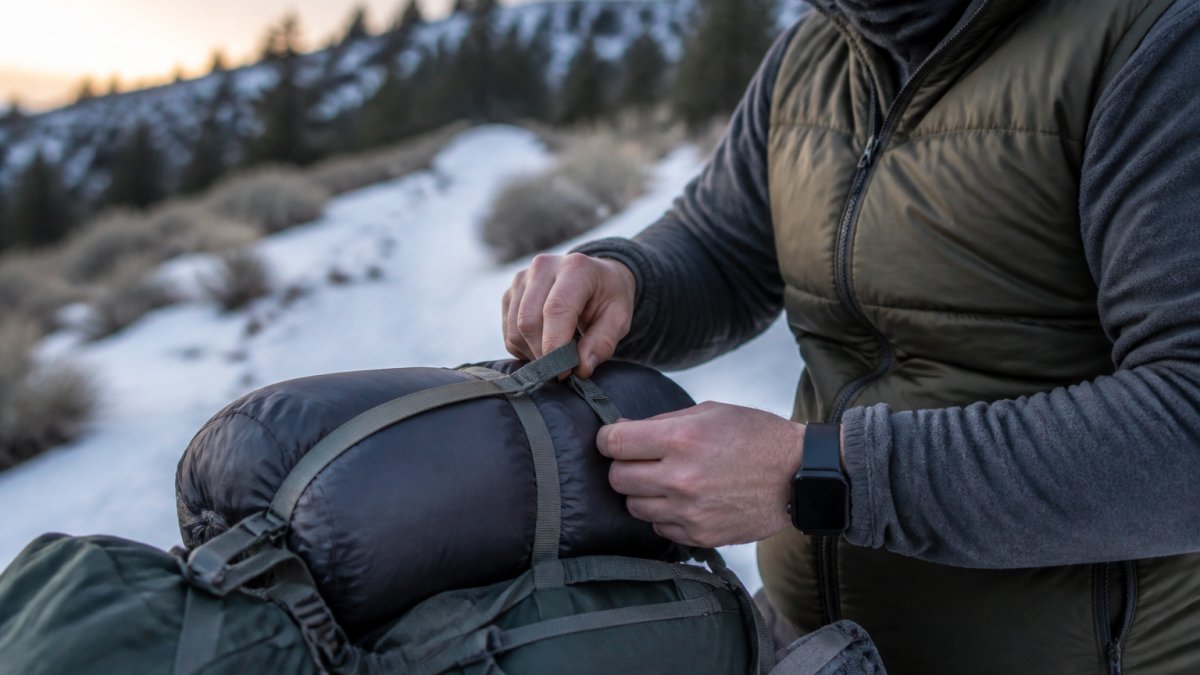
- Wet coastal hiking, rain, sleet: synthetic fill is the safer bet, or a water-resistant alpaca shell over an alpaca layer.
- Cold and dry, high output activity: alpaca wins on breathability and odor control over multi-day trips.
- Ultralight backpacking in dry cold: down still leads on weight.
- Everyday winter wear and travel: alpaca gives the best balance of warmth, softness, and packability.
For a ready-made option, our AlpacaSack sleeping bag is filled with 100% alpaca fiber, EN Comfort Rated to 32°F, and compresses into a hiking pack. For layering, the Alpafill Puffer Jacket combines 60% alpaca fiber insulation with a windproof, water-resistant shell at 14.3 oz.
Frequently Asked Questions
Is alpaca wool warmer than synthetic insulation?
It depends on the garment and the conditions. Alpaca wool's hollow fiber structure traps air efficiently, which is why it delivers strong warmth for its weight in dry cold. Synthetic insulation, usually polyester-based, is engineered for consistent loft and fast drying. In dry conditions a well-built alpaca layer holds its own; in soaking wet conditions synthetics shed water faster and dry more quickly. Match the insulation to your climate and activity rather than assuming one always wins.
Does alpaca wool keep you warm when it gets wet?
Alpaca wool handles moisture better than many people expect. The fiber wicks moisture away from the skin and can absorb some vapor without feeling clammy, and it retains a meaningful share of its insulating ability when damp. That said, no natural fiber matches a synthetic fill for speed of drying after a full soak. For damp, active use, pair alpaca with a water-resistant shell and dry it thoroughly between wears to protect the loft.
How should you care for alpaca wool clothing compared with synthetic insulation?
Alpaca wool clothing should be washed on a gentle or delicate cycle in cold water with a mild detergent, then air dried in the shade; avoid bleach and irons. Purely Alpaca's Alpafill jackets and vests follow the same routine, and the AlpacaSack sleeping bag can be gently machine washed on a hand-wash or no-agitation setting and air dried. Synthetic fill is generally more tolerant of heat, but high dryer temperatures can break down loft over time, so low heat or air drying is safer for both.
Is alpaca wool breathable enough for active use?
Yes, for most cold-weather activity. Alpaca fiber is fine and smooth, and it moves moisture vapor away from the body rather than trapping it against the skin, which helps regulate temperature during stop-and-go exertion. It is not a substitute for a dedicated moisture-wicking base layer in high-sweat pursuits, but as a midlayer or outer insulation it stays comfortable across a wide temperature range, and it feels soft against the skin rather than itchy.
The real challenge is not picking a fill. It is finding alpaca that is genuinely well made, at a price that reflects its lifespan. Purely Alpaca has specialized in alpaca since 2002, as a small family business with a wide range of styles, free shipping on orders of $100 or more, and hassle-free returns. Shop all and find the layer that fits how you actually spend your winters.