





Table of Contents
- How to Clean Alpaca Blankets Before Storage
- Best Moth Repellent for Wool Storage: Cedar, Lavender, and Beyond
- Storing Alpaca Wool in Humid Climates: Moisture Control That Works
- How to Store Alpaca Wool Blankets Long Term: Folding, Containers, and Location
- Repair and Restoration Before Storage: What to Check First
- Seasonal Rotation vs. Long-Term Storage: Two Different Protocols
- Frequently Asked Questions
Last Updated: September 11, 2026
How to Clean Alpaca Blankets Before Storage
Storing an alpaca blanket without cleaning it first is the most common reason blankets come out of storage damaged: trapped body oils, skin cells, and food particles feed pests during months of darkness.
The method depends on how dirty it is: one used lightly on a guest bed needs far less intervention than one that spent the winter on a couch.
Spot Cleaning vs. Deep Cleaning: Which to Choose
Spot cleaning handles isolated marks; deep cleaning resets the whole blanket. Choose based on what you see, not how long since the last wash.
Spot clean a stain by blotting with a clean white cloth and cool water, working from the outside inward. Avoid rubbing, which pushes stains deeper and roughens the surface.
Deep clean when the blanket has been used heavily, smells stale, or has widespread soiling. Alpaca fiber is delicate, so most manufacturers recommend dry cleaning or a careful hand wash rather than machine agitation. If you hand wash, use cool water and a mild detergent, then rinse without wringing. The American Cleaning Institute's fabric care guidance is a solid reference for matching cleaning methods to fiber type.
Drying Alpaca Fiber Without Damage
Air drying is the only safe option. Lay the blanket flat on a clean towel or drying rack, reshape it gently, and dry it away from direct sunlight and heat.
Direct sun fades natural dyes and makes fiber brittle; radiators dry it unevenly, causing stiffness. Give it a full day, sometimes two, in a well-ventilated room, flipping once halfway.
Best Moth Repellent for Wool Storage: Cedar, Lavender, and Beyond
The best moth repellent for wool storage is not a single product but a layered system that interrupts the moth life cycle at more than one stage. Cedar blocks and lavender sachets are the most widely recommended options, but understanding why they work (and where they fail) separates a blanket that survives five years from one riddled with holes.
How Cedar and Lavender Actually Work
Cedar's natural oils mask the scent of the protein fiber moths seek: cedrol and other aromatic terpenes evaporate from the wood and interfere with the adult moth's ability to locate an egg-laying site. Lavender sachets work similarly, linalool and linalyl acetate repel adult moths and add a pleasant scent.
Both need refreshing on a schedule. Cedar loses potency as its surface oils evaporate, a block that smells faintly of pencil shavings has stopped working; sanding it with fine-grit paper exposes fresh oil. Lavender loses its scent within a season or two; replace the sachets or add a few drops of food-grade lavender essential oil to the cotton bag, never directly on the fiber.
Why Moth Larvae Target Protein Fibers
Moth larvae feed on keratin, the protein in alpaca, wool, cashmere, and other animal fibers, which is why infestations damage natural textiles and leave cotton and synthetics largely untouched. The worst offenders indoors are the webbing clothes moth (Tineola bisselliella) and the casemaking clothes moth (Tinea pellionella), both of which prefer dark, undisturbed spaces with a ready food source.
The adult moth is not the problem, damage comes from larvae hatching near a food source, and a single female can lay 40 to 50 eggs in a season. The real risk begins the moment a blanket enters a dark, undisturbed space, where one overlooked blanket can host a full generation (roughly four to eight weeks from egg to adult in a warm room) before you notice holes. In an unheated area, the cycle slows but does not stop.
The Three-Layer Defense That Actually Works
Natural repellents alone are a weak barrier: they only deter adults and do nothing to larvae already in the fiber. A system that holds up over years combines three layers:
- A physical barrier. A tightly woven cotton storage bag or a sealed garment bag keeps adult moths from landing directly on the blanket. This is the layer most people skip, and it is the one that matters most.
- A repellent layer. Cedar blocks, lavender sachets, or both, placed inside the bag and refreshed on a schedule. Cedar is the longer-lasting option; lavender is the more pleasant-smelling one.
- A monitoring layer. A visual inspection every three to six months. Look for webbing (fine silk threads in corners), cast larval skins, or small fecal pellets, all signs of an active infestation rather than a past one.
Storage location matters as much as repellent choice: a cedar block in a closet will not help a blanket in an attic where moths already have a foothold. If you find an active infestation, isolate the blanket in a sealed bag, freeze it at least 72 hours at 0°F or below to kill eggs and larvae, then clean it before returning it to storage. Freezing uses no chemicals and does not damage dry alpaca fiber.
What to Do If You Find Damage
If you find holes, webbing, or larvae, don't just add more cedar. Isolate the blanket, freeze it as described above, then inspect every nearby textile, moths spread. Vacuum the storage area, dispose of the bag immediately, and replace any scentless cedar before the blanket goes back into storage.
Storing Alpaca Wool in Humid Climates: Moisture Control That Works
Storing alpaca wool in humid climates requires controlling moisture first and pests second. Damp fiber attracts mold and mildew and weakens over time, so humidity control is the foundation of any storage plan in a wet region, yet most guides give the same advice for a damp coastal apartment and a dry high-desert cabin.
The Numbers That Matter
Alpaca fiber is hygroscopic, it absorbs and releases moisture from the air, which makes it comfortable to wear but also means it soaks up ambient dampness over months. The practical target for long-term storage is 45% to 55% relative humidity: below 40% the fiber can turn dry and brittle, above 60% mold and mildew become a real risk, and above 70% the risk climbs sharply.
A cheap hygrometer, the kind sold for reptile terrariums or cigar humidors, costs less than a cedar block and tells you more about your storage conditions than any other tool. Check it weekly for the first month to learn how the space behaves.
Climate-Specific Protocols
The right protocol depends on where you live, not on a single universal rule:
High-humidity regions (Gulf Coast, Pacific Northwest, Southeast): Lean toward breathable cotton storage and frequent inspections. Run a dehumidifier if the hygrometer reads above 60% for more than a day or two, and check the blanket every two to three weeks during the damp season. Avoid basements and garages, they hold moisture and swing in temperature. An interior closet on an upper floor is usually safest.
Arid regions (Southwest, high plains): An airtight container is reasonable if the blanket went in completely dry, trapped moisture is unlikely, and the seal blocks pests. Check every three to six months; the main risks are dust and pests, not mold.
Mixed or seasonal climates: Transition seasons are the danger zone. A blanket packed in dry October and left through a humid April can develop mildew even if the space was dry when packed. Inspect at the start of each season, and air out any mustiness in a dry room before repacking.
Breathable Storage Bags vs. Airtight Containers
The breathable-versus-airtight debate is the biggest disagreement in alpaca care, and both sides have a case. Match the container to your climate and storage duration.
Breathable cotton bags let air circulate, which prevents moisture buildup and keeps the fiber from developing a musty smell. This is the approach most often recommended by Ecuadane's wool care guidance and other fiber specialists, who emphasize cotton over synthetic storage. The trade-off is that a cotton bag does not stop a determined moth.
Airtight containers offer complete protection from moths and pests, provided the blanket is aired periodically and stored bone-dry. The risk is that trapped moisture stays trapped and breeds mildew, in a humid climate, that risk is high enough that airtight storage is usually the wrong call.
| Storage Method | Protects Against Pests | Moisture Risk | Best For |
|---|---|---|---|
| Breathable cotton bag | Moderate | Low | Humid climates, seasonal use |
| Airtight plastic bin | High | High if not fully dry | Dry climates, long-term storage |
| Cotton sheet wrap | Low | Low | Short-term storage, display |
| Acid-free tissue + box | Moderate | Low | Heirloom pieces, delicate weaves |
A practical middle ground for most climates: wrap the blanket in a clean cotton sheet or acid-free tissue, place it in a breathable bag, and add cedar blocks nearby, airflow plus a pest deterrent without sealing moisture in. In a humid region, add a hygrometer and dehumidifier; in a dry region, substitute an airtight bin.
A Quick Moisture Test Before You Store
Before storing any blanket, press your palm flat against the fabric for a few seconds. If it feels cool and slightly damp, it is not dry enough, even after a day of air-drying. Give it another 12 to 24 hours in a well-ventilated room, flipping once. Storing a slightly damp blanket is the most common cause of mildew in humid climates, and the damage usually isn't visible for months.
How to Store Alpaca Wool Blankets Long Term: Folding, Containers, and Location
The short answer to how to store alpaca wool blankets long term is: clean them, fold them loosely, and keep them in a breathable container in a cool, dark, dry place. Get those four elements right and the blanket holds up for years.
Start with a fully dry blanket, residual moisture trapped in a fold turns into mildew over long storage. Lay it flat, fold it loosely in thirds, and add acid-free tissue paper between folds to cushion the fiber.
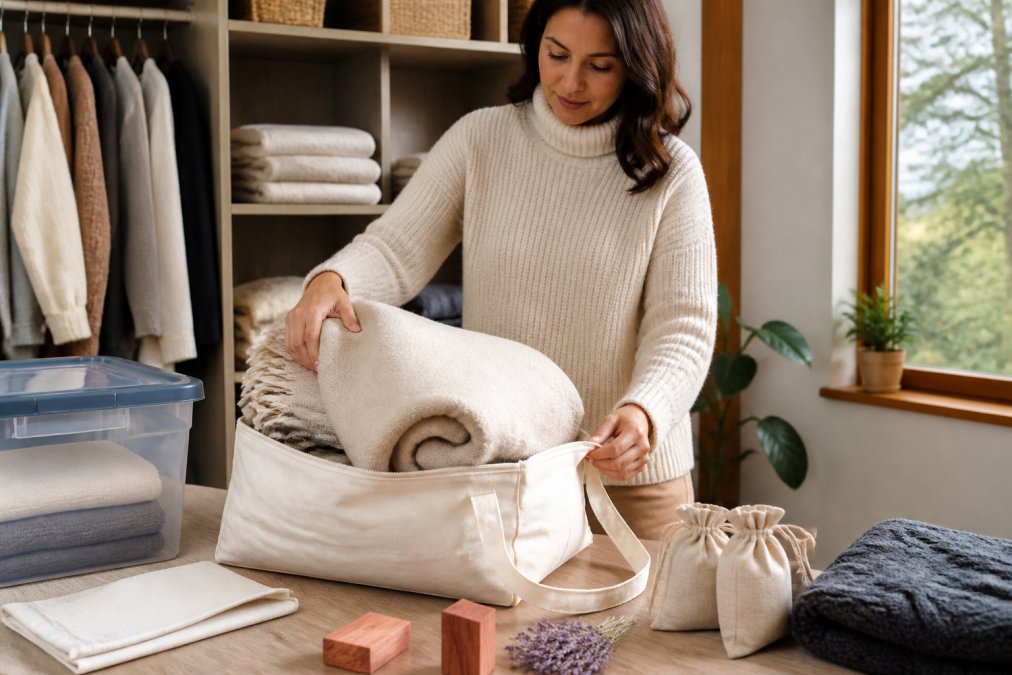
Choose a container that lets air move: a cotton storage bag or pillowcase works well. If you use a bin, leave the lid ajar or pick a ventilated one, and never use a vacuum-sealed bag, which crushes fiber and traps moisture.
For location, pick a cool, dark place with stable temperature. Avoid attics, basements, and anywhere near a water heater or furnace.
Fold Loosely to Prevent Permanent Creases
Tight folds create permanent creases because alpaca fiber has memory, a blanket folded sharply and left for months holds that line long after you unfold it.
Fold loosely and refold along different lines every few months. When storing multiple blankets, don't stack so heavily that the bottom one compresses; rotate the stack so no single blanket bears the load.
Repair and Restoration Before Storage: What to Check First
Any repair should happen before storage, not after: a small pull or loose seam left for six months can become a larger tear, and pests settle into damaged areas first.
Run a visual inspection before you pack anything away:
- Check for holes, pulls, and loose threads along edges and corners
- Look for pilling, which signals surface fiber wear
- Inspect seams and any embroidery for loose stitching
- Sniff for mustiness, which points to hidden moisture
- Check for existing pest damage before it spreads
Catch small pulls by gently working the fiber back into place with your fingers rather than cutting. For loose seams or larger damage, a professional textile repair specialist is safer, especially on heirlooms. Fixing issues now means the blanket comes out of storage ready to use.
Seasonal Rotation vs. Long-Term Storage: Two Different Protocols
Seasonal rotation and long-term storage aren't the same job, and treating them identically is a common mistake. A blanket you'll pull out again in a few months needs different handling than one going into deep storage.
Seasonal rotation means the blanket returns to use within the year: clean it lightly, air it out, fold it loosely, and store it in a breathable bag with a cedar block. Check every few weeks and refold along new lines each time.
Long-term storage means the blanket may sit untouched for a year or more, this is where acid-free tissue paper, a proper container, and a stable, dry location matter most. Label the container with the packing date and set a reminder to inspect at least twice a year; a quick visual check catches moisture, pests, or creases before they become permanent.
Climate shifts the protocol too: in a humid region, lean toward breathable storage and more frequent inspections; in a dry region, an airtight container is reasonable if the blanket went in completely dry.
At Purely Alpaca, we've been helping customers care for alpaca fiber since 2002, and the blankets that last longest are the ones stored with a little patience and the right materials. A well-cared-for alpaca blanket can last for decades, according to Alpaca Threadz's 2026 buyer's guide, which is why the storage steps above are worth the effort.
If you're adding to your collection, our Alpaca Bed Blanket and Solid Color Alpaca Throw are built from the same durable fiber that rewards careful storage.


Frequently Asked Questions
How long will an alpaca blanket last with proper storage?
A properly cared-for alpaca blanket can last for decades. The key is cleaning it before storage, using breathable cotton bags, controlling humidity, and adding natural pest deterrents like cedar blocks or lavender sachets. Cheap wool blankets are typically replaced every few years, but alpaca fiber's durability and moisture-wicking properties make it a long-term investment when stored correctly.
What is the best material for storing alpaca wool: plastic or cloth?
Most experts recommend breathable cotton bags or cotton sheets to allow airflow and prevent moisture buildup. However, some collectors prefer airtight plastic containers for complete moth protection, provided the blanket is aired out periodically. If you choose plastic, inspect and air the blanket every few months. For humid climates, breathable cotton paired with humidity control is the safer choice for preserving fiber integrity.
Can you use cedar or lavender to protect alpaca wool during storage?
Yes. Cedar blocks and lavender sachets are standard natural pest deterrents for alpaca fiber storage. These repel moth larvae without chemicals that could damage protein fibers. Replace cedar blocks every few months or sand them lightly to refresh the scent. Lavender sachets should also be refreshed seasonally. Never place repellents directly against the blanket; wrap them in acid-free tissue paper or place them near, not on, the fiber.
Should alpaca blankets be cleaned before long-term storage?
Always clean your alpaca blanket before storing it long term. Body oils, skin flakes, and food particles attract moth larvae and can cause fiber damage over time. Use spot cleaning for small marks or hand wash with a gentle detergent for a full clean. Dry completely in a shaded, well-ventilated area before folding. Storing a dirty blanket, even briefly, invites pests and moisture problems that shorten the blanket's lifespan.
Storing a natural fiber blanket well takes a bit more intention than tossing it in a plastic bin, but the payoff is a blanket that stays soft, warm, and hole-free for years. Purely Alpaca has offered alpaca home goods and apparel since 2002, with free shipping on orders of $100 or more and hassle-free returns, so you can invest in a piece worth caring for. Shop all and find a blanket built to outlast the seasons.