



Table of Contents
- Alpaca vs Merino Wool for Hiking: How the Fibers Compare
- Best Moisture Wicking Socks for Winter: What to Look For
- Where Alpaca Clothing Fits in a Winter Layering System
- Activity Intensity: When Alpaca Clothing Works Best
- The Downsides of Alpaca Clothing for Winter Hiking
- Durability, Odor Resistance, and Long-Term Value
- Conclusion
- Frequently Asked Questions
Last Updated: September 12, 2026
Alpaca vs Merino Wool for Hiking: How the Fibers Compare
Alpaca clothing is worth it for winter hiking when your priority is warmth without weight and odor control over multiple days. The fiber absorbs less water than merino, traps more heat per ounce, and resists the bacterial buildup that makes wool smell after a long trail day. Purely Alpaca has built its catalog around those properties since 2002.
Alpaca fiber is a natural protein fiber with a semi-hollow core that traps air for insulation while keeping fabric weight down. That hollow structure is why it behaves differently from merino in wet, cold conditions.
Water Absorption and Moisture Management
Alpaca absorbs less water than merino wool, which is the core of its winter performance advantage. In a 2026 hoodie comparison, Adventure Alan's fiber performance testing measured alpaca absorbing 39.9% of its weight in water against 43.4% for merino. That gap sounds small until you're four hours into a climb with a damp base layer against your skin.
Less absorbed water means faster drying, less evaporative chill when you stop, and fabric that stays closer to its dry insulating value.
Warmth-to-Weight and Thermal Regulation
Alpaca's semi-hollow fiber delivers more loft per gram than solid-core merino, so it insulates with less bulk, a real advantage under a shell.
The tradeoff: alpaca can run too warm for high-output activity in moderate temperatures, making it less versatile than merino across a wider band. That critique fits spring conditions, not genuine winter trekking.
| Property | Alpaca Fiber | Merino Wool |
|---|---|---|
| Water absorption (2026 test) | 39.9% of weight | 43.4% of weight |
| Fiber structure | Semi-hollow core | Solid core |
| Odor resistance | High | Moderate |
| Lanolin content | None | Present |
| Typical feel | Soft, can vary by grade | Soft to slightly scratchy |
Best Moisture Wicking Socks for Winter: What to Look For
The best winter hiking socks combine high alpaca content with nylon or Lycra reinforcement at the heel, toe, and arch. Pure natural fiber wears through fast under boot friction; a blend keeps alpaca's performance and adds abrasion resistance.
Look for three things before you buy:
- Alpaca content above 50% for meaningful warmth and moisture management
- Reinforced heel and toe to survive repeated boot contact
- Terry loop interior for cushioning and heat trapping
Purely Alpaca's Field Hiker Alpaca Socks hit that balance at $24.95 with a 50% alpaca, 41% acrylic, 8% nylon, 1% elastic blend. For colder trips, the Survival Over-the-Calf Sock at $38.95 runs 78% U.S. alpaca with a full terry loop and a triple-length stay-up welt, which matters when you're wearing heavy boots and long underwear.

Blend Ratios and Why They Matter
A blend ratio tells you what the sock will do over a season. Higher alpaca content means better thermoregulation and odor resistance; higher nylon content means longer wear. The 78/20/2 Survival Sock leans toward performance; the 50/41/8/1 Field Hiker toward durability and price. Neither is wrong, they serve different trips.

Where Alpaca Clothing Fits in a Winter Layering System
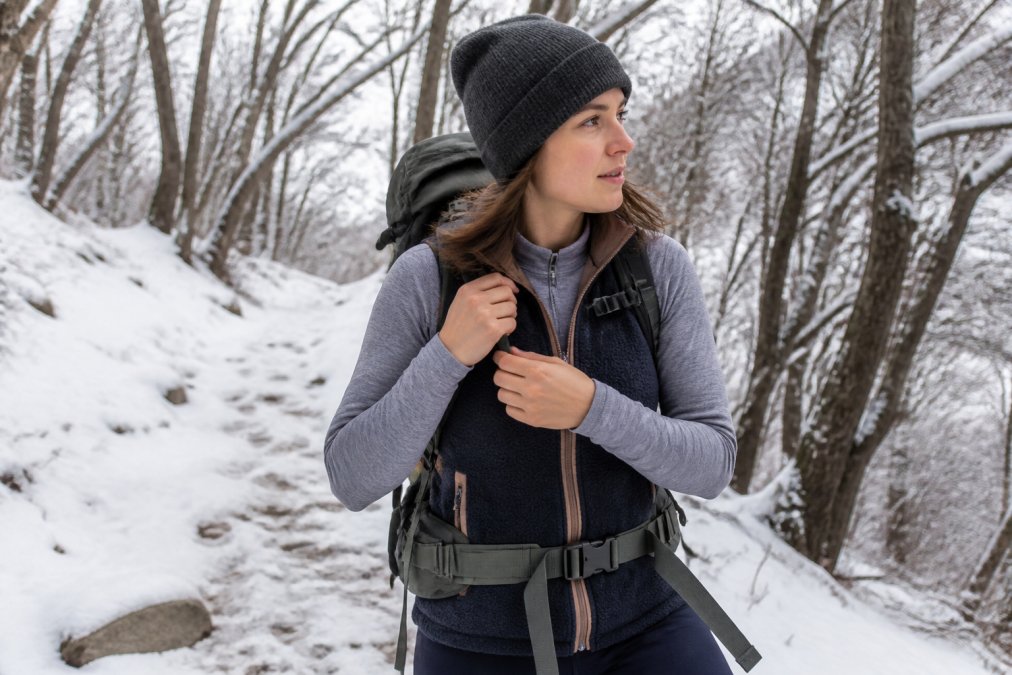
Alpaca belongs in the base and mid-layer slots, not the shell. The fiber's job is moisture management and insulation; wind and precipitation protection come from a separate outer layer. What most comparisons skip is how the three layers interact and what fabric weight each slot should carry at a given temperature.
Base Layer, Mid-Layer, and Shell: Matching Fiber to Function
A base layer's job is moving sweat off your skin. Alpaca's hydrophobic surface pushes moisture toward the outer face of the fabric, where it can evaporate or be absorbed by the next layer. The Thermal Alpaca Baselayer Top Shirt at $129.95 uses a 55% baby alpaca, 45% microfiber construction built for exactly this role.
The mid-layer adds loft and traps heat. Alpaca works here too, especially on low-output days, and pairs well with a lighter base because the layers do different jobs rather than duplicating insulation.
The shell stays synthetic or membrane-based. Alpaca is not a rain layer. A waterproof-breathable shell over an alpaca base and mid lets the fiber do its moisture work while the shell handles wind and precipitation.
Building the System by Temperature Band
Fabric weight, usually expressed in grams per square meter (GSM), determines whether a layer is right for the day. Treat these bands as a starting point and adjust for wind, sun, and personal run temperature:
- Above freezing, active hiking: A light base layer in the 150-180 GSM range, no mid-layer until you stop. Alpaca is optional here; synthetics and merino handle this band well.
- 20°F to 32°F, moderate output: A midweight alpaca base (roughly 200-260 GSM) plus a light fleece or synthetic mid. The alpaca base does the moisture work; the mid adds loft you can shed at a rest stop.
- 0°F to 20°F, low to moderate output: Midweight alpaca base plus an alpaca or lofted synthetic mid. This is the band where alpaca's warmth-to-weight advantage shows up most clearly under a shell.
- Below 0°F, low output: Heavyweight alpaca base, lofted mid, and a belay-style puffy for stops. At this point the shell is doing less work and the insulation stack is doing more.
Why the Layer Order Matters More Than the Fiber
A common mistake is buying one excellent alpaca piece and expecting it to carry the whole system. Each layer has a different job, and a fiber that excels in one slot can underperform in another. Alpaca's semi-hollow core makes it an excellent insulator and moisture mover, but it is not a wind blocker or a rain layer, putting it in the shell slot is the fastest way to a cold, wet day.
The reverse mistake is treating the base layer as disposable. It sits against skin, manages sweat, and sets up everything above it. A base layer that holds water drags the whole system down, which is why the fiber choice here matters most.
Activity Intensity: When Alpaca Clothing Works Best
Alpaca performs best at low to moderate output in cold conditions: winter trekking, snowshoeing, hunting, and cold-weather camping. At high intensity in moderate temperatures, its insulating power works against you.
The Sweat-Management Mechanism
When you hike hard, your body produces sweat to cool itself. If it stays in the base layer, it chills you when you slow down, the classic postholing-then-freezing pattern. If it moves through the fabric and evaporates, you stay dry and warm.
Alpaca's semi-hollow fiber and hydrophobic surface move moisture away from skin faster than solid-core fibers, and absorb less of it in the first place. That's why alpaca shines at moderate output in cold conditions: enough sweat to need management, not so much that insulation becomes a liability.
At high output in moderate temperatures, the math flips: you produce more heat than the fiber can shed, and the insulation that kept you warm on the climb now keeps you warm when you want to cool down. Synthetics and lighter merino blends pull ahead here.
Matching Fiber to Effort and Temperature
A practical way to think about it is a two-axis decision: how hard you'll be working, and how cold it will be.
- Low output, deep cold: Full alpaca base layer plus alpaca mid-layer. This is alpaca's home turf. Hunting, ice fishing, snowshoeing at a relaxed pace, and cold-weather camping all fit here.
- Moderate output, cold: Alpaca base layer, lighter synthetic mid-layer. The alpaca handles moisture; the synthetic mid gives you a layer you can shed without losing your moisture management.
- High output, moderate temps: Merino or synthetic base, alpaca reserved for the stop-and-rest layer. Alpaca as a belay jacket or a dry layer to pull on at lunch is a strong use case even when it's the wrong base layer for the climb.
- High output, deep cold: This is the hardest band. Many hikers run a synthetic or merino base for the climb and switch to an alpaca mid or puffy at rest stops. Carrying a dry alpaca layer to change into at the top is a common pattern.
The Stop-and-Rest Layer
One of the most underused applications of alpaca is the dry layer you pull on when you stop moving. Because the fiber absorbs less water and dries faster than merino, an alpaca mid-layer or puffy that stays in your pack until a rest stop arrives dry and warm. That's a different job than the base layer, and alpaca does it very well.
The mistake most hikers make is treating alpaca as an all-conditions fiber. It's a cold-weather specialist, very good at that job, but only when matched to the effort level and temperature you'll actually be in.
The Downsides of Alpaca Clothing for Winter Hiking
Alpaca has three honest limitations: it can be heavier than merino in comparable garments, which matters on long-distance backpacking trips; some pieces feel scratchy, varying with fiber grade; and at high output in moderate temperatures it can run too warm. None disqualify the fiber, they define its use case.
A common mistake is buying a low-grade alpaca sweater and concluding the fiber is scratchy. Fiber diameter in microns drives softness far more than fiber type; baby alpaca grades sit at the fine end and feel dramatically different from coarser adult fiber.
Durability, Odor Resistance, and Long-Term Value
Alpaca's odor resistance is its most underrated property for multi-day trips. The fiber lacks lanolin, which is the waxy substance in sheep's wool that some people react to, and its structure resists the bacteria that produce odor. One hiker testing alpaca over multiple 20-mile hikes reported zero odor retention and no significant wear, per user field reports on r/hiking.
Durability comes down to construction: reinforced heels and toes, tight knit density, and a sensible blend ratio determine whether a garment lasts three seasons or ten. Alpaca's tensile strength is respectable, but friction kills socks and cuffs, which is why nylon and Lycra percentages matter.
For sensitive skin, the lanolin-free profile is a genuine advantage. Many people who itch in standard wool find alpaca comfortable, though sensitivity varies by fiber grade and dye.
Conclusion
The real question isn't whether alpaca beats merino across the board, because it doesn't. It's whether your winter hiking looks more like a long, cold day at moderate output than a fast, warm-weather push. If so, alpaca wins on warmth-to-weight, moisture management, and odor control.
Purely Alpaca has been sourcing alpaca fiber since 2002, and the products that make the strongest case for winter hiking are the ones built for the conditions: the Thermal Alpaca Baselayer Top Shirt for next-to-skin warmth, the Survival Over-the-Calf Sock for deep-cold boot days, and the OutdoorAdventure Alpaca Sock for a machine-washable everyday option. Free shipping applies on orders of $100 or more, and returns are hassle-free if the fit isn't right.

Get started with Purely Alpaca and build a winter layering system that stays warm, dry, and odor-free through the whole season.
Frequently Asked Questions
Is alpaca wool warmer than merino wool for hiking?
Alpaca fiber is semi-hollow, which lets it trap more air and heat than merino's solid fiber structure. That structure gives alpaca a higher warmth-to-weight ratio, so a thinner alpaca layer can deliver the same insulation as a thicker merino one. For winter hiking in freezing or below-freezing conditions, that means less bulk under your shell. The trade-off is that alpaca can run too warm for high-output climbs in moderate temperatures, so it suits cold-weather trips better than mild-weather day hikes.
Does alpaca clothing hold moisture during winter hikes?
Alpaca absorbs less water than merino, which matters when you are sweating under a pack. Alpaca absorbs less water than merino. Alpaca also releases that moisture faster, so it dries against your skin instead of staying damp. That moisture management is the main reason alpaca clothing works well as a base layer in cold conditions, where wet fabric pulls heat away from your body.
What are the downsides of alpaca wool for outdoor activities?
Two stand out. First, weight: some backpackers find certain alpaca garments heavier than comparable merino or synthetic options, which matters on long-distance trips where every ounce counts. Second, warmth: alpaca insulates so well that it can feel like too much during high-output activity in moderate temperatures. Texture also varies by fiber quality, and a lower-grade garment can feel scratchy. None of these are dealbreakers, but they explain why alpaca suits cold-weather hiking better than warm-weather use.
Are alpaca socks better than merino wool socks for cold weather?
For winter hiking, alpaca socks hold an edge in warmth and odor resistance. Alpaca's semi-hollow fibers trap heat efficiently, and the fiber lacks lanolin, so it resists odor buildup over multi-day trips. Look for a blend with nylon or Lycra for durability and shape retention, since 100% alpaca socks wear out faster at the heel and toe. The Field Hiker Alpaca Socks and OutdoorAdventure Alpaca Sock both pair alpaca with synthetic fibers for that balance of warmth, moisture wicking, and abrasion resistance.
How does alpaca fiber durability compare to synthetic hiking gear?
Synthetics win on raw abrasion resistance, but alpaca holds up well when blended correctly. A sock like the Survival Sock uses 78% U.S. alpaca with 20% nylon and 2% Lycra, so the nylon outer layer takes the friction inside a boot while the alpaca terry loops handle insulation and moisture. Pilling is the main long-term concern with any natural fiber, and it shows up most on high-friction spots. Proper care, including machine washing inside out on a gentle cycle, extends the life of alpaca garments considerably.