


Table of Contents
- What You'll Need Before You Shop
- What Is Baby Alpaca Fiber and Why It Matters for Your Baby
- Is Alpaca Wool Itchy for Sensitive Skin?
- Step-by-Step: How to Choose Hypoallergenic Alpaca Baby Clothing
- How to Care for Alpaca Baby Clothes So They Last
- Common Mistakes to Avoid When Buying Hypoallergenic Alpaca Baby Clothing
- Frequently Asked Questions
Last Updated: September 13, 2026
What You'll Need Before You Shop
The global alpaca apparel and accessories market is projected to grow from $805.2 million in 2026 to $1,412.0 million by 2033, driven in large part by parents seeking gentler natural fibers for their children, according to Grand View Research's alpaca apparel market analysis. That surge matters if you're learning how to choose hypoallergenic alpaca baby clothing, because a growing category also attracts low-quality imitations.
At Purely Alpaca, we've sold alpaca goods since 2002, and the questions we hear most from parents are always the same: will this actually be soft enough, and how do I know it's real?
Before you buy anything, gather a few basics:
- Your baby's approximate measurements (chest, arm length, foot length)
- A note of any known skin sensitivities in your family
- The garment's fiber content and micron count, if listed
- The brand's care instructions and return policy
- Your budget, since genuine baby alpaca costs more than synthetic alternatives
With those in hand, the rest of this guide walks through fiber grades, itch testing, and label verification so you can shop with confidence.

What Is Baby Alpaca Fiber and Why It Matters for Your Baby
Baby alpaca fiber is the fine undercoat fleece harvested from an alpaca's first shearing, classified by fiber diameter rather than the animal's age. It typically measures 19 to 22 microns, a range soft enough for direct contact with infant skin (Tukuy Brand's fiber grading guide).

That fineness is the whole point. Coarser fibers have a wider scale structure, and those scales are what create friction against skin. Finer fibers lie flatter, reducing friction and the itch response that follows.
Fiber Grades: Superfine vs. Baby Alpaca
Superfine and baby alpaca are often confused, but they describe different things. Superfine refers to a micron range, usually around 20 to 22 microns, while baby alpaca specifically denotes fiber from the first clip. Both are soft, but baby alpaca tends to be the finer of the two and commands a higher price. If a label uses "baby alpaca" loosely without a micron count, treat it as marketing until you can verify the fiber grade another way.
Is Alpaca Wool Itchy for Sensitive Skin?
For most people with sensitive skin, alpaca wool is not itchy, because it lacks lanolin, the waxy substance found in sheep's wool that triggers many wool reactions. That's the short answer. The longer one involves fiber structure and how the garment was processed.
Alpaca fiber is a natural protein fiber with a smoother scale structure than sheep's wool, which reduces the friction that causes irritation. A 2026 market report found that alpaca fiber offers 30% higher thermal insulation efficiency and 18% lower moisture retention than sheep's wool, both factors that help sensitive skin stay comfortable (Purely Alpaca's fiber and allergy research).
That said, no fiber suits everyone. Some knitters report alpaca feels "finicky" and can still irritate certain individuals depending on personal tolerance, so patch testing before a full day of wear is worth the effort.
The Lanolin Factor: Why Alpaca Wool Rarely Causes Reactions
Lanolin is the residue most people are actually reacting to when wool makes them itch. Alpaca fiber contains little to none of it, which is why dermatologists often suggest alpaca as a wool alternative for sensitive skin. If you've reacted badly to sheep's wool before, that history doesn't automatically predict a reaction to alpaca, but it does mean you should test a small area first.
Step-by-Step: How to Choose Hypoallergenic Alpaca Baby Clothing
Follow these four steps in order, and you'll filter out most low-quality or mislabeled products before you ever add them to a cart.
Step 1: Check the Micron Count and Fiber Grade
Ask for the micron count first. Anything at or below 22 microns qualifies as baby alpaca and should feel soft against infant skin. If a seller can't tell you the micron range, that's a red flag. Reputable makers list it because it's the single clearest indicator of softness and skin tolerance.
Step 2: Verify the Garment Label and Fiber Content
Read the garment label closely for the exact fiber percentage. A label reading "100% baby alpaca" is different from one reading "alpaca blend" or "wool blend with alpaca." Blends often mix in coarser fibers or synthetics that can reintroduce irritation, so if pure softness is the goal, look for a pure alpaca claim backed by a specific grade.
Step 3: Test for Tactile Softness and Drape
Hold the fabric against the inside of your wrist or your neck, the two most sensitive spots for testing hand-feel. Genuine baby alpaca should feel smooth and slightly cool, with a soft drape rather than a stiff, scratchy hand. Rub it gently against your skin for a few seconds. If you feel prickle, walk away.
Step 4: Ask About Dye Safety and Chemical Processing
This is the step most buyers skip. Ask whether the dyes are low-impact or OEKO-TEX certified, since residual chemicals from cheap dyeing can irritate a baby's skin even when the fiber itself is gentle. Natural or undyed alpaca is the safest bet for newborns, and organic processing standards are worth confirming with the seller before you buy.
How to Care for Alpaca Baby Clothes So They Last
Baby alpaca is more durable than its softness suggests, but it fails in predictable ways when treated like cotton. The two most common outcomes are pilling (small fiber balls on the surface) and felting (permanent shrinkage and matting), and both are almost always caused by heat, agitation, or the wrong detergent.
Washing Without Causing Pills or Felting
Hand wash in cool water, under 85°F, with a mild, pH-neutral detergent formulated for wool and silk. Standard laundry detergent is often alkaline and contains enzymes that break down protein fibers, which is exactly what alpaca is. Avoid fabric softener entirely; it coats the fiber and reduces the breathability that makes alpaca worth buying.
If you use a washing machine, use a mesh laundry bag on the gentlest cycle with the lowest spin setting, and never wash alpaca with towels, denim, or anything with zippers. Agitation from heavier fabrics is the leading cause of pilling. Skip the dryer completely: heat and tumbling cause alpaca to felt, and a felted garment cannot be restored.
Drying and Reshaping
Press the water out by rolling the garment in a clean towel rather than wringing it. Wringing stretches the fiber and distorts the knit. Lay the garment flat on a dry towel, away from direct sun and radiators, and reshape it to its original dimensions while damp. Hanging wet alpaca is the fastest way to stretch out shoulders and necklines permanently.
Managing Pills Without Damaging the Knit
Some pilling in the first few wears is normal on any fine natural fiber, because short fibers work their way to the surface. Remove pills with a fabric shaver or a fine sweater comb, working in one direction with light pressure. Do not pull pills off by hand, that drags more fiber loose and accelerates the problem. After the first two or three de-pilling sessions, most baby alpaca knits stabilize and pill far less.
Storing Between Seasons
Fold, don't hang. Store clean garments in a breathable cotton bag or a pillowcase, and add cedar blocks or dried lavender to deter moths. Avoid sealed plastic bins, which trap residual moisture and can encourage mildew, a real risk in humid climates. Wash before storing, because milk residue and body oils are what attract pests in the first place.
A Realistic Lifespan
With proper care, a well-made baby alpaca garment typically holds its shape and softness through a full season of regular wear, and often through two children if stored properly.
Common Mistakes to Avoid When Buying Hypoallergenic Alpaca Baby Clothing
The biggest mistake parents make is trusting the word "alpaca" on a label without checking the grade or percentage. "Alpaca" alone tells you nothing about micron count, blend ratio, or processing, and plenty of products use a small alpaca percentage to justify a premium price.
A second common error is assuming all natural fibers behave the same. Alpaca is not sheep's wool, and treating a wool sensitivity as proof that alpaca will also irritate is a reasonable but often incorrect assumption, given the lanolin difference.
Finally, don't overlook the dye question. A beautifully soft, correctly graded garment can still cause irritation if it was processed with harsh chemicals, so dye safety belongs on your checklist right alongside fiber grade.
Choosing hypoallergenic alpaca baby clothing comes down to a handful of verifiable details: micron count, fiber percentage, tactile softness, and dye safety. Most labels won't volunteer all four, which is exactly why a short list of questions separates a good purchase from a regrettable one.
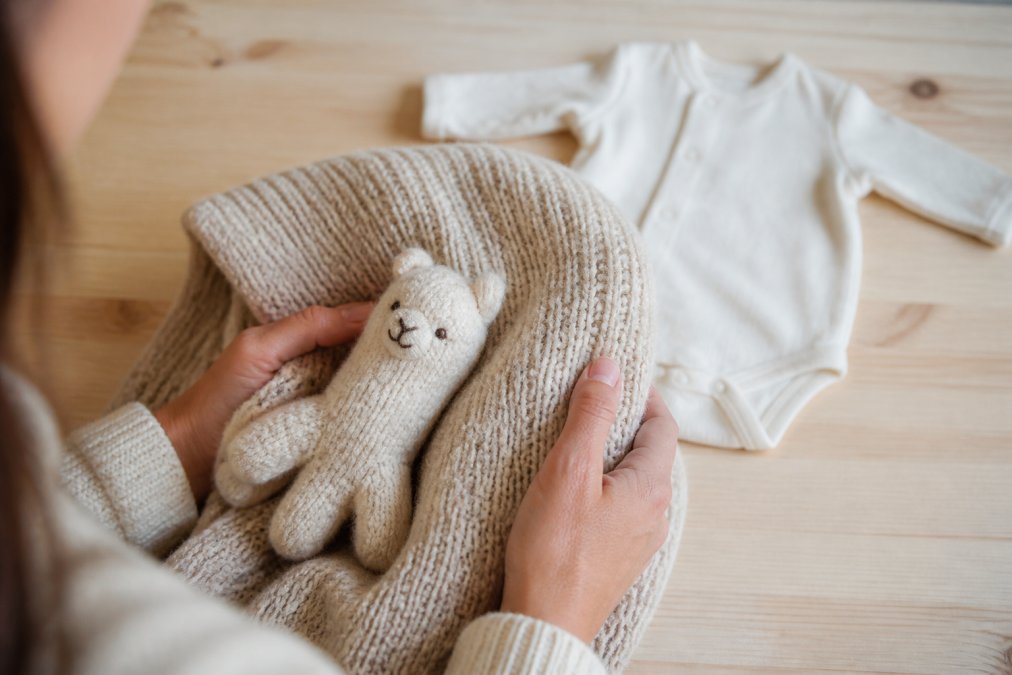
Purely Alpaca has offered alpaca goods since 2002, and our baby alpaca line includes the 100% Baby Alpaca Receiving Blanket and the Baby Alpaca Grasp Toy, both made from pure baby alpaca with no wool blends. If you want softness you can verify rather than guess at, browse our full collection and see the difference for yourself.
Frequently Asked Questions
Can people allergic to wool wear alpaca?
Most people with wool sensitivity can wear alpaca because alpaca fiber contains no lanolin, the wax that often triggers reactions to sheep's wool. Alpaca fiber has superior performance compared to merino and synthetic fibers, which reduces irritation from trapped dampness. However, some individuals with very sensitive skin may still find alpaca finicky. Always test a small area first and choose baby alpaca (19-22 microns) for the softest feel.
Is alpaca wool itchy for sensitive skin?
Alpaca wool is generally not itchy for sensitive skin because its fibers have a smoother scale structure than sheep's wool, causing less friction. Baby alpaca fiber measures 19 to 22 microns, which classifies it as non-itchy and safe for direct contact with infant skin. Still, individual tolerance varies, so patch-test any new garment before regular use.
How do I know if baby clothing is truly hypoallergenic?
Check the garment label for 100% baby alpaca fiber and look for certification that no harsh dyes or chemical finishes were used. Pure alpaca is naturally hypoallergenic because it lacks lanolin, but blends with synthetic fibers or treated wool can introduce irritants. Ask the seller for micron count (19-22 for baby alpaca) and dye safety details. If the label says 'alpaca blend' without specifying percentages, treat it as a red flag and keep looking.
Does alpaca wool contain lanolin?
No, alpaca wool does not contain lanolin. Lanolin is a waxy substance produced by sheep's sebaceous glands to waterproof their fleece, and it's a common cause of wool sensitivity and irritation. Alpaca fiber lacks lanolin entirely, which is why it's considered hypoallergenic and suitable for many people who react to sheep's wool. This also means alpaca garments don't have the typical 'wool smell' and feel softer against the skin.