


Table of Contents
- Alpaca Wool vs Sheep Wool for Home Decor: The Quick Verdict
- Alpaca Wool and Sheep Wool: How the Two Fibers Differ
- Choosing an Alpaca Wool Blanket for Your Home
- When a Sheep Wool Blanket Still Makes Sense
- Alpaca Wool Benefits and Disadvantages for Home Decor
- How to Care for an Alpaca Blanket: Washing, Drying, and Stain Removal
- Cost, Long-Term Wear, and Sourcing in Real Homes
- Conclusion: Which Fiber Belongs in Your Living Room?
- Frequently Asked Questions
Last Updated: October 14, 2026
Alpaca Wool vs Sheep Wool for Home Decor: The Quick Verdict
For most homes, alpaca wool wins on softness, warmth-to-weight, and drape, while sheep wool wins on price, elasticity, and abuse tolerance. At Purely Alpaca, we have sold alpaca home textiles since 2002, and that split holds up in real living rooms. The right fiber depends on the room: a throw on a reading chair has different demands than a rug under a dining table.
Alpaca Wool and Sheep Wool: How the Two Fibers Differ
Alpaca wool is the fleece of the alpaca, a South American camelid, prized for hollow fibers that trap air for insulation. Sheep wool is the fleece of domestic sheep, built around a crimped, elastic fiber with high natural lanolin content. Alpaca's hollow core insulates well at low weight; sheep wool's crimp holds shape and rebounds underfoot.
Fiber Diameter, Micron Count, and Softness
Fiber diameter, measured in microns, decides how a textile feels against skin: finer fibers feel smooth, coarser fibers poke and itch. Alpaca is generally finer than most sheep wool, so it feels silkier and rarely triggers wool's itchiness.
Baby alpaca, the grade used in our throws, sits at the fine end of the scale. A study of Huacaya alpacas indexed by PubMed Central examined wool thickness and medullation, the traits that drive softness and insulation.
Warmth, Weight, and the Weight-to-Warmth Ratio
Alpaca delivers more warmth per ounce than sheep wool. The Natural Fibre Company notes that alpaca has thermal insulation roughly 30% better than wool and cashmere, crediting its hollow fiber structure (Alpaca Myths: Or Are They?, 2016).
In practice, a 1.25 lb alpaca throw can feel as warm as a heavier sheep wool blanket, the whole point for a sofa or bed.

| Attribute | Alpaca Wool | Sheep Wool |
|---|---|---|
| Softness | Finer, silkier, low itch | Varies; coarser breeds itch |
| Warmth per ounce | Higher (hollow fiber) | Lower, denser |
| Elasticity | Less stretch, holds drape | High stretch, rebounds |
| Moisture | Wicks and dries faster | Retains more moisture |
| Best for | Throws, bed blankets | Rugs, upholstery, high-traffic |
Choosing an Alpaca Wool Blanket for Your Home
An alpaca wool blanket is the easiest way to test the fiber in your own space: it sits against skin, gets used daily, and shows you within a week whether the softness claim holds.
Start with the room. A living room throw should drape softly over a chair or sofa arm; a bed blanket needs to cover a mattress without bulk. Our Solid Color Alpaca Throw is 100% baby alpaca at 71 by 51 inches and 1.25 lbs, which suits a sofa or chair. The Herringbone Alpaca Throw adds a textured weave in the same build.

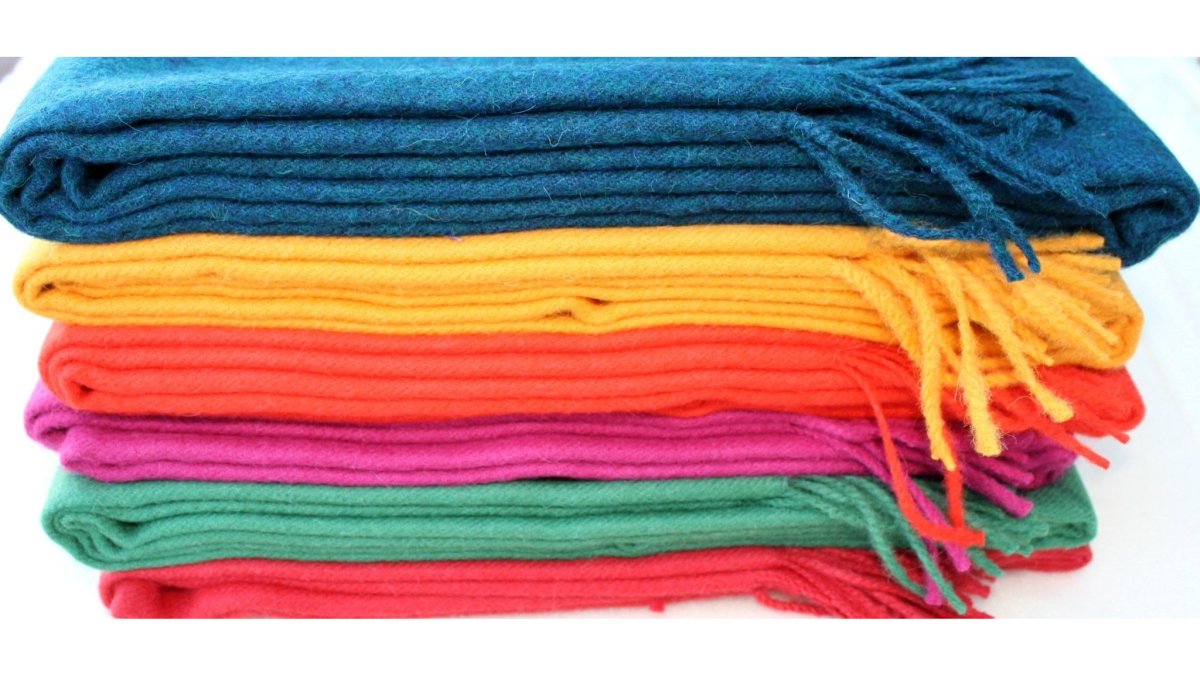
For a full bed, the Alpaca Bed Blanket runs 80% alpaca and 20% acrylic, sized for mattresses up to queen, and is machine washable on a gentle cold cycle. The Aurora Knit Alpaca Throw uses 89% alpaca and 11% nylon for a rib-knit texture that resists stretching.

When a Sheep Wool Blanket Still Makes Sense
A sheep wool blanket is the better buy when price, stretch, or heavy wear matter more than softness.
Budget is the other factor: sheep wool costs less per square foot at nearly every grade, which is why it dominates mass-market blankets and rugs.
The trade-off is itch. Coarser sheep wool grades can irritate sensitive skin, and higher lanolin content means more aggressive scouring during processing, according to Purely Alpaca's fiber care comparison.
Alpaca Wool Benefits and Disadvantages for Home Decor
Alpaca wool benefits and disadvantages come down to a simple trade: you pay more for softness, warmth per ounce, and drape, and accept more careful handling.
Benefits:
- Warmer per ounce than sheep wool, so less bulk on a bed or sofa
- Finer fibers mean far less itchiness, which suits sensitive skin
- Natural drape makes throws and cushions look tailored, not stiff
Disadvantages:
- Higher upfront cost than comparable sheep wool
- Less elasticity, so it can stretch if hung or pulled
- Requires gentler washing than most synthetic or sheep wool textiles
How to Care for an Alpaca Blanket: Washing, Drying, and Stain Removal
Most care guides stop at "cold water, mild detergent." That is the right start, but how you clean an alpaca textile depends on three things the fiber label will not tell you: the blend, the construction, and where the piece lives. A tightly woven throw and a loose-knit blanket need different handling even if both are 100% alpaca.
Care by fiber and construction
- 100% baby alpaca, woven (like our Solid Color and Herringbone throws): Dry clean or hand wash. The fine fibers and open weave are most vulnerable to agitation, so treat these as the most delicate pieces in the house.
- Alpaca blended with acrylic or nylon (like our bed blankets): The synthetic share adds shape recovery, so a gentle machine wash on cold is usually safe. Check the label first, the blend buys that convenience, not the alpaca.
- Sheep wool, tightly woven or felted: More forgiving because of its crimp and elasticity, but higher lanolin means it can hold odor and attract moths if stored dirty.
The wash routine that works
- Shake the piece outside to release dust and loose fiber before it touches water.
- Fill a basin with cold water and a capful of mild, pH-neutral detergent. Skip enzyme cleaners, which can damage protein fibers.
- Submerge and press gently for two to three minutes. Never wring, twist, or scrub.
- Rinse in cold water until it runs clear. Do not run water directly onto the fabric.
- Roll in a clean towel to press out water, then lay flat to air dry, reshaping to size.
- Tumble on low for 5 to 10 minutes only if the label allows, to restore fluff.
Stain removal by type
Blot immediately with a clean cloth and cold water. Do not rub, rubbing drives the stain into the fiber and raises the surface, turning a small spill into a permanent fuzzy patch.
- Coffee, tea, wine: Blot, then dab with cold water and a drop of mild detergent. Work from the outside of the stain inward so you do not spread the ring.
- Grease or oil: Sprinkle cornstarch or baking soda on the spot, let it sit 15 to 30 minutes to absorb, then brush off and follow with a mild detergent dab.
- Pet accidents: Blot, then rinse with cold water and a diluted white vinegar solution. Do not use hot water or ammonia-based cleaners, which set protein stains and can damage the fiber.
Storage and moth prevention
Store clean, fully dry pieces folded in a breathable cotton bag or pillowcase with cedar blocks or lavender sachets. Never use a sealed plastic bin, trapped moisture invites mildew and moths. Rotate folded pieces every few months so creases do not become permanent, and keep them out of direct sunlight, which fades natural dyes.
When to call a professional
For a large spill on an heirloom or tightly woven piece, or any stain you cannot identify, call a dry cleaner who handles woolens. A $15 to $30 professional cleaning is cheaper than replacing a throw you tried to fix yourself.
Cost, Long-Term Wear, and Sourcing in Real Homes
"Alpaca lasts longer" is not useful if you are deciding between a throw for a guest room and a rug for a hallway your dog runs down twice a day. So let us break it down by product, by room, and by what wears out first.
Long-term wear by product type
- Throws on a reading chair or sofa arm: Light, even use. These hold up for years with minimal pilling if the weave is tight. The failure point is usually a pulled loop from a zipper or pet claw, not fiber breakdown.
- Bed blankets: Sat on, tugged, and washed more often. Expect edge wear and surface fuzz first. A small acrylic or nylon share extends life here by adding shape recovery.
- Cushion covers: High friction against sofa backs and bodies. Loose weaves pill at the corners; tight weaves and blends hold better. Removable, spot-cleanable covers are the practical choice.
What actually wears out first
- Pilling: Caused by friction on loose fibers. Tight weaves and blends reduce it. A pill shaver or fine sweater comb removes existing pills without damaging the fabric.
- Shedding: More common in loosely spun yarns. A soft-bristle brush helps, and shedding usually decreases after the first few cleanings.
- Matting: Compressed, tangled fiber, common in rugs and cushions under repeated pressure. Regular rotation and a rug pad are the best prevention.
Real-home scenarios
- Homes with children: Choose machine-washable blends for anything that will be spilled on. Keep delicate 100% baby alpaca throws out of the playroom.
- Homes with pets: Tight weaves and blends resist claw snags better than loose knits. Keep a lint brush handy, and trim snags rather than pulling them.
- High-traffic rooms: Sheep wool for rugs and upholstery; alpaca for throws and accent cushions where softness matters more than abuse tolerance.
Cost and value over time
Alpaca costs more upfront than comparable sheep wool at nearly every grade. The value case is not that alpaca is cheaper, it is that a well-cared-for alpaca throw on a low-traffic chair can last many years without pilling or odor, so the per-year cost narrows against a cheaper blanket you replace every couple of seasons. Sheep wool wins on upfront price and on rugs and upholstery, where durability and rebound reduce replacement frequency.
Sourcing and environmental impact
Alpacas are shorn rather than slaughtered for their fiber, graze with relatively low impact on pasture, and produce a fleece that needs less chemical processing because it carries little lanolin compared with sheep wool. Sheep wool's higher lanolin means more scouring, a real processing cost and environmental factor. Look for transparency about where the fiber is grown and spun, origin and workshop relationships tell you more about welfare and quality than a broad "natural" claim.
Conclusion: Which Fiber Belongs in Your Living Room?
Both fibers earn a place, just not in the same room. Sheep wool belongs where stretch, price, and heavy wear win: rugs, upholstery, mudroom blankets. Alpaca belongs where softness, warmth per ounce, and drape matter most, the living room and the bedroom.
Choosing between them gets easier once you stop asking which fiber is better and start asking which room you are buying for.
Frequently Asked Questions
What are the disadvantages of alpaca wool?
Alpaca wool is strong but less elastic than sheep wool, so it can stretch out of shape in high-stress pieces like upholstery. It also costs more, with Purely Alpaca throws running $169.95 to $219.95. Some alpaca pieces need dry cleaning or careful hand washing, and the fiber can pill or shed lightly with friction. None of these are dealbreakers for throws and blankets, but they matter if you want a fiber that bounces back or cleans up easily.
Are alpaca blankets warmer than sheep wool blankets?
Yes, by most accounts. Alpaca's hollow fiber creates air pockets that trap heat, and a 2016 report from The Natural Fibre Company states alpaca has thermal insulation about 30% better than wool and cashmere. That said, the difference shows up most in cold rooms and drafty spaces. A sheep wool blanket is still plenty warm; it just tends to be heavier for the same level of warmth.
How do you care for an alpaca wool blanket?
It depends on the construction. Purely Alpaca's 100% baby alpaca throws, such as the Solid Color and Herringbone designs, should be dry cleaned or hand washed. Their 80% alpaca bed blankets can be gently machine washed or hand washed in cold water with a light detergent, then line dried; five to ten minutes in a low dryer adds fluff. Always check the label first, and never use hot water or harsh detergent on alpaca wool.
Is alpaca wool softer than sheep wool?
Generally, yes. Alpaca fibers are finer and smoother than most sheep wool, which is why alpaca wool feels silky rather than scratchy. The difference comes down to micron count: finer fibers bend more easily against skin and cause less itchiness. That matters for anyone with sensitive skin who has reacted to a sheep wool blanket. Not every sheep wool is coarse, but alpaca starts softer on average.