





Table of Contents
- How Synthetic Fabrics Cause Skin Irritation
- Understanding Textile Contact Dermatitis
- Polyester Allergy Symptoms and Synthetic Fiber Reactions
- Fabric Allergy Treatment and Symptom Management
- Best Fabrics for Eczema and Sensitive Skin
- Diagnosing and Tracking Textile Reactions
- Prevention and Practical Solutions
- Frequently Asked Questions
Last Updated: October 19, 2026
How Synthetic Fabrics Cause Skin Irritation
Why synthetic fabrics cause skin irritation involves multiple interconnected factors beyond the fibers themselves. The problem isn't simply that polyester or nylon touch your skin, it's how these materials interact with heat, moisture, and chemical finishes applied during manufacturing.
Research shows that synthetic fabrics and wool tend to cause itching and irritate skin, while studies on fabric selection for sensitive skin consistently recommend cotton and natural alternatives for those prone to reactions.

The Role of Textile Chemicals and Finishes
Textile dyes, formaldehyde resins, and finishing chemicals are often the primary culprits behind textile contact dermatitis.
According to research on allergies caused by textiles, sweating caused by light textiles can increase skin sensitivity and the probability of skin irritation.
Formaldehyde resins, commonly used to prevent wrinkling in synthetic garments, are particularly problematic. They're volatile, releasing fumes even after manufacturing, and when trapped against warm skin these compounds accumulate and trigger reactions.
Breathability, Heat, and Moisture Trapping
Synthetic fibers lack the breathability that lets moisture vapor escape.
Heat amplifies the problem: trapped warmth raises skin temperature, increasing blood flow and intensifying inflammation. Sweat itself isn't the enemy, it's the combination of sweat, trapped heat, friction, and chemical finishes.
Limited breathability also means your skin can't regulate its pH effectively. Natural fibers allow the skin's acid mantle to function, but synthetics disrupt this balance, leaving skin more vulnerable to both irritant and allergic contact dermatitis.
Understanding Textile Contact Dermatitis
Textile contact dermatitis is a skin reaction triggered by direct contact with clothing fibers or textile chemicals. Unlike a food allergy that affects your whole system, it is localized, appearing only where the garment touches your skin.
Irritant Contact Dermatitis vs. Allergic Contact Dermatitis
Irritant contact dermatitis develops when synthetic fabrics or their chemical finishes directly damage your skin barrier through repeated exposure.
Allergic contact dermatitis, by contrast, requires prior sensitization. Your immune system has learned to recognize a specific chemical as a threat.
The practical difference matters for treatment. Irritant reactions improve once you remove the irritant and let the skin barrier heal.
Common Symptoms and Where Rashes Appear
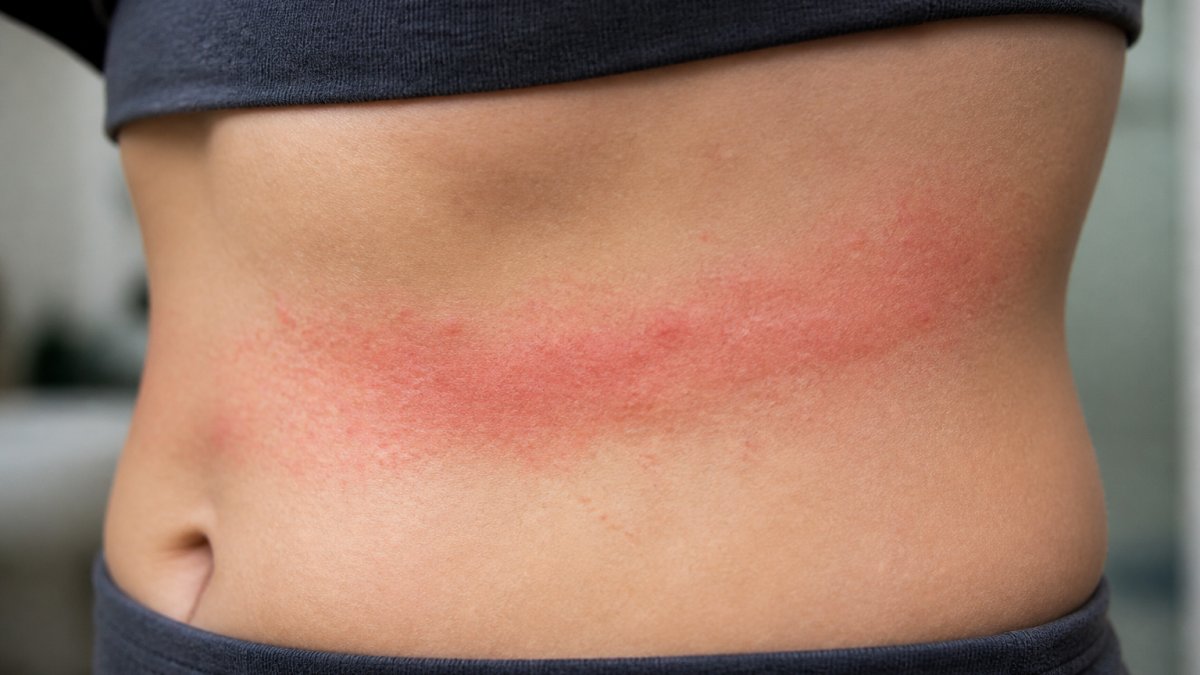
Textile contact dermatitis typically appears as itching, redness, and inflammation in areas of direct contact. The rash often follows the pattern of your clothing: a band around your waist from tight jeans, marks on your shoulders from bra straps, or irritation where a synthetic shirt sits.
Itchy rash symptoms usually begin within hours to days of wearing the offending garment. The itching can be intense enough to disrupt sleep or distract you throughout the day. Scratching worsens inflammation, creating a cycle where the rash spreads and deepens.
Polyester Allergy Symptoms and Synthetic Fiber Reactions
Polyester reactions are one of the most common forms of synthetic fabric irritation. Polyester doesn't breathe, creating conditions where both chemical finishes and friction-based irritation thrive.
Polyester allergy symptoms include localized itching that intensifies with heat or sweating, redness that may appear hours after removing the garment, and sometimes small raised bumps or patches. Nylon and acrylic trigger similar reactions through comparable mechanisms: poor breathability, chemical finishes, and friction against sensitive skin.
The problem compounds when synthetics are blended with small percentages of natural fibers. A "cotton blend" that's 85% polyester still traps moisture like pure synthetic fabric, yet consumers assume the cotton content provides protection it cannot deliver.
Fabric Allergy Treatment and Symptom Management
Once textile contact dermatitis develops, the immediate priority is stopping contact with the irritant. Remove the garment, switch to breathable natural fibers, and wash the affected area gently with lukewarm water and mild cleanser to remove chemical residue.
Topical treatment focuses on reducing inflammation and restoring your skin barrier. A fragrance-free moisturizer applied to damp skin locks in hydration, and for more significant reactions a mild topical corticosteroid can reduce itching and inflammation.
Antihistamines taken orally can help manage itching, particularly if the reaction is allergic rather than purely irritant. However, they won't resolve the underlying problem, you still need to identify and avoid the offending garment or fabric.
Soft Touch Therapeutic Alpaca Slouchy Socks →
Best Fabrics for Eczema and Sensitive Skin
Natural fibers consistently outperform synthetics for people with sensitive skin, eczema, or atopic dermatitis. The research is clear: studies examining fabrics for atopic dermatitis show that cotton is traditionally recommended, while synthetic fibers and wool tend to worsen symptoms.
Why Natural Fibers Perform Better
Cotton breathes naturally, allowing moisture vapor to escape and preventing the heat-and-sweat trap synthetics create. Cotton fibers themselves don't trigger allergic responses, though dyes and finishes applied to cotton can.
Alpaca fiber offers benefits beyond standard cotton. Unlike wool, which can feel scratchy and trigger irritation, alpaca has a smooth fiber structure that doesn't cause the itching associated with coarser natural fibers.
Linen and silk are other natural alternatives, though less practical for everyday wear or thermal applications.
Diagnosing and Tracking Textile Reactions
If you suspect textile contact dermatitis, first separate a true allergy from irritation, because the two require different strategies. A clinician typically starts with a focused history: which garments touch the affected skin, how soon symptoms appear, whether sweating or heat worsens them, what detergents and fabric softeners you use, and whether the rash fades when you stop wearing the item.
What Patch Testing Can and Cannot Tell You
Patch testing is the reference method for allergic contact dermatitis. A dermatologist applies small amounts of suspected allergens under adhesive patches, usually on the back, and reads the sites at 48 hours and often again at 72 to 96 hours.
Patch testing has limits. It identifies delayed allergic reactions, not irritant reactions, so a negative test does not rule out a fabric problem.
A Practical Exposure Diary
Before or alongside a specialist visit, a simple diary often identifies patterns faster than testing. Record for each reaction:
- Garment details: brand, fiber content from the label, color, and whether it is new or recently laundered.
- Body areas affected: note the exact location and whether it matches seams, waistbands, straps, or labels.
- Activity and sweating: what you were doing, for how long, and whether you overheated.
- Laundry products: detergent, fabric softener, dryer sheets, and any added scent boosters.
A common pattern is a reaction that appears only with snug synthetic garments worn during activity, pointing toward friction, heat, and moisture rather than a fiber allergy. Another is a reaction to one color of the same garment style, pointing toward dyes. After two to three weeks, bring the log to a clinician; it often beats a single office visit because it captures real-world exposure.
Prevention and Practical Solutions
The most effective prevention strategy is reducing contact with the specific triggers that affect you, which isn't always the same as avoiding every synthetic garment. Fiber, chemical finishes, garment construction, and laundry practices each contribute, and addressing the right one matters more than a blanket rule.
Laundry and Garment-Care Troubleshooting
Residue from laundering is an underrecognized trigger. Try these steps when you suspect a laundry-related reaction:
- Wash new garments before wearing. New synthetic clothing can carry residual dyes, resins, and sizing agents. A first wash removes much of the surface residue, and a second wash helps with heavily finished items.
- Switch to a fragrance-free, dye-free detergent. Added fragrances and dyes are common irritants and occasional allergens.
- Skip fabric softener and dryer sheets if you are reacting. These leave a coating on fibers that can trap irritants against skin and reduce moisture wicking.
- Use an extra rinse cycle on synthetic and dark-colored garments to flush out detergent residue.
Fabric Construction and Garment Design
Two garments with identical fiber content can feel completely different on skin. Weave and knit density affect breathability; tight, densely woven synthetics trap more heat than open knits. Seams, tags, and elastic trims create focused points of friction, which is why reactions often appear at waistbands, underarms, and shoulder straps. Fit matters too: snug synthetics hold moisture and heat against skin, while looser cuts allow air movement.
Evidence-Based Fabric Comparisons
No fiber is universally best, and individual responses vary. The table below summarizes common trade-offs for sensitive skin.
| Fabric | Breathability | Moisture Handling | Texture | Notes for Sensitive Skin |
|---|---|---|---|---|
| Cotton | High | Absorbs moisture but dries slowly | Smooth | Widely recommended; dyes and finishes can still irritate |
| Polyester | Low to moderate | Wicks but retains odor and heat | Smooth to slick | Finishes and disperse dyes are common suspects |
| Nylon | Low | Retains moisture | Smooth | Similar concerns to polyester |
| Wool (fine merino) | Moderate | Wicks well | Can feel scratchy | Tolerated by some, irritating to others |
| Alpaca | Moderate to high | Wicks well | Smooth, low prickle | Often tolerated by people who react to wool |
| Linen | High | Absorbs and dries quickly | Textured | Breathable but can feel rough initially |
Treat the table as a starting point, not a verdict. A fabric that works for one person may still trigger a reaction in another because of dyes, finishes, or fit.
When Symptoms Need Prompt Medical Assessment
Most mild, localized rashes improve within days of removing the trigger. Seek prompt evaluation if a rash spreads beyond the contact area, is severe or blistering, shows signs of infection such as warmth, pus, or increasing pain, persists more than two weeks despite avoidance, or comes with fever or systemic symptoms. A dermatologist can distinguish textile dermatitis from eczema, psoriasis, or fungal infection, which may need different treatment.
Frequently Asked Questions
Why do synthetic fabrics make my skin itch?
Synthetic fabrics cause itching through three main mechanisms. First, chemical finishes applied during manufacturing, such as formaldehyde resins, dyes, and tanning agents, can trigger irritant contact dermatitis or allergic reactions. Second, synthetic materials like polyester and nylon trap moisture and heat against your skin, creating an environment where irritation worsens. Third, the friction between synthetic fibers and skin, combined with limited breathability, disrupts your skin barrier. Research shows that sweating caused by light textiles increases skin sensitivity and the probability of skin irritation.
Can you become allergic to polyester later in life?
Yes. Allergic contact dermatitis from textile dyes and finishes can develop at any age, even if you've worn polyester for years without problems. Your immune system may become sensitized to a specific chemical additive over time, or you might encounter polyester treated with a chemical you haven't encountered before. Polyester allergy symptoms include itching, redness, and rash that appear within hours or days of wearing the garment. If you suddenly develop a reaction to polyester you've tolerated before, the cause may be a change in the dye lot or finishing process rather than the fiber itself.
What fabrics are best for eczema and sensitive skin?
Natural fibers like alpaca, cotton, and silk are gentler on sensitive skin and eczema-prone skin than synthetic alternatives. Alpaca fiber has a smooth fiber structure that doesn't cause the itching associated with coarser natural fibers. Cotton is traditionally recommended for eczema because it breathes well and allows moisture to evaporate. Alpaca offers superior warmth without bulk, making it ideal for layering. The key is choosing fabrics with minimal chemical finishes and maximum breathability to reduce friction, heat trapping, and moisture buildup.
How long does it take for textile dermatitis to go away?
Most textile contact dermatitis clears within 1-3 weeks once you stop wearing the irritating garment and treat symptoms. Mild irritant contact dermatitis may resolve in days with moisturizer and topical antihistamines. Allergic contact dermatitis can take longer, sometimes 2-4 weeks, because your immune system must stop reacting to the allergen. Severe cases may require topical corticosteroids prescribed by a healthcare provider. The speed of recovery depends on how quickly you identify and remove the trigger fabric, how well you manage moisture and friction, and whether you moisturize regularly to repair your skin barrier.