


Table of Contents
- Why Pajama Choice Matters for Eczema Sufferers
- Is Alpaca Wool Itchy for Sensitive Skin
- Best Fabric for Eczema and How to Evaluate Options
- How to Manage Eczema at Night With Proper Sleepwear
- Frequently Asked Questions
Why Pajama Choice Matters for Eczema Sufferers
Finding non-irritating pajamas for eczema directly impacts sleep quality and skin healing. According to research from Northwestern University Feinberg School of Medicine, sleep disturbance is common among people with atopic dermatitis, with moderate to severe eczema significantly increasing the odds of severe sleep disruption. Nighttime scratching breaks down the skin barrier further, triggering more inflammation and prolonging flares.
Sweat, friction, and heat retention are the three main culprits that worsen nighttime itch. According to Zed Sleep's 2026 eczema guide, approximately two-thirds of patients identify sweat as a major trigger for atopic dermatitis flares. Your pajamas either work with your skin or against it.
At Purely Alpaca, we've spent years helping customers with sensitive skin find materials that actually work. The right sleepwear reduces friction, manages moisture, and maintains stable body temperature throughout the night.
Is Alpaca Wool Itchy for Sensitive Skin
No, alpaca fiber is fundamentally different from sheep's wool. Sheep's wool contains lanolin (a natural oil) that irritates many people with eczema, while alpaca fiber is naturally lanolin-free. Alpaca fibers are also significantly finer and smoother than most wool, reducing friction-based irritation that triggers scratching.
According to recent data, 65% of sensitive-skin users rated alpaca as less itchy than merino wool. Alpaca's smooth surface and consistent diameter mean less mechanical irritation against inflamed skin.
Best Fabric for Eczema and How to Evaluate Options
The best fabric for eczema combines three properties: moisture-wicking, breathability, and low friction.
Natural cellulose fibers (bamboo viscose, TENCEL™ Micro Modal, lyocell) absorb moisture quickly and dry fast. According to Case Western Reserve University's 2026 study, a comparison of 30 subjects with atopic dermatitis showed that 100% lyocell pajamas outperformed cotton for softness, temperature control, and moisture management. TENCEL™ Micro Modal absorbs around 50% more moisture than cotton and is rated approximately 2x softer in handfeel testing.
Alpaca fiber offers natural thermoregulation and exceptional softness without lanolin. The smooth fiber surface reduces friction-based irritation, and alpaca's breathability prevents heat trapping that worsens night itch.
Avoid pure cotton, despite its popularity. Cotton absorbs moisture well but dries slowly once saturated, extending the sweat-trigger window for flares.
Here's how to evaluate pajamas:
| Feature | What to Look For | Why It Matters |
|---|---|---|
| Fabric composition | 100% natural fiber or blended (70%+ natural) | Synthetic blends trap heat and moisture |
| Seam construction | Flat seams, preferably internal | Raised seams dig into skin and cause friction |
| Waistband | Covered elastic or drawstring without tight bands | Tight elastic traps sweat and irritates |
| Fit | Loose, relaxed cut through torso and legs | Tight clothing traps heat and restricts movement |
| Hardware | Minimal zippers or snaps away from skin | Metal and plastic irritate sensitive areas |
| Certification | OEKO-TEX® STANDARD 100 | Verifies absence of 1,000+ harmful substances |
How to Manage Eczema at Night With Proper Sleepwear
Proper sleepwear is only part of the equation. Layer your approach: start with the right fabric, then optimize your sleep environment and care routine.
Temperature control is critical. Maintain a cool bedroom (around 65-68°F) and keep humidity between 45-55%. Dr. Larisa Ravitskiy, Board-Certified Dermatologist, recommends wearing "body-skimming clothing made from breathable fabrics such as bamboo viscose, sleep in a cool environment, and maintain 45-55% humidity in the house."
Wash pajamas correctly. Use fragrance-free, dye-free detergent and rinse twice. Use warm or cool water instead of hot, which strips natural oils from fabric and skin alike. Air-dry when possible to preserve fiber integrity.
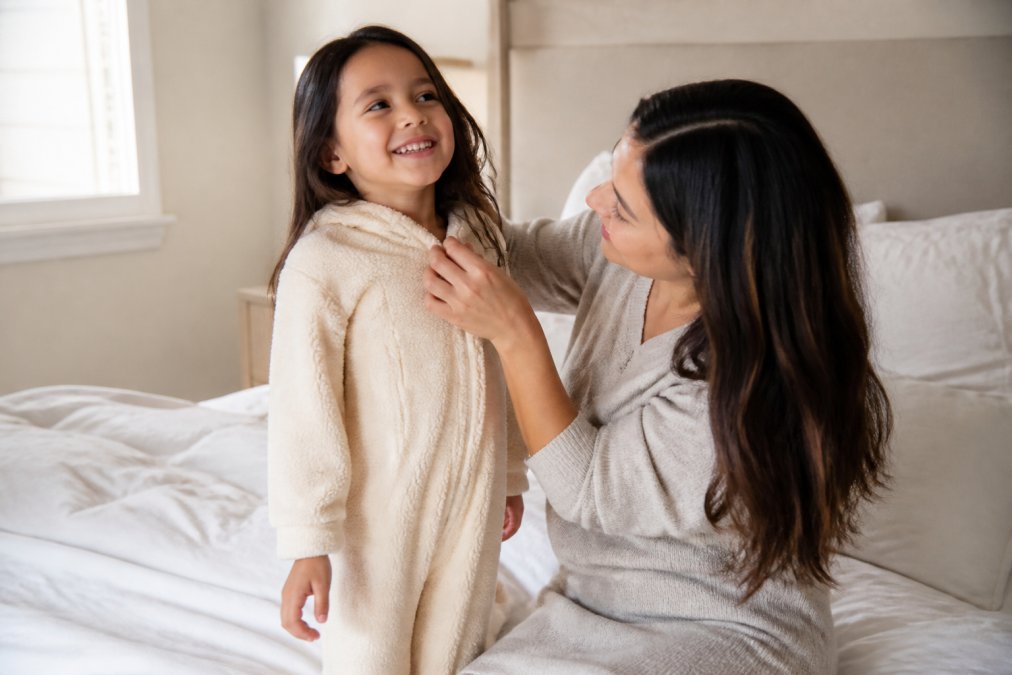
Finding the right pajamas transforms eczema management from a nightly battle into something manageable. Natural cellulose fibers and lanolin-free alpaca both deliver measurable improvements in sleep quality and skin comfort. Purely Alpaca's alpaca fiber products combine natural thermoregulation with exceptional softness, giving your skin the gentle environment it needs to heal.
Shop all our alpaca apparel for exceptional warmth and comfort. Consider our luxurious Ebel Alpaca Sweater for $139.95, or the Men's Bucksport Half-Zip Alpaca Pullover for $230.00. For a 100% alpaca option, the MEN'S YORK 1/2 ZIP ALPACA SWEATER is available for $169.95, and the Men's New York 1/2 Zip Sweater for $229.95.


Frequently Asked Questions
Q: Is alpaca wool itchy for sensitive skin?
A: No. Alpaca fiber has a smooth surface and lacks lanolin, the common irritant found in sheep's wool. Studies show 65% of sensitive-skin users rated alpaca as less itchy than merino wool in 2026. Alpaca's natural softness reduces friction-based irritation better than traditional wool.
Q: What is the best fabric for eczema pajamas?
A: The best fabrics for eczema are moisture-wicking, breathable, and smooth. TENCEL Micro Modal absorbs 50% more moisture than cotton and is 2x softer. Bamboo viscose absorbs three times more moisture than cotton, naturally thermoregulates, and has ultra-soft fibers. Alpaca fiber is lanolin-free and naturally hypoallergenic. Look for dermatologist-tested options certified to OEKO-TEX STANDARD 100, which tests for over 1,000 harmful substances, a stronger signal than unregulated 'hypoallergenic' labels.
Q: How can I prevent nighttime itching caused by sleepwear?
A: Choose pajamas with flat seams, tagless designs, and covered waistbands to eliminate friction. Sweat is reported as a trigger by two-thirds of eczema patients, so prioritize moisture-wicking fabrics that dry quickly. Keep your bedroom cool (around 65-68°F) and maintain 45-55% humidity. Wash sleepwear in fragrance-free, dye-free detergent and rinse twice. Layer lightweight pieces during flare-ups rather than wearing heavy, heat-trapping garments.