


Table of Contents
- Do Alpaca Wool Sweaters Pill Easily?
- Why Does Pilling Happen on Alpaca Sweaters
- How to Wash Alpaca Sweaters at Home
- How to Remove Pilling From Wool Sweaters
- Frequently Asked Questions
Last Updated: September 3, 2026
Do Alpaca Wool Sweaters Pill Easily?
Alpaca wool sweaters don't pill as easily as you might think, but they can, depending on fiber quality, garment construction, and care. According to Future Market Insights' 2025 market analysis, the alpaca fiber market is valued at $3.7 billion, with demand growing at 3.2% annually, driven largely by consumers seeking durable, high-performance natural fibers. The truth is more nuanced than a simple yes or no. 🧶
Alpaca fiber has genuine advantages when it comes to resistance to pilling. Research from Deakin University's School of Engineering and Technology shows that alpaca fibers have greater durability than merino fibers, with alpaca wool averaging 50 N/ktex staple strength, significantly exceeding the 30 N/ktex minimum for processing and placing it firmly in the "strong" category (>40 N/ktex).
However, pilling can still occur in high-friction areas like underarms and cuffs. The difference between a sweater that pills and one that doesn't comes down to three factors: fiber length, yarn construction, and care.
Why Does Pilling Happen on Alpaca Sweaters
Pilling occurs when surface fibers break free from the yarn and tangle together into small balls due to friction. Alpaca fibers are naturally smoother and longer than many wool alternatives, which means they shed less readily. However, length alone doesn't prevent pilling, what matters more is yarn twist and ply construction. Increasing yarn twist by 15-20% can reduce pilling incidence by up to 30%, enhancing garment longevity.
Fiber blending also plays a critical role. Pure 100% alpaca sweaters may pill less than some blends, but blends with acrylic or nylon, like our Ebel Alpaca Sweater (70% alpaca / 30% acrylic), can perform well in high-friction zones because synthetic fibers can reinforce the structure. The real difference comes down to how the yarn was constructed and what it was blended with. 🎯

How to Wash Alpaca Sweaters at Home
Proper washing is your first line of defense against pilling. Hand washing is always safest, but a delicate machine cycle works if you follow these steps:
Hand Washing (recommended):
- Fill a basin with cool water (60-65°F) and add a gentle, pH-neutral detergent designed for delicate fibers
- Submerge the sweater and gently agitate for 5 minutes; do not wring or twist
- Rinse thoroughly in cool water until soap is gone
- Gently squeeze out excess water (never wring)
- Lay flat on a clean towel to air dry, reshaping as needed
Machine Washing (delicate cycle only): Use a mesh laundry bag to minimize friction. Select delicate cycle, cold water, and gentle detergent.
The key is avoiding high heat, harsh detergents, and excessive agitation. Air drying flat is far superior to machine drying, as tumbling accelerates pilling significantly.
How to Remove Pilling From Wool Sweaters
If pills have already formed, don't panic. Removing them is straightforward and won't damage your sweater if done carefully.
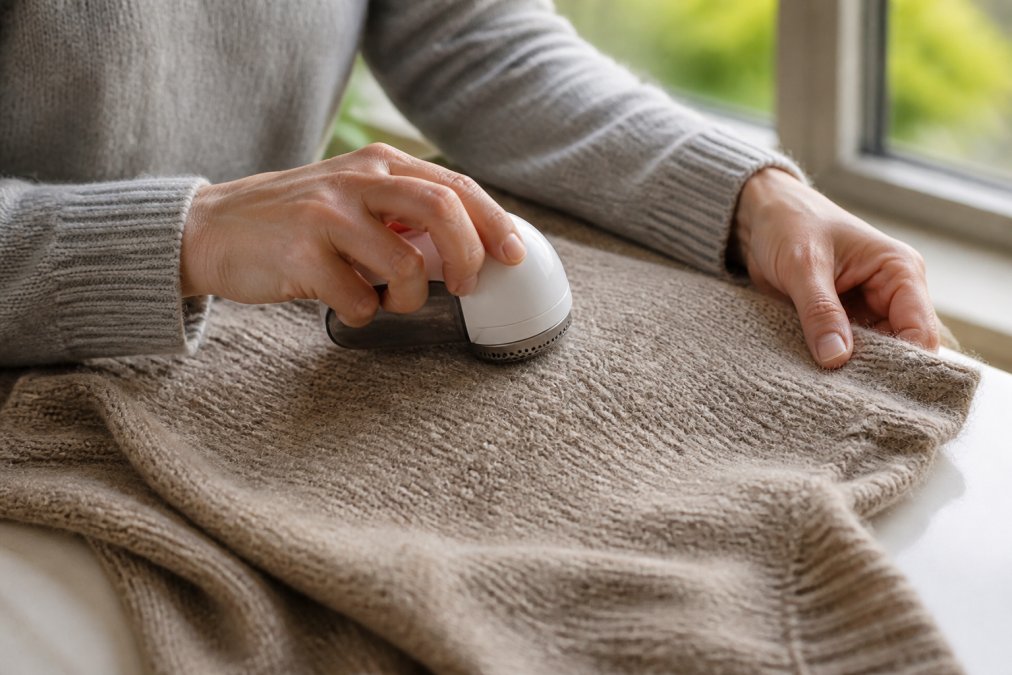
A fabric shaver (also called a de-piller) is often the most effective option. Hold the sweater taut, set the shaver to low speed, and move it gently across affected areas in circular motions. Sweater combs work similarly but may require more patience. For minor pilling, a lint roller or soft-bristled brush can remove loose pills. Avoid razors or scissors, as they risk cutting the underlying yarn and creating permanent damage.
The takeaway: pilling is manageable and often preventable. Quality construction, proper care, and gentle washing will keep your alpaca sweater looking new for years. Our Lattice Cable Mock Sweater (55% alpaca / 38% Pima cotton / 7% nylon) combines premium alpaca with reinforcing fibers specifically designed to resist pilling in high-wear areas. 💪
=== FAQ ANSWERS (audit these too, same rules) ===
[1] Q: Does alpaca wool pill more than sheep's wool? A: Alpaca wool actually pills less than merino wool when properly cared for. Alpaca fibers have greater durability than merino fibers according to research from Deakin University's School of Engineering and Technology. Alpaca averages 50 N/ktex staple strength, placing it in the 'strong' category for textile applications. The key difference: alpaca sweaters pill primarily from friction in high-wear areas, while merino may pill more readily overall.
[2] Q: Is pilling a sign of poor quality alpaca fiber? A: Not necessarily. Even high-quality alpaca sweaters can pill from friction and wear, especially in areas like underarms and cuffs. Pilling doesn't indicate weak fiber, it's a natural response to surface friction. However, quality matters in construction: tightly spun yarn and higher ply counts reduce pilling significantly. Blended alpaca (like the Ebel Alpaca Sweater at 70% alpaca/30% acrylic) can resist pilling better than 100% alpaca because the acrylic can add durability in high-friction zones. Proper care and garment rotation also prevent excessive pilling.
[3] Q: Can I prevent pilling on alpaca wool sweaters? A: Yes, through proper care and handling. Wash in cold water on a delicate cycle, air dry flat, and rotate garments to reduce friction. Avoid high-friction activities when wearing alpaca, and store pieces separately to minimize abrasion. Increasing yarn twist by 15-20% reduces pilling incidence by up to 30%, so look for well-constructed sweaters. Use a laundry mesh bag during washing for extra protection. While you can't eliminate pilling entirely, these steps significantly extend garment longevity and keep your alpaca sweater looking new longer.
Frequently Asked Questions
Does alpaca wool pill more than sheep's wool?
Alpaca wool actually pills less than merino wool when properly cared for. Alpaca fibers have greater durability than merino fibers according to research from Deakin University's School of Engineering and Technology. Alpaca averages 50 N/ktex staple strength, placing it in the 'strong' category for textile applications. The key difference: alpaca sweaters pill primarily from friction in high-wear areas, while merino may pill more readily overall.
Is pilling a sign of poor quality alpaca fiber?
Not necessarily. Even high-quality alpaca sweaters can pill from friction and wear, especially in areas like underarms and cuffs. Pilling doesn't indicate weak fiber, it's a natural response to surface friction. However, quality matters in construction: tightly spun yarn and higher ply counts reduce pilling significantly. Blended alpaca (like the Ebel Alpaca Sweater at 70% alpaca/30% acrylic) can resist pilling better than 100% alpaca because the acrylic can add durability in high-friction zones. Proper care and garment rotation also prevent excessive pilling.
Can I prevent pilling on alpaca wool sweaters?
Yes, through proper care and handling. Wash in cold water on a delicate cycle, air dry flat, and rotate garments to reduce friction. Avoid high-friction activities when wearing alpaca, and store pieces separately to minimize abrasion. Increasing yarn twist by 15-20% reduces pilling incidence by up to 30%, so look for well-constructed sweaters. Use a laundry mesh bag during washing for extra protection. While you can't eliminate pilling entirely, these steps significantly extend garment longevity and keep your alpaca sweater looking new longer.
Alpaca wool sweaters represent a real investment in quality and warmth. Understanding why pilling happens and how to prevent it ensures your sweater maintains its beauty and performance. Purely Alpaca's curated collection features thoughtfully constructed blends and pure alpaca pieces designed for lasting comfort. Explore our full range of alpaca apparel and discover why our customers have trusted us since 2002, Shop all and find your perfect sweater today.
This article was written using GrandRanker