


Table of Contents
- What You'll Need Before You Wash Alpaca Sweaters at Home
- Can You Machine Wash Alpaca? Hand Washing vs. Machine Washing Explained
- The Best Detergent for Alpaca Fiber: What to Use and What to Avoid
- Step-by-Step: How to Wash Alpaca Sweaters at Home by Hand
- How to Dry an Alpaca Sweater Without Shrinking or Warping It
- Common Mistakes to Avoid When Washing Alpaca at Home
- Washing Blended Fibers, Deodorizing Between Washes, and Troubleshooting Shrinkage
- Storing Alpaca Sweaters to Protect Fiber Integrity Long-Term
Last Updated: July 30, 2026
Knowing how to wash alpaca sweaters at home is the difference between a garment that lasts a decade and one that shrinks, felts, or loses its shape after a single bad rinse. At Purely Alpaca, we've guided customers through proper alpaca care since 2002, and the good news is that alpaca fiber is more forgiving than most people expect. Below, we'll show you exactly how to hand wash, dry, store, and even rescue a shrunken alpaca sweater without a trip to the dry cleaner.
Here's what most guides get wrong: they treat alpaca like it's as fragile as fine cashmere. It's not. Alpaca is a natural protein fiber with excellent elasticity and a lanolin-free structure, making it easier to care for than many other luxury wools. The real enemies aren't water or mild soap. They're heat, agitation, and friction.
What You'll Need Before You Wash Alpaca Sweaters at Home
Gather everything before you start. Stopping mid-wash to hunt for supplies is how accidents happen.
Your wash kit:
- A clean basin, sink, or large bowl
- Lukewarm water (around 68-72°F)
- A wool-safe detergent or pH neutral, gentle shampoo
- Two clean, dry towels (large enough to roll the sweater)
- A flat, clean surface for drying
A note on detergent: you do not need a specialty product, but you do need to avoid anything with enzymes, bleach, or optical brighteners. These break down the natural protein fiber structure of alpaca, stripping its breathability and moisture-wicking properties. According to The Textile Institute's fiber care guidance, protein-based fibers like alpaca and wool require pH-neutral cleaning agents to preserve their molecular structure. A small amount of gentle shampoo works just as well as a branded wool wash.
Can You Machine Wash Alpaca? Hand Washing vs. Machine Washing Explained
Hand washing is always the safer choice for alpaca fiber. Machine washing introduces agitation and friction that can cause irreversible felting, shrinkage, and pilling, even on a gentle setting.
When Hand Washing Is Always the Safer Choice
Pure alpaca garments, especially those labeled "baby alpaca," should be hand washed without exception. Baby alpaca refers to fiber from the first shearing of a young alpaca, producing a finer, softer strand with lower micron count. That fineness makes it more susceptible to heat and mechanical stress. Hand washing gives you complete control over water temperature, soaking duration, and pressure during rinsing.
The process takes about 15 minutes of active time, a reasonable trade for a sweater that can outlast department store purchases by years.
Using the Delicate Cycle as a Last Resort
If machine washing is unavoidable, use the delicate cycle with cold water and place the sweater inside a mesh laundry bag. This reduces direct friction against the drum. Use minimal wool-safe detergent and skip the spin cycle if your machine allows it. Remove the sweater before the spin starts and press out excess water by hand.
The delicate cycle is not equivalent to hand washing. It's a compromise that preserves most garment integrity most of the time. For anything with embellishments, a loose knit, or blended fiber construction, skip the machine entirely.
| Method | Risk Level | Best For | Avoid When |
|---|---|---|---|
| Hand wash | Low | All alpaca, baby alpaca | Never avoid this option |
| Delicate cycle | Medium | Tight-knit, durable blends | Baby alpaca, embellished pieces |
| Regular machine wash | High | Not recommended | All alpaca garments |
| Dry cleaning | Low | Heavily soiled or structured pieces | Routine maintenance |
The Best Detergent for Alpaca Fiber: What to Use and What to Avoid
The best detergent for alpaca is any pH-neutral, enzyme-free formula designed for delicate or wool fabrics. Eucalan, Woolite Delicates, and plain baby shampoo are all commonly used options. What matters most is what the detergent does NOT contain.
Avoid these ingredients entirely:
- Enzymes (protease, amylase), which digest protein fibers
- Bleach or oxygen brighteners
- Fabric softeners, which coat the fiber and reduce breathability
- High-alkaline formulas (pH above 8)
Many dish soaps contain degreasing agents that strip natural oils from alpaca fiber, leaving it brittle and prone to pilling.
Use no more than a teaspoon for a full basin of water. More detergent does not mean cleaner; it means harder rinsing and greater risk of residue buildup that affects fiber integrity.
Step-by-Step: How to Wash Alpaca Sweaters at Home by Hand
Total Time: 15-20 minutes active, plus 24 hours drying Difficulty: Beginner
Hand washing alpaca sweaters follows four distinct steps, each designed to clean the fiber without introducing agitation or heat that causes damage.
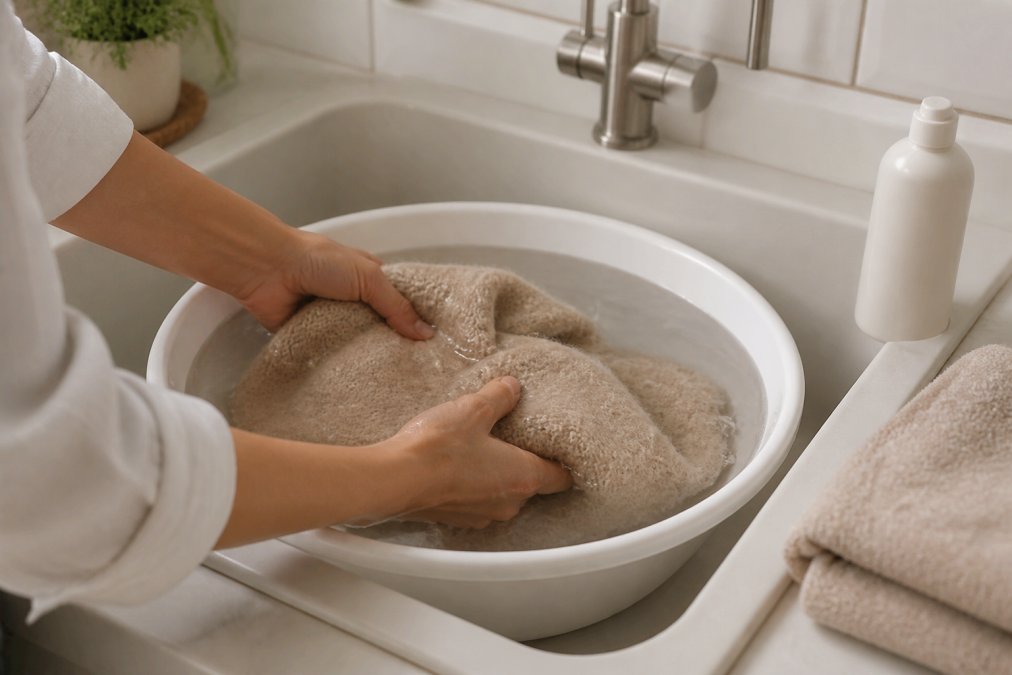
Step 1: Fill Your Basin with Lukewarm Water
Fill your basin with lukewarm water, targeting 68-72°F. If the water feels warm on your wrist, it's too hot. Hot water causes protein fiber scales to open and interlock, triggering felting and shrinkage.
Add detergent to the water first and swirl gently to dissolve before placing the sweater in.
Step 2: Soak Without Agitation
Submerge the sweater fully and press it down gently so it absorbs water evenly. Then stop. Do not scrub, wring, twist, or rub the fabric. Let it soak for 10-15 minutes.
Alpaca fiber cleans through soaking, not scrubbing. The water does the work. Agitation does damage.
Step 3: Rinse Thoroughly with Cold Water
Drain the soapy water and refill the basin with cold water. Gently press the sweater to release the detergent. Repeat two or three times until the water runs clear and no suds remain.
Avoid holding the sweater under running water. The weight of flowing water can stretch the fibers, especially at shoulders and cuffs. Always support the full weight of the sweater with both hands when lifting it.
Step 4: Remove Excess Water with the Towel Roll Method
Do not wring. Lay the sweater flat on a clean, dry towel. Roll the towel and sweater together into a loose cylinder and press gently along the length. The towel absorbs excess water without twisting or stressing the fibers.
Unroll, transfer to a second dry towel or flat drying surface, and reshape the sweater to its original dimensions while the fibers are still pliable.
How to Dry an Alpaca Sweater Without Shrinking or Warping It
The drying phase is where most alpaca sweaters get damaged. Heat and gravity are the two threats.
Always lay flat to air dry on a clean surface. A mesh drying rack allows airflow from below, shortening drying time without introducing heat. Avoid hanging the sweater: gravity pulls wet fibers downward, stretching the body and distorting the shoulders.
Keep the sweater away from direct sunlight and any heat source, including radiators, heating vents, and clothes dryers. According to the American Fiber Manufacturers Association's care guidelines, heat exposure above 86°F causes protein fiber contraction that is largely irreversible.
Reshape the sweater while it's still damp. Smooth out folds, align seams, and gently stretch any pulled areas. Drying time typically runs 12-24 hours depending on knit weight and ambient humidity.
Common Mistakes to Avoid When Washing Alpaca at Home
Most alpaca damage is self-inflicted. Here are the patterns that show up most often.
Mistake 1: Using hot or warm water. Even a few degrees above lukewarm triggers fiber contraction. Cold water is safe; warm water is a gamble; hot water guarantees shrinkage.
Mistake 2: Wringing out the sweater. Wringing twists the fiber structure and causes permanent distortion. The towel roll method removes just as much water with none of the risk.
Mistake 3: Washing too frequently. Alpaca fiber has natural moisture-wicking and odor-resistant properties. Most sweaters only need washing after four to five wears, or when visibly soiled. Over-washing accelerates pilling and reduces garment lifespan.
Mistake 4: Skipping the reshape step. Alpaca dries in whatever shape you leave it. If you toss it on a flat surface without reshaping, it dries with wrinkles and distortions that are difficult to remove.
Mistake 5: Trusting the "wool" setting on the washing machine. Machine wool settings vary widely by manufacturer. Hand washing removes that variable entirely.
Washing Blended Fibers, Deodorizing Between Washes, and Troubleshooting Shrinkage
How to Wash Alpaca Blended with Other Fibers
Alpaca blended with other fibers requires you to follow the care rules of the most delicate fiber in the blend. A sweater that is 70% alpaca and 30% nylon can generally tolerate the delicate cycle because nylon adds structural stability. An alpaca-silk blend requires the same gentle hand wash as pure alpaca because silk is equally sensitive to heat and agitation.
For alpaca-merino blends, the care process is nearly identical to pure alpaca: lukewarm water, pH-neutral detergent, no agitation, lay flat to dry. Both are natural protein fibers with similar vulnerabilities.
Always check the garment label. The care label reflects the blend composition and is the most reliable guide for that specific piece.
Deodorizing Alpaca Without Washing
Alpaca's natural fiber structure resists odor absorption far better than synthetic fabrics. Between washes, airing the sweater overnight handles most odor concerns. Hang it in a well-ventilated area away from direct sunlight for 6-8 hours, and the fibers will release absorbed moisture and light odors naturally.
For persistent odors, a light mist of diluted white vinegar followed by air drying works well. The vinegar neutralizes odor-causing bacteria without damaging the fiber. Let the sweater air dry completely before wearing or storing.
What to Do If Your Alpaca Sweater Shrinks
A shrunken alpaca sweater is not always a lost cause. The felting process that causes shrinkage can sometimes be partially reversed if caught early.
Soak the shrunken sweater in cool water with a small amount of hair conditioner for 20-30 minutes. The conditioner relaxes the protein fiber scales. While the sweater is still wet, gently stretch it back toward its original dimensions by hand, section by section. Lay it flat on a towel, pin or weight the edges to hold the stretched shape, and allow it to dry completely.
This works best on light shrinkage from a single incident. According to the Woolmark Company's fiber care resource center, light shrinkage in protein fibers can often be recovered through controlled wet-stretching within the first 24 hours of the incident.
Storing Alpaca Sweaters to Protect Fiber Integrity Long-Term
Proper storage extends garment care from seasonal to permanent. Alpaca fiber is susceptible to two specific threats during storage: moths and compression.
Moths are drawn to natural protein fibers. Cedar blocks, lavender sachets, or cedar rings placed near stored alpaca provide effective deterrence without the chemical residue of mothballs, which can damage fiber over time.
Compression flattens the natural loft of alpaca, reducing its warmth and texture. Fold sweaters loosely rather than stacking them tightly, and store them in breathable cotton bags or open shelving rather than sealed plastic bins. Plastic bags trap moisture, creating conditions for mildew and fiber degradation.
Before storing for the season, always wash the sweater first. Body oils and invisible soil attract moths even when the garment looks clean. A clean sweater stored properly will come out of storage in the same condition it went in.
For long-term storage, keep alpaca in a cool, dry location away from direct light. Avoid attics and basements where temperature and humidity fluctuate significantly. A cedar-lined drawer or breathable storage bag in a climate-controlled closet is ideal for maintaining fiber integrity season after season.
Caring for alpaca at home is straightforward once you understand what the fiber needs. The challenge is unlearning habits that work fine for cotton and synthetics but damage natural protein fibers. Purely Alpaca has been helping customers get the most from their alpaca pieces since 2002, and the garments in our collection are built to last when cared for properly. With free shipping on orders of $100 or more and hassle-free returns, there's no reason to hesitate. Shop all Purely Alpaca styles and invest in pieces that reward the care you put into them.
Frequently Asked Questions
Can you machine wash an alpaca sweater?
It is generally not recommended to machine wash alpaca sweaters. The agitation and friction inside a washing machine can damage the natural protein fiber, cause shrinkage, and break down fiber elasticity over time. If you must use a machine, select the gentlest delicate cycle available with cold water and place the sweater inside a mesh laundry bag. Hand washing in lukewarm water remains the safest method to preserve alpaca fiber integrity and garment shape.
What kind of detergent should I use for alpaca wool?
Use a wool-safe, pH-neutral, mild detergent specifically formulated for delicate natural fibers. Because alpaca is lanolin-free, it does not require the same conditioning agents as traditional wool. A gentle shampoo, even a mild baby shampoo, can work well in a pinch. Avoid any detergent containing bleach, enzymes, or fabric softeners, as these can strip the fiber and cause pilling or damage to the natural protein fiber structure.
How do you dry an alpaca sweater without shrinking it?
After washing, never wring or twist the sweater. Instead, use the towel roll method: lay the sweater flat on a clean dry towel, roll it up gently to absorb excess water, then unroll and reshape the garment. Lay flat on a fresh dry surface to air dry away from direct sunlight and any heat source, such as a radiator or dryer. Heat is the primary cause of shrinkage in alpaca fiber, so always allow it to dry at room temperature.
How often should you wash an alpaca sweater?
Alpaca fiber is naturally moisture-wicking and resistant to odors, which means you do not need to wash it after every wear. Most alpaca sweaters only need washing a few times per season under normal use. Between washes, you can deodorize by hanging the garment in fresh air for several hours. Overwashing can break down fiber elasticity and reduce the garment's lifespan, so washing only when visibly soiled or after extended wear is the best approach.
Can you use baby shampoo to wash alpaca?
Yes, a small amount of gentle baby shampoo can be an effective substitute for a dedicated wool-safe detergent when washing alpaca sweaters at home. Baby shampoos are typically pH neutral and free from harsh chemicals, making them safe for natural protein fibers like alpaca and baby alpaca. Use only a small amount, roughly a teaspoon per basin, and rinse thoroughly with cold water to ensure no residue remains in the fiber.
How do you remove stains from an alpaca sweater?
Treat stains on alpaca as quickly as possible by gently dabbing, never rubbing, the affected area with a clean cloth dampened with cold water. Rubbing creates friction that can cause pilling and damage fiber integrity. For stubborn stains, apply a tiny amount of mild detergent directly to the spot, let it sit for a few minutes, then rinse with cold water. Avoid hot water, which can set stains and cause shrinkage in alpaca fiber.
This article was written using GrandRanker