



Table of Contents
- Alpaca Wool vs Cashmere for Warmth: Head-to-Head Comparison Table
- Alpaca Wool Properties: Hollow Fiber Structure and Thermal Insulation
- Cashmere Benefits: Softness, Drape, and Thermal Regulation
- Best Wool for Warmth and Durability: Fiber Strength and Long-Term Performance
- Sustainable Luxury Fibers: Environmental Impact and Lifecycle Analysis
- Alpaca Wool vs Cashmere for Warmth: Which Fiber Fits Your Use Case?
- Care and Maintenance: Keeping Your Investment Looking New
- Pros and Cons: Alpaca Wool vs Cashmere at a Glance
Last Updated: July 31, 2026
Few questions in natural textiles generate more debate than alpaca wool vs cashmere for warmth. At Purely Alpaca, we've spent over two decades helping customers make this choice. The short answer: alpaca wins on raw thermal performance, but cashmere excels on softness and drape. The longer answer is that "better" depends entirely on how you'll wear it, where you live, and how much maintenance you'll invest. Below, we show exactly how each fiber performs across warmth, durability, sustainability, and everyday use.
Alpaca's thermal advantage isn't marketing. It comes from a structural difference inside each fiber, a distinction that matters more than thread count, brand name, or price tag.
Alpaca Wool vs Cashmere for Warmth: Head-to-Head Comparison Table
| Factor | Alpaca Wool | Cashmere | Winner |
|---|---|---|---|
| Thermal insulation | Hollow fiber traps air | Dense fiber retains heat | Alpaca |
| Warmth-to-weight ratio | Excellent, lightweight | Good, slightly heavier | Alpaca |
| Softness | Very soft (fine grades) | Exceptionally soft | Cashmere |
| Hypoallergenic | Yes, lanolin-free | Mild lanolin, can irritate | Alpaca |
| Pilling resistance | Higher resistance | Pills more readily | Alpaca |
| Fiber strength | Strong, durable | Delicate, prone to wear | Alpaca |
| Breathability | Excellent | Good | Alpaca |
| Moisture-wicking | Strong moisture management | Moderate | Alpaca |
| Sustainability | Lower environmental impact | Higher land pressure | Alpaca |
| Drape and luxury feel | Excellent | Exceptional | Cashmere |
| Best for | Outdoor, active, cold climates | Everyday luxury, layering | Depends on use |
Alpaca outperforms cashmere on most functional metrics. Cashmere's edge is tactile, for many buyers, reason enough to choose it. But if warmth and durability are priorities, alpaca is the stronger technical choice.
Alpaca Wool Properties: Hollow Fiber Structure and Thermal Insulation
Alpaca wool is harvested from alpacas native to the Andes and distinguished by its hollow core structure, which creates superior thermal insulation relative to fiber weight.
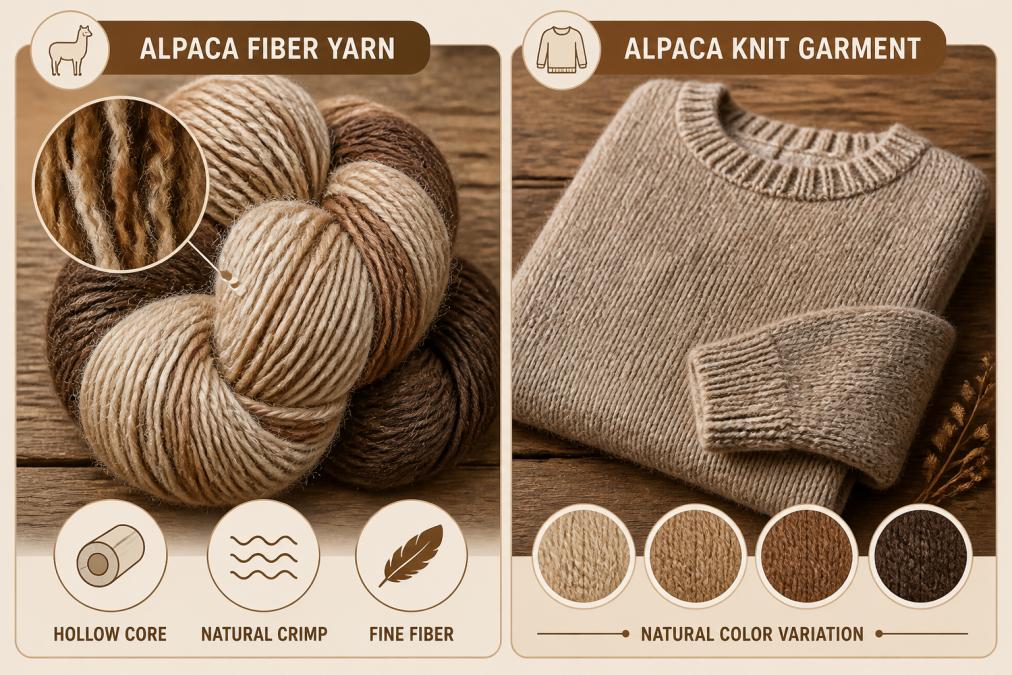
Unlike sheep's wool or cashmere, alpaca fibers contain microscopic air pockets running through each strand. These air pockets trap body heat without adding bulk, producing a garment that keeps you warm at a fraction of expected weight.
How the Hollow Fiber Core Creates Superior Warmth-to-Weight Ratio
The warmth-to-weight ratio in alpaca is grounded in physics. Air is one of the most effective thermal insulators available. By trapping air inside each fiber, alpaca creates insulation capacity that wool and cashmere achieve only by adding more material and weight.
According to fiber science research published by the Textile Research Journal, hollow-core natural fibers demonstrate measurably lower thermal conductivity than solid fibers of comparable diameter. For travelers packing for cold climates or hikers needing warmth without bulk, this translates directly into fewer layers and more freedom of movement.
The fiber's natural crimp also contributes. Crimp creates additional air spaces between fibers when yarn is spun, adding another insulating layer. Alpaca fiber carries consistent crimp throughout its length.
Hypoallergenic and Lanolin-Free: Why Sensitive Skin Responds Differently
Alpaca fiber is naturally lanolin-free, making it hypoallergenic. Lanolin, the waxy substance in sheep's wool and cashmere, is the primary trigger for wool-related skin irritation. Many people who assume they're allergic to wool are reacting to lanolin rather than the fiber itself.
Removing lanolin changes the experience entirely. Customers who struggled with itchy wool sweaters often find alpaca comfortable directly against the skin. This matters most for socks, base layers, and garments worn without a barrier underneath.
Cashmere Benefits: Softness, Drape, and Thermal Regulation
Cashmere earns its luxury reputation through unmatched softness and natural drape. Sourced from the undercoat of cashmere goats in Mongolia, China, and Central Asia, cashmere fiber is fine, lightweight, and extraordinarily pleasant against the skin.
Cashmere provides genuine thermal regulation, responding to body temperature changes and breathing enough to prevent overheating in milder conditions. This makes it well-suited to indoor environments, offices, and transitional seasons. However, cashmere doesn't perform as well in sustained extreme cold. Without alpaca's hollow fiber structure, it relies on fiber density to achieve comparable warmth, requiring heavier garments.
Micron Count, Fiber Diameter, and the Softness Index Explained
Micron count measures fiber diameter in micrometers, the single most important specification for predicting how a natural fiber garment will feel. Lower micron count means finer fiber and softer fabric.
Premium cashmere typically falls between 14 and 19 microns, with anything below 16 microns considered exceptionally fine. Alpaca ranges from baby alpaca at roughly 18-22 microns to adult fiber at 24-30 microns. According to the American Textile Manufacturers Institute's fiber grading standards, fiber diameter is the primary determinant of softness across natural fiber categories.
A high-grade cashmere sweater will generally feel softer than standard alpaca, but baby alpaca or royal alpaca garments compete directly with mid-grade cashmere on softness while maintaining alpaca's thermal and durability advantages.
Best Wool for Warmth and Durability: Fiber Strength and Long-Term Performance
Durability is where the comparison shifts decisively. Alpaca fiber has greater tensile strength than cashmere, meaning individual fibers resist breaking under stress. Over months and years of regular wear, this difference accumulates visibly.
Cashmere is delicate. The fine fiber diameter that makes it soft also makes it susceptible to abrasion, snagging, and fiber breakage. A cashmere sweater worn frequently will show wear faster than a comparable alpaca piece. Even premium cashmere requires careful handling to maintain appearance.
Alpaca's fiber elasticity also contributes to long-term shape retention. Quality alpaca garments hold their structure through repeated washing and wearing better than cashmere equivalents.
Pilling and Long-Term Aesthetic Maintenance
Pilling, the formation of small fiber balls on garment surfaces, is caused by short or broken fibers tangling through friction. Alpaca and cashmere diverge significantly here.
Cashmere pills readily with regular wear, particularly under the arms and at friction points. Even expensive cashmere garments pill. The pills can be removed with a fabric comb, but the process repeats throughout the garment's life.
Alpaca's higher fiber strength and longer staple length make it substantially more resistant to pilling. Fibers are less likely to break and tangle, keeping the surface cleaner with less maintenance over time.
Sustainable Luxury Fibers: Environmental Impact and Lifecycle Analysis
Sustainability increasingly influences how American consumers evaluate luxury textile purchases. The comparison between alpaca and cashmere here is not close.
Cashmere production has faced documented environmental scrutiny. Expansion of cashmere goat herds across Mongolia and China over the past two decades has contributed to significant grassland degradation. Cashmere goats have hard hooves and graze close to the root, which at high stocking densities strips vegetation and accelerates desertification. Research from the UN Environment Programme's land degradation assessments identifies overgrazing by cashmere goat herds as a contributing factor to grassland loss across Central Asia.
Alpacas present a fundamentally different environmental profile. Their soft padded feet cause minimal ground disturbance. They graze selectively rather than pulling vegetation at the root. Water consumption is relatively low. The fiber is biodegradable, so end-of-life disposal doesn't contribute to microplastic accumulation.
For buyers wanting luxury natural fibers without environmental cost, alpaca is the more defensible choice across the full lifecycle. This doesn't make cashmere irresponsible, especially from brands with verified sustainable sourcing, but the two fibers are not equivalent from a planetary impact standpoint.
Alpaca Wool vs Cashmere for Warmth: Which Fiber Fits Your Use Case?
The real-world answer depends on what you're actually doing in the garment.
Outdoor and Winter Sports: Performance in Extreme Cold
For outdoor use, cold-weather travel, and winter sports, alpaca is the stronger choice. The hollow fiber structure provides genuine warmth at low weight, which matters when moving, layering, or packing. Alpaca's moisture-wicking properties regulate body temperature during activity, pulling moisture away from skin and preventing the clammy feeling synthetic base layers create.
Alpaca socks deserve special mention. The combination of moisture management, thermal retention, and natural anti-microbial properties makes alpaca socks superior to wool or synthetic alternatives for hiking, skiing, or extended outdoor activity in wet or cold conditions. Customers switching from synthetic hiking socks to alpaca frequently describe the difference as immediately noticeable.
Cashmere is not built for the outdoors. Its lower fiber strength makes it vulnerable to abrasion. Wearing cashmere for winter sports will shorten its lifespan significantly.
Everyday Luxury, Gifting, and Home Comfort
Cashmere's territory is indoor luxury. A cashmere sweater for office wear, a cashmere wrap for travel, or a cashmere throw for the couch represents the fiber at its best: soft, elegant, and thermally comfortable in controlled environments.
For gifting, both fibers work well, but the choice depends on the recipient. A cashmere piece signals luxury and softness. An alpaca piece signals warmth, durability, and thoughtful practicality. For someone with sensitive skin, an outdoor lifestyle, or a home in a genuinely cold climate, alpaca is the more functional gift. For someone prioritizing how the fabric feels, cashmere may be more appreciated.
Purely Alpaca, a family-owned source for alpaca knitwear since 2002, offers a range of styles across apparel, socks, and home goods for both everyday comfort and gift-giving, with free shipping on orders of $100 or more and hassle-free returns.
Care and Maintenance: Keeping Your Investment Looking New
Both alpaca and cashmere require more attention than synthetic fabrics, but neither demands the level of care most people assume.
Hand washing in cool water with gentle wool-specific detergent is safest for both. Lay flat to dry on a clean towel, reshaping while damp. Hanging either fiber wet causes stretching that won't fully recover.
Storage matters more than most realize. Both fibers are vulnerable to moth damage. Cedar blocks or lavender sachets provide natural deterrence. Fold rather than hang for long-term storage, as garment weight on a hanger gradually stretches shoulders.
The key difference: cashmere requires more frequent de-pilling. Invest in a good fabric comb and use it regularly. Alpaca needs less intervention but benefits from occasional gentle brushing to restore natural loft after compression.
A common mistake is using a washing machine's delicate cycle, assuming it's safe. Even gentle machine cycles create enough agitation to cause felting, which permanently alters fiber structure and shrinks the garment. Hand washing takes five minutes. Replacing a quality knitwear piece costs considerably more.
According to the Textile Exchange's natural fiber care guidelines, proper cold-water washing and flat drying extends the functional lifespan of natural protein fiber garments by years compared to machine washing.
Pros and Cons: Alpaca Wool vs Cashmere at a Glance
The comparison comes down to a genuine trade-off between functional performance and tactile luxury.
Alpaca Wool: Pros
- Superior warmth-to-weight ratio through hollow fiber structure
- Naturally hypoallergenic and lanolin-free, safe for sensitive skin
- Higher fiber strength for long-term durability
- Better pilling resistance, lower maintenance
- Excellent moisture-wicking and breathability for active use
- Lower environmental impact across production lifecycle
- Biodegradable at end of life
Alpaca Wool: Cons
- Softness varies by grade; standard adult fiber is less soft than premium cashmere
- Less drape than cashmere in lightweight knit constructions
- Fewer widely recognized brand names in the US market
Cashmere: Pros
- Exceptional softness, particularly at fine micron counts below 16
- Beautiful drape that alpaca doesn't fully replicate
- Widely available across a broad price range
- Strong cultural recognition as a luxury textile
Cashmere: Cons
- Pills readily with regular wear, requiring ongoing maintenance
- Lower fiber strength means shorter lifespan with heavy use
- Cashmere goat farming carries significant documented environmental costs
- Not suitable for active outdoor use or high-moisture environments
- Contains lanolin, which can irritate sensitive skin
The verdict on alpaca wool vs cashmere for warmth is clear for most functional use cases: alpaca delivers more warmth per ounce, lasts longer, and is gentler on sensitive skin. Cashmere wins on softness and drape for controlled indoor environments. For anyone prioritizing performance over pure tactile luxury, alpaca is the stronger investment.
Choosing between alpaca wool vs cashmere for warmth is ultimately a question of where and how you plan to wear the garment. For cold-climate performance, outdoor use, sensitive skin, or long-term durability, alpaca is the more capable fiber. Purely Alpaca has been sourcing and curating high-quality alpaca products since 2002, offering a full range of apparel, socks, and home goods with free shipping on orders of $100 or more and hassle-free returns. Shop all Purely Alpaca collections and find the right alpaca piece for your climate, your lifestyle, and the people you're buying for.
Frequently Asked Questions
Is alpaca wool warmer than cashmere for clothing?
When comparing alpaca wool vs cashmere for warmth, alpaca generally has the edge due to its hollow fiber structure, which traps more air and creates greater thermal insulation per ounce. Cashmere is exceptionally warm as well, but its fibers are solid rather than hollow, giving alpaca a higher warmth-to-weight ratio. For extreme cold or outdoor use, alpaca tends to outperform cashmere without adding extra bulk or weight to the garment.
Which is softer, alpaca or cashmere?
Cashmere is widely regarded as one of the softest natural fibers available, with a very fine micron count that gives it an almost silky feel against the skin. High-quality alpaca, particularly baby alpaca, can rival cashmere's softness and is naturally lanolin-free, making it a better option for people with sensitive skin or eczema who react to the lanolin found in many wool products. The softness of both fibers varies by grade and processing quality.
Does alpaca wool pill more than cashmere?
Pilling is a concern with both fibers, but cashmere tends to pill more readily than alpaca, especially at lower grades. Cashmere's shorter, finer fibers can loosen and mat together with friction, while alpaca's longer fiber length and higher tensile strength give it better pilling resistance over time. Choosing higher-grade alpaca or cashmere, washing gently, and using a fabric comb for maintenance are the most effective ways to preserve the long-term appearance of either garment.
Is alpaca wool hypoallergenic compared to cashmere?
Alpaca wool is naturally lanolin-free, which is the primary irritant in traditional sheep's wool that triggers reactions in people with sensitive skin. This makes alpaca a strong hypoallergenic choice for individuals with eczema or wool sensitivities. Cashmere is also considered relatively gentle, but it does contain trace lanolin depending on processing. If skin sensitivity is your top concern, alpaca wool properties, specifically the absence of lanolin, make it the safer and more comfortable option.
What are the environmental differences between alpaca and cashmere production?
Both are natural fibers, but their environmental footprints differ. Alpaca are native to South America's high-altitude Andes and have soft padded hooves that cause minimal land damage. Cashmere goats, primarily raised in Mongolia and China, have hard hooves and high grazing intensity that has contributed to grassland degradation in some regions. From a sustainable luxury fibers standpoint, alpaca production is generally considered lower-impact, and alpaca fiber is biodegradable, adding to its lifecycle sustainability advantage.
Which is more expensive, alpaca wool or cashmere?
Both alpaca and cashmere sit firmly in the luxury textile category, and pricing for either fiber depends on grade, origin, and craftsmanship. Baby alpaca and royal alpaca command premium prices comparable to high-grade cashmere. Entry-level cashmere can be found at lower price points through direct-to-consumer brands, but quality varies significantly. For current pricing on alpaca products, visiting a specialist retailer directly is the best way to compare value accurately rather than relying on general estimates.
This article was written using GrandRanker