


Table of Contents
- Is Alpaca Wool Itchy for Sensitive Skin?
- Alpaca Wool vs Merino Wool for Sensitive Skin
- Lanolin Allergy and Alpaca Wool
- Grades of Alpaca Fiber and Softness
- How to Soften Alpaca Wool and Prevent Itchiness
- Blends vs Pure Alpaca for Sensitive Skin
- Common Mistakes That Make Alpaca Feel Scratchy
- Conclusion
Last Updated: August 2, 2026
When shopping for winter clothing or gifts, many people wonder whether alpaca wool itches or irritates sensitive skin. The answer depends on fiber quality, processing, and garment care. At Purely Alpaca, we've spent over two decades helping customers with sensitive skin find comfortable alpaca products. This guide explains why some alpaca wool feels scratchy while other pieces feel luxuriously soft, and how to determine if alpaca is right for your skin.
The key difference between itchy and comfortable alpaca comes down to fiber diameter, measured in microns. A single human hair measures about 70 microns. Alpaca fiber ranges from 15 to 40 microns depending on the animal's age and genetics. Fiber under 20 microns typically feels soft, while fiber above 25 microns creates that prickly sensation associated with traditional wool.
Why Alpaca Feels Different from Regular Wool
Alpaca fiber has a fundamentally different structure than sheep's wool. Unlike wool, alpaca contains virtually no lanolin, a natural waxy oil that triggers allergic reactions in many people. This makes alpaca naturally hypoallergenic. The fiber cuticle structure is also smoother, meaning less mechanical irritation against skin.
However, "naturally hypoallergenic" doesn't mean "guaranteed comfortable." The fiber's scale structure still creates friction if the fiber diameter is too coarse. A person with contact dermatitis might still experience irritation from poorly processed or low-grade alpaca fiber.
Research from textile science shows that fiber diameter matters more than fiber type when it comes to skin irritation. Fibers below 19 microns feel soft to virtually everyone. Fibers between 20-25 microns feel acceptable to most but may irritate sensitive skin. Fibers above 25 microns feel scratchy to many people, regardless of fiber type. Understanding the specific micron count of any alpaca product is critical.
Alpaca Wool vs Merino Wool for Sensitive Skin
Both alpaca and merino wool are marketed as hypoallergenic alternatives to regular sheep's wool. The comparison matters because the choice between them affects comfort and performance.
Merino wool contains lanolin in lower concentrations than standard wool, making it less likely to trigger allergic reactions. Alpaca contains essentially zero lanolin, making it the better choice if you've had reactions to merino.
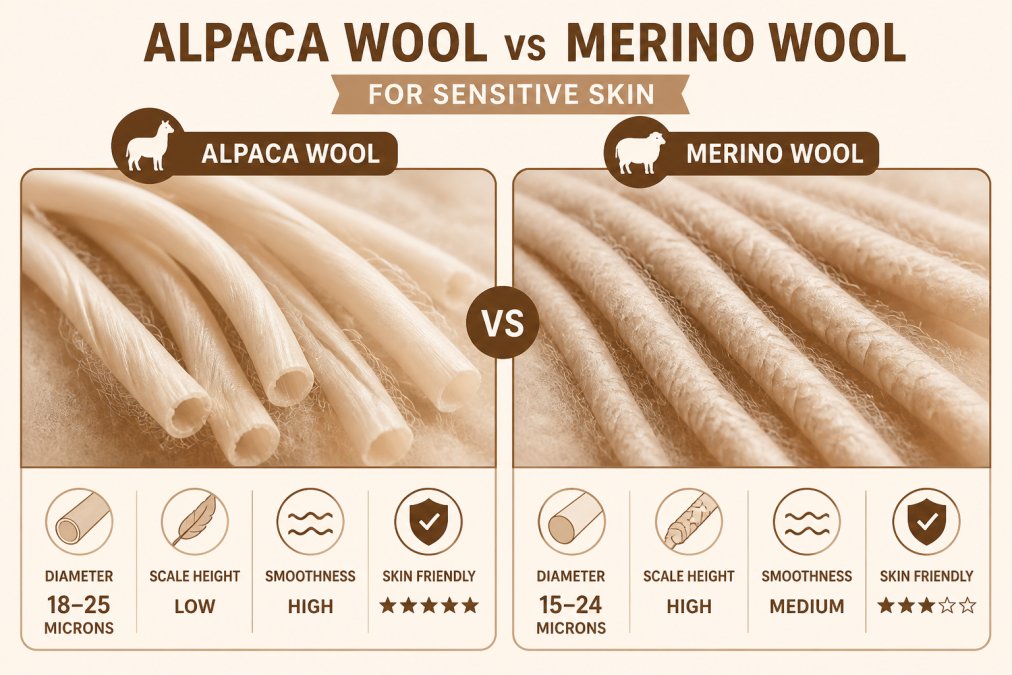
Merino wool typically ranges from 17-24 microns, with premium merino at 15-17 microns. Alpaca fiber ranges from 15-40 microns depending on grade. Low-grade alpaca can be significantly coarser than standard merino, while premium alpaca can be softer. You must check the specific micron count rather than assuming alpaca is automatically softer.
Both fibers excel at moisture-wicking and thermal regulation, keeping skin dry during physical activity. Both are natural protein fibers that breathe better than synthetics. The real difference for sensitive skin comes down to individual reactions to lanolin and the specific fiber diameter of the product.
| Characteristic | Alpaca Wool | Merino Wool |
|---|---|---|
| Lanolin Content | Lanolin-free | Low to moderate |
| Typical Micron Range | 15-40 microns | 17-24 microns |
| Best For Lanolin Sensitivity | Excellent | Good |
| Typical Softness (premium grade) | Very soft | Very soft |
| Moisture-Wicking | Excellent | Excellent |
| Price Point | Higher | Moderate |
Lanolin Allergy and Alpaca Wool
Lanolin is a natural wax secreted by sheep's skin glands that coats wool fibers. It protects the fiber from moisture but causes allergic reactions in a significant portion of the population, resulting in itching, redness, or dermatological reactions.
Alpaca produces no lanolin. The fiber grows from alpaca skin without any protective wax coating, which is why alpaca garments don't have that characteristic wool smell. This natural lanolin-free quality makes alpaca an excellent choice for anyone with a documented lanolin allergy.
However, lanolin-free doesn't guarantee zero irritation. Fiber diameter still matters. A person allergic to lanolin might feel comfortable in 18-micron alpaca but experience itching from 28-micron alpaca. The absence of lanolin removes one irritant, but fiber coarseness creates separate mechanical irritation.
Testing for sensitivity before committing to a full garment is smart. If you've had reactions to wool or merino, purchase a small alpaca item like socks or a lightweight scarf in the finest grade available. Wear it for a few hours. If no irritation develops, you've likely found a comfortable fiber.
Grades of Alpaca Fiber and Softness
Alpaca fiber is graded by micron count, and understanding these grades directly impacts whether a garment will feel scratchy or soft.
Baby alpaca ranges from 19-22 microns and represents the softest, most luxurious grade. This fiber comes from young alpacas or the finest portions of an adult's fleece. Baby alpaca feels buttery soft and is suitable for most people with sensitive skin.
Royal alpaca ranges from 15-18 microns and is the absolute finest grade available. This fiber is exceptionally rare and feels like cashmere. Royal alpaca is suitable even for people with extreme skin sensitivity, though products command premium prices.
Standard alpaca ranges from 23-30 microns and is suitable for people without sensitive skin. This grade is noticeably coarser and may irritate sensitive skin.
Huacaya alpaca typically produces fiber in the 22-28 micron range, while Suri alpaca produces longer, silkier fiber that often measures 20-25 microns. These breed differences matter less than the actual micron count.
Finer fibers bend more easily against skin rather than poking into it. Coarser fibers are stiffer and create that scratchy sensation. Someone with sensitive skin should target baby alpaca (19-22 microns) or royal alpaca (15-18 microns). The price difference is substantial, but a soft $150 sweater you wear for years is better value than a scratchy $60 sweater you can't wear.
How to Soften Alpaca Wool and Prevent Itchiness
Even premium alpaca can feel slightly stiff when new. Proper care reduces scratchiness and extends garment life.
Washing method matters significantly. Use cold water and gentle detergent, never hot water, which causes fiber to felt and become coarser. Avoid standard laundry detergent; use wool-specific or delicate-fabric detergent instead. According to The Textile Exchange sustainability guidelines, proper washing extends fiber life by 30-40% compared to standard laundering.
Conditioner softens fiber dramatically. After washing, rinse in cool water mixed with a small amount of hair conditioner or fiber conditioner. This coats the fiber cuticle and smooths the scale structure, reducing the prickly sensation. Leave the conditioner on for 5-10 minutes before rinsing thoroughly.
Drying technique prevents damage. Never wring or twist alpaca garments. Gently squeeze out excess water, then lay flat on a clean towel to dry. Air drying is gentler than machine drying.
Chemical residues from manufacturing can cause itchiness. New garments sometimes feel scratchy because they retain processing chemicals. Soak the garment in cool water with a small amount of white vinegar (1 tablespoon per gallon) for 15 minutes, then wash normally. The vinegar removes chemical residues without damaging the fiber.
Pilling doesn't indicate low quality. Pilling occurs when short fibers work loose and form small balls. Use a fabric shaver or pilling comb to remove pills. Pilling typically stops after several wears and washes.
Blends vs Pure Alpaca for Sensitive Skin
Some alpaca products blend alpaca with acrylic, wool, or cotton. Understanding blends helps you choose wisely for sensitive skin.
Pure alpaca (100% alpaca) gives you complete control over fiber diameter and processing. This is the safest choice for sensitive skin because there are no other fibers to irritate you. However, pure alpaca is more expensive and requires careful washing.
Alpaca blended with acrylic reduces cost but acrylic doesn't breathe like natural fiber and can trap moisture against skin. This blend is not ideal for sensitive skin, especially for base layers.
Alpaca blended with wool combines softness with durability, but if you have lanolin sensitivity, this blend is risky because wool introduces lanolin. The percentage matters; a 70% alpaca and 30% wool blend has less lanolin than pure wool but isn't lanolin-free.
Alpaca blended with cotton creates a lighter, more breathable fabric suitable for warmer weather. Cotton doesn't irritate sensitive skin and improves moisture absorption.
Worsted yarn is spun tightly with long fibers aligned parallel, creating a smooth yarn that feels less scratchy. Woolen yarn is spun loosely with fibers pointing in various directions, creating a fluffier yarn that can feel scratchier. For sensitive skin, worsted construction is preferable.
When choosing a blend, alpaca should be at least 50% of the blend to provide meaningful benefits. For sensitive skin, prioritize pure alpaca or alpaca blended with non-irritating fibers like cotton.
Common Mistakes That Make Alpaca Feel Scratchy
People often buy quality alpaca but experience itchiness due to preventable mistakes.
Washing in hot water causes fiber to tighten and felt, making the garment feel stiffer and coarser. Always use cold or lukewarm water.
Using standard laundry detergent contains harsh surfactants that strip natural oils from alpaca and damage the fiber cuticle. Wool-specific detergents are gentler.
Over-washing breaks down fiber and causes pilling. Most items can be worn 3-5 times before washing. Spot-clean stains instead of washing the entire garment.
Choosing the wrong fiber grade is the most common mistake. Someone with very sensitive skin buying standard-grade alpaca (25+ microns) is almost guaranteed to experience itching. If you have sensitive skin, invest in baby alpaca or royal alpaca.
Storing in plastic bags traps moisture and creates an environment for mold and mildew. Store alpaca garments in breathable cotton bags or on shelves in a cool, dry place.
Ignoring the care tag causes irreversible damage. Follow washing and drying instructions carefully.
Alpaca wool can be exceptionally comfortable for people with sensitive skin when you choose the right fiber grade and care for it properly. The difference between itchy and luxuriously soft alpaca comes down to micron count, lanolin content, and washing technique. If you have sensitive skin, invest in baby alpaca or royal alpaca from a reputable source, wash with gentle detergents, and use conditioning treatments to maintain softness. Purely Alpaca specializes in premium-grade alpaca products that prioritize comfort for sensitive skin, offering garments that deliver warmth and luxury without irritation. Shop all our fine-fiber alpaca collection and experience the difference that quality and care can make.
Frequently Asked Questions
Is alpaca wool itchy for sensitive skin, or is it actually hypoallergenic?
Alpaca wool is not technically hypoallergenic, but it is significantly gentler than sheep's wool for most people with sensitive skin. The key difference lies in fiber diameter and lanolin content. Alpaca naturally contains no lanolin, the waxy substance in sheep's wool that triggers allergic reactions in many people. Baby alpaca fiber typically measures 20-24 microns in diameter, compared to merino wool at 18-24 microns and regular wool at 25+ microns. Finer fibers create less prickle factor and cause less contact dermatitis. However, individuals with severe fiber allergies should test a small swatch first.
How does lanolin allergy affect alpaca wool compared to merino?
Lanolin is a natural oil secreted by sheep that remains in merino and regular wool even after processing. This lanolin causes contact dermatitis and skin irritation in people with sensitive skin or lanolin allergies. Alpaca does not produce lanolin, making it naturally lanolin-free. This is why alpaca wool is often recommended for those with known wool allergies. If you've had reactions to merino or sheep's wool in the past, alpaca is worth trying because it eliminates the most common irritant. Merino does contain less lanolin than coarser wools, but alpaca eliminates it entirely.
What fiber grade of alpaca wool is softest for sensitive skin?
Baby alpaca is the softest grade available, with fiber diameter between 20-24 microns. Royal alpaca is even finer at 18-20 microns, making it the premium choice for extremely sensitive skin. Standard alpaca ranges from 25-30 microns and is noticeably scratchier. The lower the micron count, the fewer dermatological reactions occur because finer fibers bend more easily against skin rather than piercing it. For sensitive skin, baby alpaca is typically the minimum acceptable grade. Royal alpaca costs more but provides the gentlest experience. Always check product labels for micron specifications before purchasing.
How should I care for alpaca wool to keep it soft and prevent itchiness?
Proper care is essential to maintain softness and prevent itchiness. Hand wash in cool water with gentle detergent designed for delicate fibers, avoiding hot water which can cause fiber crimp and stiffness. Never use regular laundry detergent or fabric softeners containing chemicals that leave residues. Rinse thoroughly until water runs clear to remove all soap. Lay flat to dry on a clean towel; never hang or machine dry. Avoid agitation and wringing. Some people soak their alpaca pieces in a mixture of cool water and a small amount of hair conditioner to maintain softness. Store in breathable cotton bags away from moths. Proper washing removes any chemical residues from textile processing that might irritate sensitive skin.
This article was written using GrandRanker