


Last Updated: October 31, 2026
Quick Summary
Eco-friendly alternatives to luxury throws are blankets made from traceable natural or recycled fibers, produced with low-impact processing, and built to last years rather than seasons. Alpaca, organic cotton, wool, linen, and hemp are renewable, biodegradable options, and GOTS or OEKO-TEX certification verifies the claims.
- Fiber choice drives most of a throw's environmental impact, so match the material to how you'll use it.
- GOTS covers organic fiber content and processing, while OEKO-TEX Standard 100 tests for harmful substances.
- Organic cotton throws suit warm sleepers and vegan households but are a lighter layer than wool or alpaca.
- Cost-per-use equals purchase price plus care and repair costs divided by total uses over its life.
- Hand wash in cool water with pH-neutral detergent and lay flat to air dry to extend a throw's life.
Table of Contents
- What Makes a Throw an Eco-Friendly Alternative to Luxury?
- Sustainable Throw Blankets: Natural Fibers That Rival Cashmere
- Organic Cotton Throws: Soft, Breathable, and Chemical-Free
- Alpaca Throw Blankets: The Warmth of Luxury Without the Guilt
- Non-Toxic Throw Blankets: How to Avoid Hidden Chemicals
- Cost-Per-Use and Lifecycle: The Real Value of Eco-Friendly Throws
- Choosing Your Eco-Friendly Throw
- Frequently Asked Questions
What Makes a Throw an Eco-Friendly Alternative to Luxury?
An eco-friendly alternative to luxury throws is a blanket made from traceable natural or recycled fibers, produced with low-impact processing, and built to last years rather than seasons. The premise is simple: you shouldn't have to choose between the feel of a high-end throw and a clear conscience about how it was made. Alpaca is one of the fibers that proves this point best.
Here's what most buying guides get wrong. They treat "eco-friendly" as a label you slap on a product, when it's really a chain of decisions: what the fiber is, how it's grown or raised, how it's cleaned and dyed, and how long the finished piece stays in use. A throw can be natural and still fail on longevity.
Below, we break down the materials, certifications, and cost math that separate a genuinely sustainable throw blanket from a green-tinted one.
The Materials That Matter
Fiber choice drives most of a throw's environmental impact. Natural fibers like alpaca, wool, linen, and hemp are renewable and biodegradable. Organic cotton avoids the pesticide load of conventional cotton. Recycled materials, including recycled polyester, divert waste from landfills but still shed microplastics over time.
The trade-offs are real. Linen is breathable but wrinkles. Hemp is tough but takes time to soften. Alpaca is warm, lightweight, and naturally low in lanolin, which matters for sensitive skin. No single fiber wins on every measure, so match the material to how you'll actually use the throw.
Certifications to Look For
Third-party certification is how you verify claims you can't see. The two most relevant for throws are GOTS (Global Organic Textile Standard), which covers organic fiber content and processing, and OEKO-TEX Standard 100, which tests for harmful substances.
Watch out: certifications have limits. A GOTS label confirms organic fiber and processing standards, not animal welfare. OEKO-TEX confirms chemical safety, not sustainability of farming. Read which specific standard applies before you treat a logo as a blanket guarantee. The Federal Trade Commission's guidance on green claims is a useful primer on what marketers can and can't legally claim.
Sustainable Throw Blankets: Natural Fibers That Rival Cashmere
Natural fibers can match cashmere on softness and warmth, and several beat it on durability and traceability. The catch is that "natural" alone doesn't guarantee low impact. Processing, dyeing, and farming methods vary widely within the same fiber category.
For sustainable throw blankets, prioritize undyed or low-impact-dyed pieces, since dyeing is one of the most resource-intensive steps. Undyed natural fibers also sidestep azo dyes and other chemical concerns entirely.
Alpaca vs. Wool vs. Cashmere
Each fiber has a distinct profile. Here's how they compare on the factors that matter most for a throw:
| Fiber | Warmth | Softness | Durability | Typical Care |
|---|---|---|---|---|
| Alpaca | High, lightweight | Very soft, low lanolin | Strong, resists pilling | Hand wash or dry clean |
| Wool | High | Can feel scratchy | Durable | Hand wash |
| Cashmere | High | Extremely soft | Delicate, pills easily | Dry clean preferred |
Wool is the workhorse, durable but often itchier. Cashmere is the softest and the most fragile. For a deeper look at how alpaca holds up against cashmere over time, see our comparison of alpaca wool durability versus cashmere.
Organic Cotton Throws: Soft, Breathable, and Chemical-Free
Organic cotton throws are the best pick for warm sleepers and anyone avoiding animal fibers. They're breathable, machine-washable, and free of the pesticide residue tied to conventional cotton.
The word "organic" carries legal weight here. In the United States, organic textile claims fall under the USDA National Organic Program, so a genuine organic cotton throw should be backed by certification, not just marketing copy. Look for GOTS, which traces the fiber from farm to finished product.
Where organic cotton falls short is warmth. It's a lighter layer, better for year-round use than deep winter. If you want cozy weight without synthetic fill, pair it with a natural-fiber layer rather than a polyester-backed "plush" throw.
Alpaca Throw Blankets: The Warmth of Luxury Without the Guilt
Alpaca throw blankets deliver the drape, softness, and warmth people associate with high-end throws.
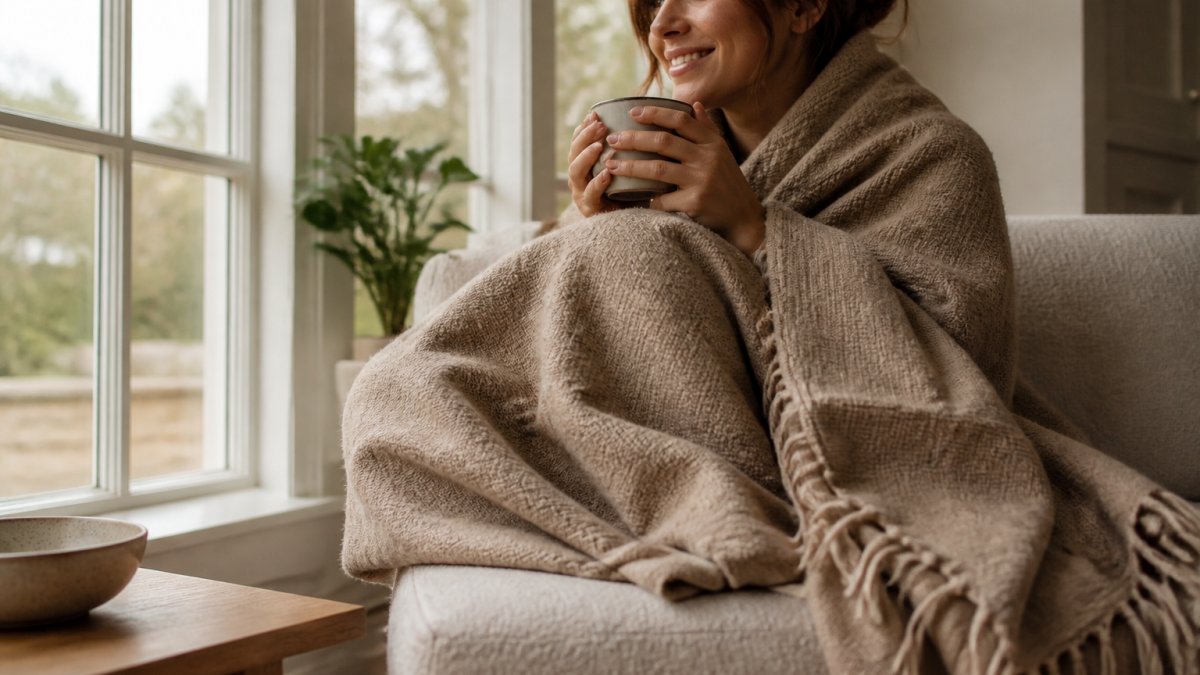
Our Solid Color Alpaca Throw is 100% baby alpaca, made in Peru, and measures 71 inches including fringe by 51 inches wide. The Aurora Knit Alpaca Throw features a modern rib-knit texture with a contrast stitch border, made in Peru from 89% alpaca and 11% nylon.
Why Alpaca Beats Synthetic Fleece
Synthetic fleece is cheap and soft, but it's plastic. It sheds microfibers in the wash that end up in waterways, and it's derived from petroleum.
If warmth and performance are your priority, our breakdown of alpaca wool versus synthetic insulation lays out the difference in detail.
Natural Undyed 100% Baby Alpaca Eco Classic Shawl →
Non-Toxic Throw Blankets: How to Avoid Hidden Chemicals
Non-toxic throw blankets are those free of harmful dyes, finishes, and flame retardants, verified through testing rather than assumed from natural-sounding labels. Chemical safety is where "eco-friendly" claims most often fall apart.
The biggest offenders in conventional textiles are azo dyes, formaldehyde-based finishes, and flame retardants. Natural fibers aren't automatically clean, since they can still be dyed and finished with the same chemicals. That's why OEKO-TEX Standard 100 matters: it tests the finished product for harmful substances, not just the raw fiber.
A practical rule: if a throw is labeled "non-toxic" with no certification behind it, treat the claim as unverified. Ask which standard was tested and by whom.
Cost-Per-Use and Lifecycle: The Real Value of Eco-Friendly Throws
Cost-per-use is the purchase price divided by the number of times you'll actually use a throw, and it reframes the whole purchase. Most roundups compare sticker prices and stop there. The lifecycle math is where eco-friendly throws separate from cheap ones, but only if you're honest about lifespan, care costs, and repairability.
The Cost-Per-Use Formula, Worked Through
Cost-per-use = (purchase price + care and repair costs over its life) ÷ total uses.
A throw used every winter evening for ten years sees roughly 1,500 uses. A cheaper throw replaced every two years sees about 300 uses before it's replaced. Run the numbers with representative figures and the pattern is consistent: a higher-priced natural-fiber throw that lasts a decade often lands at a lower cost per use than a budget throw bought three times over. The exact dollar figures depend on the pieces you're comparing, so plug in your own prices, the mechanism, not a single number, is the point.
Lifespan Assumptions That Drive the Math
The comparison only holds if the lifespan assumptions are realistic. A few factors move them most:
- Fiber structure. Long-staple natural fibers resist pilling and matting better than short-staple or synthetic fleece, which compresses and sheds over time.
- Weight and construction. A denser knit or weave holds shape through washing; a loose, lofty fleece flattens.
- Dye and finish. Low-impact or undyed pieces avoid some of the chemical processing that can weaken fibers.
- Care. Hand washing and air drying add years; hot machine cycles subtract them permanently.
A common pattern is that natural-fiber throws outlast synthetic fleece by a wide margin, but the gap narrows if the natural throw is machine-washed hot or stored poorly. Longevity is partly a property of the fiber and partly a property of the owner.
Care and Repair Costs
Care is a real line item, not a footnote. Hand washing with a pH-neutral detergent costs little in supplies but takes time; dry cleaning a wool or alpaca throw runs a per-visit cost that adds up over a decade. Repair matters too: a skilled reweaver can mend a pulled thread or small hole in a natural-fiber throw for a fraction of replacement cost, while a synthetic fleece throw is usually discarded once it pills or tears. Factor both into the lifecycle total rather than treating the purchase price as the whole cost.
End-of-Life Trade-Offs
Recycled polyester diverts waste from landfills but still sheds microplastics in the wash and is not biodegradable. Neither path is free of impact, the trade-off is between landfilling a plastic product and the land, water, and processing footprint of a natural one. Durability is what keeps either out of the waste stream longest.
Care Instructions That Extend Life
Care is the single biggest lever on longevity, and it's where natural-fiber throws earn their keep. Follow these steps to get the most years out of an alpaca or wool throw:
- Check the care label before your first wash and follow it exactly
- Hand wash in cool water with a gentle, pH-neutral detergent
- Skip the dryer; lay flat to air dry away from direct heat
- Fold rather than hang for long-term storage to avoid stretching
- Brush lightly to refresh the nap and remove surface pills
- Store clean and dry, away from moths, in a breathable bag
Our alpaca throws are dry clean or hand wash only, and our scarves are dry clean or hand wash and air dry only. For the full method, follow our simple alpaca product care instructions. Watch out: machine washing on a hot cycle is the fastest way to shrink and mat a natural-fiber throw, and that damage is permanent.
Choosing Your Eco-Friendly Throw
The right eco-friendly alternative to luxury throws comes down to three questions: what fiber suits your climate and skin, which certifications back the claims, and how long the piece will realistically last. Answer those and the choice gets simple.
Start with fiber. Warm sleepers and vegan households lean organic cotton. Cold-climate homes and sensitive skin do well with alpaca. Then verify with GOTS or OEKO-TEX, and run the cost-per-use math before you compare price tags.
For the fiber itself, our guide to why alpaca wool is eco friendly explains the sourcing and processing side in more depth. When you're ready to browse, our full range of alpaca throws and blankets puts every option in one place.
Frequently Asked Questions
What are the most eco-friendly materials for throw blankets?
Alpaca, organic cotton, hemp, and linen are among the most eco-friendly options. Organic cotton avoids synthetic pesticides and fertilizers. Look for certifications like GOTS or OEKO-TEX to verify low-impact production and chemical safety.
Are alpaca throws more sustainable than synthetic throws?
Yes. Alpaca is a natural fiber, while synthetic throws like polyester and fleece are made from petroleum. Choosing alpaca supports sustainable farming and reduces landfill waste.
How can I tell if a throw blanket is non-toxic?
Check for third-party certifications such as OEKO-TEX Standard 100, which tests for harmful substances, or GOTS for organic textiles. Avoid blankets labeled with vague terms like 'eco-friendly' without proof. Look for undyed or low-impact dyed options, and prefer natural fibers over synthetic ones that may off-gas chemicals.
What should I look for in an ethical and sustainable throw blanket?
Prioritize natural fibers like alpaca or organic cotton, and verify certifications that ensure fair labor and environmental standards. Consider the full lifecycle: how the material is produced, whether it's biodegradable, and how to care for it. Brands that offer transparency about sourcing and manufacturing, like Purely Alpaca's undyed baby alpaca throws, are a good sign.
The hardest part of buying a sustainable throw isn't finding one. It's cutting through vague "green" labels to a piece you can trust for a decade. That's the problem we've worked on since 2002, as a small family business offering naturally warm, hypoallergenic alpaca throws and accessories, with free shipping on orders of $100 or more and hassle-free returns. Get started with Purely Alpaca and bring home a throw built to last.
