



Last Updated: November 1, 2026
Quick Summary
Static on alpaca knitwear is prevented mainly by controlling dry indoor air, avoiding heat, and reducing friction from synthetic layers. Use a humidifier during heating season, air dry sweaters flat instead of using a dryer, and keep alpaca away from synthetic linings.
- Static builds when dry air prevents charge from draining away from the fiber.
- Heating systems can pull indoor humidity well below the comfort range.
- Air dry alpaca flat on a towel instead of using a hot dryer.
- Use 100% wool dryer balls and low heat when drying other laundry.
- Avoid aerosol anti-static sprays and dryer sheets on alpaca knitwear.
Table of Contents
- Why Alpaca Knitwear Picks Up Static
- Step 1: Control the Air Around Your Knitwear
- Step 2: Dry Alpaca Wool Flat Instead of in the Dryer
- Step 3: Use Wool Dryer Balls for Static Control
- Step 4: Remove Static From Clothes While You Wear Them
- Step 5: Store and Fold to Prevent Sweater Static Cling
- Start With the Right Care Routine for Your Next Alpaca Piece
- Frequently Asked Questions
Why Alpaca Knitwear Picks Up Static
Static on alpaca knitwear happens when friction builds an electrical charge in the fibers and the garment clings to you, your other clothes, or your hair, which is why many owners ask about static on alpaca during dry months. Static is a normal part of wearing natural fibers in dry air, and the good news is that most of it is easy to control once you understand what is actually happening in the fiber.
The basic mechanism
Static is an electrical charge that builds when two materials rub together and then separate. Every time you pull a sweater over your head, slide your arms into a coat, or shift in a car seat, tiny amounts of charge transfer between the surfaces. In humid air, that charge drains away through moisture in the air and on your skin. In dry, cold air, it has nowhere to go, so it accumulates on the fabric until you touch something metal or feel the familiar snap.
Winter heating makes indoor air even drier, which is why sweaters crackle most from November through March. A heated room can pull indoor humidity down well below the comfort range, and that is exactly the condition that lets static build and linger.
Why alpaca is different from other natural fibers
Alpaca fiber is naturally smooth and lightweight, and it resists pilling well. Those same qualities that make it pleasant to wear also affect how it handles static. The smooth surface means the fiber slides easily across skin, synthetic linings, and other fabrics, and that sliding is what generates friction. Because alpaca is lightweight, a sweater moves more against your body and your outer layers than a heavier wool garment would, which adds more opportunities for charge to build.
Check the fiber content on the care label before you assume the alpaca is the culprit, since blends that include nylon, acrylic, or polyester are generally more prone to holding a charge than pure fiber.
The layering effect
Most static complaints come from layering, not from the sweater alone. A common pattern is an alpaca sweater worn over a synthetic base layer or under a jacket with a synthetic lining. Each time you move, the two surfaces rub and separate, and the dry air keeps the charge in place. Removing one synthetic layer from the outfit often reduces static more than any spray or home remedy.
- Dry indoor air from heating systems
- Friction from rubbing against synthetic linings and pants
- Dryer heat that strips moisture from the fiber
- Static-prone layers worn under synthetic jackets
- Fiber blends that include nylon, acrylic, or polyester
Step 1: Control the Air Around Your Knitwear
Humidity is the biggest factor you can control. Many people find that a small humidifier in the room where they store or wear their sweaters makes a noticeable difference during dry months.
Aim to keep indoor air in a comfortable middle range rather than letting it drop very low. A simple hygrometer shows you where your air sits.
- Place a humidifier in the bedroom or living area during heating season
- Keep sweaters away from heating vents and radiators
- Avoid storing knitwear in very dry spaces like an unheated attic
- Use a hygrometer to check indoor humidity
Watch out: Overly damp air can encourage mildew in stored knitwear, so keep stored pieces clean and dry before packing them away.
The table below summarises the main air-control steps that help keep static down on alpaca knitwear.
| Action | Why | Watch out |
|---|---|---|
| Place a humidifier in the room | Adds moisture to dry heated air | Keep stored pieces clean and dry |
| Keep sweaters away from vents | Heat dries out the fiber | Avoid radiators |
| Avoid very dry storage spaces | Dry spaces encourage static | Unheated attics are a poor choice |
| Check humidity with a hygrometer | Shows where your air sits | Aim for a middle range |
Step 2: Dry Alpaca Wool Flat Instead of in the Dryer
Heat is hard on alpaca. A hot dryer removes moisture from the fiber and leaves it more prone to static and shape loss. Laying the garment flat on a clean towel and letting it air dry is the safest method.
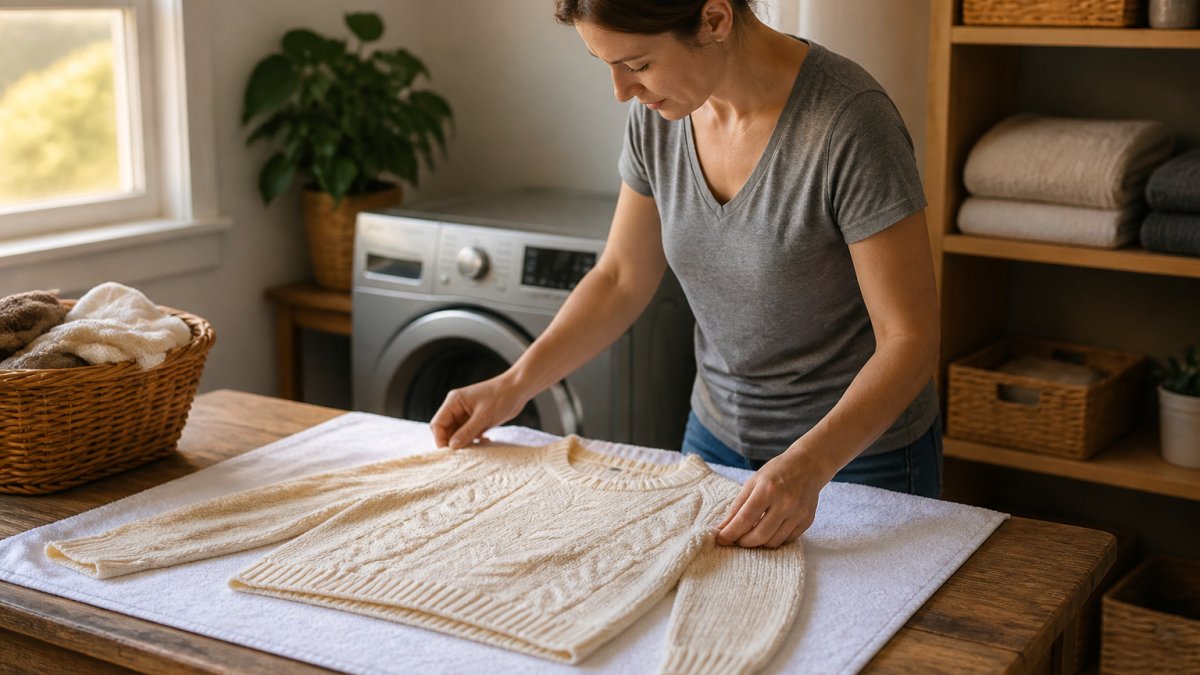
Gently press out excess water in a towel, then reshape the piece by hand. Place it on a dry towel away from direct sun and heat sources. Turn it once or twice so it dries evenly.
- Roll the sweater in a clean towel to remove extra water
- Lay it flat on a second dry towel
- Reshape the sleeves and hem while damp
- Keep it out of direct sunlight and away from radiators
Step 3: Use Wool Dryer Balls for Static Control
If you do use a dryer for other laundry, wool dryer balls can help reduce static on the load. Read why alpaca dryer balls work better than alternatives. Choose 100% wool balls and run the dryer on a low or no-heat setting. Wool balls separate pieces of fabric and help them tumble freely, which reduces friction.
You can browse our range of alpaca dryer balls on the Purely Alpaca website for current options.
- Use two to four balls per load
- Select a low-heat or air-fluff setting
- Keep alpaca knitwear out of the dryer whenever possible
Step 4: Remove Static From Clothes While You Wear Them
Sometimes static appears after you have already put the sweater on. Quick, gentle fixes work well in these moments, but alpaca needs a lighter touch than a cotton T-shirt. The goal is to discharge or redirect the charge without adding moisture, residue, or friction that can damage the fiber.
Step-by-step: the safe sequence
- Discharge before you touch the knit. Touch a metal object such as a door handle, a metal faucet, or a key before your hand contacts the sweater. This gives the built-up charge a path to leave your body instead of snapping through the fiber.
- Dampen your hands, not the garment. Lightly wet your hands and smooth them over the outside of the sweater. The trace moisture on your palms is enough to help the charge dissipate. Do not wring or rub; a light pass is all you need.
- Add moisture to your skin. Dry skin holds more charge. A small amount of unscented lotion on your hands and forearms before you dress reduces the friction between skin and fiber.
- Separate the layers. If you are wearing a synthetic base layer or a jacket with a synthetic lining, put a thin natural-fiber layer between the alpaca and the synthetic. Cotton or silk can work well as a separating layer.
- Let the garment rest. If static keeps returning, take the sweater off for a few minutes and let it hang in a room with normal humidity. The charge often drains on its own once the friction stops.
What to avoid on alpaca
- Do not spray water directly on the garment. Spot-wetting can leave water marks and distort the shape as it dries.
- Do not use aerosol anti-static sprays or fabric fresheners. They can leave residue that attracts dirt and is hard to remove from a fiber you should not wash often.
- Do not rub the sweater with a dryer sheet. The coating that reduces static on synthetics can transfer onto alpaca and leave a waxy feel.
- Do not press or rub hard. Friction is what created the charge, and aggressive rubbing can also felt or stretch the knit.
- Do not use high heat to dry out the static. Heat drives moisture out of the fiber and makes the problem worse the next time you wear the piece.
For more on keeping pieces in good condition between wears, see How to Store Luxury Wool Sweaters Long Term.
Step 5: Store and Fold to Prevent Sweater Static Cling
Folding protects the shape of your knitwear and reduces the rubbing that creates static in storage. Fold sweaters rather than hanging them, since hanging stretches the shoulders over time.
Store folded pieces in breathable cotton bags or on open shelves. Avoid plastic bags that trap moisture and rub against the fabric. For more detail on keeping pieces in good condition over time, read How to Store Luxury Wool Sweaters Long Term.
-
Fold sweaters with the arms tucked in
-
Choose breathable cotton storage over plastic
Start With the Right Care Routine for Your Next Alpaca Piece
Preventing static comes down to a few habits: keep indoor air from getting too dry, dry pieces flat, use wool dryer balls for the rest of your laundry, and fold instead of hang. Start with the one that fits your routine most easily, then add the others as needed.
Check the care label on every garment before you wash it, since fiber blends can vary. If you are unsure, air drying flat is always the safe choice. Browse the full Purely Alpaca collection to find knitwear that suits your winter wardrobe.
Frequently Asked Questions
Is it okay to put alpaca wool in the dryer?
Machine drying is generally a poor choice for alpaca knitwear. Heat and tumbling can shrink fibers, stretch the knit and increase pilling. Lay pieces flat on a clean towel and reshape them gently while damp. If you ever use a dryer, choose the lowest or no-heat setting and remove the garment while it is still slightly damp. Always check the care label first, since blends can behave differently from pure alpaca.
Can you use a dryer sheet on an alpaca sweater?
It is better to avoid dryer sheets on alpaca. Many sheets coat fibers with waxes and softeners that can reduce loft and natural softness over time, and they can leave residue that makes knitwear feel less breathable. If you want static control in a dryer, wool dryer balls are a gentler option. For garments you wear, a light mist of water or a small amount of fabric-safe conditioner works without buildup.
Does humidity help prevent static cling in sweaters?
Yes. Static builds more easily in dry air, especially during winter when indoor heating lowers humidity. Running a humidifier in the room where you store or wear your knitwear, or keeping the air at a comfortable moisture level, helps reduce cling. Lightly misting the air or a nearby surface, not the garment directly, can also help. Keep your sweaters away from direct heat sources, which dry fibers further.
