


Quick Summary
The best pajamas for children with eczema are soft, breathable and free of irritating finishes, with fabric being the biggest factor. Alpaca, cotton and bamboo viscose are the main options, and alpaca is often gentler because it contains no lanolin.
- Fabric is the single biggest factor in keeping eczema-prone skin calm overnight.
- Alpaca contains no lanolin and has finer scales, so it tends to feel smoother than sheep wool.
- Bamboo viscose feels cool and soft but can lose shape after repeated hot washes.
- Choose flat seams, tagless designs and a relaxed cut that does not pull across joints.
- Wash new pajamas first and use a mild, fragrance-free detergent, drying flat when possible.
Table of Contents
Why Fabric Choice Matters for Children With Eczema
The best pajamas for children with eczema are the ones that keep skin calm through the night, and fabric is the single biggest factor in that. Read our guide to choosing hypoallergenic alpaca baby clothing for a step-by-step look at what to check. Eczema, also called atopic dermatitis, leaves skin dry, reactive and easily irritated. Clothing that traps heat, rubs or contains harsh dyes can trigger a flare-up before a child even falls asleep. Fabric choice can make a real difference to how a child's skin feels overnight.
The stakes are high because children with eczema often scratch in their sleep without waking. Breaking that itch-scratch cycle starts with what touches the skin all night. Pajamas that feel smooth, breathe well and avoid irritating finishes give the skin barrier a better chance to recover.
Watch out: sizing matters as much as material. Pajamas that are too tight can chafe at the elbows and knees, while loose sleeves can ride up and expose skin to the bedding.
Best Fabric for Children With Eczema: Alpaca, Cotton and Bamboo Compared
Most parents narrow the choice to three fibers: cotton, bamboo viscose and alpaca. Cotton is widely available and easy to wash, but it can hold moisture and feel stiff after repeated laundering. Bamboo viscose is soft and drapes well, and many families like its cool feel. Alpaca is a natural fiber that contains no lanolin. See how it stacks up in alpaca vs sheep wool for eczema.
The right choice depends on how your child sleeps, how warm your home runs and how often you can launder. Compare fiber, warmth and care requirements side by side before you buy.
| Fiber | Warmth | Moisture handling | Care | Best for |
|---|---|---|---|---|
| Alpaca | Warm without bulk | Breathes and wicks moisture | Gentle wash, lay flat | Cooler bedrooms, sensitive skin |
| Cotton | Light to moderate | Absorbs moisture, dries slower | Machine wash | Warm rooms, frequent laundry |
| Bamboo viscose | Light and cool | Soft, breathes well | Gentle cycle | Warm nights, soft drape |
Why Alpaca Feels Softer Than Wool on Sensitive Skin
Many parents avoid wool because traditional sheep wool can feel itchy. Alpaca fiber has finer scales and contains no lanolin, so it tends to feel smoother against the skin. That difference matters for children whose skin is already reactive. Purely Alpaca's baby alpaca pieces are made to feel gentle from the first wear, which is why many families reach for alpaca when wool has failed them.
Bamboo Pajamas for Toddlers: Breathability and Temperature Control
Toddlers run warm and kick off blankets, so breathability is a real concern. Bamboo viscose is light and soft, and it tends to feel cool, which suits warmer bedrooms. The trade-off is that bamboo viscose can lose shape after repeated hot washes, so follow the care label closely. For toddlers who sleep hot, a lightweight bamboo layer over a breathable base often works well.
Eczema Pajamas With Mittens: Stopping Nighttime Scratching
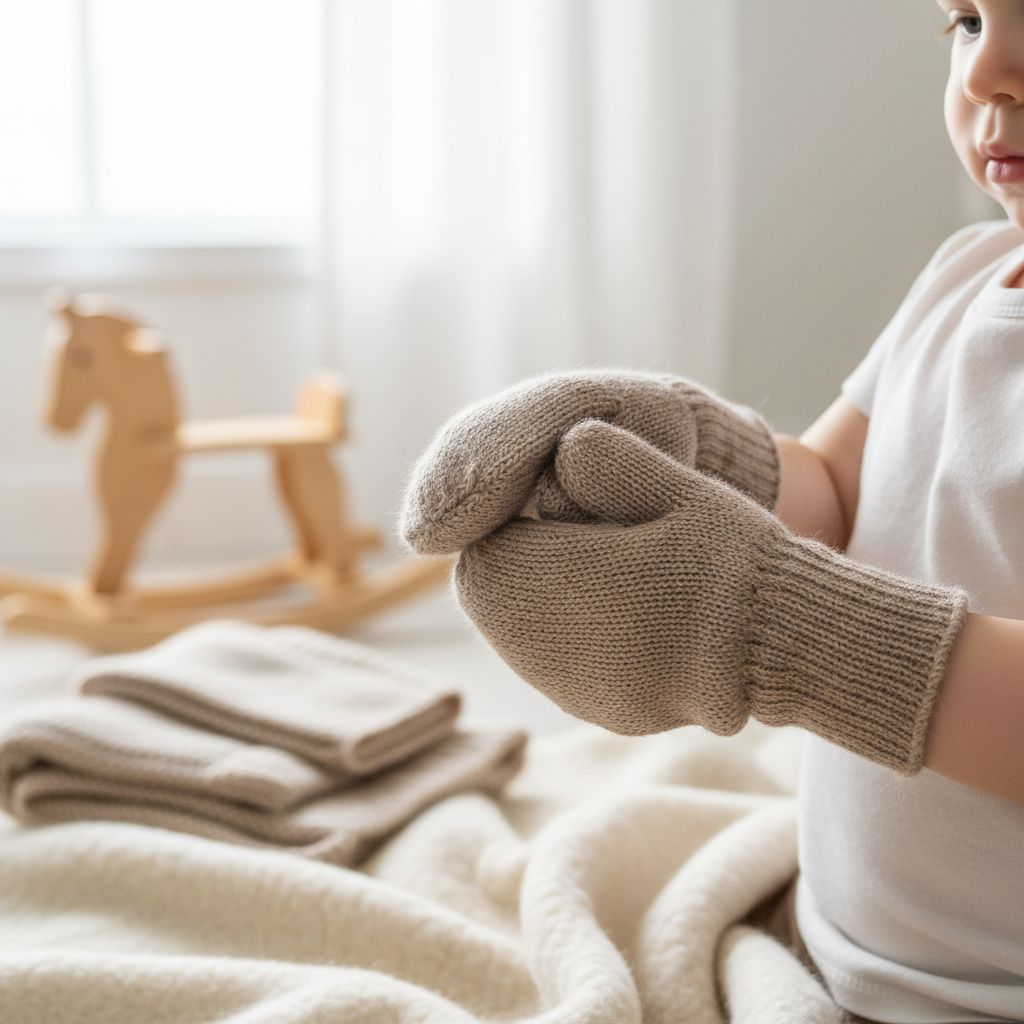
Scratching at night is the hardest part of eczema for many families. Our Kids Alpaca Mittens are made from Suri blend alpaca yarn.
Eczema Clothing for Kids: Fit, Seams and Laundry Care
Fit and construction affect comfort as much as fiber. Look for flat seams, tagless designs and a relaxed cut that does not pull across joints. Wash new pajamas before first use to remove finishing residues, and use a mild, fragrance-free detergent. Dry flat when possible, since heat can stiffen fibers and make them less comfortable over time.
Choosing Your Child's First Soft Alpaca Layer From Purely Alpaca
If you are ready to try alpaca, start with a piece that suits your child's age and activity. Our 100% Baby Alpaca Receiving Blanket is priced at $159.95 and finished with a satin ribbon trim. For older children, the Alpaca Infant Toddler Chullo Hat is priced at $19.95 and the Alpaca Watching Socks at $18.95. Pick one item first, see how your child responds, then build a wardrobe that fits your home and routine.
Best for: parents who want a soft, natural layer that stays warm without heavy bulk.
Frequently Asked Questions
What are the best pajamas for kids with eczema?
The best pajamas for kids with eczema are loose, soft and made from breathable natural fibers such as alpaca, organic cotton or bamboo viscose. Look for smooth seams, tagless designs and a fit that does not press on the skin. Avoid rough wool and heavily dyed synthetics, which can trigger itching. Purely Alpaca offers alpaca items for kids, such as the Alpaca Watching Socks and Kids Alpaca Mittens. Always test a new garment on a small area first.
What is the best fabric for children with eczema?
For most children with eczema, the best fabric is a soft, breathable natural fiber that wicks moisture and does not irritate. Alpaca fiber is naturally free of lanolin. Synthetic fabrics tend to trap heat and sweat, which can worsen the itch-scratch cycle. Choose the fabric that your child tolerates best and wash new items before wearing.
Are bamboo pajamas good for children with eczema?
Bamboo pajamas can work well for children with eczema because bamboo viscose is soft, breathable and tends to wick moisture away from the skin. Lighter fabrics also help prevent overheating, which can trigger flare-ups. Bamboo is not the only option, though. Purely Alpaca offers alpaca blend items such as the Soft Touch Therapeutic Alpaca Slouchy Socks. Check the fabric content label and try a small patch first to confirm your child does not react.
Should children with eczema wear loose or tight pajamas?
Loose pajamas are usually the better choice for children with eczema. Tight garments can rub against inflamed skin and trap sweat, while looser fits allow air to circulate and reduce friction during sleep. Look for an relaxed cut with enough room at the wrists and ankles. Compression styles can be appropriate for specific medical needs, but these should be chosen with a clinician's guidance rather than for eczema alone.
