


Quick Summary
2026 is the year the scarf takes center stage, with shoppers seeking fewer, better pieces that are soft, warm and built to last. An alpaca scarf fits that goal, and Purely Alpaca's collection offers options in every style and weight this season.
- Market analysts project the global scarf market to reach between 27 and 29 billion USD by 2026.
- Compare options on fiber content, length and width, weave or knit structure, and care requirements.
- A 100% baby alpaca scarf feels softer, while an alpaca blend adds durability and structure.
- Wash alpaca in cool water with a mild wool-safe detergent, and dry it flat rather than hanging it.
- Store folded or loosely rolled, using cedar or lavender sachets instead of harsh mothballs.
Table of Contents
- Why 2026 Is the Year of the Scarf
- What Makes an Alpaca Scarf Worth Buying
- Finding the Best Alpaca Scarf for Your Needs
- How to Style an Alpaca Scarf for Every Outfit
- How to Care for an Alpaca Scarf So It Lasts
- Choosing Your Next Alpaca Scarf at Purely Alpaca
- Frequently Asked Questions
2026 Is the Year of the Scarf: Shop Alpaca Styles
Last Updated: November 9, 2026
Why 2026 Is the Year of the Scarf
Purely Alpaca has spent more than two decades working with alpaca fiber, and 2026 looks like the year the scarf finally takes center stage. Market analysts project the global scarf market to reach between 27 billion and 29 billion USD by 2026, according to Research and Markets, Scarf Market Analysis 2026. Scarf trends for 2026 emphasize versatility, texture, and bold statements, with skinny scarves and triangle styles leading the way.
The shift is more than a passing trend. Industry commentary points to a move toward refinement over expansion and intention over excess. Shoppers are looking for fewer, better pieces, and a scarf that is soft, warm, and built to last fits that goal well. If you have been wearing an older scarf that looks a little tired, this is a good season to upgrade.
Shop our full scarf collection to see the styles, colors and weights available this season.
What Makes an Alpaca Scarf Worth Buying
Alpaca fiber earns its place in a scarf because of how it works, not just how it feels.
When you compare options, look at four things: fiber content, length and width, weave or knit structure, and care requirements. A 100% baby alpaca scarf will feel noticeably softer than a blend, while a blend can add durability and structure. Check the listed dimensions too: a longer scarf gives you more wrapping options, while a wider one provides extra coverage on cold days. A dense twill or herringbone weave drapes cleanly and resists wind, while a looser knit feels airier and works better in mild weather.
Cost per wear is the practical test when weighing a scarf against cheaper options. If you want the softest possible feel against the skin, start with baby alpaca; if you need structure and easier care, a blend is the more forgiving choice.
Here is how the main scarf choices compare at a glance.
| Option | Best for | Key difference |
|---|---|---|
| 100% baby alpaca | Softest feel against skin | Lightest, most delicate |
| Alpaca blend | Structure and easier care | More durable, less soft |
| Dense twill or herringbone | Wind resistance and clean drape | Holds shape well |
| Looser knit | Mild weather | Airier and lighter |
Finding the Best Alpaca Scarf for Your Needs
The right scarf depends on how you plan to wear it. A lightweight woven piece suits layering in mild winters, while a denser knit is better for serious cold. Start by deciding how warm you need the scarf to be, then choose the fiber and construction that match.
Baby Alpaca, Blends and Chunky Knits
Our 100% Baby Alpaca Scarf - Woven Solid measures 71 inches long and 12 inches wide and weighs 130 grams, making it a lightweight option.

If you want more presence and heft, the Chunky Knitted Alpaca Scarf is built for warmth without weight. It is made from a blend of 58% acrylic, 38% alpaca and 4% polyamide.

Alpaca Versus Cashmere, Merino and Synthetics
Many shoppers wonder how alpaca stacks up against other premium fibers. Purely Alpaca recommends choosing based on your priorities for softness, warmth, durability and care rather than on fiber alone.
How to Style an Alpaca Scarf for Every Outfit
An alpaca scarf can change the look of a simple outfit. Wrap a long scarf loosely once for an easy, relaxed look, or loop it twice for extra warmth in colder conditions. A solid neutral works with almost everything, while a bolder piece like The Ombre - USA Made Alpaca Scarf, which is fully reversible, can serve as the statement of the outfit. Its rich color transitions give you two looks in one accessory.

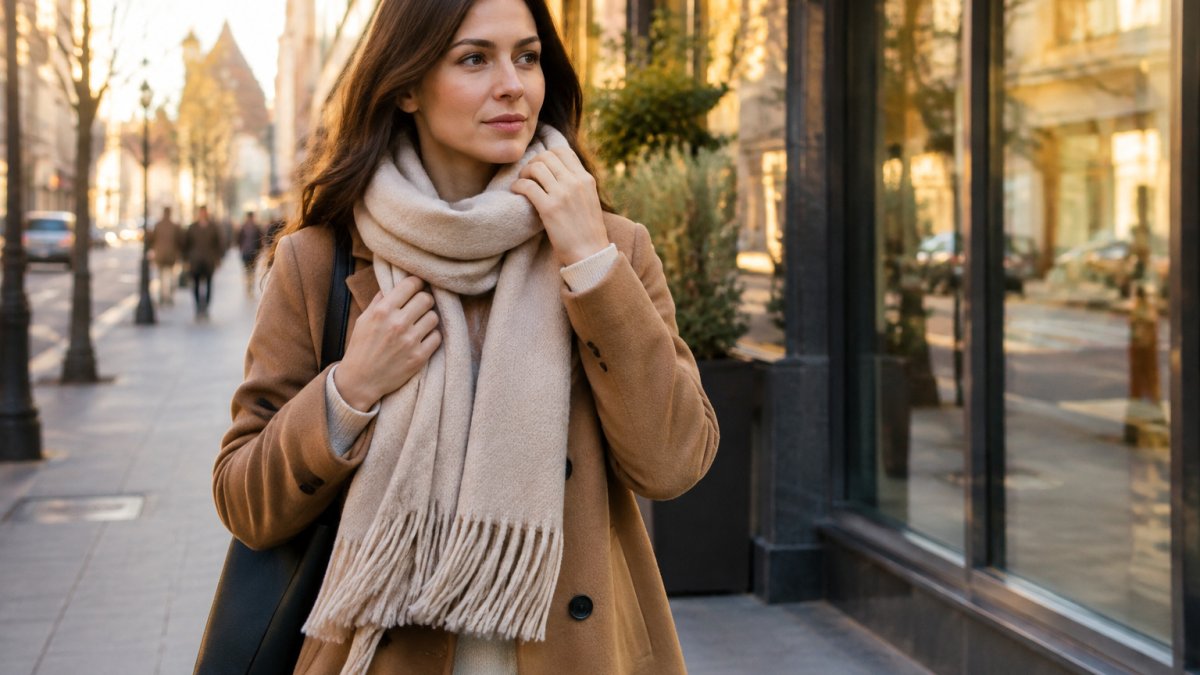
For a polished finish, drape the scarf over a tailored coat and let the ends fall evenly. For casual days, tie a loose knot or simply tuck one end into your jacket. Scarves also work as a layering piece over knitwear, adding color and texture without overwhelming the rest of your look.
How to Care for an Alpaca Scarf So It Lasts
Alpaca responds best to gentle care. Most of our scarves are dry clean or hand wash only.
For hand washing, use cool water and a mild wool-safe detergent, not regular laundry soap. Submerge the scarf and let it soak for a few minutes, then press it gently against the side of the basin rather than rubbing or wringing. Rinse in cool water until the soap is gone. The goal is to clean the fibers without agitating them, because friction is what causes felting and pilling.
Drying is where many scarves go wrong. Lay the scarf flat on a clean towel, reshape it to its original dimensions, and let it air dry away from direct heat and sunlight. Never hang a wet alpaca scarf: the weight of the water stretches the fibers and can leave the scarf longer on one side. Avoid wringing the scarf and keep it away from radiators, which can stiffen the fibers.
Storage matters as much as washing. Fold or loosely roll the scarf in a breathable space, and use cedar or lavender sachets rather than harsh mothballs to keep moths away. Avoid storing a scarf on a tight hook for months, since the weight can distort the weave. For seasonal storage, a cotton pillowcase or breathable bag protects the fiber without trapping moisture.
Pilling is normal with any knit, especially in the first few wears, and it is not a sign of poor quality. A fabric shaver or gentle brushing can remove surface pills and keep the scarf looking fresh. Following the care label for each piece is the best way to protect your investment.
Follow the care label before trying any stain treatment, and avoid harsh household cleaners.
Choosing Your Next Alpaca Scarf at Purely Alpaca
Choosing a scarf comes down to three questions: how warm you need it to be, how you plan to style it, and how much care you are willing to give it. If you are picking one as a present, our guide to choosing a baby alpaca scarf as a gift walks through how to select the right one for someone else. A lightweight baby alpaca piece suits layering and everyday wear, while a chunky knit or a reversible statement scarf suits colder days and bolder outfits. Purely Alpaca, a family business since 2002, offers a range of options to match each of those needs.
Explore the full range to find the piece that fits your wardrobe this winter. You can browse all our alpaca scarves and filter by style to find your match.
Frequently Asked Questions
What is the trendy scarf in 2026?
Scarf trends for 2026 emphasize versatility, texture and bold statements, with skinny scarves and triangle styles leading the way. Solid colors and natural neutrals pair easily with coats you already own, making them a practical place to start.
Is an alpaca scarf worth it?
An alpaca scarf is worth it if you value softness, warmth and durability. Purely Alpaca scarves start at $57.95 for a 100% baby alpaca woven scarf, .
How do you care for an alpaca scarf?
Purely Alpaca recommends dry cleaning or hand washing alpaca scarves, followed by air drying flat away from direct heat. Avoid wringing the fabric, which can distort the weave. Store the scarf folded in a breathable bag.
What should you look for when choosing an alpaca scarf?
Check the fiber content first, since the fiber breakdown differs between 100% baby alpaca and blends. Look at the dimensions too: a scarf around 71 inches long by 12 inches wide wraps comfortably and layers well. Consider the weave and knit, as a fine knit feels smoother and a chunky knit gives more warmth. Finally, review the care instructions so the scarf fits your routine.
