




Last Updated: November 13, 2026
Quick Summary
Alpaca fiber gloves are water-resistant but not waterproof. They repel light moisture and stay warmer than many fibers when damp, but sustained rain or heavy snow will eventually saturate them, so pair them with a waterproof shell for wet work.
- Alpaca has wicking properties but is not 100% waterproof, according to Alpaca of Montana.
- The Purely Alpaca gloves are 80% alpaca and 20% nylon.
- Do not wear alpaca gloves for long wet jobs like shoveling heavy slush without a waterproof layer.
- Blot wet gloves in a towel rather than wringing them, then air dry flat away from heat.
- Never put alpaca gloves in a dryer or near direct heat, which can shrink the fiber.
Table of Contents
- What Water Resistance Means for Alpaca Fiber Gloves
- How Alpaca Fiber Handles Moisture and Wicking
- Are Alpaca Gloves Warm When Damp or Wet?
- What Happens If Alpaca Wool Gets Wet
- Alpaca vs. Merino Wool Moisture Wicking Compared
- How to Dry Alpaca Wool Gloves Safely
- Choosing Alpaca Gloves for Wet Winter Use
- Frequently Asked Questions
What Water Resistance Means for Alpaca Fiber Gloves
Alpaca fiber gloves are water-resistant, but they are not waterproof. That distinction matters the moment your hands get wet. Alpaca of Montana notes that alpaca has wicking properties but is not 100% waterproof, so a glove can handle light moisture and still soak through under sustained exposure. Alpacas of Montana guide to alpaca fleece versus sheep's wool
The Purely Alpaca gloves listed in this article are made from 80% alpaca and 20% nylon. Expect the knit to shed surface water and resist soaking for a while, then eventually saturate in heavy snow or prolonged rain.
Water-Resistant Versus Waterproof
A waterproof glove blocks liquid completely. A water-resistant glove slows water down and holds it in the fiber for a time.
- Waterproof: Membranes or coatings stop water from passing through, like rubber and laminated synthetic shells.
- Water-resistant: The fiber repels or absorbs moisture slowly. Alpaca fits here.
- Practical test: Waterproof gear keeps hands dry in a downpour. Water-resistant alpaca keeps them warmer and less clammy, but may feel damp after a long, wet outing.
Do not buy alpaca gloves for a long wet job, like shoveling heavy slush all morning, and expect them to stay dry. Pair them with a waterproof shell for hours of soaking.
How Alpaca Fiber Handles Moisture and Wicking
Alpaca fiber is commonly described as wicking moisture away from the skin. The Alpaca Owners Association describes alpaca as water resistant but notes that water can eventually saturate it. Alpaca Owners Association, Alpaca Fiber Characteristics
Here is what that looks like in use:
- Light moisture beads on the surface and rolls off.
- Sweat moves into the fiber instead of sitting against your skin.
- Heavy, continuous water eventually saturates the fiber.
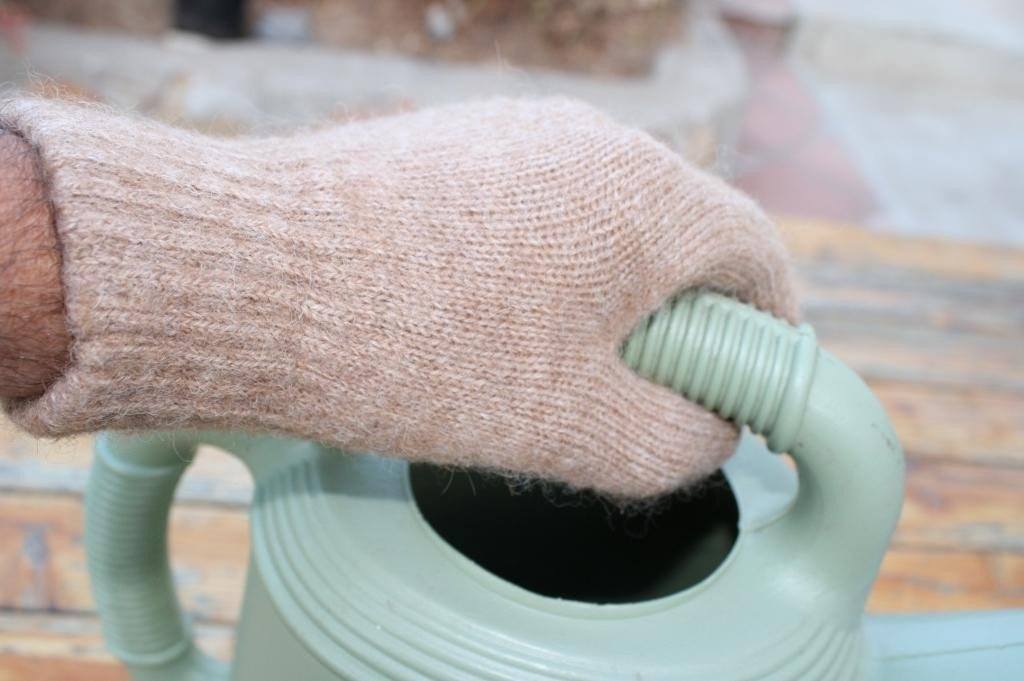
The Work/Play Alpaca Gloves are made of soft alpaca fiber, which has a hollow-core insulation factor.
Are Alpaca Gloves Warm When Damp or Wet?
Wet material conducts heat away faster than dry, and alpaca slows that loss better than cotton, though no natural fiber keeps full warmth when saturated.
A common mistake is wearing a damp glove to bed or leaving it on a cold porch. The fiber needs time to dry before it insulates well again.
For the best warmth in wet conditions:
- Carry a spare pair in a dry pocket.
- Wear a thin liner underneath for extra insulation.
- Remove and swap gloves when they feel heavy with water.
The Colorful 100% Alpaca Fingerless Knit Gloves are sometimes worn as liners inside outer gloves.
What Happens If Alpaca Wool Gets Wet
Alpaca wool does not fall apart when it gets wet, but a finished glove can change in ways that matter for fit and comfort. Wet fiber can stretch, so a glove may feel looser until it dries, and the knit can hold water in the yarn rather than shedding it quickly. That is normal for a natural-fiber knit and is not a sign of a defective glove.
Alpaca also differs from sheep's wool in care. , which gives sheep's wool some natural water resistance and self-cleaning. Alpaca therefore needs more frequent gentle washing. Purely Alpaca, Alpaca vs Sheep Wool care guide
Do not assume alpaca sheds dirt and water the way sheep's wool does. Wash it when it gets grimy or smells of sweat.
How Glove Construction Changes the Wet-Weather Outcome
Fiber-level claims do not predict how a finished glove handles water. Four construction factors do most of the work:
- Knit density: A tighter knit leaves smaller gaps between stitches, so surface water has fewer paths through. A loose, open knit wets through faster even when the yarn is water-resistant.
- Yarn thickness: Heavier yarn holds more water before feeling saturated but takes longer to dry. A double-thick knit like the Iditarod style behaves differently from a thin liner knit.
- Lining: An unlined knit passes water straight to the skin. A brushed or fleece lining slows the transfer and keeps damp fiber off your hand for a while, though it adds bulk.
- Finishing: Some makers apply a light surface treatment or fulling to tighten the face of the knit. That improves shed-water performance, but it is not a waterproof membrane and wears with use.
What to Do When Alpaca Gloves Get Wet
Act before the glove cools on your hand, because a wet glove loses warmth fast once you stop moving.
- Blot, do not wring. Press the glove between a dry towel to pull water out of the yarn. Wringing distorts the knit and can stretch the glove out of shape.
- Reshape while damp. Slide the glove back onto your hand briefly or lay it flat and smooth the fingers and cuff back to their original form. Wet fiber takes a set, so the shape you leave it in is roughly the shape it keeps.
- Air dry flat, away from heat. Lay the glove on a dry towel at room temperature, off radiators, wood stoves, and direct sun.
- Turn the glove inside out for the second half of drying if the lining or inner knit is still damp after a few hours.
Watch out: a hair dryer or a radiator will feel like a shortcut, but heat can shrink the fiber and stiffen the knit, and the damage is usually permanent.
Practical Limits by Weather Condition
Water resistance is not one number. It is a curve that depends on how much water arrives and how long it stays.
- Cold drizzle or light snow: Alpaca gloves shed surface moisture and stay comfortable for a normal commute or walk. Brush off snow before it melts into the knit.
- Wet snow and slush: The glove resists soaking for a while, but packed snow that melts against a warm hand works into the yarn. Expect dampness after 20 to 30 minutes of active handling.
- Steady rain: Without a shell, a knit alpaca glove will saturate. It stays warmer than cotton would, but it is not a rain glove.
- Prolonged exposure or wet work: Shoveling slush, handling wet rope, or clearing a gutter will soak through. Pair the alpaca glove with a waterproof over-mitt or choose a membrane glove.
Fit, Dexterity, and Warmth When Damp
A wet glove that fits well still works better than a wet glove that does not. A snug cuff keeps snow and drips out, and a close fit keeps damp fiber in contact with your skin so body heat can push moisture outward. A loose glove traps a layer of water against the hand and feels colder.
For fine grip, like zipping a jacket or buckling a boot, a thinner liner-style alpaca glove keeps more feel than a heavy double knit. If you expect hours of damp, carry a dry spare and swap when the first pair feels heavy.
Alpaca vs. Merino Wool Moisture Wicking Compared
Both alpaca and merino are natural fibers that handle moisture well, but they differ in key ways.
| Feature | Alpaca | Merino |
|---|---|---|
| Water resistance | Good, not waterproof | Good, not waterproof |
| Wicking | Strong | Strong |
| Warmth for weight | High, hollow core | High, lightweight |
| Itch factor | Low for most wearers | Low for most wearers |
| Lanolin | None | Present |
How to Dry Alpaca Wool Gloves Safely
Never put alpaca gloves in a dryer or near a direct heat source. Heat can shrink the fiber and stiffen the knit.
Use this method instead:
- Gently squeeze out extra water. Do not wring or twist.
- Lay the gloves flat on a clean towel.
- Roll the towel to press out more moisture.
- Reshape the gloves to their original form.
- Air dry at room temperature, away from radiators.
Choosing Alpaca Gloves for Wet Winter Use
Pick alpaca gloves for mild wet conditions, cold dry days, or as a warm liner. For heavy, sustained wet work, choose a glove built for it. The useful question is not "are alpaca gloves water-resistant" but "which alpaca glove, worn how, for which weather."
Match the Glove to the Conditions
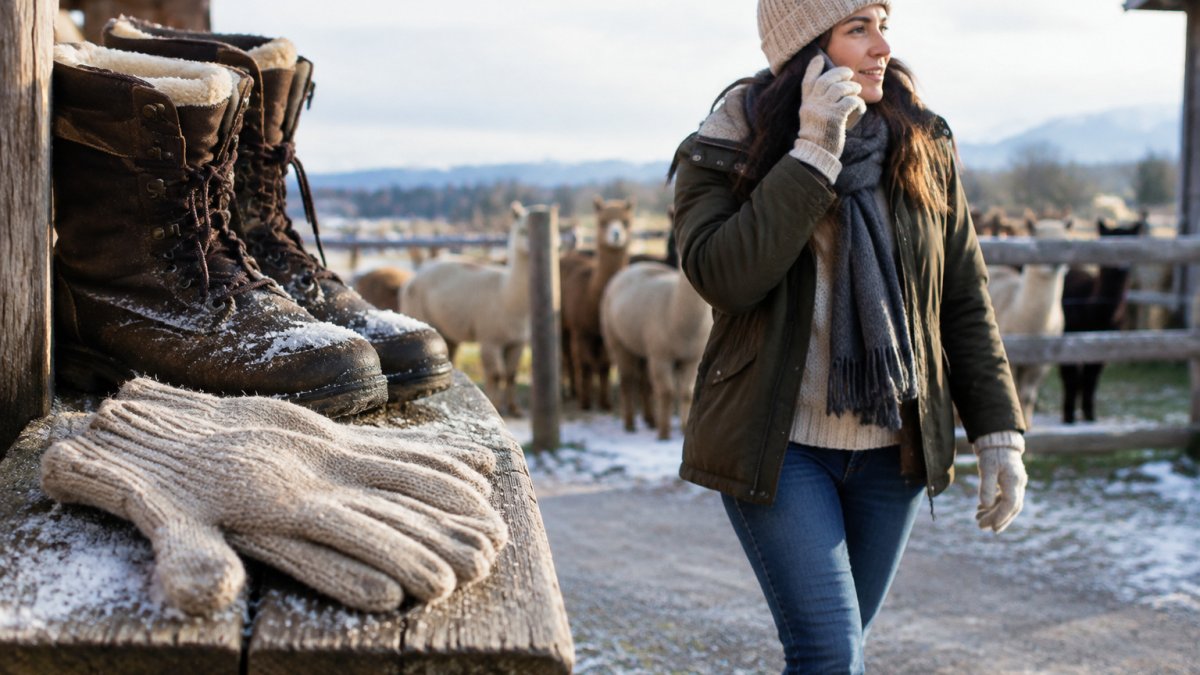
- Cold, dry days and light snow: A standard single-layer alpaca knit is enough. It traps warm air and sheds light snow before it melts.
- Damp city winters and drizzle: Choose a tighter knit with a snug cuff. A denser knit slows water entry and keeps drips out at the wrist.
- Wet snow, slush, and active outdoor work: A heavier double-thick knit or a lined glove holds more warmth before dampness reaches the skin. Plan to swap to a dry pair at the midpoint.
- Steady rain or hours of wet handling: Treat alpaca as a liner under a waterproof shell. The alpaca wicks sweat and adds warmth; the shell keeps the water out.
The Iditarod 100% Alpaca Double-Thick Reversible Gloves are a heavier knit at $41.95. The Alpaca Work/Play Alpaca Gloves are $32.95 and are described by their farm maker as made for farm and outdoor work.
Read the size guidance before ordering. Some styles may run a little small, so people on the edge of a size should consider sizing up.
Alpaca vs. Wool, Fleece, and Synthetic Gloves
A fiber-level comparison helps, but construction still decides the outcome.
| Glove type | Water behavior | Warmth when damp | Best use |
|---|---|---|---|
| Alpaca knit | Resists light moisture, saturates under sustained wet | Stays warmer than cotton, loses warmth when soaked | Cold dry days, drizzle, liners |
| Merino wool knit | Similar resistance, lanolin adds some natural shedding | Good, similar limits when soaked | Active cold-weather use |
| Fleece | Sheds light moisture, absorbs in steady rain | Moderate, dries quickly | Dry cold, casual wear |
| Synthetic with membrane | Blocks liquid water | Low if the membrane wets out | Rain, wet work, long exposure |
What the Water-Resistance Claims Actually Rest On
A few practical rules follow from that gap:
- Treat "water-resistant" as a relative description, not a rating. It tells you the glove slows water down, not how long it holds.
- Ask what the claim refers to: the raw fiber, the yarn, or the finished knit. A fiber-level claim can be true while a loose knit glove still wets through quickly.
- Judge a glove by its construction description, cuff design, and lining before trusting a broad fiber claim.
Best for: people who want warm, natural-fiber gloves for cool, damp days and general winter use, and who are willing to pair them with a shell when the weather turns serious.
Skip if: you will be wet for hours in heavy rain or snow without a waterproof layer.
Frequently Asked Questions
Is alpaca water resistant?
Yes, alpaca fiber is water resistant rather than waterproof. It sheds light moisture, but it will eventually saturate under sustained wet conditions. For sustained rain or deep snow, pair alpaca gloves with a waterproof shell or choose a sturdier outer layer.
Are alpaca gloves waterproof?
No. Alpaca gloves are not waterproof. Prolonged exposure to heavy rain or wet snow will eventually soak through. The Iditarod 100% Alpaca Double-Thick Reversible Gloves are priced at $41.95 and are a double-thick, fully reversible 100% alpaca knit.
How do you dry wet alpaca gloves?
Gently squeeze out excess water without wringing, then lay the gloves flat on a towel and reshape them. Air dry at room temperature away from direct heat, radiators and sunlight, which can weaken fibers. Avoid tumble drying, and check the care label on the product before using any cleaning method.
Do alpaca gloves keep your hands warm when damp?
For prolonged wet conditions, a waterproof outer shell or a backup dry pair is the practical choice. The Alpaca Work/Play Alpaca Gloves are priced at $32.95.
