


Table of Contents
- Fiber Structure: Why Alpaca and Sheep Wool Care Differently
- Durability and Longevity: Alpaca vs Sheep Wool
- How to Wash Alpaca Wool Without Damage
- Alpaca Wool vs Merino Wool Itchiness: The Real Difference
- Storing Alpaca Clothing for Year-Round Freshness
- Pilling, Felting, and Shape Retention Compared
- Drying and Finishing: Natural Dryer Balls Make the Difference
- Frequently Asked Questions
Last Updated: September 26, 2026
Fiber Structure: Why Alpaca and Sheep Wool Care Differently
Understanding alpaca vs sheep wool care requires examining how alpaca fiber's hollow core structure and sheep wool's dense crimp patterns and lanolin content create fundamentally different care requirements. These microscopic differences determine optimal washing temperature, drying method, and storage approach for each fiber type.
Hollow Fiber Architecture and Crimp Patterns
Alpaca's hollow center provides warmth without bulk, while sheep wool's crimp pattern creates air pockets and elasticity that allow garments to stretch and recover better than alpaca pieces.
Alpaca's hollow architecture dries faster than sheep wool's denser structure, requiring gentler handling during spin cycles.
Scale Height and Lanolin Content
Alpaca fiber has a lower scale height, the microscopic overlapping layers on the fiber surface are flatter and smoother. This is why alpaca feels softer against skin and rarely causes itching. According to Backpacking Light's fiber analysis, alpaca fiber's lower scale height and frequency make it innately less itchy than sheep wool.
Sheep wool's higher lanolin content (clean yield 43-76% vs. alpaca's 87-95%) requires more aggressive scouring and careful home handling to preserve protective oils.
Lanolin makes sheep wool naturally water-resistant and self-cleaning; alpaca lacks this protection, requiring more frequent gentle washing and never hot water.
Durability and Longevity: Alpaca vs Sheep Wool
Alpaca fiber demonstrates higher abrasion resistance compared to sheep wool, according to ResearchGate's physico-mechanical properties study. However, alpaca fibers do not stretch as effectively as merino wool fibers, which can impact the fit and recovery of garments over time (Ridge Merino, 2024). This means an alpaca sweater might hold its shape longer but could develop permanent creases if folded the same way repeatedly, whereas a wool sweater might bag out but will spring back.
Alpaca requires intentional storage to prevent permanent deformation; sheep wool's stretch allows recovery but risks gradual bagging without proper support.
How to Wash Alpaca Wool Without Damage
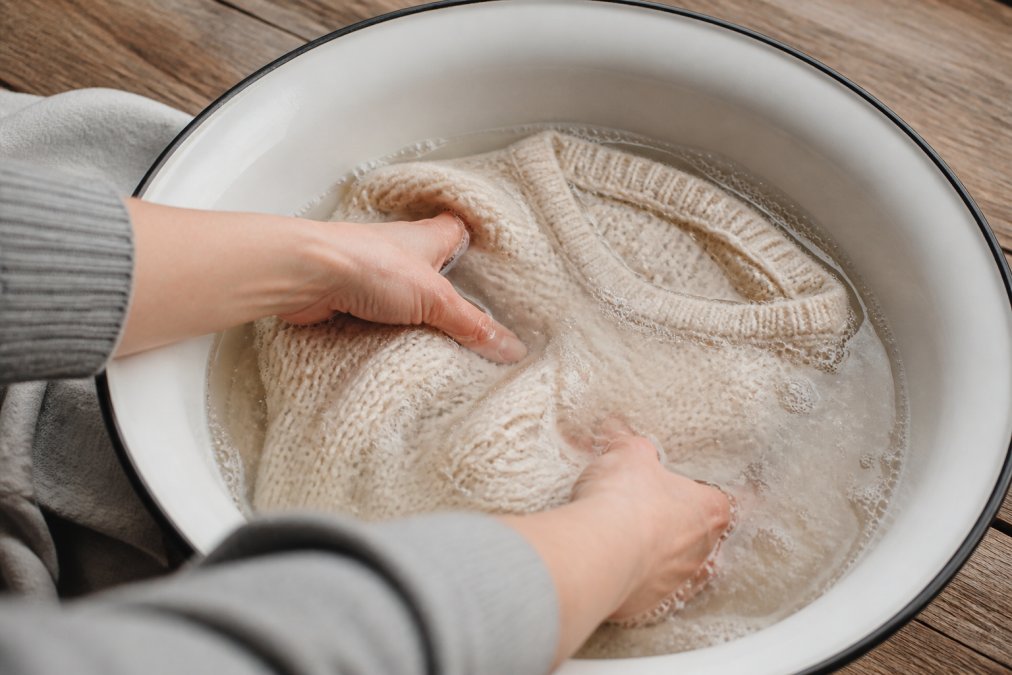
Hand washing is a recommended method for alpaca garments.
Hand Washing Best Practices
Fill a basin with cool water (65-70°F) and use wool-specific or pH-neutral soap. Avoid regular laundry detergent with surfactants and enzymes that degrade protein fibers.
Soak for 10-15 minutes without agitation. Gently press soapy water through with downward motions. Rinse three times in cool water until clear.
Sheep wool tolerates warmer water (up to 85°F) and benefits from lanolin rising to the surface; it's more forgiving if you gently squeeze excess water.
Temperature and Detergent Selection
Alpaca is sensitive to thermal shock; rapid temperature changes cause fiber scales to open and close abruptly, leading to felting. Cold water is safest for both fiber types.
Never use hot water for alpaca; water penetrates quickly and rapid cooling traps moisture, promoting mildew. Sheep wool tolerates warmer water due to its denser structure and lanolin barrier.
Choose a detergent labeled as wool-safe or alpaca-safe. Products designed for delicate fabrics often contain bleach or optical brighteners that damage protein fibers. Look for formulations that specify they are phosphate-free and enzyme-free. If you cannot find a specialty detergent, baby shampoo works in a pinch for both fiber types.
Alpaca Wool vs Merino Wool Itchiness: The Real Difference
Itchiness comes down to fiber diameter and scale structure. Merino wool is finer than standard sheep wool, around 17-20 microns in diameter, which makes it softer than coarse wool but still noticeably itchier than alpaca for many people.
The key difference is that alpaca fiber's lower scale height means fewer sharp edges pressing against skin. For people with sensitive skin or eczema, alpaca is often the better choice. Alpaca fiber is innately less itchy than sheep wool due to lower scale height and frequency on the fiber surface (Backpacking Light, 2023).
However, the quality of the alpaca matters. Premium alpaca, like what Purely Alpaca sources, results in garments that feel luxurious rather than prickly.
Wet Felted Alpaca Dryer Balls - Grey →
Merino wool's itch factor is partly a perception issue. Many people expect wool to itch because they've experienced coarse wool before. Merino is genuinely softer, but if you have extremely sensitive skin, alpaca will likely feel more comfortable.
Storing Alpaca Clothing for Year-Round Freshness
Storage mistakes damage more garments than washing does. Alpaca's lack of elasticity means it will hold creases and folds permanently if stored incorrectly. Sheep wool, with its natural stretch, recovers better from compression but still benefits from thoughtful storage.
Seasonal Rotation and Moth Prevention
Fold alpaca garments loosely and store them flat in a cool, dry place. Do not hang alpaca sweaters, the weight of the garment will stretch the shoulders permanently. Sheep wool can tolerate hanging for short periods, but flat storage is still preferable for long-term preservation.
Moths are attracted to the protein in both fibers. Cedar blocks and lavender sachets provide natural deterrent options, but they work best in sealed containers. Vacuum-sealed bags compress garments, which can cause permanent creasing in alpaca. Instead, use breathable storage boxes or cotton bags that allow air circulation while keeping insects out.
Before storing, ensure garments are completely clean and dry. Dirt and body oils attract moths and bacteria. Wash alpaca pieces within a week of last wearing if you plan to store them for several months.
Humidity and Temperature Control
Ideal storage conditions are 50-65% relative humidity and 60-70°F temperature. Basements and attics are risky, basements are often damp, and attics experience temperature swings that stress fibers. A bedroom closet or interior storage shelf is better.
Alpaca absorbs moisture more readily than sheep wool due to its hollow structure.
Temperature stability matters more than the absolute temperature. Repeated heating and cooling causes fibers to expand and contract, weakening the yarn structure over time. A consistent cool environment is better than a warmer but fluctuating one.
Pilling, Felting, and Shape Retention Compared
Pilling, those small balls of fiber that form on the surface, happens with both alpaca and sheep wool. Alpaca pills when loose fibers on the surface tangle together. Sheep wool pills more readily because its crimp structure and elasticity allow fibers to migrate to the surface and form balls more easily.
Felting is the more serious concern for alpaca. When alpaca fiber is exposed to heat, moisture, and agitation simultaneously, the scales on the fiber surface open and lock together, permanently shrinking the garment. Sheep wool felts too, but its lanolin provides some protection. Alpaca offers no such built-in safeguard, which is why cold water and gentle handling are non-negotiable.
Shape retention is where alpaca and sheep wool diverge most. Alpaca holds its shape better because the fibers don't stretch. A sweater will maintain its silhouette for years. Sheep wool's elasticity means it gradually bags out in the arms and torso with wear, though it recovers somewhat after washing. For a garment you want to look the same five years from now, alpaca wins. For a garment you want to feel comfortable and flexible, sheep wool's stretch is an advantage.
Store alpaca garments folded, not hung. Sheep wool can tolerate hanging briefly, but folding is still the safer option for both. If you must hang an alpaca piece, use a padded hanger and rotate it weekly to prevent permanent shoulder stretching.
Drying and Finishing: Natural Dryer Balls Make the Difference
Never put alpaca or sheep wool in a conventional dryer. The heat and tumbling will felt both fiber types. Air drying is the only safe method, but the way you prepare the garment for air drying matters significantly.
After hand washing, gently press out excess water. Do not wring or twist. Lay the garment flat on a clean towel or hang it over a drying rack in a well-ventilated area away from direct heat or sunlight. Direct sun can cause color fading in both fiber types. Air circulation speeds drying without heat damage.
For garments that need softening or fluffing after air drying, alpaca dryer balls provide a natural alternative to heat and chemicals.

| Care Factor | Alpaca | Sheep Wool |
|---|---|---|
| Water Temperature | Cold (65-70°F) | Cool to Lukewarm (65-85°F) |
| Washing Method | Hand wash only | Hand wash or gentle machine cycle |
| Drying | Air dry flat | Air dry or low heat dryer |
| Storage | Fold flat, never hang | Fold or brief hanging periods |
| Usable Lifespan | 5-10 years | 3-5 years |
| Elasticity | Low (holds shape) | High (stretches, recovers) |
| Itch Factor | Very low | Moderate to high |
| Felting Risk | High if mishandled | Moderate |
Frequently Asked Questions
Is alpaca wool less itchy than sheep wool?
Yes. Alpaca fiber has lower scale height and frequency on its surface compared to sheep wool, making it inherently less irritating to sensitive skin. Alpaca garments are often preferred by people with eczema or wool sensitivity. Sheep wool's higher lanolin content and coarser fiber structure can trigger itching, while alpaca's smooth surface feels softer against skin without the prickling sensation.
How long do alpaca garments last compared to sheep wool?
Alpaca fiber demonstrates higher abrasion resistance due to its hollow fiber structure and lower vegetable matter content. The cleaner yield of alpaca (87-95%) versus sheep wool (43-76%) means less processing damage and stronger fibers that withstand repeated wear and washing.
Can I machine wash alpaca wool like I do sheep wool?
Hand washing is recommended for alpaca to preserve its delicate fiber structure and elasticity. Use cool water, mild detergent, and gentle agitation. Pure alpaca is best cared for by hand. Sheep wool tolerates slightly warmer water and more mechanical action, but both fibers benefit from gentle handling to prevent felting and maintain shape retention.
How should I store alpaca clothing to prevent damage?
Store alpaca garments in a cool, dry place away from direct sunlight, ideally in breathable cotton bags or cedar-lined drawers to prevent moths. Fold rather than hang to avoid stretching. Before seasonal storage, ensure garments are completely clean and dry. Using natural moth deterrents like cedar blocks is safer than chemical treatments that can damage protein fibers.