





Table of Contents
- Why Alpaca Fiber Naturally Resists Odors
- How to Air Out Wool Sweaters Effectively
- Spot Cleaning Techniques for Targeted Stain Removal
- Preventing Musty Smells in Wool Clothing
- Best Odor Eliminator for Natural Fibers
- Storage and Moisture Control to Remove Odors From Alpaca Sweaters
- Troubleshooting Specific Odor Types in Alpaca Garments
- Frequently Asked Questions
Last Updated: September 27, 2026
Why Alpaca Fiber Naturally Resists Odors
Alpaca fiber naturally resists bacterial growth that causes odors because it is antimicrobial and repels the microorganisms that create smells.
According to Knitbrary's fiber analysis, alpaca fiber is naturally odor-resistant and bacteria-repellent, allowing garments to remain fresh after multiple wears without washing. This protein fiber structure makes alpaca sweaters fundamentally different from conventional wool or blended materials.
Alpaca's breathability allows moisture to move away from your skin, preventing the damp environment where bacteria multiply and odors develop. This is why alpaca garments can be worn multiple times before needing a full wash.
Alpaca may emit a slight farmyard or wet smell when damp, a natural characteristic of the fiber, not uncleanliness. It fades once the garment dries.
How to Air Out Wool Sweaters Effectively
The simplest way to remove odors alpaca sweaters is to air them out. Fresh air and sunlight naturally eliminate odors and refresh the fabric.
Here's the step-by-step process:
-
Choose your location: Pick a spot with good air circulation, a window sill, balcony, or outdoor clothesline. Avoid enclosed spaces.
-
Lay flat or hang loosely: Spread the sweater flat or hang it on a padded hanger. Avoid wire hangers, which stretch alpaca.
-
Expose to fresh air for 4-8 hours: Morning or afternoon sun is ideal. Air circulation does most of the work.
-
Flip halfway through: If laying flat, turn the sweater over after a few hours for equal exposure.
-
Bring inside when done: Once the sweater feels dry and smells fresh, store it in a breathable space.
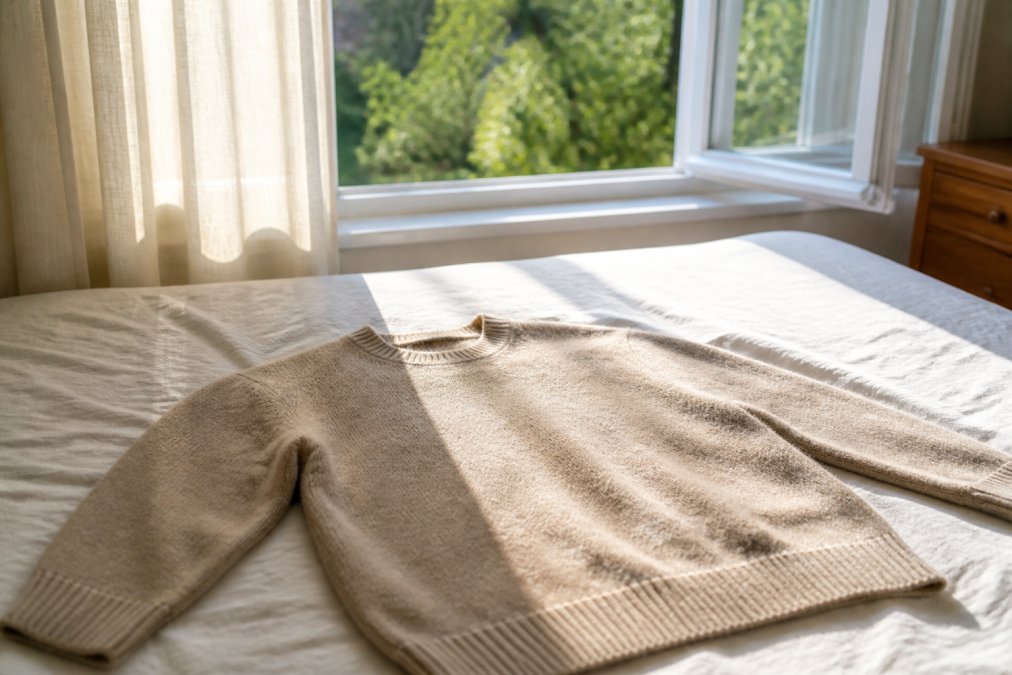
Fresh air breaks down odor-causing compounds and allows moisture to evaporate without products or chemicals. This method is especially effective for light odors or general mustiness.
For stubborn smells, extend airing to 12-24 hours or leave sweaters outside overnight.
Spot Cleaning Techniques for Targeted Stain Removal
According to SISA garment care guidelines, stains can be managed by dabbing with cold water and mild soap, avoiding the need for full garment soaking. This approach preserves the alpaca fiber while removing localized odors.
Step-by-step spot cleaning:
-
Identify the problem area, Locate where the smell is strongest (underarms, collar, cuffs).
-
Test first: Test your cleaning solution on a hidden seam to check for color bleeding or damage.
-
Mix your solution: Combine cold water with a tiny amount of mild soap (wool-specific detergent or baby shampoo).
-
Dampen a cloth: Dip a clean cloth into the solution and wring it out so it's barely damp.
-
Dab the stain: Press the damp cloth against the problem area. Don't rub or scrub.
-
Rinse with cold water, Use another damp cloth with plain cold water to remove soap residue.
-
Press dry: Lay the sweater flat and pat it dry with a towel.
This method works for sweat stains, food spots, or localized odors in 10-15 minutes, avoiding full-wash shrinkage or damage.
Preventing Musty Smells in Wool Clothing
Prevention strategies:
-
Store in breathable spaces: Use cloth storage bags or open shelving. Avoid plastic containers, which trap moisture.
-
Control humidity: Keep your storage area dry. A humidity level below 50% is ideal.
-
Avoid plastic bags: Sealed plastic prevents air circulation. Use breathable garment bags instead.
-
Space items apart: Don't pack sweaters tightly. Air needs to flow around each piece.
-
Wear a base layer: A thin shirt under your sweater reduces direct contact with sweat, a major odor source.
-
Rotate your sweaters: Alternating gives each sweater time to air out naturally between wears.
Best Odor Eliminator for Natural Fibers
When airing and spot cleaning aren't enough, natural deodorizing methods work safely on alpaca. Choose neutralizers that don't rely on surfactants or high alcohol concentrations that can damage protein fibers.
Why alpaca requires fiber-safe odor neutralizers

Alpaca is a protein fiber vulnerable to alkaline substances and high-alcohol solutions that denature the protein structure and cause stiffness. Standard fabric sprays formulated for cotton are too harsh. Your deodorizer must neutralize odor molecules without damaging the fiber.
Wet Felted Alpaca Dryer Balls - Grey →
Cedar blocks and cedar oil
Cedar naturally repels odors through volatile organic compounds that inhibit bacterial growth. Place cedar blocks in your storage area or lay a sweater on cedar shavings for 24 hours. The odor-eliminating properties remain active for 6-12 months. Cedar is safe for alpaca because it works through scent volatility, not absorption into fibers.
Lavender sachets
Lavender absorbs odors while adding a pleasant scent. Tuck a sachet inside a folded sweater or hang one nearby. Replace every 3-6 months. It works well for light odors and does not alter the feel or color of alpaca.
DIY natural deodorizing spray (safe for alpaca)
Make your own odor neutralizer:
- Base formula: Mix 2 cups of distilled water with 1-2 tablespoons of white vinegar (5% acidity).
- Optional scent: Add 2-3 drops of essential oil (lavender, eucalyptus, or lemon).
- Lightly mist the sweater from 6-8 inches away, targeting problem areas (underarms, collar, cuffs).
- Let it air dry completely (2-4 hours) before wearing or storing.
Why this formula works: Vinegar's acetic acid breaks down odor molecules at the source. The low concentration is safe for alpaca and far below the pH threshold that damages protein fibers.
Alternative: Vodka-based spray
Diluted vodka (40% ABV mixed 1:1 with water) kills odor-causing bacteria as it evaporates. However, it carries a higher risk of fiber stiffness if over-applied. Reserve for stubborn odors and test on a hidden area first.
Baking soda method
Sprinkle baking soda on your folded sweater, let it sit for 2-4 hours in a sealed bag, then brush it off gently. Baking soda absorbs odors naturally and is pH-neutral. This method works well for sweat odors. Use restraint to avoid white residue.
What to avoid
Do not use commercial fabric sprays with synthetic fragrances, quaternary ammonium compounds, or alcohol above 10%. Avoid enzyme-based sprays unless explicitly labeled safe for delicate fibers.
Storage and Moisture Control to Remove Odors From Alpaca Sweaters
Proper storage technique:
-
Fold, don't hang: Fold alpaca sweaters and stack them on a shelf. Hanging stretches the shoulders and widens the neckline.
-
Use shelf dividers: Separate each sweater with acid-free tissue paper to prevent color transfer and improve air circulation.
-
Keep storage cool: Store away from direct sunlight and heat sources.
-
Maintain airflow: Leave closet doors open periodically to refresh the air around your sweaters.
-
Avoid damp areas: Never store alpaca in basements, attics, or near bathrooms where humidity is high.
Store sweaters in a clean, dry closet with good air circulation. In humid climates, consider a small dehumidifier to control moisture.
Troubleshooting Specific Odor Types in Alpaca Garments
Different odor sources require different interventions. Diagnosing the odor type helps you choose the fastest, most effective solution.
Sweat or body odor (underarms, collar, cuffs)
What's happening: Sweat contains compounds that feed bacteria on the fabric surface, producing volatile compounds that smell sour or ammonia-like.
Smoke or cooking odors (cling to fabric surface)
Farmyard or wet wool smell (natural alpaca characteristic)
Timeline: 12-24 hours air drying in warm space.
Timeline: 8-12 hours for recovery.
Diagnostic checklist: How to identify your odor type
- Is the smell localized to one area (underarms, collar) or throughout the sweater? Localized = sweat or food stain. Throughout = smoke, mustiness, or farmyard smell.
- Does the smell intensify when the sweater is damp? Yes = farmyard/natural alpaca smell. No = external contamination (smoke, perfume, sweat).
- Is there visible discoloration or staining? Yes = sweat or food residue (use spot cleaning). No = odor only (use airing or spray).
- When did you last wear or store the sweater? Recently worn = sweat or food odor. Stored for weeks/months = musty or mildew smell.
- Do you smell mold or earth tones? Yes = mildew (use sunlight). No = other odor type.
Frequently Asked Questions
Does alpaca wool stink when wet?
Alpaca fiber can emit a wet or farmyard odor when damp, which is a natural characteristic of the protein fiber rather than a sign of uncleanliness. This temporary smell dissipates once the garment dries completely. Avoid soaking your alpaca sweater and instead use spot cleaning with cold water for targeted stain removal. Always air-dry thoroughly to prevent moisture buildup and musty odors from developing.
Is airing out an alpaca sweater effective for odor removal?
Yes, natural ventilation is highly effective for refreshing alpaca garments. Alpaca fiber is naturally odor-resistant and bacteria-repellent, allowing sweaters to remain fresh after multiple wears without washing. Lay your sweater flat or hang it in a well-ventilated area, preferably near a window with indirect sunlight, for 2-4 hours. This method works best for light odors and everyday freshening.
What are the best natural ways to deodorize luxury knitwear made from alpaca?
Create DIY natural deodorizing sprays using essential oils diluted in water, or use cedar blocks and lavender sachets near storage areas. For immediate freshening, sprinkle baking soda lightly on the garment, let it sit for 15-20 minutes, then gently brush it off. Alpaca dryer balls with a drop of essential oil can also freshen garments during low-heat drying cycles. These methods preserve fiber integrity without harsh chemicals.
How do I prevent musty smells in stored alpaca clothing?
Control humidity and ensure proper airflow in your storage space. Fold sweaters loosely rather than cramping them in tight spaces, and avoid plastic bags that trap moisture. Place cedar blocks or lavender sachets in your storage area to naturally repel moths and maintain freshness. Store in a cool, dry location away from direct sunlight. Check periodically and air out garments every few months to prevent moisture buildup and musty odors.