



Quick Summary
Alpaca fiber blends biodegrade only as well as their natural share allows, because synthetic fibers like recycled polyester persist. Check the fiber percentages, plus dyes, finishes and trims, before assuming a blended garment will break down.
- Alpaca is a natural protein fiber, but the whole garment determines end-of-life behavior.
- A blend of 30% baby alpaca and 70% recycled polyester is mostly synthetic and will not break down usefully.
- A 70% baby alpaca and 30% silk shawl contains only natural fibers, giving a cleaner end-of-life picture.
- Dyes, finishes, and synthetic thread or trims can slow biodegradation even in mostly natural garments.
- Polyester and other synthetic fibers shed microfibers in the wash; cold, gentle cycles reduce shedding.
Table of Contents
- Why Fiber Content Decides Whether Alpaca Clothing Biodegrades
- 100% Alpaca Clothing: What Biodegradable Really Means
- Alpaca Wool Clothing Blends and Their Trade-offs
- How Dyes, Finishes and Trims Change Biodegradability
- Microplastic Shedding and Synthetic Fiber Content
- Alpaca Clothing Care That Protects Fiber and Lifespan
- Choosing a Blend You Can Feel Good About
- Frequently Asked Questions
Why Fiber Content Decides Whether Alpaca Clothing Biodegrades
Last Updated: November 21, 2026
Most shoppers assume that anything made from animal fiber, including alpaca fiber blends, will simply break down in the ground. That assumption is only partly right.
Alpaca is a natural protein fiber, and natural protein fibers are generally biodegradable. The catch is what gets woven, dyed and finished into the final product. Researchers led by K.
Blends, especially alpaca fiber blends, are where things get complicated.
Here's the practical takeaway: read the fiber content, not the marketing. A label that reads "alpaca" with no percentages tells you very little about the end-of-life story.
100% Alpaca Clothing: What Biodegradable Really Means
"Biodegradable" is a tidy word for a messy process. A garment breaks down when microorganisms can digest its fibers under the right conditions of moisture, heat and oxygen. Untreated natural fiber generally fits that description.
Even pure alpaca isn't a guaranteed outcome. Industry guidance notes that dyes, chemical treatments, blended fibers and trims can all hinder biodegradability, and that the claim applies most clearly to untreated alpaca fiber.
So a 100% undyed alpaca piece is the closest thing to a clean biodegradation story. A dyed piece with metal trims is a different product at end of life, even though the fiber itself hasn't changed.
Alpaca Wool Clothing Blends and Their Trade-offs
Blends are popular for good reasons: they can add strength, stretch or lower cost. The trade-off is end-of-life behavior, and the trade-off is not binary. A blend is not simply "biodegradable" or "not biodegradable", the outcome depends on the ratio, the companion fiber, the dyes and finishes, and the sewing components that hold the garment together.
A useful way to think about it is the biodegradable share. If a label reads 70% baby alpaca and 30% silk, the biodegradable share is 100% by fiber weight, because silk is also a natural protein fiber.
Blends with Recycled Polyester
Recycled polyester blends sound like an upgrade, but they carry a real trade-off. A beanie such as the Hösėg Alpaca Beanie is 30% baby alpaca and 70% recycled polyester, so most of its fiber is synthetic. You get a more structured, versatile knit, but the biodegradable share is the minority. Hösėg Alpaca Beanie | purelyalpaca.com

Recycled content is better than virgin plastic, yet it still doesn't biodegrade the way alpaca does. The polyester portion will shed microfibers in the wash and will not break down in a home compost pile or a landfill on any useful timescale.
Blends with Silk and Cotton
Silk and cotton blends are a different story. Both are natural fibers, so they don't introduce persistent plastics. In both cases, the majority of the fiber is natural, which keeps the end-of-life picture far cleaner than a polyester-heavy blend. Dragonfly Baby Alpaca and Silk Shawl | purelyalpaca.com
That said, natural blends are not automatically home-compostable. Cotton is often treated with dyes and finishes that slow breakdown, and silk is frequently degummed and dyed. A 51/49 alpaca-cotton hoodie is a better end-of-life story than a 30/70 alpaca-polyester beanie, but it is not the same as an undyed 100% alpaca piece.
The parts that don't show up in the fiber percentage
Fiber content labels describe the yarn, not the whole garment. Sewing thread, elastic waistbands, zippers, buttons, interfacing, and care labels are usually synthetic even when the shell is natural. A 100% alpaca sweater sewn with polyester thread and finished with a nylon care label is not a clean compost input. Watch out: a garment can read "100% alpaca" on the fiber label and still contain enough synthetic trim to disqualify it from home composting, check the seams, the waistband and the buttons before you assume otherwise.
How to read a blend label
That ordering is the fastest way to judge a blend. If the first fiber listed is polyester or nylon, the garment is synthetic-dominant regardless of how prominently alpaca appears in the product name. If the first fiber is alpaca, cotton or silk, the natural share is the majority.
Most shoppers stop at the fiber percentage; the finish and trim are where the real differences hide.
Disposal when the blend is mixed
When a garment combines fibers that are hard to separate, mechanical recycling usually downgrades the material rather than returning it to fiber. The practical hierarchy is repair first, then resale or donation, then a textile-recycling program that accepts mixed fibers, and only then disposal. A 30/70 alpaca-polyester beanie is a poor candidate for composting but a reasonable candidate for resale or a take-back program.
The table below compares the blends the article discusses, showing the fiber mix and what each means for end-of-life behavior.
| Blend | Fiber mix | End-of-life note |
|---|---|---|
| Hösėg Alpaca Beanie | 30% baby alpaca, 70% recycled polyester | Majority synthetic; polyester will not break down usefully |
| Baby Alpaca/Cotton Hoodie | 51% baby alpaca, 49% cotton | Natural majority; dyes and finishes can slow breakdown |
| Dragonfly Baby Alpaca and Silk Shawl | 70% baby alpaca, 30% silk | Natural fibers only; cleaner end-of-life picture |
| Natural Undyed Baby Alpaca Eco and Silk Boucle' Stole | 80% baby alpaca eco, 20% silk | Undyed finish removes a key variable |
How Dyes, Finishes and Trims Change Biodegradability
Dyes and finishes are the quiet variable. A garment can be mostly natural fiber and still behave poorly at end of life if it's heavily treated.
This is why undyed options are worth a look if end-of-life matters most to you. The Natural Undyed Baby Alpaca Eco and Silk Boucle' Stole is 80% baby alpaca eco and 20% silk, and its natural, undyed finish removes one of the main variables. Natural Undyed Baby Alpaca Eco and Silk Boucle' Stole | purelyalpaca.com
Microplastic Shedding and Synthetic Fiber Content
Synthetic fibers raise a second concern beyond biodegradability: shedding. Every wash can release small fibers, and synthetic content is the likely source. Natural fibers don't contribute to plastic shedding in the same way, which is one more reason to check the blend.
The fibers to look for on a label are polyester (including recycled polyester), nylon (sometimes listed as polyamide), acrylic, elastane (sometimes listed as spandex or Lycra), and polypropylene. Each of these is a plastic, and each can shed microfibers during washing. A garment labeled 30% baby alpaca and 70% recycled polyester is, from a shedding standpoint, a polyester garment.
What changes how much a garment sheds
Shedding is not fixed. Several washing variables affect how much a garment sheds:
- Fabric construction. Loosely knit or brushed fabrics release more fibers than tightly woven ones. A fluffy alpaca blend can shed more total fiber than a smooth one, even when the synthetic share is lower.
- Wash cycle and temperature. Longer, hotter, more agitated cycles tend to release more fibers. A gentle, cold, short cycle reduces shedding for both natural and synthetic fibers.
- Detergent and load size. Powder detergents and full loads increase mechanical action and fiber loss. Liquid detergent and a fuller-but-not-packed drum reduce it.
- Garment age. New garments shed more in the first several washes than later in life.
A practical routine for a synthetic-containing alpaca blend is to wash cold on a gentle cycle, use liquid detergent, and consider a microfiber-catching wash bag or an inline filter on the washing machine. These steps don't make a polyester blend biodegradable, but they reduce what reaches waterways during the garment's life.
Why natural fibers are different
Alpaca, silk and cotton are not plastic. They can still shed fibers, but those fibers are organic material that microorganisms can break down under the right conditions. The distinction matters because the concern with microplastics is persistence, not fiber release itself. A 100% alpaca garment releases alpaca fibers; a 30/70 alpaca-polyester beanie releases a mix, and the polyester fraction is the persistent one.
Watch out: a "recycled" or "eco" label on a synthetic fiber does not change its shedding behavior. Recycled polyester sheds microfibers in the same way as virgin polyester, so the recycled claim is about feedstock, not about end-of-life or shedding.
A label-check routine
Before buying, read the fiber-content label and ask three questions. First, is the first-listed fiber natural or synthetic? Second, what percentage of the garment is a plastic fiber? Third, does the garment have a care label that recommends hand washing or gentle cycles, which reduces shedding? A blend with a high natural share and a gentle-care recommendation is the lowest-shedding option in the alpaca category. A blend with a high synthetic share is a different product, and the label tells you so before you spend money.
Alpaca Clothing Care That Protects Fiber and Lifespan
Good care extends a garment's life, and a longer-lived garment is usually a more sustainable one. Care instructions vary by product. The Hösėg beanie is best hand washed or gently machine washed in room-temperature water with mild detergent, then rolled in a towel and laid flat to dry. The Baby Alpaca/Cotton Hoodie calls for hand washing in lukewarm water with baby shampoo and air drying flat without stretching while wet. Hösėg Alpaca Beanie | purelyalpaca.com
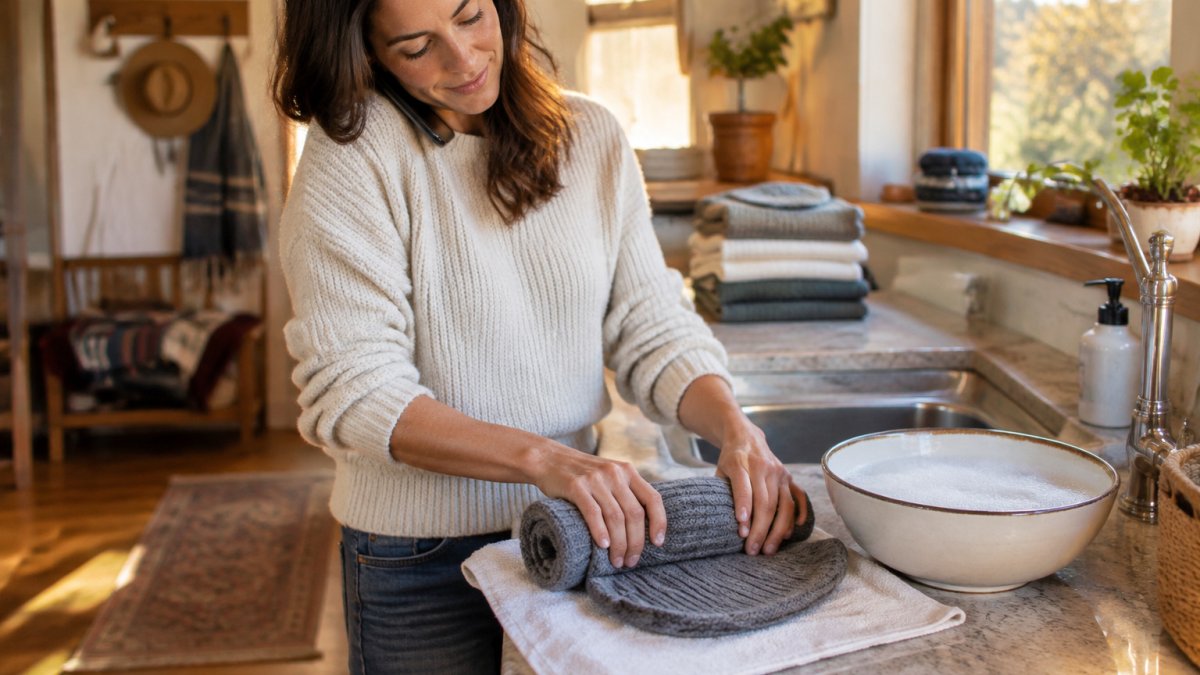
Here's a simple routine that works across most alpaca pieces:
- Check the label before washing and follow its temperature limit.
- Use mild detergent or baby shampoo, never bleach.
- Roll wet pieces in a towel to absorb water instead of wringing them.
- Dry flat, away from direct heat, and never stretch while wet.
- Dry clean only where the label specifies it, such as the Dragonfly shawl.
A common mistake is hanging wet knitwear, which stretches it out of shape. Flat drying keeps the knit intact.
Choosing a Blend You Can Feel Good About
Here's our take: pick the blend based on what you need the garment to do, then check the percentages. If warmth and natural breathability matter most, a high-alpaca blend or pure alpaca is the cleanest choice.
Sourcing matters too. A guide to sustainable alpaca wool sourcing can help you judge that. Sustainable Alpaca Wool Sourcing Guide for 2026 | purelyalpaca.com Environmental claims are also easier to weigh once you understand the broader picture.
Finally, buy for longevity. A well-made alpaca piece that you care for properly will outlast a cheap blend, and that durability is often the most sustainable choice of all.
Frequently Asked Questions
Are alpaca fiber clothing blends biodegradable?
Alpaca fiber itself is biodegradable, but a finished garment is only as biodegradable as its least degradable component. A blend that includes recycled polyester or other synthetic fibers will break down far more slowly than untreated alpaca, and trims, zippers and synthetic dyes can further slow decomposition. Check the fiber content on the label: the higher the alpaca percentage and the fewer synthetic components, the more likely the garment is to biodegrade under suitable conditions.
Is 100% alpaca clothing more biodegradable than a blend?
Generally, yes. Untreated 100% alpaca fiber has the clearest biodegradability profile because it contains no plastic-based fibers. Dyeing and chemical finishing can reduce that advantage, which is why undyed or naturally colored alpaca is often the most straightforward choice for a low-impact garment. Blends can still be practical when they add durability or a specific feel, but they trade some end-of-life benefit for those properties.
Do synthetic fibers make alpaca clothing less biodegradable?
Yes. Synthetic fibers such as recycled polyester do not biodegrade in the same way natural fibers do, so a blend containing them will break down more slowly and can shed microplastic fibers during washing. The percentage matters: a small synthetic share changes the garment's end-of-life profile less than a large one, but the trade-off is real and worth weighing against the performance benefits the blend provides.
How should I care for alpaca clothing to make it last longer?
Hand wash or use a gentle, delicate cycle in lukewarm water with a mild, alpaca-safe shampoo, and avoid bleach. Roll the garment in a towel to absorb water, then lay it flat to air dry, and never stretch it while wet. Avoid high heat and ironing. Following these steps protects the fiber, limits pilling and helps the garment hold its shape for seasons of wear.
