



Table of Contents
- Eco Friendly Benefits of Alpaca Fiber: A Balanced Look
- Properties of Alpaca Fiber That Drive Its Low-Impact Case
- Alpaca Wool vs Sheep Wool Sustainability: A Side-by-Side
- Grazing, Padded Feet, and Land Use on Real Farms
- Is Alpaca Wool Ethical? Welfare and Supply-Chain Questions
- Is Alpaca Fiber Biodegradable? End-of-Life and Blends
- Carbon Footprint, Emissions, and Farm-Level Variation
- How to Shop for Alpaca Fiber You Can Actually Trust
- Frequently Asked Questions
Last Updated: October 6, 2026
Eco Friendly Benefits of Alpaca Fiber: A Balanced Look
Alpaca fiber is the fleece grown by alpacas and prized in textiles for warmth, softness, and low bulk. The eco friendly benefits of alpaca fiber are real but frequently overstated, and at Purely Alpaca we think the honest version is more useful.
Here is the tension: alpaca requires no lanolin stripping, no pesticide-heavy dip, and it biodegrades, yet a 2023 cradle-to-grave analysis noted that the Sustainable Apparel Coalition rated alpaca fiber among the worst fibers for environmental impact.
Properties of Alpaca Fiber That Drive Its Low-Impact Case
The properties of alpaca fiber that matter most are insulation, moisture management, and durability, because all three extend how long a garment stays in use. A 2026 alpaca fiber market report from Business Research Insights claims alpaca delivers 30% higher thermal insulation efficiency than sheep wool and 18% lower moisture retention, though that report does not publish its underlying test method.
Durability is the underrated one: a sweater that survives ten winters carries roughly one-tenth the annual manufacturing burden of one replaced every season.
Insulation, Moisture, and Durability in Practical Terms
Alpaca's hollow fiber structure traps air, so it feels warm without bulk, and it moves moisture away from skin rather than holding it, staying comfortable during stop-start activity like hiking or skiing.
- Warmth-to-weight: high insulation with less bulk than comparable wool knits
- Moisture handling: lower retention, so garments dry faster between wears
- Shape retention: resists pilling and stretching better than many soft wools
Alpaca Wool vs Sheep Wool Sustainability: A Side-by-Side
Alpaca wool vs sheep wool sustainability comes down to processing chemistry and land impact more than the fiber itself. Alpaca carries no lanolin, so it can be cleaned with mild, biodegradable soaps and far less water than greasy wool requires.
Wool scouring generates wastewater loaded with grease and detergent, while alpaca skips most of it. Alpaca also comes in many natural colors, reducing the need for dyeing.
| Factor | Alpaca Wool | Sheep Wool |
|---|---|---|
| Lanolin content | None | High, requires scouring |
| Washing water demand | Lower | Higher |
| Chemical processing | Minimal | Scouring plus dyeing |
| Natural color range | Broad | Limited |
| Grazing impact | Padded feet, low soil disturbance | Hooves can compact soil |
Water, Chemicals, and Lanolin
Lanolin is the wax sheep produce to shed water, and removing it is the most resource-intensive step in wool processing. Alpaca produces none, so the cleaning stage is gentler and uses less water. A 2026 Strategic Market Research analysis of the alpaca fiber market notes that this lanolin-free chemistry allows cleaning with mild, biodegradable soaps, which also makes the fiber less likely to irritate sensitive skin.
Grazing, Padded Feet, and Land Use on Real Farms
Alpacas graze differently from cattle or sheep, and that difference is measurable at ground level.
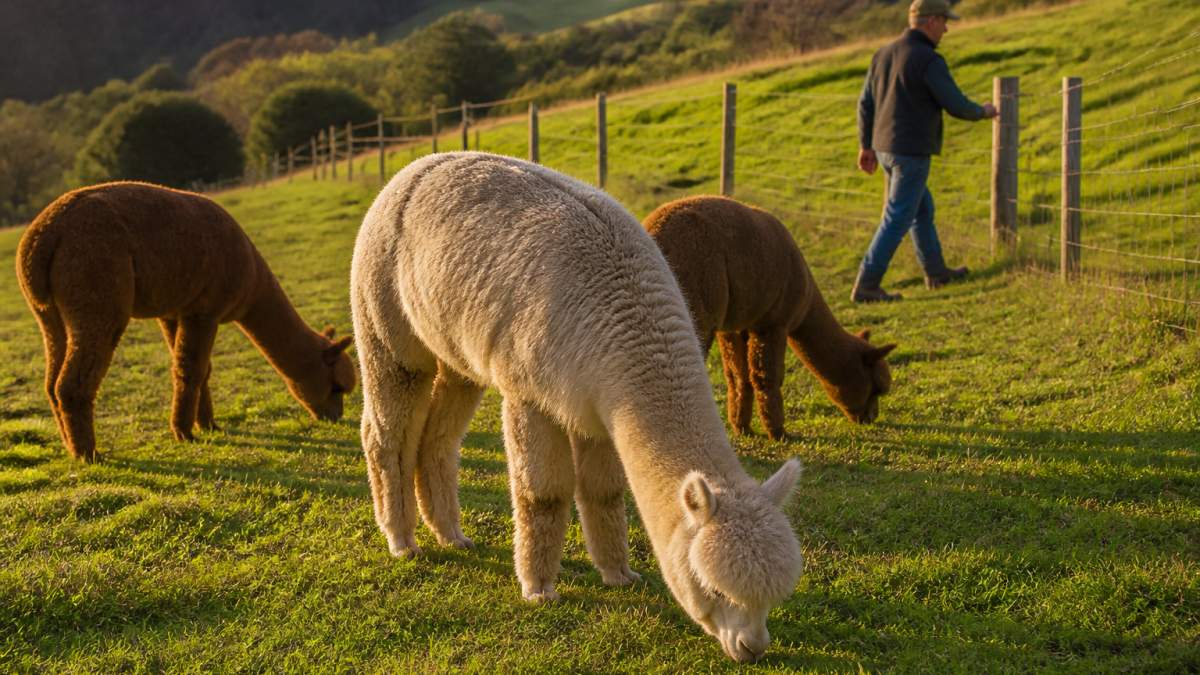
They also nibble plants rather than pulling them up by the roots, letting vegetation regrow faster, so a well-managed alpaca pasture recovers between grazing cycles with less intervention than a sheep or cattle operation.
That said, "gentle grazer" is not "no land use." Every fiber animal occupies acreage, and regional variation matters: a farm on marginal highland differs from one carved out of cleared forest.
Is Alpaca Wool Ethical? Welfare and Supply-Chain Questions
Is alpaca wool ethical? It can be, but the answer depends on the farm, not the species. Alpacas are shorn once a year, and shearing is necessary for their health, since an unshorn animal overheats.
The welfare questions that actually matter are practical ones:
- Shearing practice: restrained, calm handling versus rough, rushed handling
- Herd management: adequate shade, water, and veterinary care
- Traceability: can the seller name the farm or region the fiber came from?
Ask sellers directly. A business that sources from small family farms can usually answer within a day; one that cannot is telling you something.
Is Alpaca Fiber Biodegradable? End-of-Life and Blends
Alpaca fiber is biodegradable, breaking down in composting conditions rather than persisting for centuries the way polyester does.
The catch is blending. A 100% alpaca scarf returns to the soil. A 70/30 alpaca-polyester blend does not, because the synthetic portion never breaks down and contaminates the compost stream.
Check the fiber content label before assuming a garment is compostable. Natural colors and undyed finishes also mean fewer dye chemicals entering wastewater.
Carbon Footprint, Emissions, and Farm-Level Variation
The carbon footprint of alpaca fiber is where marketing and measurement diverge most sharply. A 2023 cradle-to-grave environmental analysis of alpaca fiber, led by researchers identified as K. Bartl and coauthors, includes a carbon-footprint assessment but publishes no headline number. Meanwhile, the Sustainable Apparel Coalition's Higg Materials Sustainability Index has rated alpaca among the higher-impact fibers per kilogram, surprising shoppers who assume "natural" means "low carbon." Both can be true, because most of the impact is not in the animal's feet but in what happens before and after the fleece leaves the farm.
Where the Emissions Actually Come From
A useful way to read any alpaca carbon figure is to break it into five buckets. Most published estimates do this inconsistently, which is why the numbers disagree.
- Enteric fermentation: Ruminant digestion produces methane, a potent greenhouse gas. Alpacas are pseudo-ruminants with a three-compartment stomach and emit less methane per animal than cattle, but they still emit it, usually the largest line item in a farm-gate assessment.
- Feed production: Hay, pasture, and supplemental feed carry their own footprint, fertilizer, diesel for cutting and baling, and land conversion if pasture was recently cleared. Pasture-based systems can offset some through soil carbon, but only under specific management.
- Manure management: How manure is stored and applied changes whether it becomes a methane and nitrous oxide source or a soil amendment. Open lagoons and stockpiled piles are worse than direct deposition on pasture.
Measured Data vs. Estimates
It is worth being explicit about what is solid and what is not. Farm-gate studies measuring methane and feed inputs exist for sheep and cattle in several countries; comparable measured datasets for alpaca are far thinner. Many widely quoted alpaca figures are modeled, extrapolated from sheep or small herd samples, rather than directly measured. That does not make them useless, but a "8-12 kg CO2e per kilogram of clean fiber" style range should be treated as an indicative band, not a settled constant.
Natural Undyed 100% Baby Alpaca Eco Classic Shawl →
Why Farm-Level Variation Is So Large
Treating "alpaca" as one impact number is the same mistake as treating "beef" as one number. Two farms raising the same breed can differ by a factor of two or more depending on:
- Stocking density: Overstocked pasture degrades soil and forces supplemental feed, raising feed and manure footprints.
- Grazing management: Rotational or mob grazing that lets pasture recover can build soil organic carbon, partially offsetting methane. Continuous grazing does the opposite.
- Feed sourcing: Locally grown hay has a very different footprint from feed trucked in from another region.
Mitigation Levers That Are Actually Used
Farms and mills that take emissions seriously pull the same levers: rotational grazing to build soil carbon, on-farm or regional milling to cut freight, renewable or efficient energy at processing, and natural color selection to skip dyeing. None eliminates the footprint, but together they can move a garment from "high impact" to "moderate", a more honest claim than "carbon neutral."
The Lifespan Multiplier
One factor can outweigh all of the above: how long the garment lasts. A sweater worn for ten winters carries roughly one-tenth the annualized manufacturing burden of one replaced every season. Because alpaca resists pilling and holds shape well, a well-made piece often outlasts a comparable wool or acrylic knit, the single largest lever a buyer controls.
How to Shop for Alpaca Fiber You Can Actually Trust
Trustworthy alpaca shopping is about verification, not vibes. A garment's eco case is only as strong as its weakest supply-chain link, so it helps to know what happens between the animal and your closet, and what questions expose a gap.
The Supply Chain, Step by Step
**1.
2. Sorting and grading. After shearing, fleece is sorted by fineness (micron count), staple length, and color. Baby alpaca is not from baby animals, it is a grade of fine fiber, typically under about 22-23 microns.

**3.
4. Carding and spinning. Carding aligns the fibers; spinning turns them into yarn. Both are energy-intensive but not chemistry-intensive.
**5.
6. Manufacturing. Knitting, weaving, and finishing happen at a factory, often far from the farm.
7. Shipping and traceability. Fiber traveling farm → mill → spinner → knitter → warehouse → customer accumulates freight emissions at every leg.
A Verification Checklist
Use this before you buy:
- Fiber content stated as 100% alpaca, with no hidden synthetic blend
- Micron count published if you have sensitive skin
- Origin disclosed, ideally with named farms or a clear region
Care, Repair, and Lifespan
The use phase is where most of a garment's environmental math lives. Alpaca is durable but not indestructible, and how you treat it determines whether it lasts three winters or ten.
- Washing: Hand wash in cool water with a mild, pH-neutral soap, or use a machine's wool cycle in a mesh bag. Avoid hot water and agitation, which cause felting.
- Drying: Lay flat to dry. Hanging stretches the fiber.
- Storage: Fold, do not hang. Store clean, and use cedar or lavender rather than mothballs.
Two Product Types That Show the Difference
The Natural Undyed 100% Baby Alpaca Eco Classic Shawl is undyed 100% baby alpaca, meaning no dye chemistry and full biodegradability at end of life. For a smaller commitment, the Natural Undyed 100% Baby Alpaca Eco Scarf uses the same fiber and finish.

For home use, Wet Felted USA Alpaca Dryer Balls replace dryer sheets, cut drying time by as much as 25% according to the product listing, and last several years, a small, repeatable reduction in household energy use.

Frequently Asked Questions
What are the properties of alpaca fiber that make it eco friendly?
Alpaca fiber is naturally insulating, moisture wicking, and durable, which means garments can be worn longer and washed less often. It contains no lanolin, so cleaning uses mild, biodegradable soaps and less water. A 2026 market report notes alpaca fiber provides 30% higher thermal insulation efficiency than sheep wool and 18% lower moisture retention. It is also 100% biodegradable, breaking down within 12 months under composting conditions.
Is alpaca fiber biodegradable in a landfill or only in a compost bin?
Alpaca fiber is 100% biodegradable and can break down within 12 months under composting conditions, per 2026 industry data. In a sealed landfill, oxygen and moisture are limited, so breakdown slows considerably. The bigger issue is blended textiles: a 100% alpaca scarf or shawl will decompose, but a blend with synthetic fibers may not. Check the label before assuming a garment will return to the soil.
Is alpaca wool ethical compared to other animal fibers?
Alpaca wool is generally considered ethical because alpacas are not harmed during shearing, which happens once a year and is necessary for their health. They live in social herds and are not bred for slaughter in fiber production. That said, conditions vary by farm. A 2023 cradle-to-grave study noted the Sustainable Apparel Coalition rated alpaca fiber among the worst fibers for environmental impact, so welfare and environmental claims should be checked separately rather than treated as one.
How does alpaca fiber hold up compared to synthetic fibers for cold-weather gear?
Alpaca fiber offers warmth without bulk, wicks moisture, and resists odors, which matters for hiking, skiing, and travel in cold climates. Synthetic fibers dry quickly but are petroleum-based, shed microplastics during washing, and are not biodegradable. Alpaca is a renewable natural fiber that lasts for years with proper care. For sensitive skin, alpaca is also hypoallergenic and lanolin-free, so it is less likely to cause the itch that regular wool can.
The hard part is not finding alpaca. It is finding alpaca whose supply chain actually supports the claims on the label. Purely Alpaca has sourced alpaca products since 2002 as a small family business, with free shipping on orders of $100 or more and hassle-free returns, so you can verify the fiber against your own skin and your own standards. Start with an undyed 100% baby alpaca piece, check the micron count and fiber content yourself, and let the garment earn the claim.