


Table of Contents
- Can a Shrunk Alpaca Sweater Be Saved?
- How to Unshrink an Alpaca Sweater: A Measured Step-by-Step Method
- Can You Unshrink Felted Wool? What Alpaca Fiber Does Differently
- Alpaca Sweater Washing Instructions That Prevent Shrinkage
- How to Dry an Alpaca Sweater Without Shrinking It Further
- What to Do When Home Blocking Fails
- Conclusion: Realistic Recovery and Better Care Going Forward
- Frequently Asked Questions
Last Updated: October 8, 2026
Can a Shrunk Alpaca Sweater Be Saved?
Yes, in many cases a shrunk alpaca sweater can be saved, but the odds depend on why it shrank. If your sweater simply came out smaller after a wash, you have a good chance of stretching it back. If the fibers have felted together into a stiff, matted fabric, full recovery is unlikely.

At Purely Alpaca, we've specialized in alpaca garments since 2002. The difference comes down to one question: did the fibers lock together, or did they just tighten up?
This guide shows you how to repair a shrunk alpaca sweater step by step. You'll learn how to tell felting from simple shrinkage, how to reshape the garment safely, and what to do when home methods fall short.
Felted vs. Merely Smaller: How to Tell the Difference
Felting is the permanent locking of wool fibers caused by heat, moisture, and agitation. Once fibers felt, they cannot be separated again. Simple shrinkage, by contrast, means the fibers tightened but did not interlock, so they can often be stretched back.
Here's how to tell which one you're dealing with:
- Stretch test: Gently pull a small section. If it gives and stretches, the fibers aren't felted.
- Texture check: Felted fabric feels dense, stiff, and matted. Shrunken fabric still feels soft.
- Stitch visibility: If you can still see individual knit stitches, the sweater is likely just smaller.
- Surface look: A fuzzy, blurry surface with no visible stitches points to felting.
If your sweater passes the stretch test, keep reading. There's a real chance you can restore it.
How to Unshrink an Alpaca Sweater: A Measured Step-by-Step Method
You can unshrink an alpaca sweater by soaking it in lukewarm water with a wool-safe wash, then gently stretching it back to its original measurements while wet and laying it flat to dry. The key word is gently. Rough handling causes the felting you're trying to avoid.
Step 1: Check the Care Label and Measure the Current Fit
Read the care label first. It tells you whether the maker allows hand washing or calls for dry cleaning only. Then measure the sweater as it is now, plus the size you want to reach.
Lay it flat and record these numbers:
- Chest width, measured flat, pit to pit
- Total body length, from shoulder seam to hem
- Sleeve length, from shoulder seam to cuff
Write them down. You'll stretch toward these targets, not past them.
Step 2: Soak in Lukewarm Water With a Wool-Safe Wash
Fill a clean sink or tub with lukewarm water. Add a capful of wool wash or a gentle detergent made for natural fibers. Skip regular laundry detergent, which can strip the fiber and leave residue.
Submerge the sweater and let it soak for 20 to 30 minutes. Do not agitate, rub, or scrub. Just let it sit. The water and wash relax the fibers so they can move again.
Step 3: Stretch Gently While Wet and Block to Measurements
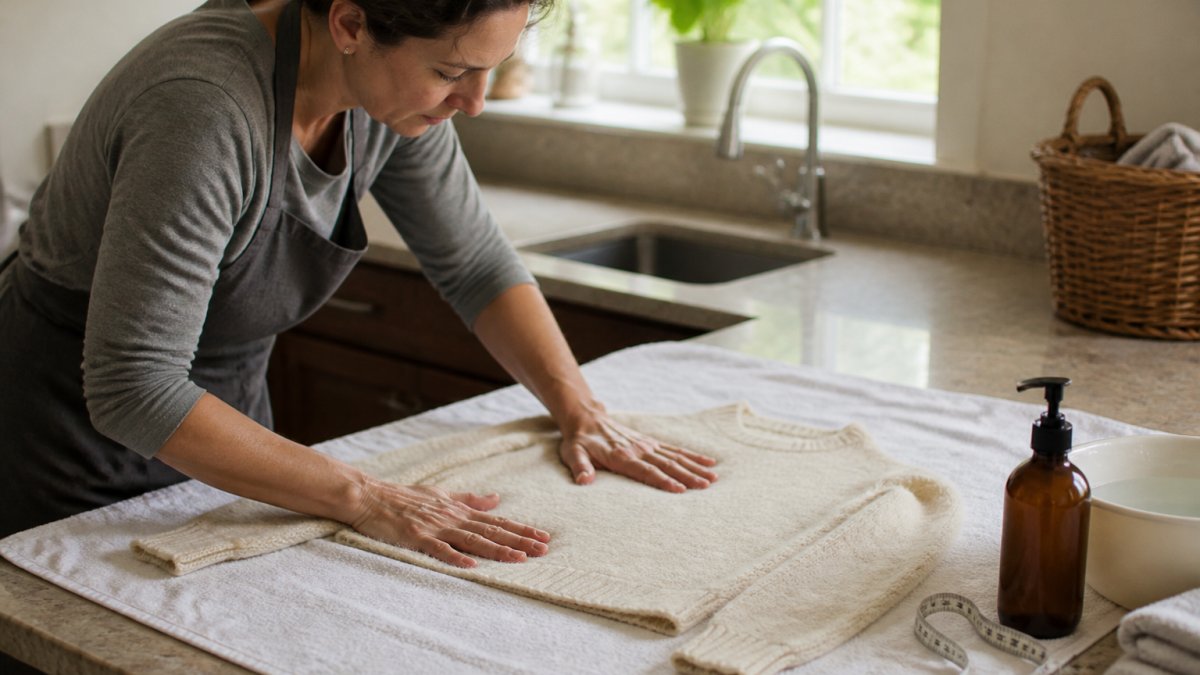
Lift the sweater out and press the water out against the side of the tub. Never wring or twist it. Lay it on a clean towel, roll the towel up, and press down to pull out more water.
Now stretch. Work in small sections and use both hands:
- Start at the chest and ease the fabric outward toward your target width.
- Move to the body length and pull gently from shoulder to hem.
- Finish with the sleeves, stretching from shoulder seam to cuff.
- Pin the sweater to a flat towel or blocking mat at your recorded measurements.
- Let it air dry completely, away from direct sun and heat.
Expect to repeat this once or twice. Alpaca fiber has memory, so it may creep back a little after the first try.
Can You Unshrink Felted Wool? What Alpaca Fiber Does Differently
No, felted wool cannot be unshrunk. Once the surface scales on the fibers lift and interlock, they form a permanent bond. No soak, conditioner, steam, or stretch will separate them, and aggressive pulling on felted fabric usually just distorts the shape further or tears the knit.
Alpaca is not wool, though, and the difference matters for both prevention and repair.
Scale structure. Sheep's wool has prominent, overlapping scales along each fiber, which is why it felts relatively easily. Alpaca fiber has a smoother surface with fewer, flatter scales. That makes alpaca more resistant to felting than merino under the same conditions, but not immune. A hot wash plus agitation will still mat the surface, especially in a loosely spun yarn.
Crimp. Wool fibers have natural crimp, a wavy, springy structure that gives wool its elasticity and memory. Alpaca has very little crimp. That means an alpaca sweater gets most of its stretch from the knit structure itself, not from the fiber. This is the key insight most guides miss: when you stretch a wet alpaca sweater, you are reshaping the loops of the knit, not re-springing the fiber. Gentle, measured, incremental stretching works because it moves those loops. Aggressive pulling just distorts them unevenly.
Hollow fiber. Alpaca fibers are partially hollow, which is what makes them warm for their weight and gives them a soft, slightly lofty hand. That loft is also why alpaca can look deceptively fragile when wet, the fiber absorbs water and the garment feels heavier and more fragile than it does dry. Handle a wet alpaca sweater with both hands supporting the full weight.
Garment construction. Fiber is only half the story. A tightly knit, firmly spun sweater holds its shape far better than a loose, lofty, brushed knit. Cable patterns and dense ribbing resist distortion; open, airy knits and brushed surfaces, like a brushed alpaca blend, are more prone to matting and stretching out of shape. Blends matter too: an alpaca-cotton or alpaca-synthetic blend often behaves differently from 100% alpaca, and the care label reflects that.
Realistic recovery limits. Even a successful home repair is rarely a perfect restoration.
Alpaca Sweater Washing Instructions That Prevent Shrinkage
The best repair is the wash you never have to do. Alpaca is naturally odor-resistant and doesn't need frequent laundering. Spot clean when you can, and wash only when the garment is actually soiled.
When you do wash, follow these rules:
- Use cold or lukewarm water only, never hot
- Choose a wool-safe wash or gentle detergent
- Hand wash and let the sweater soak, don't scrub
- Never put alpaca in the washing machine or dryer
- Skip wringing and twisting at every stage
- Lay flat to dry on a towel, reshaped to size
If the care label says dry-clean-only, follow it. That label usually signals a delicate blend or a structured knit that won't hold its shape through a soak. Our Lattice Cable Mock Sweater, a brushed alpaca blend, is one to treat with that extra care.

How to Dry an Alpaca Sweater Without Shrinking It Further
Drying is where most sweaters shrink a second time. Heat and hanging both pull the garment out of shape. The fix is simple: press, roll, and lay flat.
Here's the method we recommend:
- Press water out against the tub edge, never wring
- Roll the sweater in a dry towel and press to absorb more moisture
- Lay it flat on a fresh dry towel or blocking mat
- Reshape to your target measurements while damp
- Air dry away from radiators, sun, and vents
- Flip once halfway through drying for even results
Never hang a wet alpaca sweater. The weight of the water stretches the shoulders and hem, and the garment dries in that distorted shape.
What to Do When Home Blocking Fails
Sometimes the sweater stays small even after two or three rounds of blocking. At that point, you have three options.
First, accept the new size and repurpose it. A shrunken sweater often fits a smaller frame, or works as a layered piece over a collared shirt.
Second, take it to a professional. A dry cleaner who handles natural fibers may have blocking equipment and steam tools that go beyond what a home setup can do.
Third, replace it with a piece built to hold its shape. Prevention beats repair every time.
Conclusion: Realistic Recovery and Better Care Going Forward
Most sweaters that shrank from a single wash can be stretched back with patience and a gentle hand. Felted sweaters usually can't. The difference is diagnosis, not luck.
Once you know how to repair a shrunk alpaca sweater, the real win is never needing to. Cold water, a wool-safe wash, and flat drying keep alpaca in shape for years.
Shrinking a favorite sweater is frustrating, but it's often avoidable with the right care habits. At Purely Alpaca, we've specialized in alpaca garments since 2002, and we build our pieces to hold their warmth and shape season after season. Our Ebel Alpaca Sweater and Capital Crewneck are both made with care instructions that make home washing simple. Shop all and find a sweater worth protecting.

Frequently Asked Questions
Can you unshrink an alpaca sweater?
Sometimes, but it depends on what happened. If the sweater shrank from heat and agitation, the fibers may have locked together through felting, which is permanent. If it simply came out smaller after a cool wash, the knit is usually still flexible and can often be relaxed with a lukewarm soak and careful stretching. Alpaca has smooth, low-scale fibers, so it resists felting better than sheep's wool, which works in your favor.
Can hair conditioner help unshrink an alpaca sweater?
Hair conditioner can relax the fibers and make them easier to stretch, and it is a common home remedy. Use a small amount of a cheap, silicone-free conditioner in a basin of lukewarm water, soak for 20 to 30 minutes, then rinse gently. A wool wash or gentle detergent made for natural fibers works just as well and rinses cleaner. Either way, the stretching you do afterward matters more than the product you soak in.
Should you use warm or cold water to unshrink alpaca?
Lukewarm water, not hot and not ice cold. Warm water helps the fibers relax so they accept gentle stretching, while hot water risks more shrinkage and felting. Cold water is safe for routine washing but does little to loosen a shrunken knit. Keep the temperature steady throughout the soak and rinse, since sudden temperature changes can shock the fiber.
When should you take a shrunken alpaca sweater to a professional?
If the fabric feels dense, matted, or stiff rather than soft and stretchy, the fibers have likely felted, and no amount of soaking will reverse it. In that case, a specialty dry cleaner experienced with wool and alpaca may be able to relax the garment slightly, but results are not guaranteed. If the sweater is a hand-knit heirloom or has sentimental value, get a quote before trying anything at home.