



Table of Contents
- Why Alpaca Fibers Stretch and How to Prevent It
- What You'll Need Before Reshaping Your Sweater
- How to Wash Alpaca Wool Without Causing Further Damage
- Step-by-Step: Soaking and Relaxing Your Sweater
- How to Block a Knitted Sweater Back to Original Dimensions
- Drying and Setting Your Alpaca Sweater Care Instructions
- Common Mistakes to Avoid When Reshaping Alpaca
- Conclusion
- Frequently Asked Questions
Last Updated: October 1, 2026
Why Alpaca Fibers Stretch and How to Prevent It
Alpaca fiber is a protein-based wool with unique properties that make it soft and warm. But these same properties make it vulnerable to stretching. Understanding why your alpaca sweater stretched in the first place helps you prevent it from happening again.
Alpaca fibers have natural elasticity. When exposed to moisture and agitation, they relax and can shift out of shape. Heat combined with water causes the protein structure to become temporarily flexible. This is actually how we reshape stretched garments, but it's also why careless washing ruins them.
The key difference: stretching and felting aren't the same thing. Stretching happens when fibers shift position but remain separate. Felting occurs when fibers lock together permanently through heat and friction. If your sweater has felted (the fabric feels matted or stiff), reshaping may not fully restore it. But if it's simply stretched, you can recover most of the original dimensions.
According to Alpaca Direct's fiber care guidelines, controlled moisture and heat are the primary methods for relaxing stretched fibers. This controlled approach is different from the aggressive washing that caused the problem.
What You'll Need Before Reshaping Your Sweater
Gathering the right supplies makes the reshaping process straightforward. You don't need expensive equipment, most items are already in your home.
Here's what to have ready:
- Lukewarm water (between 65-75°F)
- Hair conditioner or baby shampoo
- Large basin or sink
- Terry cloth towels
- Blocking board or clean, flat surface
- T-pins or rust-free pins
- Measuring tape or ruler
- Flat iron or steam iron (optional, for final setting)
The blocking board can be a yoga mat, cork board, or even a clean towel spread on a flat surface. Some people use pegboards or DIY blocking mats made from foam. The important part is having a flat, clean area where your sweater can dry undisturbed for 24-48 hours.
T-pins hold your sweater in place while it dries. Regular sewing pins work too, but T-pins are easier to handle and less likely to slip out. Make sure any pins are rust-free, rust stains are nearly impossible to remove from alpaca fiber.
How to Wash Alpaca Wool Without Causing Further Damage
Before you reshape your sweater, wash out any dirt or detergent residue. But this wash is different from a regular wash, it's gentle and intentional.
Start with lukewarm water. Cold water won't relax the fibers enough to reshape them. Hot water risks felting. Lukewarm is the sweet spot.
Fill your basin with lukewarm water and add a small amount of hair conditioner or baby shampoo. These products are gentler than regular laundry detergent. They also help relax the protein fibers, which is exactly what you need. Avoid wool-specific detergents for this step, they're formulated to prevent felting, which works against your reshaping goal.
Submerge your sweater gently. Let it soak for 10-15 minutes. Don't agitate it. No squeezing, wringing, or scrubbing. The soaking time allows moisture to penetrate the fibers and begin relaxing them.
After soaking, drain the water slowly. Support the sweater as you drain it, don't let the weight pull on the wet fabric. Rinse with fresh lukewarm water two or three times until the water runs clear and you don't smell soap.
Gently squeeze out excess water. Again, no wringing. Press the sweater between your hands or against the side of the basin. The goal is to remove water without creating new stretching.
Step-by-Step: Soaking and Relaxing Your Sweater
Now comes the core of how to reshape a stretched out alpaca sweater. This soaking process is where the real magic happens.
Step 1: Prepare your soak water (5 minutes)
Fill a large basin with lukewarm water, about 65-75°F. Add one-quarter teaspoon of hair conditioner or baby shampoo. The conditioner acts as a fabric relaxant, helping the protein fibers loosen and become pliable.
Step 2: Submerge and soak (20-30 minutes)
Place your damp sweater in the water. Push it down gently so it's fully submerged. Let it sit without touching it. The moisture and time work together to relax the fiber elasticity. This is not a wash, it's a soak.
Step 3: Gentle agitation (2-3 minutes)
After 20 minutes, gently move the sweater around in the water. Use slow, deliberate motions. Think of it as massaging the fabric, not washing it. This gentle agitation helps distribute the relaxant and loosens the fiber structure.
Step 4: Drain and rinse (5 minutes)
Drain the soak water. Rinse the sweater in fresh lukewarm water three times. Each rinse removes more of the conditioner. By the third rinse, the water should run almost clear.
Step 5: Squeeze out water (5 minutes)
Press the sweater gently between your hands. Squeeze without wringing. You want to remove water weight without creating new stretching. Some people use a clean towel to absorb extra water by rolling the sweater gently inside it.
The whole soaking process takes about 40-50 minutes of hands-on time. Your sweater is now primed for blocking.
How to Block a Knitted Sweater Back to Original Dimensions
Blocking is where you reshape your sweater to its original size. This step requires patience and precision.
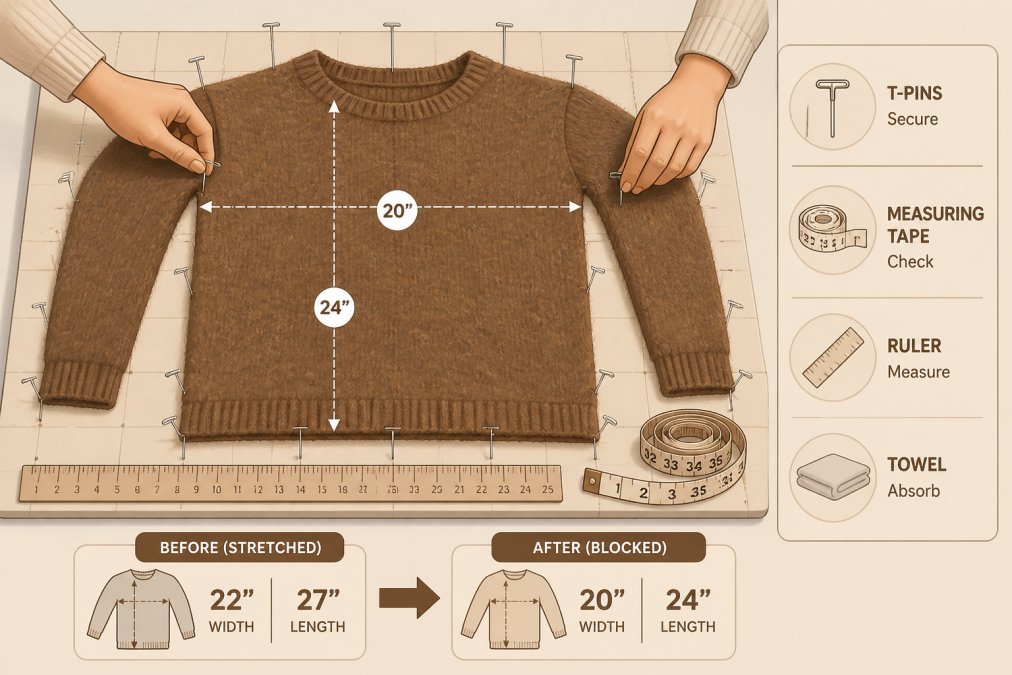
Step 1: Measure your target dimensions (5 minutes)
Before you block, know what you're aiming for. Check the garment tag if it lists original dimensions. If not, measure a similar sweater that fits you well. Write down the chest width, length, and sleeve length.
Step 2: Lay out your blocking board (2 minutes)
Place your blocking board on a clean, flat surface. A yoga mat works fine. Lay down a clean white towel or cloth on top, this prevents any color transfer from the board to your sweater.
Step 3: Arrange your sweater (10 minutes)
Lay your damp sweater flat on the blocking board. Smooth it out gently with your hands. Start at the center and work outward, removing wrinkles and creases. Position it to match your target dimensions.
Step 4: Pin the edges (10-15 minutes)
Use T-pins to secure the edges of your sweater. Pin the bottom edge first, spacing pins about 2 inches apart. Then pin the side seams, working from bottom to top. Pin the neckline and sleeve cuffs last.
Don't pull hard. The pins should hold the sweater in place, not stretch it. Your goal is to maintain the shape you've arranged, not to force it into a smaller size.
Step 5: Check your measurements (5 minutes)
Use your measuring tape to verify the sweater matches your target dimensions. Measure the chest width, length from shoulder to hem, and sleeve length. Make adjustments by moving pins if needed.
Step 6: Let it dry (24-48 hours)
This is the hardest part: waiting. Leave your sweater pinned on the blocking board until it's completely dry. This usually takes 24-48 hours depending on humidity and airflow. Don't rush this step. The sweater sets its shape as it dries.
In a humid environment, drying takes longer. A fan nearby (not blowing directly on the sweater) helps speed up the process.
Drying and Setting Your Alpaca Sweater Care Instructions
Once your sweater is dry, you've successfully reshaped your stretched out alpaca sweater. But the final steps matter for long-term results.
Common Mistakes to Avoid When Reshaping Alpaca
Learning what not to do prevents costly errors.
Using hot water is the biggest mistake. Hot water causes felting, which is permanent. Stick to lukewarm (65-75°F) every time.
Conclusion
Learning how to reshape a stretched out alpaca sweater is possible with the right approach. The key is understanding that alpaca fiber responds to moisture and gentle handling, use lukewarm water, let the fibers relax through soaking, pin the sweater to your target dimensions, and allow it to dry undisturbed for 24-48 hours.
Frequently Asked Questions
Can a stretched alpaca sweater be shrunk back to its original size?
Yes, in most cases. Alpaca fiber has natural elasticity that allows it to be reshaped through controlled soaking and blocking. The key is using lukewarm water, a gentle fabric relaxant like hair conditioner or baby shampoo, and proper blocking with T-pins on a blocking board. However, if the sweater has been severely felted (where fibers have locked together), full restoration may not be possible.
What is the best way to wash alpaca wool to prevent stretching?
Hand wash in cold water using a gentle detergent or baby shampoo. Avoid hot water and agitation, which relax fibers and cause stretching. Support the garment's weight throughout washing rather than letting it hang. Gently squeeze soapy water through the fabric without wringing. Rinse in cold water until soap is gone. Always lay flat to dry on a clean towel, never hang or machine dry.
How long does it take to reshape a stretched alpaca sweater?
The soaking process typically takes 20-30 minutes, though some sources recommend up to 45 minutes for heavily stretched garments. Blocking takes 24-48 hours depending on humidity and room temperature. Plan for at least 2-3 days total from start to finish, including drying time. Patience is essential, rushing the drying phase can undo your progress.
Does alpaca wool stretch over time?
Yes, alpaca fiber is protein-based and naturally absorbent, making it susceptible to stretching when wet or under tension. Moisture absorption causes fiber elasticity to relax, especially if the sweater is worn while damp or hung to dry. Proper care, including flat drying and appropriate storage, helps maintain the garment's original dimensions over time.