


Last Updated: November 16, 2026
Quick Summary
To learn how to read alpaca clothing fiber labels, find the fiber content line sewn into a side seam, neck, or hem, then read the fiber names and percentages in order. The first fiber listed is the main material, and the percentages should total 100%. This tells you how much alpaca the garment actually contains.
- Check the sewn-in tag at the inside neck, side seam, or hem, since hang tags can be removed.
- Fibers are listed from largest share to smallest, so the first one named is the main material.
- Confirm the percentages add up to 100% to verify you have the full fiber list.
- Baby alpaca describes the fiber's source, not a guarantee of how the finished item feels.
- Follow the sewn-in care label first, because it overrides gentler routines suggested by the fiber line.
Table of Contents
- Where to Find the Fiber Content Line on an Alpaca Garment Label
- How to Read Fiber Names and Percentages Step by Step
- What Baby Alpaca Meaning Really Tells You on a Label
- Working Through Alpaca Wool Blend Percentages
- How to Tell If Alpaca Is Real and Not Just Labeled That Way
- Decoding Care Symbols and Alpaca Clothing Care Label Instructions
- Putting Your Label Checklist to Use Before Your Next Purchase
- Frequently Asked Questions
Where to Find the Fiber Content Line on an Alpaca Garment Label
Purely Alpaca has been making alpaca clothing since 2002, and many customers love the feel of a piece but can't tell what the label actually promises. Knowing how to read alpaca clothing fiber labels is the fastest way to cut through that.
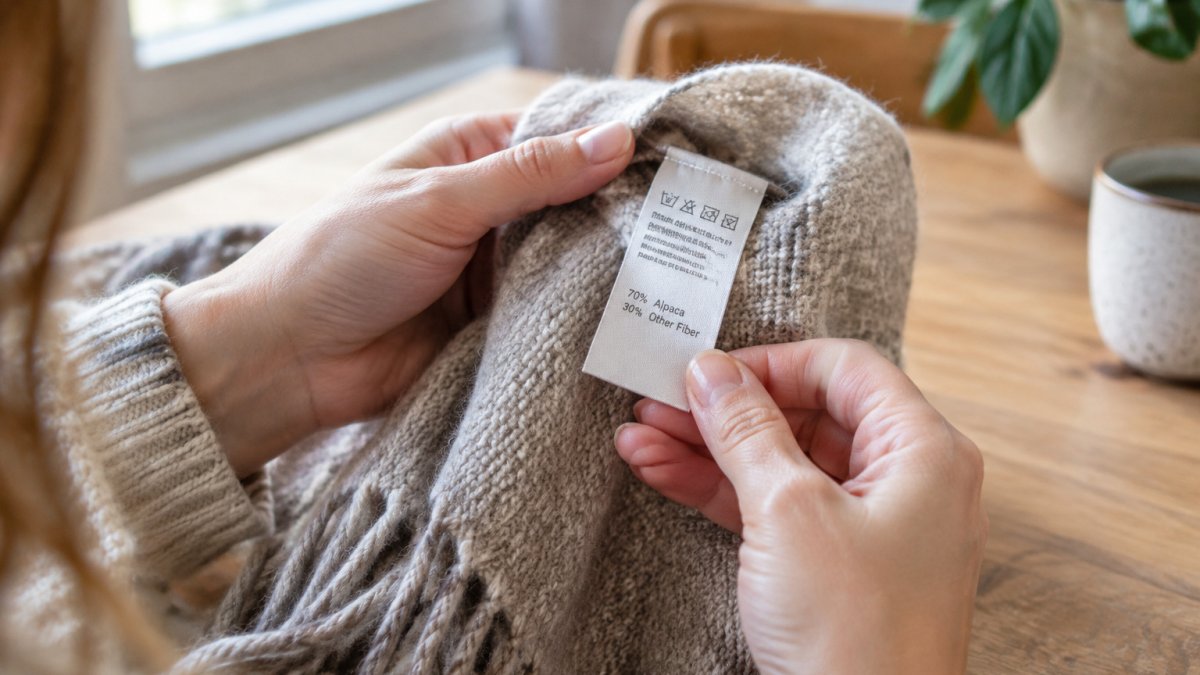
Start by finding the small tag with the fiber content, often printed near the care instructions. Federal rules in the United States require most textile products to show fiber content, and the Federal Trade Commission guidance on textile fiber labeling explains how those labels must be presented.
- Check the inside neck, side seam, or hem first
- Look for a separate tag for care instructions
- Some scarves and socks print the fiber line on a paper hang tag instead
Watch out: a hang tag can be removed before purchase, so check the sewn-in label too.
How to Read Fiber Names and Percentages Step by Step
Fiber names come first, and the percentages tell you how much of each fiber the garment contains. Read the list in order, because manufacturers must list fibers from the largest share to the smallest.
Here is a simple way to read it, the same method that works for any garment on how to read alpaca clothing fiber labels:
- Find the first fiber named. It is the main material.
- Check its percentage. A higher number means more of that fiber.
- Read the next fibers in order. Each one adds a smaller share.
- Add the percentages mentally to confirm they total 100%.
| Step | What to Look For | Why It Matters |
|---|---|---|
| 1 | First fiber listed | Shows the main material |
| 2 | Percentage next to it | Shows how much is used |
| 3 | Smaller fibers after | Shows what was blended in |
| 4 | Total equals 100% | Confirms the full list |
Our socks show this clearly. The Alpaca Argyle Socks list 41% Baby Alpaca, 33% Acrylic, and 26% Nylon, so the alpaca is the main fiber, while the acrylic and nylon add stretch and durability.
Fiber content of Alpaca Argyle Socks
What Baby Alpaca Meaning Really Tells You on a Label
"Baby alpaca" refers to the fiber taken from young animals, and it is usually softer than fiber from older animals. The term describes the source of the fiber, not a guarantee of how the finished item will feel.
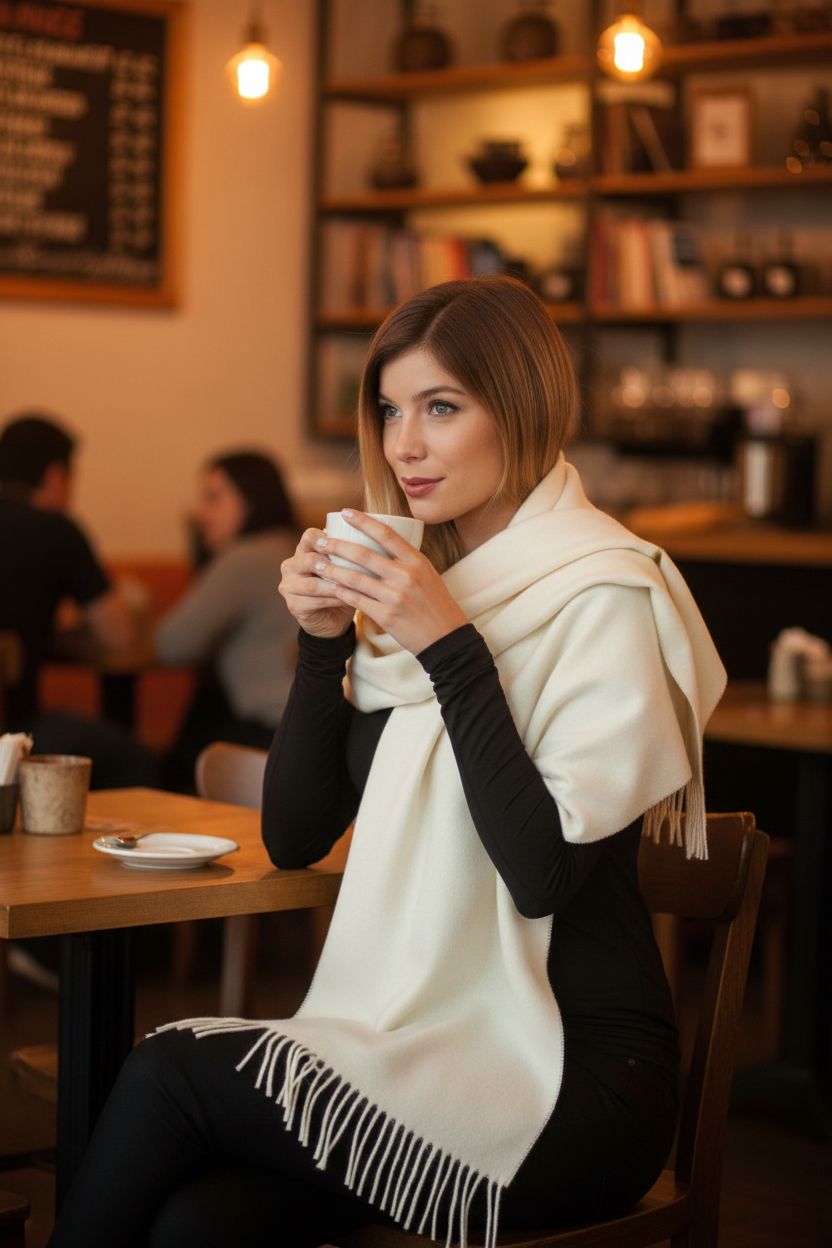
A label that says 100% Baby Alpaca tells you the whole garment is made from that fiber. Our [PRODUCT:100% Baby Alpaca Scarf - Woven Solid | https://purelyalpaca.com/products/100-baby-alpaca-woven-solid-scarf] is listed as 100% Baby Alpaca and measures 71 inches long and 12 inches wide.
Many shoppers also ask whether the alpaca is pure or mixed. Look for the percentage. If you see no percentage, ask the seller before you buy.
Baby Alpaca Versus Standard Alpaca
Baby alpaca is generally finer and softer than standard alpaca fiber. Standard alpaca can be a little coarser, which is why many people with sensitive skin prefer baby alpaca items. Both are warm and light for their weight, so the choice often comes down to how soft you want the item to feel against your skin.
Working Through Alpaca Wool Blend Percentages
Many alpaca products blend fibers to change their strength, stretch, or price. A blend is not a flaw, but you should know what each fiber does.
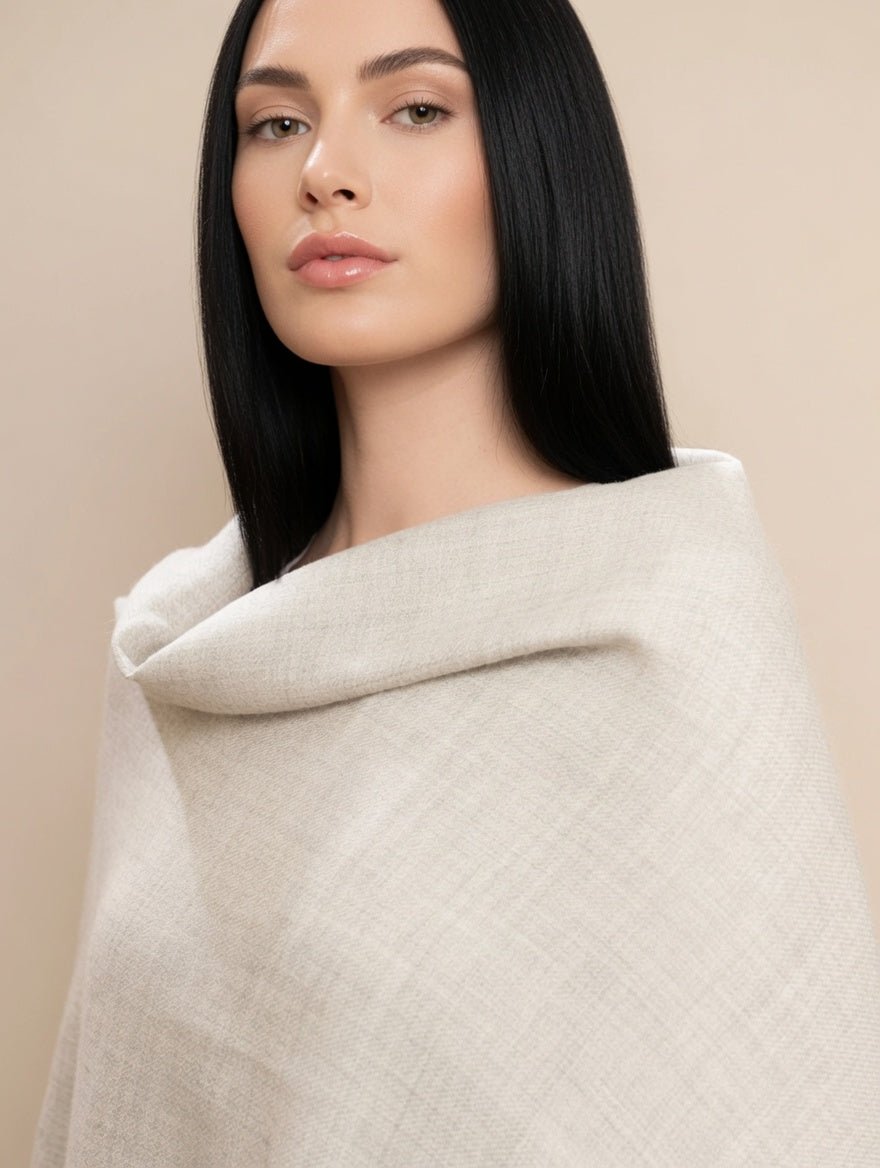
Take our [PRODUCT:Natural Undyed Baby Alpaca Eco and Silk BOUCLE' Stole | https://purelyalpaca.com/products/natural-undyed-100-baby-alpaca-eco-boucle-scarf] as an example. Its label reads 80% Baby Alpaca Eco and 20% Silk. The alpaca gives warmth and softness, and the silk adds a smooth sheen and a bit of drape. Because the alpaca is the majority fiber, the stole still feels and wears like an alpaca piece.
Here is how to read a blend:
- Highest percentage: the main fiber that shapes the feel
- Middle percentages: support fibers that change durability or stretch
- Small percentages: added for a specific reason, such as nylon for strength
Worked Example: Alpaca Blended with Wool
A label reading 70% Alpaca, 30% Wool tells you the garment is mostly alpaca, with wool added for resilience and memory. Wool can help a knit hold its shape, but it can feel scratchier against sensitive skin than finer fibers. If the label says 50% Alpaca, 50% Wool, expect the wool to be a real presence in both hand-feel and performance.
Worked Example: Alpaca Blended with Nylon
A label reading 80% Alpaca, 20% Nylon is common in socks and lightweight knits. Nylon is often added for abrasion resistance. Our [PRODUCT:Alpaca Argyle Socks | https://purelyalpaca.com/products/alpaca-argyle-socks] show this pattern at 41% Baby Alpaca, 33% Acrylic, and 26% Nylon: the alpaca is still the largest single fiber, while the acrylic and nylon carry stretch and durability. In a sock, that combination matters more than in a scarf because the fiber is under constant friction.
Worked Example: Alpaca Blended with Acrylic
A label reading 60% Alpaca, 40% Acrylic is a price-driven blend. Acrylic is a synthetic fiber that adds bulk and loft at a lower cost, and it can make a knit feel lighter and fluffier. Acrylic is a synthetic fiber, so it differs from alpaca in breathability and temperature regulation. A 60/40 blend can still be a good value, but read the number: the higher the acrylic share, the less of the alpaca feel you are actually buying.
Worked Example: Alpaca Blended with Silk
A label reading 80% Baby Alpaca, 20% Silk, like our boucle stole, is a luxury blend. Silk adds sheen and drape to a blend. The trade-off is care: silk can be sensitive to heat and harsh detergent, so follow the care label closely.
Watch out: a garment that says "alpaca blend" with no percentage can contain very little alpaca, so always look for the number. A label that lists a fiber only in the marketing copy but not on the sewn-in tag is a reason to ask the seller for the exact composition before you buy.
How to Tell If Alpaca Is Real and Not Just Labeled That Way
A label is only as good as the seller behind it. The fiber content line is the best guide, so check it before trusting any description. Look for a clear percentage and a named fiber, not vague words like "luxury blend" or "alpaca-style." To go deeper on checking authenticity and hypoallergenic claims, read how to verify fabric and hypoallergenic claims.
Ask the seller simple questions:
- Does the label list the exact fiber percentages?
- Is the product made with baby alpaca or standard alpaca?
- Can I see the care label and fiber line in person or in photos?
Our [PRODUCT:Alpaca Argyle Socks | https://purelyalpaca.com/products/alpaca-argyle-socks] list their exact fiber percentages and suggested care, which makes it easy to check the claim yourself.
Decoding Care Symbols and Alpaca Clothing Care Label Instructions
Care symbols are small pictures that show how to wash, dry, iron, and clean a garment. They are standardized, so the same symbol means the same instruction on most clothing. The symbols matter for alpaca because heat, agitation, and harsh detergent can damage protein fibers like alpaca.
- Washtub with a hand: hand wash only
- Washtub with a line: gentle machine cycle
- Square with a circle: tumble dry
- Square with an X over it: do not tumble dry
Match the Care Symbol to the Fiber Blend
The fiber line and the care line work together. A 100% baby alpaca scarf and a 41% baby alpaca sock blend do not need the same treatment, even if both say "hand wash." Use the fiber percentages to set your expectations:
- 100% alpaca or baby alpaca: treat as delicate. Hand wash in cool water with a mild detergent, press water out without wringing, and lay flat to dry. Avoid hanging, which can stretch the garment.
- Alpaca blended with wool: the wool share makes the garment more resilient but also more prone to felting if agitated. Keep the water cool and skip the dryer.
- Alpaca blended with nylon or acrylic: these synthetics tolerate gentle machine cycles better, but the alpaca share still sets the limit. Follow the most delicate instruction on the label. For detailed washing and care steps for alpaca garments, see alpaca clothing care instructions.
- Alpaca blended with silk: silk is heat-sensitive, so keep water cool and avoid direct sun when drying.
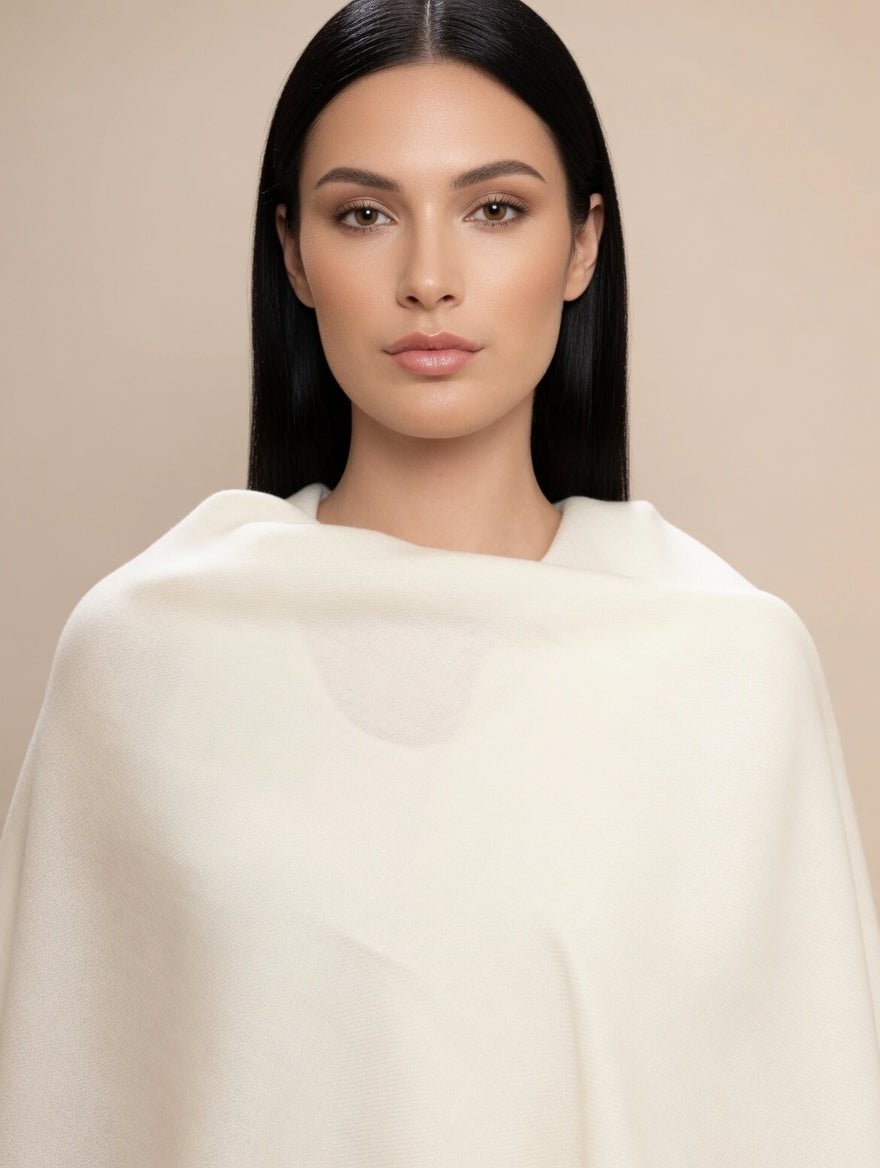
The [PRODUCT:Natural Undyed 100% Baby Alpaca Eco Classic Shawl | https://purelyalpaca.com/products/natural-undyed-100-baby-alpaca-eco-classic-shawl] is listed as dry clean or hand wash/air dry only. Follow the label closely.
Washing, Drying, and Storing Alpaca
A practical routine for most alpaca garments:
- Wash less often. Airing a garment between wears can reduce how often it needs washing.
- Use cool water and a mild detergent. Hot water and harsh detergent are the two most common causes of damage.
- Do not wring or twist. Press water out between towels instead.
- Lay flat to dry. Hanging wet alpaca can stretch it out of shape.
- Fold, do not hang, for storage. Hangers can distort shoulders over time.
- Store clean and dry. Moths are attracted to soil and moisture, so clean garments store better.
Some shoppers worry that care can be expensive. Many items can be hand washed at home. The care label always comes first: if the sewn-in label says dry clean only, follow it, even if the fiber line suggests a gentler routine would work.
Watch out: a paper hang tag with care instructions can be removed before purchase, so check the sewn-in care label too. If the sewn-in label is missing or unreadable, ask the seller for the care instructions in writing before you buy.
Putting Your Label Checklist to Use Before Your Next Purchase
Before you buy, run through this checklist:
- Find the fiber content line and read the percentages
- Confirm the main fiber is the one you want
- Check whether "baby alpaca" is stated, if that matters to you
- Read the care symbols and suggested care instructions
- Look for an exact size and weight listed
- Ask the seller about returns if the item will be a gift
Purely Alpaca offers free shipping on orders of $100 or more and hassle-free returns. Shop all of our alpaca pieces and read each listing's fiber line before you check out.
Ready to read the labels yourself? Shop all Purely Alpaca pieces and find warmth you can trust.
Frequently Asked Questions
What does baby alpaca mean on a clothing label?
Baby alpaca generally refers to fiber shorn from young alpacas. The fibers are finer and softer than adult alpaca fiber, which is why baby alpaca garments tend to feel gentler against the skin. On a label, the term describes the fiber source rather than a guaranteed level of softness, so it is worth checking the percentage line and the garment's fiber content alongside it.
Is alpaca fiber hypoallergenic?
Alpaca fiber is a different material from sheep's wool. However, no fiber is guaranteed to be hypoallergenic for everyone, and blends containing acrylic or nylon can still irritate some wearers, so check the full fiber content before buying.
Can alpaca clothing still feel itchy if the label says baby alpaca?
It can. Fiber fineness is only one factor in how a garment feels. Yarn twist, knit tightness, and the percentage of other fibers in a blend all affect comfort. Trying the garment on or buying from a retailer with clear return terms can help you confirm comfort.
What does 100% alpaca mean on a garment label?
A 100% alpaca label means every fiber in the garment comes from alpaca, with no other fibers listed. This is the most straightforward label to read. Keep in mind that trim, buttons, or linings may be made of other materials, and those components are often described separately. For the main body of the garment, 100% alpaca means you are not getting a blend.
