


Last Updated: November 16, 2026
Quick Summary
The best alpaca fiber toys for newborns are small, lightweight grasp toys like the Baby Alpaca Grasp Toy, a 6.25-inch, 1.1-ounce toy made from 100% baby alpaca yarn over clean polyfill. Choose toys with tight seams, no detachable parts, and use them only during supervised awake time, never in the crib.
- A newborn toy should be about 6 to 7 inches and weigh roughly an ounce for easy gripping.
- The Baby Alpaca Grasp Toy is priced at $34.95 and labeled for newborns and up.
- The knit doll and pom-pom figure are labeled for ages 3 and up due to removable parts.
- Remove lightly attached cloth tags and check every seam before first use.
- Hand wash toys in cool water with gentle detergent and air dry flat.
Table of Contents
- What to Look for in Alpaca Fiber Toys for Newborns
- Is Alpaca Wool Safe for Babies?
- Baby Alpaca Grasp Toy: The Best First Toy for Newborns
- Alpaca Stuffed Animal Real Fur: What You Are Actually Buying
- Baby Alpaca Knit Doll with Scarf: A Cuddle Companion for Older Babies
- Large Alpaca Stuffed Animal vs Small Plush: Which Size Fits Your Child
- Care, Cleaning, and Hygiene for Baby Alpaca Toys
- Choosing the Right Alpaca Toy for Your Child
- Frequently Asked Questions
What to Look for in Alpaca Fiber Toys for Newborns
Alpaca fiber toys are soft, lightweight plush objects made from alpaca fleece, and the best ones for a newborn are small enough to grip, free of loose parts, and gentle against skin. At Purely Alpaca, we have sold alpaca goods since 2002. The right first toy comes down to four checks: size, weight, construction, and fiber.
Below, we explain how to judge each check, then compare our toys so you can match one to your child's age and stage.
Size, Weight, and Grip for Tiny Hands
A newborn cannot grasp a large stuffed animal. Their hands close around objects roughly the size of a small rattle, and anything heavier than a few ounces gets dropped or pressed into the face by accident.
Look for toys in the 6 to 7 inch range weighing about an ounce, so a baby can wrap their fingers around the body and explore the texture. Larger plush animals are better saved for toddlers who can hug and carry them.
Construction Checks: Seams, Tags, and Small Parts
Run three checks before handing any plush toy to a newborn.
- Seams: squeeze along every seam; stitching should be tight with no gaps where filling could escape.
- Tags: cloth tags are a common grab target; remove any lightly attached tag before use.
- Small parts: pom-poms, scarves, ribbons, and button eyes can come loose, and anything detachable is a choking risk for a baby under three.
Watch out: a toy that passes for a three-year-old can still fail for a newborn. Age labels exist for a reason, and we flag them on every product page.
Is Alpaca Wool Safe for Babies?
Alpaca wool is safe for babies when the toy is well made, age-appropriate, and used under supervision, and the fiber itself is gentler than most sheep's wool. The main safety questions are construction, sleep environment, and supervision, not the fleece.
Alpaca fleece is generally described as having a smoother structure than sheep's wool, which is why many people find it less prickly against the skin. For a closer look, our guide to alpaca fiber benefits for sensitive skin breaks down how it behaves against the skin.
The Sleep Rule Comes First
A plush toy is not a crib item. Pediatric safe-sleep guidance generally recommends keeping soft objects, stuffed toys, pillows, blankets, and bumper pads out of an infant's sleep space, and that guidance applies to alpaca toys the same as any other plush. Use an alpaca toy during supervised awake time, tummy time, lap play, stroller walks while you are watching, and put it away before the baby goes down to sleep. A toy that is safe in your hands is not automatically safe in a bassinet.
Supervision and Mouthing
A newborn explores by mouthing, so every toy goes into the mouth within minutes. Look for loose fibers that pull free in strands, pile that sheds onto a wet finger, and dye that transfers when you rub a damp cloth across the surface.
Watch out: a toy can pass a visual inspection and still fail the mouth test. Rub a damp cloth over the surface and squeeze the seams before first use, and retire the toy if fibers come away in clumps rather than individual strands.
What "Hypoallergenic" Does and Does Not Mean
A hypoallergenic label is a marketing term rather than a safety certification. It does not tell you whether the dye is low-impact, whether the filling is clean polyfill, or whether the seams will hold. A fiber-content statement and a clear age recommendation are useful details to look for before you buy.
Why Alpaca Fiber Feels Gentler Than Regular Wool
The difference comes down to the fiber's surface. Sheep's wool has overlapping scales that can lift and catch on skin. Alpaca fiber is generally described as smoother, so it is often perceived as less itchy.
Baby alpaca, the finest grade, is generally softer still. The toys in our range are made from 100% baby alpaca yarn. If you are shopping for a baby with eczema or very reactive skin, our article on whether alpaca wool is hypoallergenic for eczema covers what to expect in more detail.
Baby Alpaca Grasp Toy: The Best First Toy for Newborns
The Baby Alpaca Grasp Toy is a good option for a newborn's first toy.
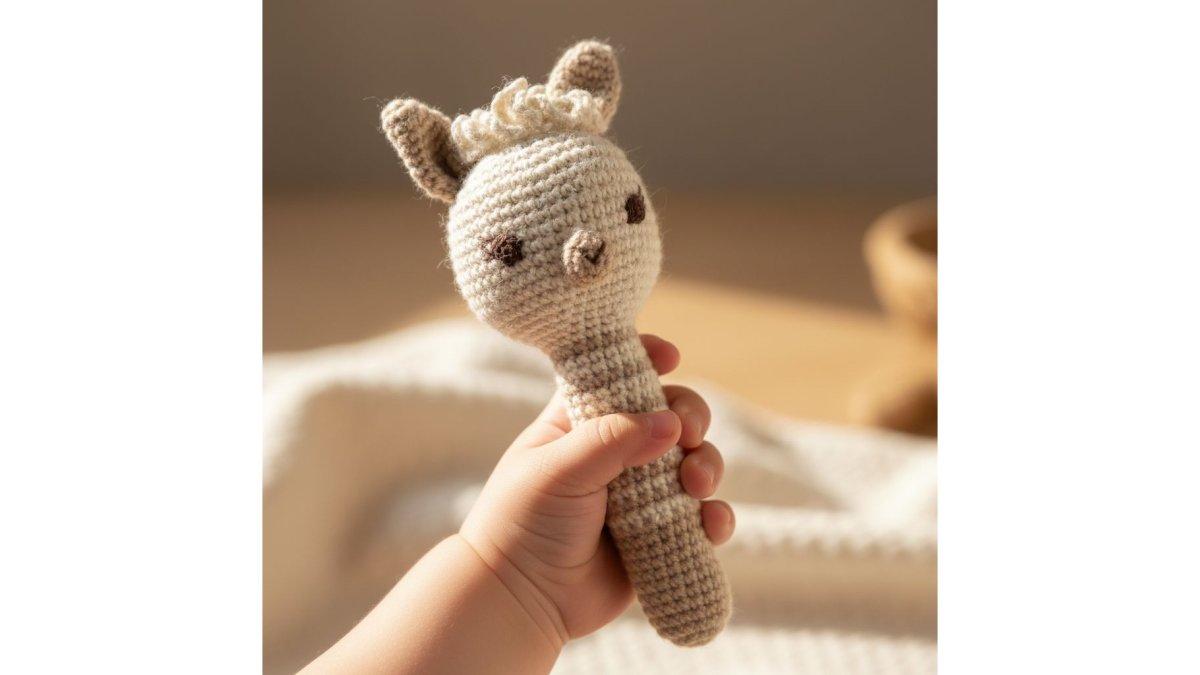
At just over six inches and barely an ounce, it is small enough for a newborn's hand. Its bright design is meant to be fun to look at and hold.
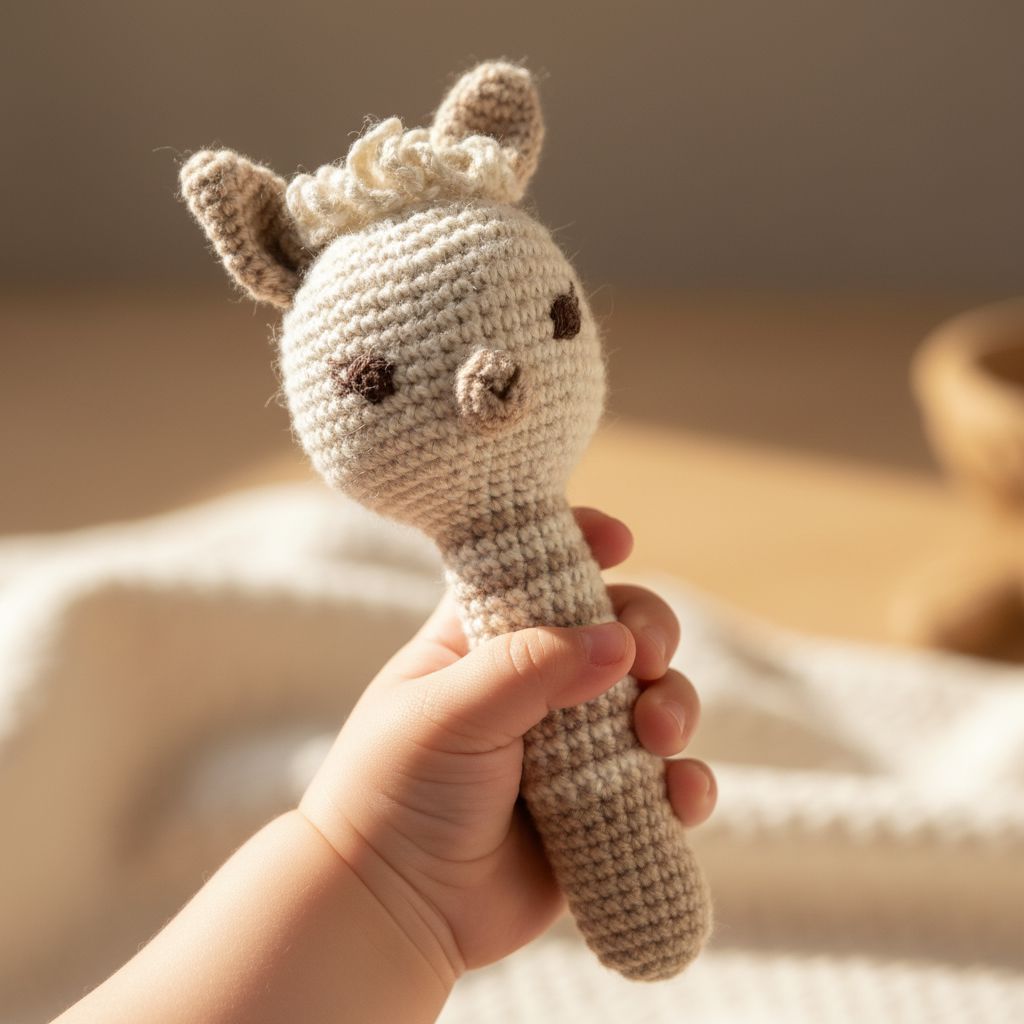
The lightly sewn cloth tag can be removed before first use. Care is a gentle hand wash and air dry.
Best for: newborns and babies just learning to grip. Skip if: you want a larger cuddle toy for an older baby.
You can shop the Baby Alpaca Grasp Toy to see the size and color up close.
Alpaca Stuffed Animal Real Fur: What You Are Actually Buying
An alpaca stuffed animal labeled "real fur" is usually made from real alpaca fleece or yarn, not from animal hide. The fiber is shorn from the animal the way wool is, and the animal is not harmed in the process.
That distinction matters when buying for a baby: a toy made from alpaca yarn over polyfill is a washable, soft textile product, not a fur pelt.
If a product page is vague about what "real fur" means, ask before you buy. Reputable sellers will tell you whether the toy is knitted yarn, woven fleece, or something else.
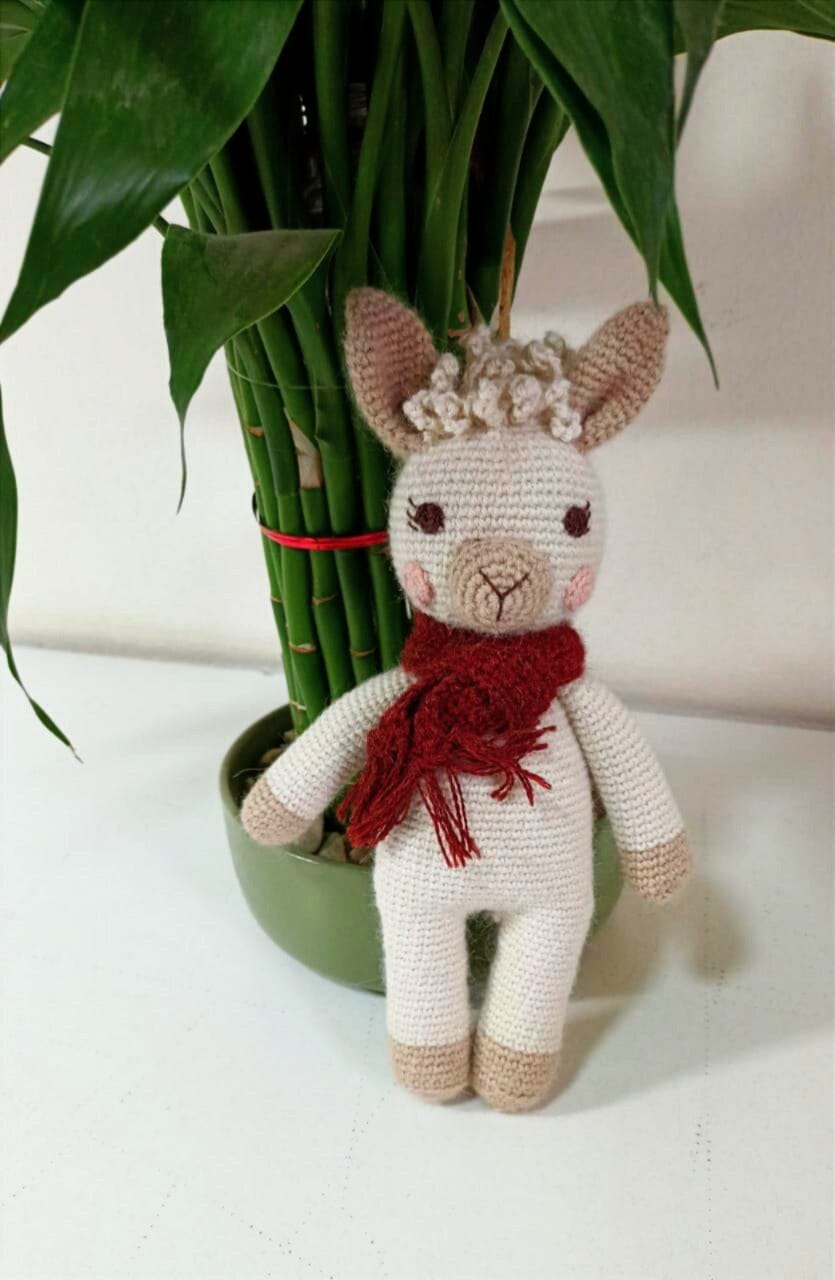
Baby Alpaca Knit Doll with Scarf: A Cuddle Companion for Older Babies
That age label is not a formality. The scarf comes off, and a removable piece is a hazard for a baby who mouths everything.
The alpaca face and scarf give it a charming look, and the same hand-wash, air-dry care applies.
Best for: children 3 and up who want a huggable doll. Skip if: the child is under three or still puts everything in their mouth.
You can see the Baby Alpaca Knit Doll with Scarf for the full details.
Large Alpaca Stuffed Animal vs Small Plush: Which Size Fits Your Child
Size should follow age and stage, not preference. A newborn needs a small grasp toy used under supervision; a toddler or preschooler can handle a larger stuffed animal. The table below compares our range.
| Toy | Size | Weight | Recommended Age | Price | Best For |
|---|---|---|---|---|---|
| Baby Alpaca Grasp Toy | 6.25 in | 1.1 oz | Newborn and up | $34.95 | First grip and tummy time |
| Baby Alpaca Knit Figure with Pom-Pom Necklace | 7 in | 2.7 oz | 3 and up | $29.95 | Small cuddle toy for older kids |
| Baby Alpaca Knit Doll with Scarf | 10 in | 2.7 oz | 3 and up | $33.95 | Hugging and carrying |
Weight
Why the Age Labels Differ
The grasp toy is labeled for newborns and weighs about an ounce. The knit figure and knit doll are labeled for ages 3 and up. The pom-pom necklace on the figure can be torn off, which is a potential choking hazard. The age label should be checked before buying any of these toys.
Buying Criteria for a Newborn
Use these checks in order when the child is under one:
- Age label first. If the label says 3 and up, it is not a newborn toy, no matter how soft it looks.
- Weight under about 2 ounces. Lighter toys are easier for a newborn to hold.
- No detachable parts. No scarves, necklaces, ribbons, pom-poms, or button eyes.
- Tight seams and removable tags. Squeeze every seam and remove cloth tags before first use.
- Supervised use only. Awake-time play, not the crib.
Buying Criteria for an Older Child
Once a child can sit up, hug, and carry a toy without tipping over, a larger plush becomes the better fit.
Watch out: a plush that looks like a newborn gift may be labeled for ages 3 and up. Check the label before you buy.
If you want to compare the full range side by side, you can browse the stuffed alpaca toys and check each size against your child's age.
Care, Cleaning, and Hygiene for Baby Alpaca Toys
The toys in our range call for a gentle hand wash and air dry.
- Spot clean first. For small marks, use a damp cloth with a little mild soap and blot, rather than washing the whole toy.
- Hand wash when needed. Use cool water and a gentle detergent, and rinse well.
- Air dry flat. Air dry the toy rather than using a dryer.
- Check seams after washing. Give the toy a squeeze along every seam before it goes back to a child.
Watch out: skipping the seam check after a wash is how small openings turn into loose filling. A thirty-second squeeze prevents most problems.
Choosing the Right Alpaca Toy for Your Child
Match the toy to the age, and the decision gets simple. For a newborn, choose the smallest, lightest option with no detachable parts. For a child of three or older, a larger doll or figure is the better gift.
Use this checklist before you buy:
- Is the toy labeled for the child's age?
- Does it weigh about an ounce for a newborn, or is it a larger cuddle toy for an older child?
- Are all tags and detachable pieces removed or safe?
- Are the seams tight with no gaps?
- Is the material stated clearly as alpaca yarn over polyfill?
- Can you hand wash and air dry it?
That is the whole framework. Age first, then size, then construction, then care.
A newborn's first toy should be soft, light, and simple, and finding one that meets every safety check takes care. Purely Alpaca has been a small family business since 2002, and our baby alpaca toys are made from 100% baby alpaca yarn.
Frequently Asked Questions
Can newborns sleep with stuffed animals?
No. Pediatric safe-sleep guidance generally advises keeping soft objects, including stuffed animals, out of the crib and sleep space. Alpaca fiber toys are for supervised play and cuddling while your baby is awake, not for sleep. Keep them out of the bassinet, crib, and play yard, and store them on a shelf between play sessions.
Is alpaca wool safe for babies with sensitive skin?
Alpaca fiber is generally described as smooth, which many people find comfortable against the skin. Baby alpaca refers to the finer first fleece, which feels softer against skin. Every baby is different, so watch for redness or irritation during supervised use. The Baby Alpaca Grasp Toy is made from 100% baby alpaca yarn over a clean polyfill interior, and you can remove the lightly sewn cloth tag before first use.
Is the alpaca stuffed animal real fur or yarn?
The alpaca stuffed animal real fur question comes up often. These toys are knitted from 100% baby alpaca yarn over a clean polyfill interior, not made from animal hide or fur. The toys are knit from alpaca yarn, and the care instruction is a gentle hand wash and air dry.
What should I check before giving a plush toy to a newborn?
Run through four checks. First, remove any lightly sewn cloth tag before use, as the listings for these toys instruct. Second, inspect seams and attached pieces; the pom-pom necklace on the Knit Figure can be torn off, so that toy is recommended for ages 3 and up. Third, confirm the size is appropriate for your baby, such as the 6.25-inch Grasp Toy. Fourth, plan supervision, since no plush toy belongs in a sleep space.
How do I clean a baby alpaca toy?
All three toys use the same care routine: gentle hand wash and air dry. Use a gentle hand wash and air dry the toy. Use cool water and a small amount of mild detergent.
