



Table of Contents
- Why Winter Socks Matter for Circulation
- Understanding Compression Levels and mmHg
- Alpaca Wool Socks Benefits for Cold Weather Support
- Non-Binding Socks for Circulation: Why Fit Matters
- Compression Socks for Winter: Material Selection and Performance
- Layering Systems and Footwear Fit for Optimal Circulation
- Sizing, Care, and Longevity: Making Your Investment Last
- Frequently Asked Questions
Last Updated: September 22, 2026
Why Winter Socks Matter for Circulation
Cold weather restricts blood flow to your feet, worsening existing circulation problems and causing cold feet, numbness, and in severe cases, tissue damage.
The right winter socks do more than keep your feet warm. They actively support blood flow through graduated compression, moisture management, and thermal regulation. This matters whether you're dealing with mild cold feet or a diagnosed circulation condition.
Standard socks often restrict circulation or fail to maintain warmth without bulk. Choosing the right winter socks for circulation is essential.
Understanding Compression Levels and mmHg
Compression strength is measured in millimeters of mercury (mmHg), indicating the graduated pressure applied to your leg and foot. This is foundational to choosing winter socks for circulation.
For everyday wear and general circulation support, the standard range is 12-20 mmHg Apex Foot compression guidelines. This gentle compression promotes blood flow without feeling restrictive. Most people wearing these socks report comfort for all-day use.
For more significant circulation concerns or prevention of blood clots and varicose veins, compression in the 20-30 mmHg range is recommended Clinical compression support standards. This firmer compression requires proper fitting and may feel snug initially, but it delivers stronger vascular support.
Higher compression doesn't always mean better results, a sock that feels too tight won't be worn consistently.
| Compression Level | Best For | Feel | Duration |
|---|---|---|---|
| 12-20 mmHg | Daily wear, mild circulation support | Gentle, barely noticeable | All day |
| 20-30 mmHg | Serious circulation issues, prevention | Noticeably firm, snug fit | 4-8 hours |
| 30+ mmHg | Medical conditions, post-surgery | Very firm, requires adjustment | As directed |
Graduated compression is strongest at the ankle and decreases toward the top, mimicking natural circulation and pushing blood upward against gravity.
When Compression Socks Are Contraindicated: Critical Safety Considerations
Compression socks can harm circulation in specific medical conditions. Understanding when NOT to wear them is essential.
Peripheral Artery Disease (PAD): Compression can further restrict blood flow to oxygen-starved tissues. An ankle-brachial index (ABI) test can determine if your arteries are compromised.
Acute Deep Vein Thrombosis (DVT): Compression during an active clot can dislodge it, creating a potentially life-threatening pulmonary embolism. Compression is only appropriate after anticoagulation therapy begins and under medical supervision.
Undiagnosed leg swelling: Always have swelling evaluated before self-treating with compression socks, as it can signal infection, kidney disease, heart failure, or lymphatic obstruction.
Severe diabetes with neuropathy: If you cannot feel your feet, you cannot detect if compression is cutting off circulation or causing skin breakdown. Compression requires medical oversight.
Skin conditions or open wounds: Compression traps moisture and heat, worsening eczema, psoriasis, or fungal infections, and can infect open sores or ulcers.
Consult your healthcare provider before starting compression socks if you have any diagnosed circulatory condition, diabetes, kidney disease, or heart condition.
Alpaca Wool Socks Benefits for Cold Weather Support
Alpaca fiber stands apart from merino wool and synthetic alternatives. It's warmer than merino wool by weight, softer than cashmere, and naturally hypoallergenic. These properties make alpaca an exceptional choice for winter socks for circulation.
Alpaca's hollow fiber structure traps air in cold conditions and breathes in warmer conditions, preventing overheating that causes swelling and poor circulation.
Alpaca is naturally odor-resistant, allowing longer wear between washes without bacterial buildup that creates pressure points or skin irritation.
Alpaca contains no lanolin, the waxy substance that makes traditional wool itchy. For people with sensitive skin or eczema, conditions often linked to circulation issues, alpaca socks eliminate the irritation barrier that prevents consistent wear.
Natural fiber integration in compression hosiery shows that top-rated compression socks increasingly blend alpaca with merino wool and bamboo. These combinations deliver the thermal benefits of alpaca with added breathability. Purely Alpaca's USA Made Alpaca Compression Socks ($39.95) deliver 15-20 mmHg graduated compression with 100% alpaca comfort, engineered specifically for circulation support during extended wear.
USA Made Alpaca Compression Socks →

For everyday layering, the Copper Crew Alpaca Socks ($14.00) blend alpaca with organic cotton and copper fibers. Heat reflecting copper fibers help relieve symptoms of stress and aging. Known for its many beneficial properties, copper perfectly enhances the warm luxurious softness of alpaca. The Copper Crew Alpaca Sock is a great everyday sock. It is also excellent as a layering sock under a heavier boot sock.
Non-Binding Socks for Circulation: Why Fit Matters
A sock's binding pressure at the cuff can impede circulation. Non-binding compression socks apply graduated pressure without creating a tourniquet effect.
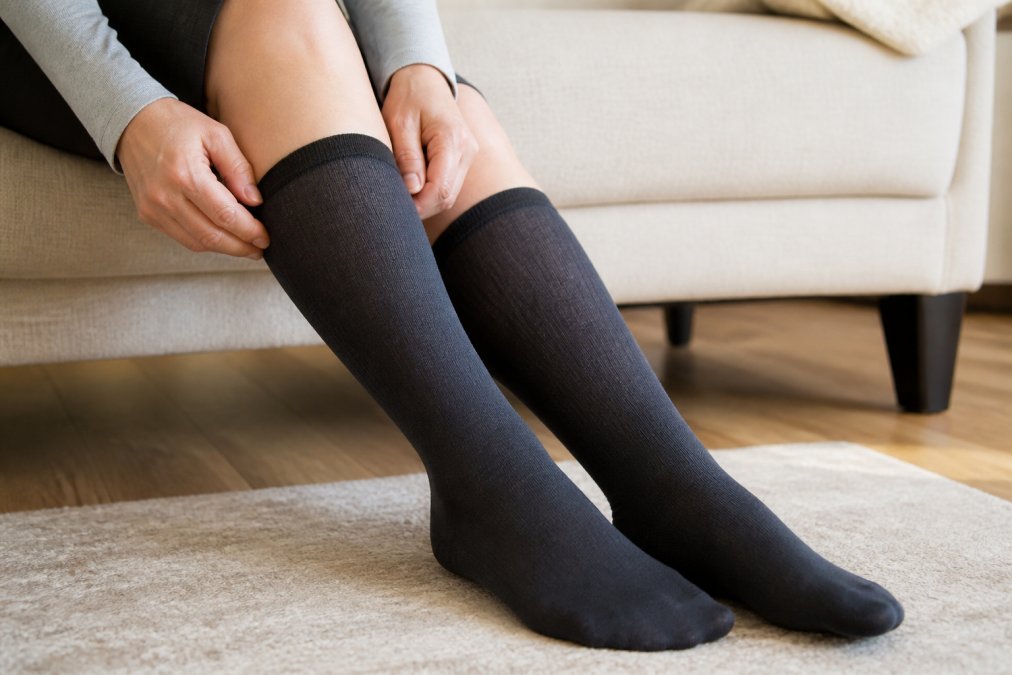
Tight binding restricts venous return and creates pooling in the lower leg and foot. A proper non-binding design maintains gentle, graduated pressure that supports flow without restriction.
A sock that leaves marks or feels uncomfortable won't be worn regularly. Purely Alpaca's Soft Touch Therapeutic Alpaca Socks ($29.95) are designed with a light, gentle touch that stays on without marking skin.

Proper fit requires accurate sizing. Sock sizes differ from shoe sizes, measure your actual foot length and compare to sock sizing charts to avoid buying socks too small.
Compression Socks for Winter: Material Selection and Performance
Material choice determines whether compression socks deliver on their promise. The best blend multiple fibers to balance support, warmth, breathability, and durability.
Layering Systems and Footwear Fit for Optimal Circulation
Layering for circulation support requires thermal regulation without pressure that restricts blood flow.
Sizing, Care, and Longevity: Making Your Investment Last
Proper sizing is non-negotiable for compression socks. Unlike regular socks, compression socks require two measurements: foot length and calf circumference.
Measuring for Proper Compression Sock Fit
Step 1: Foot Length Measure your foot from heel to toe while standing barefoot. Most compression socks come in small (7-9 inches), medium (9-11 inches), large (10-13 inches), and extra-large (13-15 inches) ranges. Compare your measurement to the sock's sizing chart, not your shoe size.
Timing Your Measurement
Measure your feet and legs in the morning, before daily swelling. Morning measurements give you the most accurate baseline.
Care and Maintenance: Preserving Compression Elasticity
Compression socks last 6-12 months with proper care. The elastic that provides therapeutic pressure degrades with improper washing, shortening lifespan significantly.
Washing Protocol:
- Hand wash in lukewarm water with mild detergent, or machine wash on delicate cycle in a mesh bag
- Wash inside out to protect the outer surface from pilling and friction
- Never use fabric softener, it breaks down the elastic polymers that create compression
- Never bleach or use harsh chemicals; they damage both natural and synthetic fibers
- Rinse thoroughly until water runs clear
Drying:
- Air dry flat or hanging; never tumble dry on high heat
- Heat degrades elastic. If machine drying, use low heat only, and remove while still slightly damp
- Never wring or twist; gently squeeze excess water
- Avoid direct sunlight, which can fade color and weaken fibers over time
Storage:
- Store in a cool, dry place away from direct heat sources
- Do not fold tightly; roll or lay flat to prevent permanent creases that weaken elastic
You'll know it's time to replace when:
- The sock no longer feels snug at the ankle
- It no longer leaves a slight indentation on your skin (indicating lost compression)
- The elastic feels loose or baggy
- It has visible pilling, holes, or thinning areas
Frequently Asked Questions
What compression level should I choose for winter socks for circulation?
For everyday winter wear, aim for 12-20 mmHg compression, which supports blood flow without feeling restrictive. If you have diagnosed circulation issues or are at risk for blood clots, your doctor may recommend 20-30 mmHg. The key is finding a level you'll actually wear consistently, a sock that feels too tight won't help if you avoid wearing it.
Do alpaca wool socks benefits include better circulation support than synthetic options?
Yes. Alpaca naturally regulates temperature and wicks moisture away from skin, keeping feet dry and warm without the bulk of synthetic materials. Alpaca is smoother than traditional wool, making it ideal for sensitive skin, and its thermal properties help maintain consistent blood flow. Combined with graduated compression, alpaca socks deliver both comfort and functional circulation support.
Can tight socks restrict circulation, and how do I avoid this?
Absolutely. Socks that are too snug or footwear that's too tight can reduce blood flow, negating any compression benefits. Choose non-binding socks with elastic that sits comfortably without leaving marks on your skin. Avoid doubling up on socks, this restricts circulation rather than improving it. If your socks leave visible indentations after removal, they're too tight.
What materials should I look for in winter socks for circulation?
Prioritize moisture-wicking fabrics like alpaca blended with nylon for durability. These natural fibers provide thermal regulation and breathability while managing moisture. Avoid materials that trap sweat or cause bulk inside your boot. Look for reinforced heels and toes to extend longevity, and ensure the cuff design is non-binding to maintain steady pressure without cutting off circulation.