





Table of Contents
- How to Layer Socks for Extreme Cold: The Right Approach
- Alpaca Wool Socks Benefits for Winter Performance
- Moisture-Wicking Socks for Winter and Circulation
- Boot Fit for Layered Socks: Avoid the Compression Trap
Last Updated: August 25, 2026
How to Layer Socks for Extreme Cold: The Right Approach
Layering socks for extreme cold isn't about stuffing your feet into multiple pairs. The real science comes down to managing moisture, maintaining circulation, and creating dead air space that traps warmth without restricting blood flow. 🧦
Feet lose heat approximately 25 times faster when wet than when dry, according to research on cold-weather physiology. Most people get this wrong by wearing two thick pairs (which crowds the boot and cuts off circulation) or using cotton as a base layer (which absorbs sweat and makes everything worse).
The approach that works combines a thin moisture-wicking base layer with a mid-weight insulating sock, then adds a thermal liner or heavier outer sock only when your boot volume allows it. This system keeps feet dry, maintains blood circulation, and provides superior insulation without the compression that makes toes go numb.
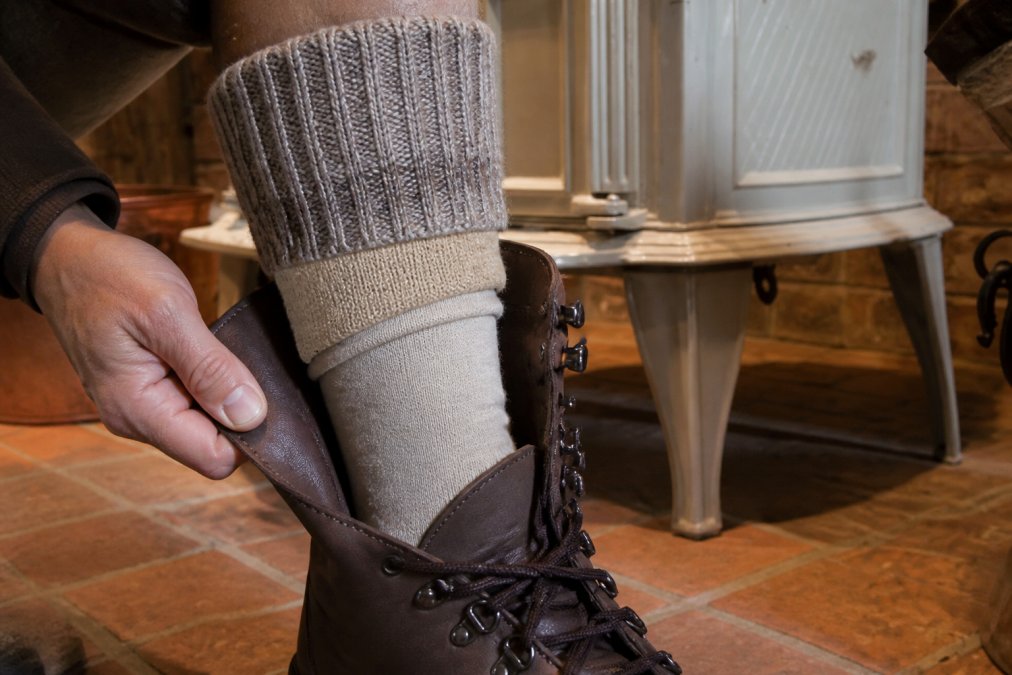
Alpaca Wool Socks Benefits for Winter Performance
Alpaca fiber delivers approximately 30% greater insulation than traditional sheep's wool while remaining significantly lighter (peer-reviewed research). This matters because lighter insulation lets you layer effectively without creating the compression that kills circulation.
Unlike merino wool, alpaca fiber wicks sweat away from skin while maintaining its insulating properties even when damp. Alpaca also naturally resists odor and microbial growth. The Purely Alpaca Superwarm Heavy Extreme Alpaca Socks ($33.95) combine alpaca's superior insulation with reinforced heel and toe construction. For a lighter mid-weight option, the OutdoorAdventure Alpaca Sock ($29.95) pairs perfectly as a base layer beneath a heavier outer sock.

Moisture-Wicking Socks for Winter and Circulation
Moisture-wicking properties separate socks that keep your feet warm from socks that eventually make them cold. When sweat accumulates inside your boot, it creates a cooling effect as it evaporates, even in extreme cold.
A moisture-wicking base layer pulls sweat away from skin and transfers it to outer layers where it can evaporate. Choose synthetic fibers or alpaca wool for your base layer, never cotton. Your middle layer should be a mid-weight sock made from alpaca wool or merino that absorbs moisture while providing insulation. According to military research on sock performance, a prototype boot sock and liner combination reduced blister incidence to 40%, compared to 69% for standard military socks alone.
Boot Fit for Layered Socks: Avoid the Compression Trap
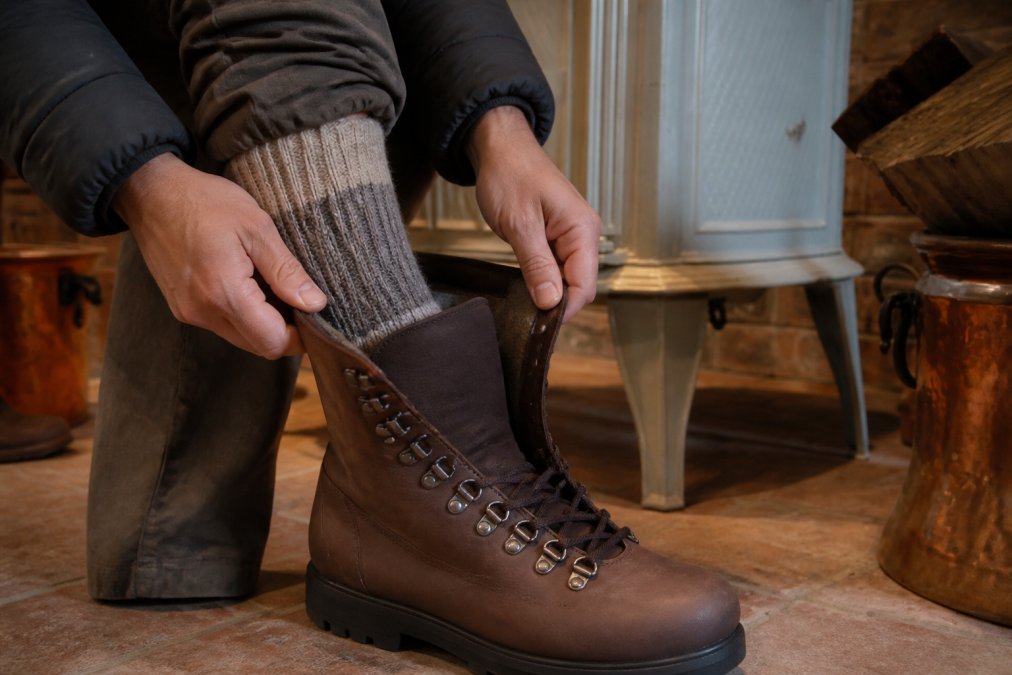
Adding layers without adjusting boot fit creates compression that restricts blood circulation. When you layer socks, you're adding volume inside your boot. If your boot doesn't have enough toe box space, the layered socks compress your foot, cutting off the blood flow that generates warmth.
A properly fitted boot with layered socks should still have roughly a thumb's width of space at the toe box when standing. If layering makes your boot feel tight, you need either a larger boot size or thinner socks. Excessively thick sock combinations restrict circulation, actually decreasing warmth by limiting blood flow to extremities.
| Sock Layer | Material | Purpose | Thickness |
|---|---|---|---|
| Base Layer | Alpaca or synthetic | Moisture-wicking | Thin (lightweight) |
| Mid Layer | Alpaca wool | Insulation & absorption | Mid-weight |
| Outer Layer | Alpaca wool | Additional warmth | Heavy-weight (if volume allows) |
The difference between cold feet and warm feet in extreme conditions comes down to understanding how moisture, insulation, and circulation work together. Build your layering system with a moisture-wicking base, a quality mid-weight insulator, and only add a third layer if your boot has the volume to support it without compression.
Purely Alpaca's sock collection is designed for this layering approach. The Field Hiker Alpaca Socks ($24.95) work beautifully as a mid-layer, while the Superwarm Heavy Extreme option handles outer-layer duty. Start with the right foundation, and your feet will stay warm, dry, and blister-free through the harshest winters.
=== FAQ ANSWERS (audit these too, same rules) ===
[1] Q: Can wearing too many socks make your feet colder? A: Yes. Wearing multiple thick pairs of socks can restrict blood circulation to your feet, actually making them colder. Tight layering crowds the boot's toe box, compressing your socks and limiting the dead air space that creates insulation. Focus on strategic material combinations rather than bulk.
[2] Q: What are the best materials for layering socks in extreme cold? A: Alpaca wool provides approximately 30% greater insulation than traditional sheep's wool while remaining lighter and more breathable. Start with a moisture-wicking synthetic or merino base layer, add an alpaca mid-weight sock for insulation, and finish with a heavy-weight alpaca outer sock. Avoid cotton entirely, it absorbs moisture and loses insulation when wet. Feet lose heat 25 times faster when wet than when dry.
[3] Q: How do you prevent blisters when layering socks for extreme cold? A: Proper layering with the right materials significantly reduces blister risk. Military research found that participants wearing a prototype boot sock with liner experienced 40% blister incidence, compared to 69% with standard military socks alone. Use a smooth, moisture-wicking base layer to minimize friction, add a cushioned mid-weight alpaca sock, and ensure your boot has adequate volume without excessive compression. Moisture management is critical, wicking away sweat prevents the friction that causes blisters.

Frequently Asked Questions
Q: Can wearing too many socks make your feet colder?
A: Yes. Wearing multiple thick pairs of socks can restrict blood circulation to your feet, actually making them colder. Tight layering crowds the boot's toe box, compressing your socks and limiting the dead air space that creates insulation. Focus on strategic material combinations rather than bulk.
Q: What are the best materials for layering socks in extreme cold?
A: Alpaca wool provides approximately 30% greater insulation than traditional sheep's wool while remaining lighter and more breathable. Start with a moisture-wicking synthetic or merino base layer, add an alpaca mid-weight sock for insulation, and finish with a heavy-weight alpaca outer sock. Avoid cotton entirely, it absorbs moisture and loses insulation when wet. Feet lose heat 25 times faster when wet than when dry.
Q: How do you prevent blisters when layering socks for extreme cold?
A: Proper layering with the right materials significantly reduces blister risk. Military research found that participants wearing a prototype boot sock with liner experienced 40% blister incidence, compared to 69% with standard military socks alone. Use a smooth, moisture-wicking base layer to minimize friction, add a cushioned mid-weight alpaca sock, and ensure your boot has adequate volume without excessive compression. Moisture management is critical, wicking away sweat prevents the friction that causes blisters.
This article was written using GrandRanker