





Table of Contents
- Are Synthetic Socks Good for Winter Hiking? The Direct Answer
- Merino Wool vs Synthetic Socks for Cold Weather
- How Moisture-Wicking and Breathability Work in Winter
- Alpaca Wool Benefits for Hiking in Extreme Cold
- How to Prevent Cold Feet While Hiking: Layering and Material Selection
- Synthetic Socks in Wet vs. Dry Cold Conditions
- Choosing the Right Winter Hiking Sock for Your Needs
- Frequently Asked Questions
Last Updated: September 21, 2026
Are Synthetic Socks Good for Winter Hiking? The Direct Answer
Synthetic socks are good for winter hiking in specific conditions, but they're not the top choice for most cold-weather trails. Here's the honest assessment: are synthetic socks good for winter hiking? The answer depends on your environment and priorities.
Synthetic materials excel at moisture-wicking and drying speed, making them ideal for wet, slushy conditions where your feet face repeated exposure to moisture. However, they fall short on thermal regulation compared to natural fibers like merino wool or alpaca. According to Stio's 2026 winter hiking guide, synthetic fibers are increasingly recommended for activities involving high moisture exposure, such as winter hiking and snow sports, due to their rapid drying capabilities. That said, many winter hikers discover that synthetic socks leave feet feeling colder in dry, extreme cold conditions than wool blends would.
At Purely Alpaca, we've analyzed this question through the lens of real hiking conditions. The choice between synthetic and natural fibers isn't about which is universally better, it's about matching the sock to your specific environment. Wet, damp conditions? Synthetics perform well. Dry cold below freezing? Natural fibers typically outperform them.
Merino Wool vs Synthetic Socks for Cold Weather
Merino wool and synthetic materials represent two fundamentally different approaches to winter foot comfort. Merino delivers superior thermal regulation and maintains warmth even when damp, while synthetics prioritize moisture transport and drying speed.
The key difference comes down to how each fiber handles moisture. Wool fibers absorb moisture internally without feeling wet, trapping air pockets that insulate your feet. Synthetic fibers like polyester and nylon are hydrophobic, they repel water and move it away from skin quickly. This sounds ideal until you're hiking in truly cold conditions where the fastest-drying sock isn't necessarily the warmest one.
According to Mountain High Outfitters' 2026 sock performance analysis, blending merino wool with synthetic fibers is increasingly recommended to combine the moisture-wicking efficiency of synthetics with the thermal regulation of wool. This hybrid approach addresses the real weakness in pure synthetics: they simply don't insulate as effectively in extreme cold.
For hikers facing temperatures below 20°F, merino wool blends consistently outperform pure synthetics. The trade-off? Merino costs more and requires slightly more careful washing. Synthetics are cheaper and more durable in terms of abrasion resistance, but that durability means little if your feet are cold.
| Characteristic | Merino Wool | Synthetic | Alpaca Blend |
|---|---|---|---|
| Thermal regulation | Excellent | Good | Excellent |
| Moisture-wicking | Very good | Excellent | Very good |
| Drying speed | Moderate | Fast | Moderate |
| Cost | Higher | Lower | Higher |
| Cold-weather performance | Superior in dry cold | Better in wet cold | Superior across conditions |
| Hypoallergenic | Good | Yes | Excellent |
How Moisture-Wicking and Breathability Work in Winter
Moisture-wicking isn't just about moving sweat away from your skin, it's about managing the temperature impact of that moisture in cold conditions. In winter, moisture management becomes critical because damp feet lose heat rapidly.
Synthetic fibers achieve fast moisture transport by moving water through the fiber structure to the outer surface where it evaporates quickly. This works exceptionally well in wet, slushy conditions where your socks are repeatedly exposed to external moisture. The problem emerges in dry cold: if your feet aren't producing excess sweat (which they shouldn't be in proper winter gear), the fast-drying advantage disappears entirely.
Breathability in winter socks means allowing air circulation without sacrificing insulation. This is where the real tension exists. A sock that breathes too much loses warmth; a sock that doesn't breathe enough traps moisture and creates the damp-foot problem. Merino wool naturally balances this, the fiber structure allows air movement while maintaining thermal insulation. Synthetics tend to prioritize breathability, which can work against you in extreme cold.
The BACKPACA Lightweight Hiker Alpaca Ankle Socks feature ribbed knit along the top of the foot for increased breathability and moisture wicking, while terry loop interior construction along the sole provides cushion, padding, and comfort. This layered approach to breathability and moisture management addresses the real challenge winter hikers face: you need ventilation without sacrificing warmth.

Alpaca Wool Benefits for Hiking in Extreme Cold
Alpaca fiber represents a different category entirely from both synthetic and merino wool. It delivers superior insulation-to-weight ratio, meaning your feet stay warm without the bulk that makes boots feel tight and restrictive.
The thermal properties of alpaca come from the fiber's natural structure. Alpaca fibers are hollow, creating air pockets that trap heat more efficiently than solid synthetic fibers or even merino wool. This hollow structure also contributes to natural antimicrobial properties, your feet stay fresher longer without the odor buildup that synthetic materials sometimes allow despite their moisture-wicking claims.
For hikers tackling extreme cold, alpaca wool offers genuine advantages. The fiber maintains its insulating properties when damp, similar to merino but with even greater thermal efficiency. Unlike synthetics, which lose effectiveness as temperatures drop, alpaca actually performs better in harsh conditions. The Survival Over-the-Calf Sock is crafted for enduring harsh weather, long days, and rigorous walking. This heavyweight sock provides full cushioning and extends several inches above a standard boot sock to offer optimal coverage and warmth from toe to just below the knee.

Alpaca's natural properties address one of the biggest complaints about synthetic socks: the clammy feeling that develops even with moisture-wicking technology. Real customers report that alpaca socks keep feet dry without that synthetic moisture-transport sensation that some find uncomfortable. The fiber naturally regulates temperature across many conditions, performing well in both dry cold and damp environments.
How to Prevent Cold Feet While Hiking: Layering and Material Selection
The most effective cold-foot prevention strategy isn't choosing one perfect sock, it's building a layering system that works together. Your sock choice is just one component of a larger thermal management system.
Start with the base layer closest to skin. A moisture-wicking synthetic or merino blend works here because it manages the sweat your feet produce during exertion. The second layer should prioritize insulation and thermal regulation. This is where alpaca excels. The OutdoorAdventure Alpaca Sock sits perfectly in this role, it provides a cushioned interior, thermal regulation, and natural odor resistance. It is also machine washable/dryable.

Sock height matters more than many hikers realize. Boot-height socks create a thermal seal at the ankle, preventing cold air from entering at the boot opening. For serious winter hiking, crew-height or over-the-calf options provide additional coverage and warmth. The Survival Over-the-Calf Sock rises about 4 inches above standard crew height, offering optimal coverage and warmth from toe to just below the knee.
Material selection should account for your specific hiking environment. Wet-cold conditions (think Pacific Northwest winter hiking or coastal mountain trails) benefit from synthetic or synthetic-blend socks that dry quickly. Dry-cold conditions (high-altitude winter mountaineering or interior mountain ranges) perform better with merino or alpaca. Most winter hikers face mixed conditions, making hybrid materials the practical choice.
Boot fit affects thermal performance significantly.
Synthetic Socks in Wet vs. Dry Cold Conditions
The performance gap between synthetic socks in wet versus dry cold is dramatic enough to change your entire sock strategy. Understanding this distinction prevents the frustration of investing in expensive synthetics only to discover they underperform in your specific hiking environment.
Choosing the Right Winter Hiking Sock for Your Needs
Your ideal winter hiking sock depends on three variables: your environment's moisture profile, the temperature range you'll encounter, and your personal sensitivity to foot discomfort.
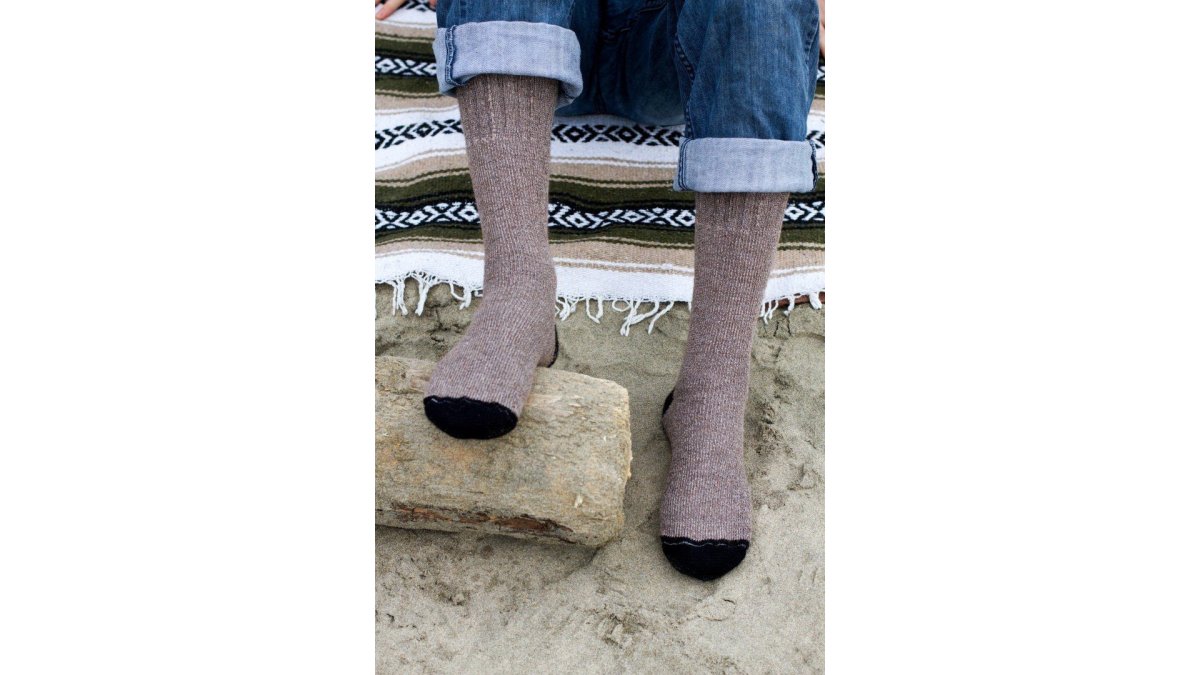
| Condition | Best Choice | Why | Product Example |
|---|---|---|---|
| Wet, slushy conditions | Synthetic blend | Fast drying, moisture transport | Field Hiker Alpaca Socks |
| Dry extreme cold | Natural fiber blend | Superior thermal regulation | OutdoorAdventure Alpaca Sock |
| Mixed wet/dry conditions | Hybrid blend | Balanced performance | BACKPACA Lightweight Hiker |
| Extended high-altitude winter | Heavyweight alpaca | Maximum insulation and durability | Survival Over-the-Calf Sock |
| Sensitive skin or eczema | Alpaca or merino | Hypoallergenic, naturally antimicrobial | Survival Sock |
Frequently Asked Questions
Are synthetic socks better than wool for winter hiking?
Synthetic socks excel at moisture-wicking and dry quickly, making them ideal for wet conditions. However, they don't provide the same thermal regulation as merino wool or alpaca fiber in extreme cold. Wool blends and natural fibers trap more heat and maintain warmth even when damp, which is critical for sub-zero hiking. For winter hiking specifically, wool or alpaca-based socks typically outperform pure synthetics.
Do synthetic socks keep your feet warm when wet?
Synthetic socks dry faster than wool, but they lose insulation value quickly when wet because synthetics don't retain heat the way natural fibers do. Once saturated, synthetics feel cold against the skin. Natural fibers like alpaca and merino maintain some warmth even when damp, making them safer for winter hiking where wet feet can lead to hypothermia. If you expect wet conditions, a synthetic blend with wool or alpaca is a better choice than pure synthetics.
What material of socks are best for hiking?
For winter hiking, blended socks combining alpaca or merino wool with synthetic fibers offer the best performance. The natural fiber provides thermal regulation and warmth, while synthetics add durability and moisture-wicking. Pure alpaca socks like the Survival Over-the-Calf Sock ($38.95) deliver superior insulation without bulk. Lightweight alpaca blends like the BACKPACA Lightweight Hiker ($28.95) work well for active hiking where breathability matters. Material choice depends on temperature, activity level, and moisture exposure.
What are the disadvantages of wearing synthetic socks in freezing temperatures?
Synthetic socks don't provide adequate thermal insulation in sub-zero conditions because they lack the natural heat-trapping properties of wool or alpaca. They also lose effectiveness when wet, becoming cold and uncomfortable. Synthetics can also cause moisture to pool at the footbed rather than evaporating, leading to clammy feet and blisters. In extreme cold, synthetic-only socks increase blister risk and foot fatigue. For freezing temperatures, natural fiber socks or blends are significantly more reliable.