


Last Updated: October 24, 2026
Quick Summary
Alpaca wool durability outperforms cotton in low-friction situations like layering and accessories, resisting pilling and surface abrasion due to its smooth fiber structure. Cotton excels in high-stress wear through superior wet strength and elastic recovery, making it more durable for everyday garments subject to repeated washing and sustained load. The durability of alpaca wool clothing compared to cotton ultimately depends on yarn twist, knit density, care practices, and how the garment is worn.
- Alpaca's smooth surface resists pilling and abrasion in dense, tightly twisted knits; cotton's better elastic recovery prevents bagging at cuffs and elbows.
- Cotton's tensile strength increases when wet, giving it an advantage in sweat-exposed garments and frequent laundering; alpaca weakens when wet.
- Alpaca requires careful washing in lukewarm water and flat drying to prevent felting and permanent stretching; cotton tolerates standard machine washing and hanging.
- Construction variables, yarn twist, knit density, fabric weight, and seam quality, outweigh fiber choice in determining how long a garment lasts.
- Alpaca socks excel for cold-weather hiking and sports; cotton socks are more practical for everyday office wear and frequent washing.
Table of Contents
- Alpaca Wool Durability vs Cotton: The Core Differences
- Is Alpaca Wool Hard Wearing: Fiber Strength and Abrasion Resistance
- Pilling, Stretching, and Shape Retention: Where Alpaca and Cotton Differ
- How Long Does Alpaca Clothing Last vs Cotton Garments
- Alpaca Wool vs Cotton Socks: Durability for High-Wear Situations
- How to Care for Alpaca Clothing to Maximize Its Lifespan
- Choosing Alpaca Over Cotton: Which Garment Type Wins
- Frequently Asked Questions
Alpaca Wool Durability vs Cotton: The Core Differences
When choosing between alpaca and cotton clothing, alpaca wool durability is often the deciding factor. Both are natural fibers, but they behave very differently under stress, moisture, and repeated wear.
At Purely Alpaca, we've spent over two decades working with alpaca fiber, and the durability question comes up constantly. Alpaca's structure affects how it holds up to friction, stretching, and washing.
Cotton is predictable and has been used for centuries; alpaca is newer to mainstream markets, so expectations sometimes outpace reality.
Is Alpaca Wool Hard Wearing: Fiber Strength and Abrasion Resistance
"Hard wearing" is not a single fiber property. Textile testing breaks durability into distinct measurements, and alpaca and cotton score differently on each.
The four tests that matter most
- Tensile strength measures pulling force before breaking (tenacity in cN/tex), predicting seam failure and yarn breakage.
- Abrasion resistance counts rub cycles before a hole forms, via ASTM D4966 (Martindale) or ASTM D4157 (Wyzenbeek).
- Pilling and fuzzing is assessed with ASTM D4970 or ASTM D3512, rated 1-5.
- Elastic recovery and dimensional stability measure stretch under load and return to shape after washing (AATCC 135).
How alpaca and cotton compare on each
Cotton is the opposite profile: its tensile strength rises when wet, an advantage for garments exposed to sweat and laundering, and its better elastic recovery resists bagging at knees, elbows, and cuffs.
| Test / property | Alpaca | Cotton | Practical meaning |
|---|---|---|---|
| Abrasion resistance (Martindale/Wyzenbeek cycles) | Good to very good in dense knits; lower in loose, low-twist knits | Moderate; degrades at high-friction points | Alpaca resists surface wear; cotton thins and holes |
| Pilling (ASTM D4970 / D3512) | Low pilling in fine, long-staple grades | Low pilling but high fuzzing | Alpaca pills less; cotton fuzzes |
| Tensile strength, dry | High for fiber diameter | Moderate | Both resist tearing in normal use |
| Tensile strength, wet | Decreases | Increases | Cotton tolerates wet wear better |
| Elastic recovery | Limited | Better in knit form | Cotton holds shape; alpaca can bag |
| Dimensional stability after washing | Poor without care (felting risk) | Good with standard care | Alpaca needs controlled washing |
Why construction can outweigh fiber
A fiber-level comparison only predicts finished-garment durability when construction is held constant, and it rarely is. Four variables matter more than fiber choice:
- Yarn twist. Tightly twisted yarn resists abrasion and pilling far better than loose, lofty yarn, a low-twist alpaca knit can wear faster than a tightly spun cotton knit.
- Knit structure. Dense interlock and rib structures resist abrasion and shape loss better than loose single jersey; ribbed cuffs and hems recover better than plain edges.
- Fabric weight. Heavier fabrics (oz/yd² or gsm) last longer at high-friction points because more material must wear through.
- Seams and trims. Flatlock and reinforced seams outlast simple overlock seams, and elastic and ribbed trims usually fail before the body fabric does.
What this means in practice
For sustained load and repeated laundering, everyday knitwear, cuffs, waistbands, cotton's recovery and wet strength win.
Pilling, Stretching, and Shape Retention: Where Alpaca and Cotton Differ
Pilling happens when short fibers break loose and ball up on the surface.
Cotton doesn't pill the same way; it fuzzes and sheds loose threads from seams or edges. That's less visible than alpaca pilling but still degrades appearance.
Stretching is where the differences become critical.
Shape retention depends heavily on construction. A well-made alpaca garment with proper yarn tension holds its shape better than you might expect, while a poorly constructed piece sags after a few wearings.
| Property | Alpaca | Cotton |
|---|---|---|
| Pilling resistance | Good (premium grades) | Very good |
| Stretch recovery | Moderate | Excellent |
| Shape retention | Variable (construction-dependent) | Consistent |
| Wet strength | Decreases | Increases |
| Fiber smoothness | High | Medium |
How Long Does Alpaca Clothing Last vs Cotton Garments
Most articles answer this question with a single number, "alpaca lasts decades", and move on. How Long Alpaca Clothing Lasts: Fiber Durability breaks down the variables that actually determine lifespan.
Why year ranges are unreliable
A garment's service life is set by four variables, not one:
- Fiber grade and yarn twist. Fine, long-staple fiber in a tightly twisted yarn resists pilling and abrasion far better than short, low-twist fiber.
- Knit or weave density and fabric weight. Denser, heavier fabrics last longer at high-friction points.
- Wear intensity and rotation. A garment worn twice a week and rested between wears lasts far longer than one worn daily.
- Care and repair. Washing, drying, storage, and whether small damage is repaired shift lifespan more than fiber choice does.
Because these variables interact, any specific year figure is a range, not a guarantee.
Failure modes by garment type
- Sweaters and knits. Cotton sweaters fail at cuffs, elbows, and underarm seams through thinning and fuzzing, and they fade and soften. Alpaca sweaters resist surface abrasion and pilling but can stretch at cuffs, hems, and shoulders if hung or worn under sustained load. A well-constructed alpaca sweater cared for properly can last a long time, but a loosely knit, low-twist alpaca sweater can bag faster than a tightly knit cotton one.
- Socks. Socks fail at the heel and toe through abrasion and at the cuff through elastic fatigue. Cotton handles repeated washing and wet strength well but thins at high-friction points. Alpaca resists abrasion and odor but can stretch at the cuff if the elastic or rib is weak. Blends often outperform either pure fiber.
- Base layers and underwear. These fail through repeated laundering, elastic fatigue, and seam stress. Cotton's wet strength and recovery are advantages; alpaca's care requirements make it higher-maintenance for garments washed after every wear.
- Outerwear and accessories. Scarves, hats, and lightweight outer layers see surface friction and folding rather than sustained load, which plays to alpaca's strengths. Cotton accessories fade and fuzz but hold shape.
Care choices that change lifespan
Care is where the two fibers diverge most, and the variable readers can actually control.
- Washing. Alpaca is sensitive to temperature shock and agitation; hot-then-cold rinsing can cause felting and permanent shrinkage. Use lukewarm water and a gentle wool wash, and hand wash or use a mesh bag on a gentle cycle. Cotton tolerates standard detergent and machine washing, though gentle cycles extend its life too.
- Drying. Never hang wet alpaca, the weight of wet fiber stretches it permanently. Lay flat to dry. Cotton can be hung or tumbled on low without the same risk.
- Shrinkage. Cotton knitwear can shrink with hot water and high heat drying; alpaca can felt and shrink irreversibly with agitation and temperature shock. Both are preventable with controlled washing and drying.
- Storage. Fold alpaca rather than hanging it, keep it out of direct sunlight, and use cedar or lavender against moths. Cotton tolerates standard closet storage.
Cost per wear and replacement frequency
The durability question is really a value question.
Thermal Alpaca Baselayer Top Shirt →
The bottom line
Alpaca has higher fiber-level durability potential in low-friction, low-wet-exposure use, provided the garment is tightly constructed and carefully maintained.
Alpaca Wool vs Cotton Socks: Durability for High-Wear Situations
Socks are the ultimate durability test: constant friction, compression, and moisture, where fiber properties matter most. Browse our Alpaca Socks collection to find durable alternatives to cotton.
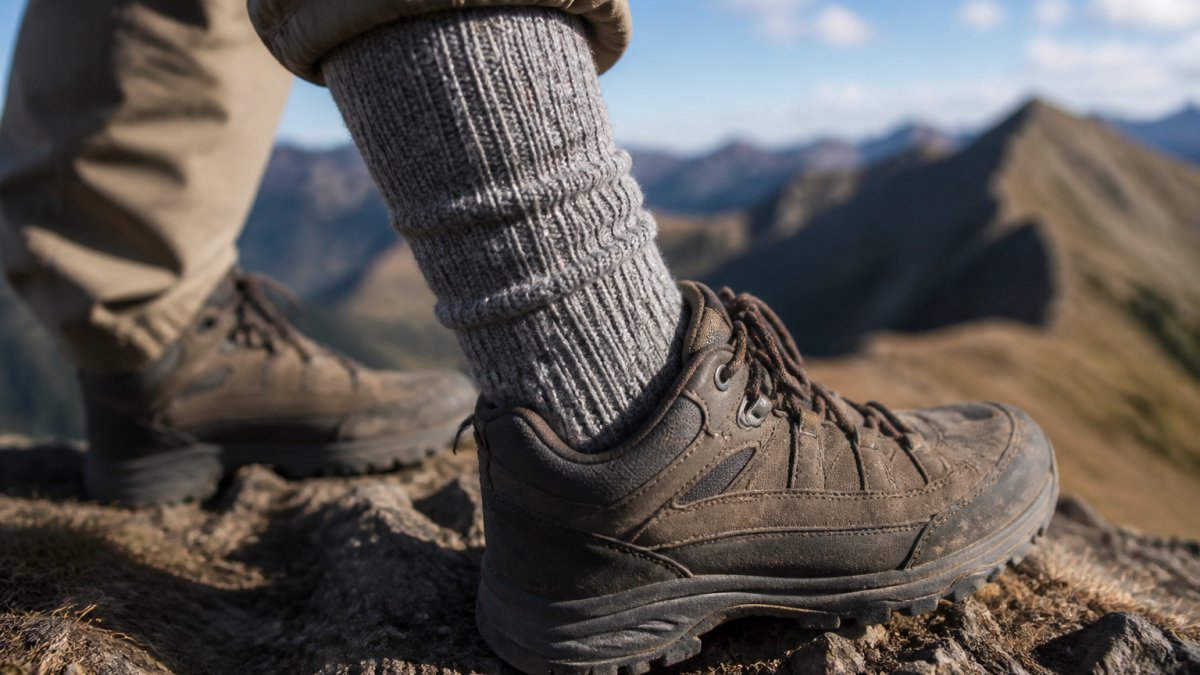
Alpaca socks win on insulation and moisture management.
Cotton socks excel in durability for everyday wear in temperate conditions.
The middle ground is a blend. Our Deluxe Hand Knit Patterned Long Alpaca Socks use premium alpaca construction designed for high-wear situations; the hand-knit structure adds durability, and the fiber quality resists pilling and shape loss.
For hiking, skiing, or cold-weather sports, alpaca socks are worth the investment. For everyday wear in an office or home, cotton or cotton-blend socks are more practical.
How to Care for Alpaca Clothing to Maximize Its Lifespan
Care is where alpaca and cotton diverge dramatically. Cotton is forgiving. Alpaca requires intention.
Washing is the first critical step.
Detergent matters too.
Drying is where many people make mistakes with alpaca.
Storage affects longevity significantly.
Pilling prevention starts with wear patterns. Avoid excessive friction in high-motion areas.
For detailed care instructions, our How To Care For Alpaca Clothing guide covers washing, drying, and storage in depth.
Choosing Alpaca Over Cotton: Which Garment Type Wins
The answer depends on the garment's purpose and your lifestyle.
Choose alpaca for:
- Winter base layers and thermal wear where insulation matters most
- Garments worn in cold climates where you want superior warmth without bulk
- Socks and accessories for outdoor activities, hiking, or skiing
- Pieces you'll wear occasionally and want to last decades
- Situations where odor resistance is valuable (hiking, travel, athletic use)
Our Thermal Alpaca Baselayer Top Shirt at $129.95 is engineered for serious outdoor enthusiasts who demand both warmth and mobility.

Choose cotton for:
- Everyday wear in temperate climates
- Garments that will see frequent washing and heavy rotation
- Situations where breathability in warm conditions matters most
- Budget-conscious purchases where upfront cost is the priority
- Intimate apparel and underwear where moisture management is constant
The hybrid approach works well too. Our Hoodie - Baby Alpaca/Cotton at $159.95 blends 51% baby alpaca with 49% cotton, delivering a garment that feels as good as it looks.

For sweaters and outerwear, 100% alpaca offers excellent longevity if you're willing to care for it properly. Our Classic Crew Alpaca Sweater at $160.00 in 100% premium baby alpaca is a luxurious choice.

Alpaca and cotton each have genuine strengths. At Purely Alpaca, we recommend starting with a specific piece like our Alpaca Love No-Show Cotton Socks to experience the difference firsthand.
Frequently Asked Questions
Is alpaca wool harder wearing than cotton?
Alpaca fiber has natural strength that resists abrasion better than standard cotton in everyday wear. However, durability depends on garment construction and care. Cotton's advantage lies in tear resistance and recovery from stretching, while alpaca excels at maintaining shape and resisting pilling. For thermal wear and outdoor activities, alpaca wool typically outlasts cotton; for casual everyday items, the difference is less dramatic.
How long does alpaca clothing last compared to cotton?
Well-made alpaca garments can last a long time with proper care, as can quality cotton pieces. The Thermal Alpaca Baselayer Top and Classic Crew Alpaca Sweater from Purely Alpaca are designed for comfort and warmth. Lifespan depends heavily on washing method, storage, and how frequently you wear the item. Hand washing and air drying extend life dramatically for both fibers.
Which lasts longer: alpaca socks or cotton socks?
Alpaca wool socks resist pilling and maintain cushioning through repeated wear and washing. Cotton socks tend to thin out faster and lose elasticity. For hiking and cold-weather activities, alpaca socks offer a good lifespan. However, cotton's lower cost means replacement is less of a financial burden. For year-round wear in harsh conditions, alpaca wool socks offer excellent value through longevity.
What's the best way to care for alpaca clothing to keep it durable?
Hand wash alpaca garments in lukewarm water with mild detergent or baby shampoo, then air dry flat, never stretch wet fabric. The Hoodie - Baby Alpaca/Cotton and Classic Crew Alpaca Sweater require gentle handling to prevent damage. Avoid machine washing on hot cycles and never tumble dry. Store in a cool, dry place away from direct sunlight. Proper care extends lifespan by years and prevents pilling, shrinkage, and fiber breakdown that accelerates wear.
