



Last Updated: October 25, 2026
Quick Summary
The best hiking socks for preventing blisters control friction, moisture, and fit, and our top overall pick is the Field Hiker Alpaca Sock at $24.95, a medium-weight boot-height sock with a 50% alpaca blend that fits close through the arch with no excess fabric to fold inside a boot. For warm-weather day hikes, the BACKPACA Lightweight Hiker Ankle at $28.95 uses an arch band to stop slipping.
- The Survival Over-the-Calf sock uses a triple-length stay-up welt to prevent sliding in heavy boots.
- A liner sock creates a slip plane so friction hits the two socks instead of your skin.
- Toe socks remove skin-on-skin friction between toes but need a roomier toe box.
- Wet skin softens and tears more easily, so change socks at lunch if your feet are damp.
- Tightening boots to stop heel slip increases pressure and reduces circulation, making blisters worse.
Table of Contents
- Why the Right Hiking Socks Prevent Blisters
- Best Hiking Socks for Preventing Blisters at a Glance
- 1. Field Hiker Alpaca Socks: Best Overall for Classic Boot Fit
- 2. BACKPACA Lightweight Hiker Alpaca Ankle Socks: Best for Warm-Weather Day Hikes
- 3. Survival Over-the-Calf Sock: Best for Heavy Boots and Cold Trails
- Hiking Sock Liners: When a Thin Base Layer Helps
- Toe Socks for Hiking: Who They Suit and Who They Don't
- Merino Wool Hiking Socks vs. Alpaca: What Changes on the Trail
- How to Prevent Blisters When Hiking: Fit, Seams, and Moisture
- The Bottom Line on Blister-Free Hiking
- Frequently Asked Questions
Why the Right Hiking Socks Prevent Blisters
Blisters are a friction injury, not a badge of honor. For a broader guide to choosing the best alpaca socks for hiking, start there before diving into the specific picks.
At Purely Alpaca, we have sold fiber-based outdoor socks since 2002, and the pattern is consistent: hikers who switch from thin cotton to a properly fitted, moisture-managing sock report fewer hot spots on long days.
Best Hiking Socks for Preventing Blisters at a Glance
Here is the short version. Every pick below is an alpaca or alpaca-blend sock from our own line, chosen for a specific trail condition.
| Sock | Price | Height | Best For | Blister Defense |
|---|---|---|---|---|
| Field Hiker Alpaca Socks | $24.95 | Boot | Classic boot fit, all-round hiking | Medium weight, snug fit |
| BACKPACA Lightweight Hiker Ankle | $28.95 | Ankle | Warm-weather day hikes | Arch band stops slipping |
| Survival Over-the-Calf | $38.95 | Over the calf | Heavy boots, cold trails | Triple welt, no bunching |
| Low Pro Alpaca Ankle | $30.95 | Ankle | Low-cut shoes, warm days | Heel tab prevents rubbing |
| OutdoorAdventure Alpaca Sock | $31.95 | Tall crew | Cold weather, heavy boots | Shock-absorbing cushion |
| Survival Sock | $31.95 | Crew | Mixed conditions | Terry loop lining |
| Dahlgren Summit Over-calf | $31.95 | Over the calf | Skiing, deep cold | Flat knit toe seam |
1. Field Hiker Alpaca Socks: Best Overall for Classic Boot Fit
Our top pick for most hikers is the Field Hiker, a medium-weight boot-height sock with a 50% alpaca blend.

Materials: 50% alpaca, 41% acrylic, 8% nylon, 1% elastic. Machine wash inside out, tumble dry low.
Best for: hikers in standard hiking boots who want one sock that handles three-season day hikes. Skip if: you are hiking in sustained heat and want the thinnest option available.
[See the Field Hiker specs and sizing
2. BACKPACA Lightweight Hiker Alpaca Ankle Socks: Best for Warm-Weather Day Hikes
Summer hiking is where thick socks fail. The BACKPACA is a lightweight ankle-height hiker made in the USA from 60% U.S. alpaca, with a terry loop sole and ribbed knit for breathability.

The dense knit and arch support band keep the sock locked in place all day without bunching or slipping, the exact failure mode that produces blisters on the ball of the foot.
It is also naturally antimicrobial and odor resistant, a real benefit on multi-day trips. Gentle wash, tumble low.
Best for: warm-weather day hikes and hikers who overheat in crew socks. Skip if: you need ankle coverage under a tall boot in cold conditions.
[Shop the BACKPACA ankle hiker
3. Survival Over-the-Calf Sock: Best for Heavy Boots and Cold Trails
Cold-weather hiking brings a different blister problem: a sock that slides down inside a heavy boot creates heel friction with every step. The Survival Over-the-Calf solves that with a triple-length stay-up welt that holds position all day.

It is a heavyweight sock with full terry loop cushion from cuff to toe, 78% U.S. alpaca, and a reinforced heel, sole, and toe.
Best for: winter hiking, snow, and anyone in stiff mountaineering boots. Skip if: you are hiking in hot weather; this sock is built for cold.
[Buy the Survival Over-the-Calf sock
How Cushioning and Height Change the Blister Risk
Cushioning absorbs shear force, and height controls where the sock's top edge sits against your boot cuff. More padding under the heel and ball reduces friction, but too much tightens the boot and creates pressure points.
A sock that ends mid-calf under a tall boot can roll down and bunch, so match sock height to boot height.
Hiking Sock Liners: When a Thin Base Layer Helps
A liner sock is a thin base layer worn under your main hiking sock. It creates a slip plane so friction happens between the two socks instead of against your skin, which is why liners work best against shear.
Liners earn their place in a few specific situations:
- Breaking in new boots. Stiff leather and new synthetic uppers generate more shear at the heel and ball than broken-in footwear. A liner absorbs that extra movement while the boot softens.
- Long days with a known hot spot. If you already blister at the same spot on every hike, a liner under your main sock is a low-cost way to change where the friction lands.
- Cold-weather layering. A thin liner under a heavyweight sock adds a moisture-transport layer without much bulk.
Liners add bulk, so size your boots with the liner in place, and they add heat in summer. If your boots fit well and your main sock manages moisture, a liner is optional.
Liners vs. Toe Socks vs. Tape vs. Single-Layer Socks
The four blister tools hikers reach for solve different problems. Pick one based on where you rub and why.
| Tool | What it fixes | Best scenario | Trade-off |
|---|---|---|---|
| Liner sock | Shear between skin and main sock | New boots, known heel or ball hot spots, cold-weather layering | Extra bulk, heat, more laundry |
| Toe socks | Skin-on-skin friction between toes | Toe blisters, toe crowding, long-distance walkers with roomy toe boxes | Slower to put on, needs a roomier toe box |
| Tape or anti-chafe balm | Direct friction at a pinpoint spot | One known hot spot, short-term fix on trail | Can roll or wear off; not a fit solution |
| Single-layer moisture-managing sock | Moisture, heat, and moderate shear | Well-fitting boots, three-season hiking, everyday use | Does not separate toes or add a slip plane |
A practical rule: hot spot between toes, reach for toe socks. Heel or ball with still-stiff boots, use a liner. One pinpoint spot and a well-fitting boot, tape or balm is enough. If your boots fit and your sock manages moisture, start with a single-layer sock.
If you are choosing between a liner and a heavier single sock, our guide covers how fiber and cushioning interact with boot fit.
Toe Socks for Hiking: Who They Suit and Who They Don't
Toe socks separate each toe with fabric, removing skin-on-skin friction between toes, a genuine fix for hikers who blister there.
They suit hikers prone to toe blisters and long-distance walkers, but they take longer to put on, some find the fabric between toes distracting, and they need a roomier toe box. If your boots are snug in front, skip them.
Merino Wool Hiking Socks vs. Alpaca: What Changes on the Trail
Merino wool is the default recommendation in most hiking sock guides, and it deserves the reputation. It manages moisture, resists odor, and stays warm when damp.
Alpaca does the same job with a different fiber structure.
Where merino has an edge: it is more widely available and often cheaper.
If you want the fiber science in detail, read our breakdown of whether alpaca socks keep feet dry while hiking.
How to Prevent Blisters When Hiking: Fit, Seams, and Moisture
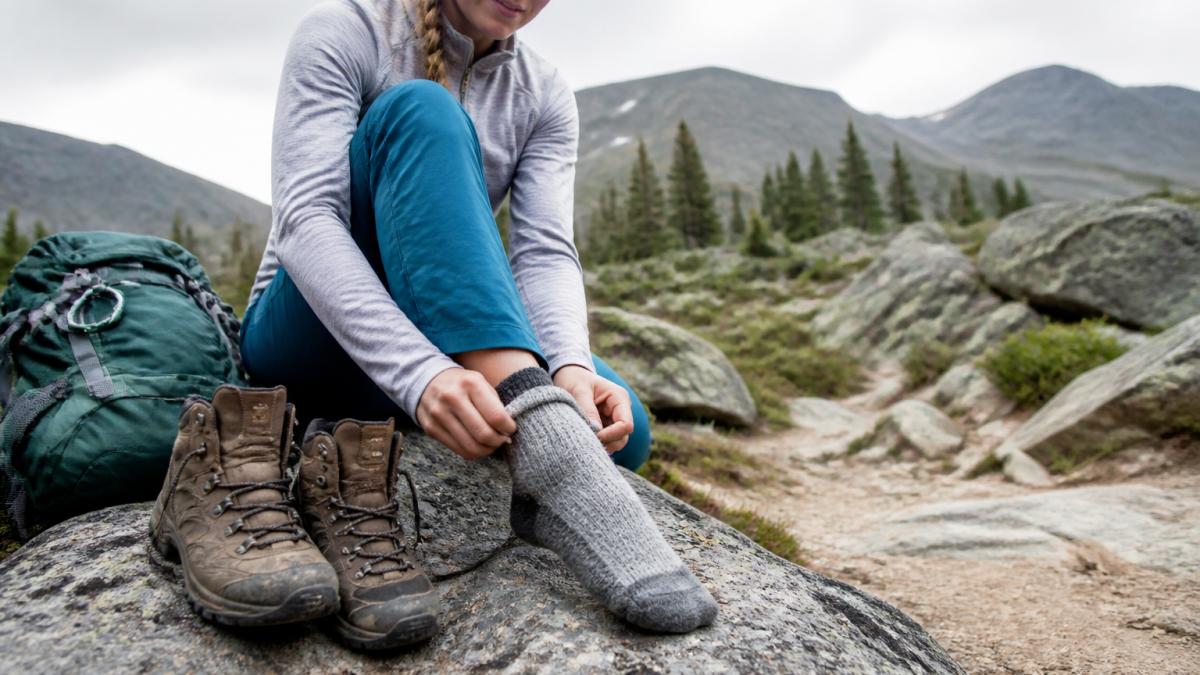
Blisters come from friction, moisture, heat, and fit interacting, and each cause has a different fix. The checklist below is organized by cause.
The Fit Check: Diagnose Before You Hike
Do this with your hiking socks on and your boots laced as you would hike. It takes two minutes and catches most fit problems before they become blisters.
- Heel lock: walk a few steps. Your heel should not lift more than a hair inside the boot. Visible lift means the boot is too long, the sock is too thin, or the lacing is loose at the ankle.
- Toe room: you should be able to wiggle your toes and tap the front of the boot without pressure. If your toes touch the front, you will lose toenails on descents, not just get blisters.
- Bunching check: run a hand inside the boot and along the sock. Any fold, ridge, or excess fabric over the heel, arch, or instep is a future hot spot.
Match the Fix to the Blister Location
Where you blister tells you which sock feature matters. Use this map before you shop.
| Hot spot | Likely cause | Sock feature to look for |
|---|---|---|
| Heel | Heel lift, loose heel counter, sock sliding down | Snug heel pocket, arch band, stay-up welt on taller socks |
| Ball of foot | Shear under the metatarsal heads, thin cushioning | Medium terry cushion under the ball, dense knit that stays put |
| Between toes | Skin-on-skin friction, toe crowding | Toe socks or a roomier toe box |
| Arch | Pressure from lacing plus a tight arch band | Moderate arch support, not maximum compression |
| Toe tips | Boot too short, sock bunching at the front | Correct boot length, flat toe seam, no excess fabric |
| Ankle bone | Boot cuff rubbing, sock height mismatch | Height that clears the cuff, heel tab on low-cut socks |
Foot Shape Changes the Answer
- Wide feet: look for socks with a roomier toe box and moderate arch compression. A tight arch band on a wide foot creates a pressure line rather than a secure fit.
- Narrow heels: heel lift is the main risk. Choose socks with a defined heel pocket and pair them with heel-lock lacing. A thicker sock can fill volume, but it will not fix a boot that is too long.
- Toe crowding: if your toes press together, toe socks or a wider toe box reduce the skin-on-skin friction that causes between-toe blisters.
Moisture and Heat
Wet skin softens and tears more easily, so moisture control is blister control. Choose a moisture-wicking fiber over cotton, carry a spare pair on long days, and change socks at lunch if your feet are damp.
Hot Spot Protocol
The moment you feel warmth or rubbing, stop. Cover the spot with tape or anti-chafe balm, or change to a dry sock or liner. Addressing a hot spot in the first minute beats treating a blister for a week.
The Bottom Line on Blister-Free Hiking
Blisters are preventable, and the sock is the cheapest variable to change. Start with a sock that fits, manages moisture, and matches your boot height.
That is what we build at Purely Alpaca. Our socks use alpaca fiber for warmth without bulk, smooth fibers that suit sensitive skin, and details like arch bands, heel tabs, and flat knit toe seams that reduce the rubbing that starts a blister.
Get started with Purely Alpaca and find the sock that keeps your feet dry, warm, and blister-free on the trail.
Frequently Asked Questions
Are toe socks good for preventing blisters?
Toe socks separate each toe with fabric, which stops skin-on-skin rubbing between toes. That makes them a reasonable pick if your blisters form between the toes rather than on the heel or ball of the foot. They are not a fix for heel blisters, and they add bulk inside a tight boot. If your boots already fit snugly, a separated-toe design can create new pressure points, so test them on a short walk before a long hike.
Do sock liners help prevent hiking blisters?
Hiking sock liners work by adding a thin layer that moves with your foot instead of against your skin, so friction shifts to the liner-to-sock interface rather than your skin. They help most when you wear a thicker outer sock and your boots have room for the extra layer. If your boots are already snug, a liner can crowd your toes and cause a different problem. Pair a liner with a smooth, seam-free outer sock and check the fit before committing to a long hike.
What material is best for hiking socks to prevent blisters?
Look for a fiber that moves moisture away from skin and stays soft when damp. Alpaca and merino wool both absorb moisture and dry without the clammy feel of cotton, which is the fabric most associated with blisters. Alpaca fiber is notably soft against sensitive skin, and several Purely Alpaca socks blend it with nylon for durability and a small amount of Lycra for hold. Avoid all-cotton socks for hiking; they hold sweat against your foot.
How should hiking socks fit to reduce friction?
A hiking sock should sit smooth against your foot with no wrinkles at the heel or under the arch, and your toes should not press against the front seam. Check that the heel pocket actually cups your heel rather than riding up your ankle. Purely Alpaca lists sock sizes separately from shoe sizes, so use its sizing chart rather than guessing. If the sock bunches when you slide your boot on, size up or switch to a thinner model.
Can the wrong hiking boots cause blisters even with good socks?
Yes. A sock can only manage friction and moisture; it cannot fix a boot that is too narrow, too short, or loose in the heel. If your heel lifts on every step or your toes hit the front on descents, the boot is creating the movement that causes blisters. Match your sock thickness to the boot's volume, then walk a few miles before a long trip. Good socks reduce the risk; they do not cancel out a poor boot fit.
