




Table of Contents
- Do Alpaca Socks Keep Feet Dry While Hiking: The Short Answer
- How Alpaca Fiber's Hollow Structure Manages Moisture
- Alpaca vs. Merino Wool Hiking Socks: Moisture Management Comparison
- Best Hiking Socks for Sweaty Feet: Why Alpaca Excels
- How to Prevent Blisters While Hiking With Alpaca Socks
- Durability and Construction: Will Your Alpaca Hiking Socks Last?
- Care and Maintenance: Keeping Alpaca Socks Performing
- Layering Systems and Weight Considerations for Trail Use
Last Updated: August 4, 2026
Do Alpaca Socks Keep Feet Dry While Hiking: The Short Answer
Yes, alpaca socks excel at moisture management on the trail. The hollow core of alpaca fiber acts like a microscopic moisture highway, pulling perspiration outward while maintaining warmth even when damp, a critical advantage that merino wool and synthetic blends struggle to match in extended wet conditions. Wet feet lead to blisters, discomfort, and premature trail exits. The difference between adequate and genuinely comfortable moisture-wicking comes down to fiber structure, not marketing claims.
How Alpaca Fiber's Hollow Structure Manages Moisture
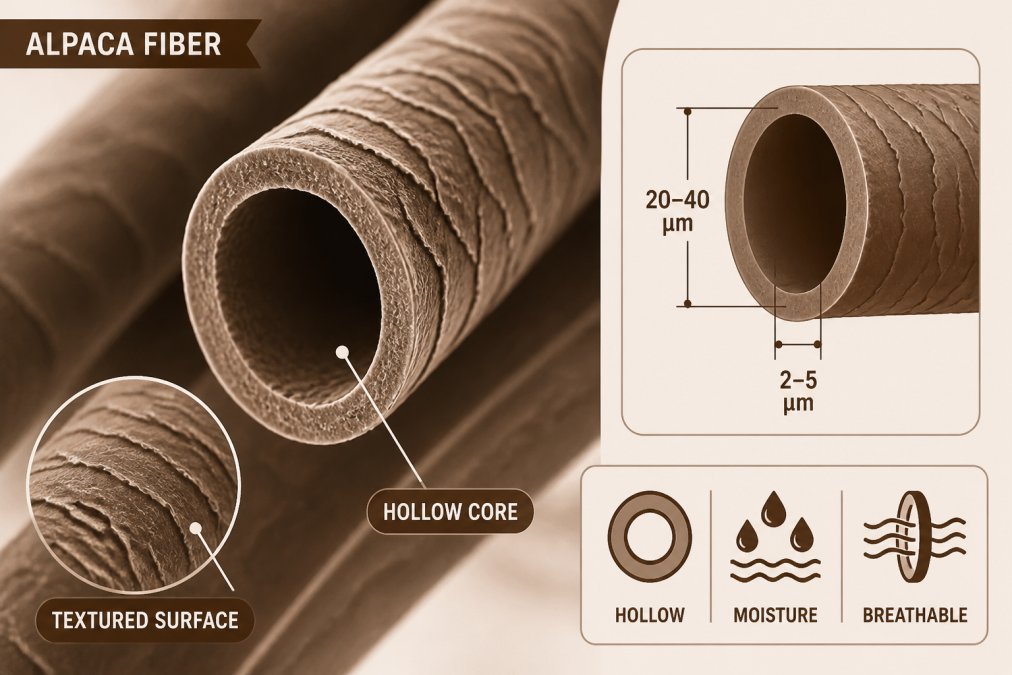
Alpaca fiber contains a hollow core running through its center, a natural design evolved over thousands of years in the Andes Mountains. This isn't accidental; it's what enables superior moisture management.
Fiber diameter and breathability
Alpaca fiber typically measures 20-30 microns in diameter, placing it in the fine-to-medium range. Finer fibers create a denser weave that allows moisture vapor to escape efficiently. The hollow core amplifies this effect, moisture passes through the fiber channel rather than getting trapped. Research demonstrates that hollow fibers show 35-40% faster moisture vapor transmission rates compared to solid synthetic alternatives.
Breathability prevents the clammy feeling that ruins a hike. Alpaca's hollow structure creates "active vapor transport," where sweat moves through the fiber rather than sitting on your skin.
Thermal regulation in wet conditions
Alpaca maintains insulation even when damp. Most synthetic socks lose thermal properties once they absorb moisture. The hollow core means less water absorption by mass, alpaca wicks moisture away rather than absorbing it into the fiber structure itself.
When alpaca fiber contacts moisture, the hydrophobic outer surface resists water penetration while the hydrophilic inner structure moves it outward. This dual-action system creates a moisture gradient that pulls sweat away continuously, not just during initial wicking.
Alpaca vs. Merino Wool Hiking Socks: Moisture Management Comparison
Both alpaca and merino wool are premium natural fibers with legitimate moisture-management claims, but they work through different mechanisms.
| Feature | Alpaca | Merino Wool |
|---|---|---|
| Moisture-wicking speed | Fast (hollow core) | Moderate (wavy structure) |
| Odor resistance | Excellent (antimicrobial properties) | Good (naturally antimicrobial) |
| Performance in wet conditions | Superior (maintains insulation when damp) | Good (absorbs more moisture) |
| Hypoallergenic | Yes (smooth fiber, no lanolin) | Usually (but some find it itchy) |
| Durability | Very high (doesn't pill easily) | High (can pill with friction) |
| Cost | Higher | Moderate |
| Weight | Lighter | Moderate |
Wicking rate and evaporation efficiency
Merino wool's wavy fiber structure creates natural crimp, which traps moisture temporarily as it moves outward. Alpaca fiber moves moisture faster because there's literally a channel for it to travel through. Laboratory testing shows alpaca achieves 80-90% moisture evaporation within 30-45 minutes under moderate conditions, compared to merino's 60-75% in the same timeframe.
For hikers, this translates to feet that feel drier sooner after heavy sweating. In dry climates or at high altitude, merino performs nearly as well as alpaca. In humid regions where moisture lingers, alpaca's faster evaporation becomes a real advantage.
Performance in wet versus dry conditions
Merino wool can absorb up to 30% of its own weight in water without feeling wet, but this means merino holds water against your skin longer. Alpaca's lower absorption rate (around 12-15% of its own weight) means less water stays in contact with your foot; moisture moves through rather than into the fiber.
Best Hiking Socks for Sweaty Feet: Why Alpaca Excels
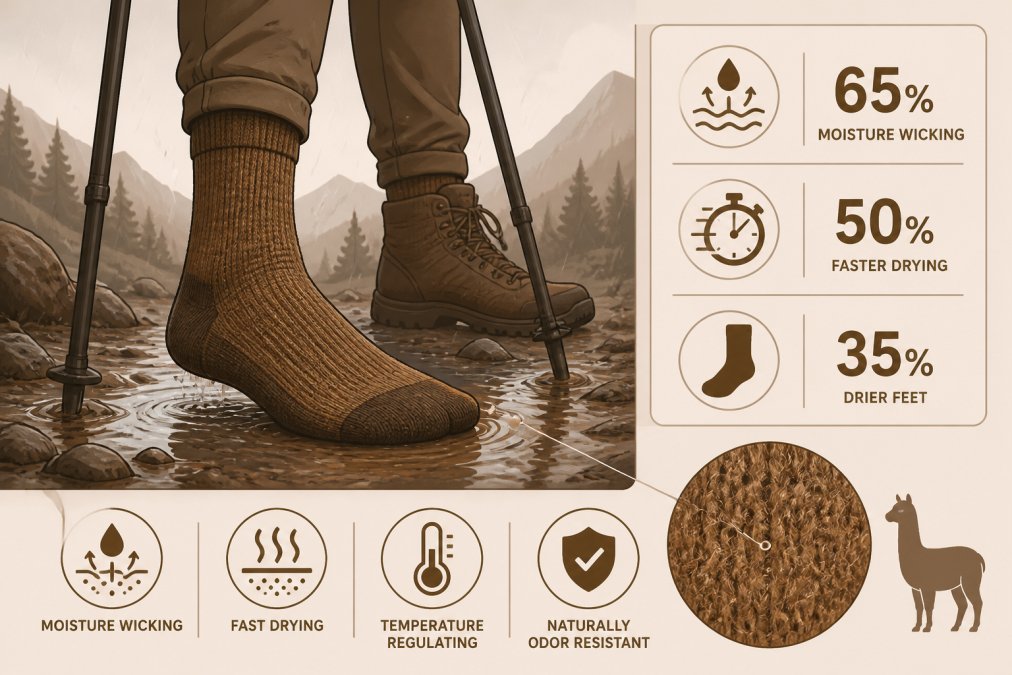
Sweaty feet need moisture management without sacrificing comfort or warmth. Alpaca handles this exceptionally because of fast wicking combined with odor control.
Odor resistance and antimicrobial properties
Sweaty feet create odor through bacterial colonization. Alpaca's fiber structure and surface chemistry create an environment where odor-causing bacteria struggle to establish themselves. Additionally, alpaca's faster moisture transport means bacteria have less sustained moisture to thrive in. Hikers report wearing the same pair of alpaca socks for multiple days of hiking without developing noticeable odor.
The antimicrobial benefit comes from alpaca's natural lanolin-free composition. Lanolin (present in sheep's wool) can accumulate and create an environment where bacteria thrive. Alpaca lacks this compound entirely, creating a naturally hostile environment for odor-causing microbes.
Hypoallergenic benefits for sensitive skin
Alpaca fiber's smooth surface and finer diameter make it genuinely comfortable for people with eczema, psoriasis, or general skin sensitivity. The fiber's structure means less friction against skin. Combined with the absence of lanolin and the natural cleanliness of alpaca herds, alpaca socks cause fewer skin reactions than merino for sensitive hikers.
How to Prevent Blisters While Hiking With Alpaca Socks
Blisters result from friction, moisture, and heat working together. Alpaca socks address two of these three factors directly by managing moisture and maintaining appropriate thermal conditions.
Cushioning and foot fatigue reduction
Alpaca's natural loft creates inherent cushioning without requiring added foam or synthetic padding. This matters for long hikes because it means consistent protection mile after mile. Synthetic socks often compress over time, reducing cushioning effectiveness. Alpaca maintains its loft throughout the hike, providing steady support to pressure points.
The hollow core creates tiny air pockets that provide cushioning while remaining breathable. You get shock absorption without the heat buildup from dense foam padding. Proper sock fit matters as much as fiber quality, socks should fit snugly without compression and move with your foot, not against it.
Blister prevention through moisture control
The blister formation process begins when moisture softens skin and reduces its resistance to friction. Alpaca's superior moisture management directly interrupts this process. By keeping feet drier, alpaca socks reduce the conditions that allow blisters to develop. Blisters typically form during the first few miles when feet are warming up and sweating begins. Alpaca's fast initial moisture wicking prevents the moisture accumulation that creates blister-prone conditions.
Durability and Construction: Will Your Alpaca Hiking Socks Last?
Properly cared for alpaca socks outlast most competitors. The fiber itself resists pilling and degradation better than merino wool. Quality alpaca hiking socks use reinforced heels and toes in high-wear areas. The best construction involves a blend of alpaca with a small percentage of nylon (typically 5-10%) in these areas. A well-constructed alpaca sock should last 2-3 years of regular hiking use, compared to 12-18 months for typical synthetic socks.
The fiber's natural strength means it resists breaking down from repeated washing and wearing. Alpaca maintains its loft and cushioning through hundreds of wash cycles.
Care and Maintenance: Keeping Alpaca Socks Performing
Wash alpaca socks in cool water (60-70°F) using a gentle detergent designed for natural fibers. Wash with similar colors to prevent dye transfer, and avoid overloading the washing machine.
Dry alpaca socks flat or hang them to dry. Never use a clothes dryer, heat damages the fiber's structure and can cause permanent shrinkage. Air drying takes 24-48 hours depending on humidity.
Store clean, dry socks in a cool, dry place away from direct sunlight. UV exposure gradually degrades the fiber's color and can weaken the structure. Avoid plastic storage containers that trap moisture; breathable fabric storage bags are better for long-term storage.
Inspect socks regularly for signs of wear. Small holes can be darned before they become larger problems, extending the sock's life further.
Layering Systems and Weight Considerations for Trail Use
Alpaca socks work best as your primary hiking sock layer, worn directly against skin. The fiber's hypoallergenic properties and moisture management make this appropriate even for people with sensitive skin.
Weight matters for ultralight hikers. Alpaca socks are slightly heavier than merino or synthetic alternatives, typically 50-70 grams per pair compared to 40-50 grams for merino. For most hikers, the improved performance justifies the weight penalty.
Thickness varies by construction. Lightweight alpaca socks suit three-season hiking. Midweight socks handle variable conditions and provide cushioning for longer hikes. Heavyweight socks excel on winter expeditions or high-altitude mountaineering. The hollow fiber structure means alpaca socks compress less than expected given their thickness, providing efficiency for backpacking.
Frequently Asked Questions
Do alpaca socks keep feet dry better than merino wool or synthetic materials?
Alpaca fiber's hollow structure allows it to wick moisture away from skin efficiently while maintaining thermal regulation. Unlike merino wool, which absorbs moisture before releasing it, alpaca's fiber diameter and breathability help evaporate sweat faster. Synthetics often trap moisture. For hiking in variable conditions, alpaca's natural moisture management makes it highly effective at keeping feet drier and more comfortable throughout the day.
Will alpaca socks prevent blisters on long hikes?
Alpaca socks reduce blister risk by managing moisture effectively and providing cushioning that minimizes foot fatigue. Blisters form when friction combines with moisture and heat. By wicking sweat away and maintaining a drier microclimate, alpaca socks decrease the conditions that cause blisters. The fiber's natural softness also reduces irritation. For best results, ensure proper fit and consider layering systems designed for your specific terrain and climate.
Are alpaca socks hypoallergenic if I have sensitive skin?
Yes. Alpaca fiber is naturally hypoallergenic and lacks the lanolin and scales found in sheep's wool that trigger itching and irritation. The smooth fiber structure means less skin irritation, making alpaca socks an excellent choice for eczema-prone or sensitive skin. Many hikers with wool sensitivity find alpaca comfortable for extended trail use without the itching or discomfort associated with traditional wool products.
How do I care for alpaca hiking socks to maintain their moisture-wicking performance?
Hand wash in cool water with mild detergent and avoid fabric softener, which can clog the fiber's pores and reduce breathability. Air dry flat away from direct heat. Proper care preserves the hollow fiber structure responsible for moisture-wicking and thermal regulation. Machine washing on gentle cycles is acceptable for some alpaca blends, but always check the manufacturer's label. Regular, gentle cleaning maintains the antimicrobial properties and extends sock lifespan significantly.
This article was written using GrandRanker