


Table of Contents
- How to Identify High Quality Alpaca: The Complete Framework
- The Touch Test: Softness and Fiber Hand-Feel
- Baby Alpaca vs Adult Alpaca: Understanding Fiber Grades
- Alpaca Fiber Micron Count: What the Numbers Mean
- Visual Inspection: Color, Luster, and Fiber Authenticity
- Label Verification and Textile Composition Standards
- How to Care for Alpaca Wool: A Quality Indicator
- Burn Test and Microscopic Fiber Analysis
Last Updated: August 5, 2026
How to Identify High Quality Alpaca: The Complete Framework
Identifying high quality alpaca requires understanding fiber characteristics, manufacturing standards, and tactile assessment methods. At Purely Alpaca, we've spent over two decades helping customers distinguish premium alpaca from lower-grade alternatives through specific, measurable attributes: fiber softness, micron count, color authenticity, and proper labeling.
This guide walks you through the exact framework we use to assess alpaca quality. You'll learn to identify high quality alpaca by examining the fiber itself, understanding grading standards, and recognizing the certifications that matter.
The Touch Test: Softness and Fiber Hand-Feel
The touch test is your first and most immediate quality assessment tool. High quality alpaca should feel impossibly soft against your skin, softer than merino wool, with zero scratchiness or irritation.
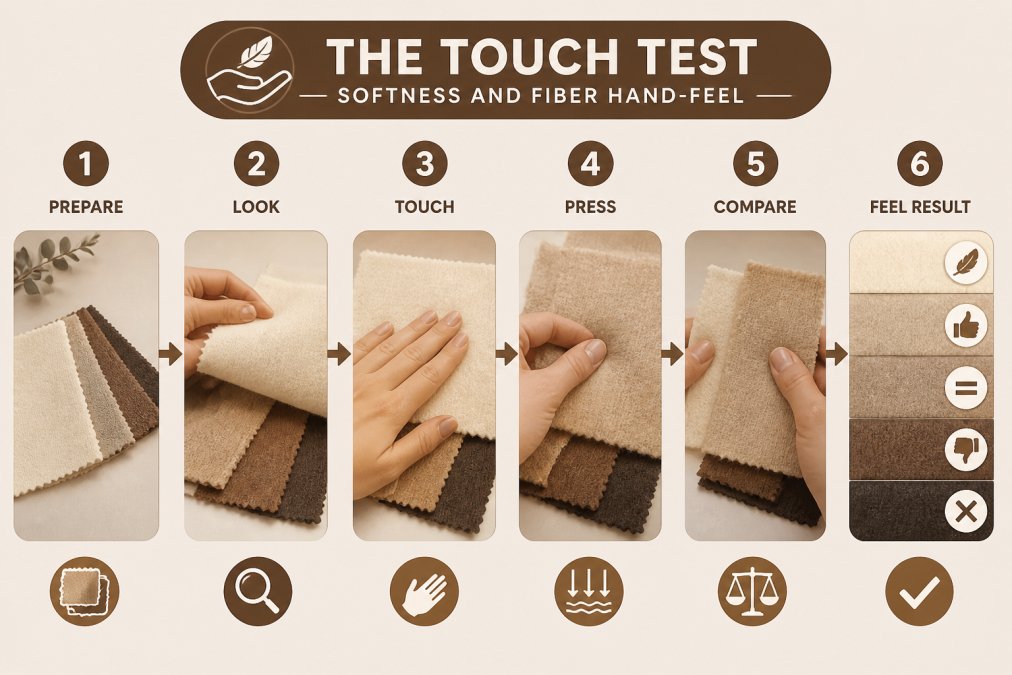
When you run your fingers across premium alpaca, the sensation should be uniform with no prickly fibers or inconsistent texture. This uniformity signals consistent fiber diameter throughout the piece. Lower-grade alpaca contains fibers of varying thicknesses, creating that uneven, slightly scratchy feeling that irritates sensitive skin.
The hand-feel test works because alpaca fiber diameter directly correlates with softness. Thinner fibers bend more easily against your skin, creating that luxurious sensation. Thicker fibers (above 30 microns) feel coarser and can trigger itching, particularly for people with eczema or sensitive skin.
Press the fabric gently against your inner wrist or the side of your neck. These areas have more sensitive skin and will immediately reveal any scratchiness. If you feel any irritation after 10-15 seconds of contact, the alpaca grade is likely adult or lower. Premium baby alpaca should feel like touching a cloud.
Baby Alpaca vs Adult Alpaca: Understanding Fiber Grades
Baby alpaca and adult alpaca are not different animals, they're different fiber grades based on micron count and age of harvest. Baby alpaca comes from the first shearing of young alpacas, typically under one year old, resulting in naturally thinner, softer fibers. Adult alpaca comes from older animals whose fibers have thickened over multiple shearings.
Baby alpaca fiber typically measures 20-22 microns in diameter. Adult alpaca ranges from 25-30 microns or higher. That 5-8 micron difference translates to a noticeable shift in softness and comfort. Many retailers blur this distinction by marketing "alpaca" without specifying the grade, allowing them to sell lower-quality adult fiber at premium prices.
When you examine a label, look for explicit grade designation. Purely Alpaca clearly identifies baby alpaca versus adult alpaca in all product descriptions because the quality difference justifies different pricing. If a retailer won't specify the grade, that's a red flag.
Alpaca Fiber Micron Count: What the Numbers Mean
Micron count is the objective measurement of fiber diameter, expressed in microns (millionths of a meter). This single number tells you more about quality than any marketing claim.
Baby alpaca typically ranges from 18-24 microns. The finest baby alpaca sits at 18-20 microns. Anything under 18 microns is considered "royal alpaca" or "superfine baby alpaca," the absolute premium tier. Adult alpaca starts at 25 microns and extends upward, with some coarse grades reaching 40+ microns.
The relationship between micron count and softness is inverse and non-linear. The difference between 20 and 22 microns is noticeable. The difference between 25 and 30 microns is dramatic.
For practical purposes, here's how micron count translates to quality and use case:
- 18-20 microns: Royal/superfine baby alpaca. Luxury garments, exceptional softness, premium pricing. Best for sensitive skin.
- 20-24 microns: Baby alpaca. Standard premium grade. Excellent softness, ideal for sweaters and apparel.
- 25-30 microns: Adult alpaca. Noticeable coarseness compared to baby alpaca. Better durability for outerwear.
- 30+ microns: Coarse adult alpaca. Used in blends or lower-priced items. Significant scratchiness.
The challenge is that micron count rarely appears on retail labels. Purely Alpaca includes micron count specifications because transparency builds customer confidence. When shopping elsewhere, request micron count data before purchasing.
Visual Inspection: Color, Luster, and Fiber Authenticity
Visual assessment reveals quality through color consistency, natural luster, and fiber structure. High quality alpaca displays specific visual characteristics that distinguish it from synthetic blends and lower grades.
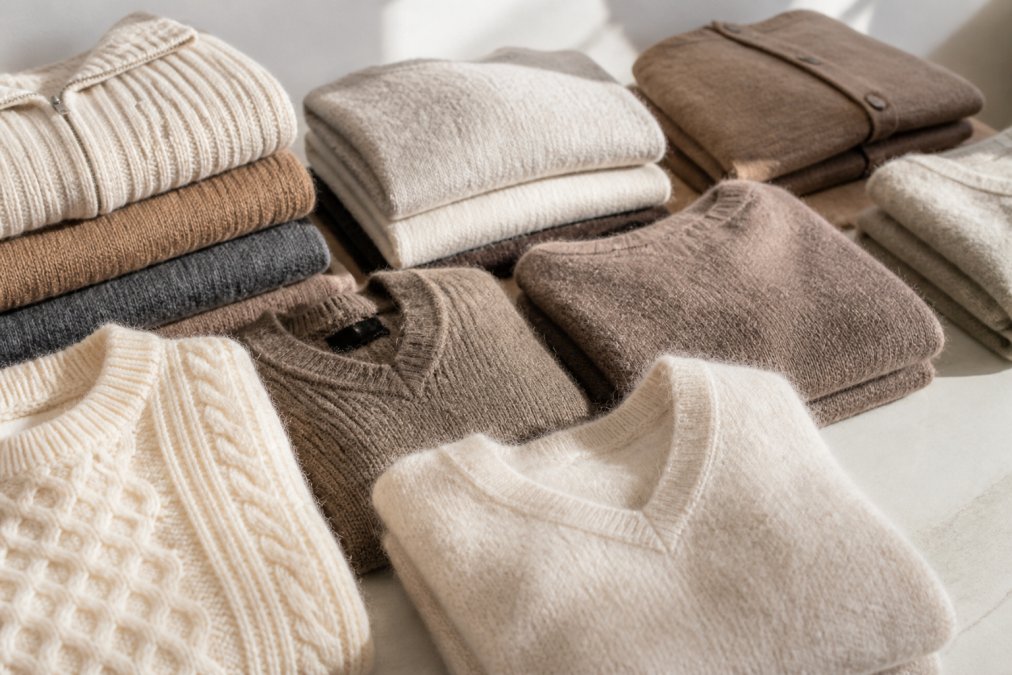
Premium alpaca has a subtle, natural luster, a soft sheen that catches light without appearing shiny or plastic-like. Synthetic fibers have a harsher, more reflective sheen. Blended alpaca shows inconsistent luster, with some areas appearing matte and others glossy.
Natural alpaca comes in a limited palette: whites, creams, grays, browns, and blacks. Any other color indicates synthetic dyes applied to lower-grade fiber. Natural dyes and earth tones suggest higher quality because premium fiber doesn't need aggressive dyeing to look appealing.
Examine the fiber surface under good lighting. High quality alpaca fibers appear smooth and uniform. Lower-grade fiber shows visible texture irregularities or fuzzy areas. Pilling occurs when shorter fibers break loose and ball up on the surface. Premium alpaca resists pilling because the fibers are longer and more tightly bound.
Look at seams and construction details. Quality alpaca products feature even stitching, secure seams, and attention to detail. Loose threads or uneven seams indicate lower manufacturing standards.
Label Verification and Textile Composition Standards
The label is your legal guarantee of what you're purchasing. High quality alpaca products must meet specific composition requirements and provide transparent labeling.
The Textile Fiber Products Identification Act (TFPIA) requires that all textile products sold in the United States display fiber content by percentage. Any product without clear fiber composition labeling violates federal law.
Look for these specific elements on the label:
Fiber Content Statement: Must list all fibers by percentage, in descending order. Example: "100% Baby Alpaca" or "85% Alpaca, 15% Acrylic." If the label says "Alpaca Blend" without percentages, the manufacturer is hiding the actual composition.
Country of Origin: Must state where the product was manufactured. Peruvian alpaca is considered premium because Peru has the largest alpaca population and the most established quality standards.
Care Instructions: Quality alpaca typically requires hand washing or gentle machine washing. If the label says "machine wash warm" or "dry clean only," that suggests either synthetic content or lower-grade fiber.
Fiber Grade Designation: Premium brands explicitly state "Baby Alpaca" or "Adult Alpaca." If the label only says "Alpaca," it's likely adult grade marketed ambiguously.
Beware of misleading language. "Alpaca-style" means synthetic. "Alpaca-like" means not actually alpaca. "Alpaca blend" means less than 100% alpaca. Purely Alpaca uses clear, transparent labeling because we stand behind every product's composition.
Check for certification marks from recognized textile authorities. The Responsible Wool Standard and similar certifications indicate that fiber was sourced ethically and meets quality benchmarks.
How to Care for Alpaca Wool: A Quality Indicator
The way a product responds to care reveals its quality. Premium alpaca maintains its softness and shape through proper care. Lower-grade fiber deteriorates quickly or requires excessive maintenance.
High quality alpaca should be hand washed in cool water with gentle detergent. After washing, the product should air dry flat, never in a dryer. This care routine is straightforward and manageable for most people.
If a product demands constant special attention, that's a quality issue. Premium fiber is designed for practical, everyday use without fussy maintenance.
Quality alpaca from Purely Alpaca maintains its softness, shape, and appearance after dozens of washes. Lower-grade alpaca pills, loses softness, or develops thin spots after minimal use. Pilling is a common misconception about alpaca, high quality alpaca resists pilling because the fibers are long and tightly bound.
Burn Test and Microscopic Fiber Analysis
The burn test is a simple, non-destructive method to verify fiber authenticity. Natural fibers (alpaca, wool, cotton) burn differently than synthetic fibers (acrylic, polyester, nylon). When you burn a small sample of natural fiber, it produces an ash that crumbles easily and smells like burnt hair. Synthetic fibers melt into hard, plastic-like beads and smell like burnt plastic.
To perform a safe burn test:
- Cut a small sample of fiber (about 1 inch) from an inconspicuous area
- Hold it with tweezers over a small flame
- Observe how it burns and note the smell
- Let it cool and examine the residue
Pure alpaca will produce soft ash that crumbles between your fingers. Blended alpaca will show two distinct burn patterns. Never perform a burn test on a finished garment, only on raw fiber samples.
Microscopic fiber analysis is the professional-grade assessment method. Under a microscope, alpaca fiber shows specific structural characteristics that distinguish it from synthetics. The American Society for Testing and Materials (ASTM) International publishes standards for textile fiber identification. For practical purposes, the burn test combined with tactile assessment and label verification provides sufficient quality verification.
Identifying high quality alpaca comes down to understanding fiber characteristics, knowing what to look for in labels and construction, and trusting your tactile assessment. The framework in this guide, touch test, micron count verification, visual inspection, label review, and care expectations, gives you the tools to distinguish premium alpaca from lower-grade alternatives.
At Purely Alpaca, we've built our reputation on transparency about fiber quality and honest product descriptions. Every item we offer clearly specifies fiber grade, includes micron count information, and comes with care guidance backed by decades of customer experience. When you shop for alpaca, demand the same transparency from any retailer. Quality alpaca is worth the investment, but only when you know exactly what you're purchasing.
Frequently Asked Questions
How can you tell if something is 100% alpaca?
Check the fiber content label first, it should state 100% alpaca or alpaca blend percentage. Examine the fabric tag for country of origin and fiber diameter micron count. Feel the texture: genuine alpaca is soft, smooth, and free of the prickliness common in sheep's wool. Look for natural luster without synthetic sheen. If the label is missing or unclear, request documentation from the seller. Reputable alpaca retailers like Purely Alpaca include detailed composition information with every product.
What is the difference between baby alpaca and adult alpaca wool?
Baby alpaca comes from young alpacas and has a finer fiber diameter (under 22 microns), making it softer and more luxurious. Adult alpaca fiber is coarser (22-30 microns) and slightly less soft, though still hypoallergenic and durable. Baby alpaca commands higher prices due to limited supply and superior softness. Both are excellent for warmth and breathability, but baby alpaca offers a more delicate hand-feel ideal for sensitive skin. Premium garments typically feature baby alpaca blends or pure baby alpaca construction.
Why does alpaca cost more than synthetic alternatives?
High-quality alpaca fiber offers superior thermal insulation, moisture-wicking, and breathability that synthetics cannot match. Alpaca is naturally hypoallergenic and lanolin-free, making it ideal for sensitive skin. The fiber is biodegradable and sustainable, with exceptional durability and pilling resistance when properly cared for. Production costs are higher because alpaca shearing and processing require specialized handling. Premium alpaca products, like those from a family business since 2002, reflect the investment in quality sourcing, ethical production, and rigorous quality standards that justify the price difference.
How do I know alpaca won't irritate my sensitive skin like regular wool does?
Alpaca fiber is naturally lanolin-free and hypoallergenic, unlike sheep's wool which contains lanolin and has coarser fiber scales that trigger irritation. Alpaca's smooth fiber structure and lower micron count (especially baby alpaca under 22 microns) minimize skin irritation. Many people with eczema and wool sensitivity wear alpaca comfortably. To verify quality, check the micron count on the label, finer fibers mean gentler contact with skin. Always wash alpaca in cool water with mild detergent to preserve the fiber's natural properties and minimize any potential irritation.
What should I look for when buying alpaca products online?
Verify fiber content on the label: look for 100% alpaca or clearly stated blend percentages. Check the micron count (under 22 is baby alpaca, 22-30 is adult alpaca). Read product descriptions for natural dye information and country of origin. Review return policies, reputable sellers offer hassle-free returns. Look for company longevity and customer reviews mentioning durability and comfort. Examine product photos for natural luster and color consistency. Request documentation if composition details are unclear. Established retailers like Purely Alpaca provide detailed specifications and transparent sourcing information.
Does alpaca wool pill easily compared to other fibers?
High-quality alpaca has excellent pilling resistance due to its smooth fiber structure and strong tensile strength. Lower-grade alpaca or synthetic blends may pill more readily. Pilling tendency depends on fiber density, yarn quality, and proper care. Washing alpaca in cool water with gentle detergent and avoiding excessive agitation prevents pilling. Air-drying flat maintains fiber integrity better than machine drying. Premium alpaca products engineered for durability resist pilling far better than budget alternatives. If a garment pills excessively after proper care, it indicates lower fiber quality or inadequate construction.
What do micron count numbers mean for alpaca quality?
Micron count measures fiber diameter: lower numbers indicate finer, softer fibers. Baby alpaca is under 22 microns and offers luxury softness. Adult alpaca ranges from 22-30 microns and provides excellent warmth with slightly coarser texture. Fibers above 30 microns are coarser and less comfortable against skin. Lower micron counts mean higher prices but superior comfort, especially for sensitive skin. Always check the label for micron count to verify you're purchasing the grade you expect. This specification is the most reliable indicator of fiber quality and performance.
This article was written using GrandRanker