



Table of Contents
- What Makes a Fabric Summer-Safe for Sensitive Skin
- 1. Organic Cotton: The Dermatologist's Standby
- 2. Linen: Breathable and Naturally Cooling
- 3. TENCEL Lyocell: Smooth, Sustainable, and Skin-Friendly
- 4. Bamboo Viscose: Soft Against Reactive Skin
- 5. Silk: Lightweight Luxury for Hot Weather
- 6. Hemp: Durable and Hypoallergenic
- Is Alpaca Wool Itchy for Sensitive Skin?
- Frequently Asked Questions
Last Updated: September 16, 2026
What Makes a Fabric Summer-Safe for Sensitive Skin
The best fabric for sensitive skin in summer is one that breathes, pulls moisture away from the body, and carries no rough fiber ends to trigger itching. Research from the National Center for Biotechnology Information shows that synthetic fibers like polyester and nylon, along with certain types of wool, can worsen atopic dermatitis symptoms, while cotton remains a preferred alternative for its breathability and comfort.
That single finding explains most of what follows. Heat and trapped sweat are the real enemies here, not fabric weight alone.
Below, we break down some of the best fabrics for sensitive skin in summer, with the honest trade-offs of each.
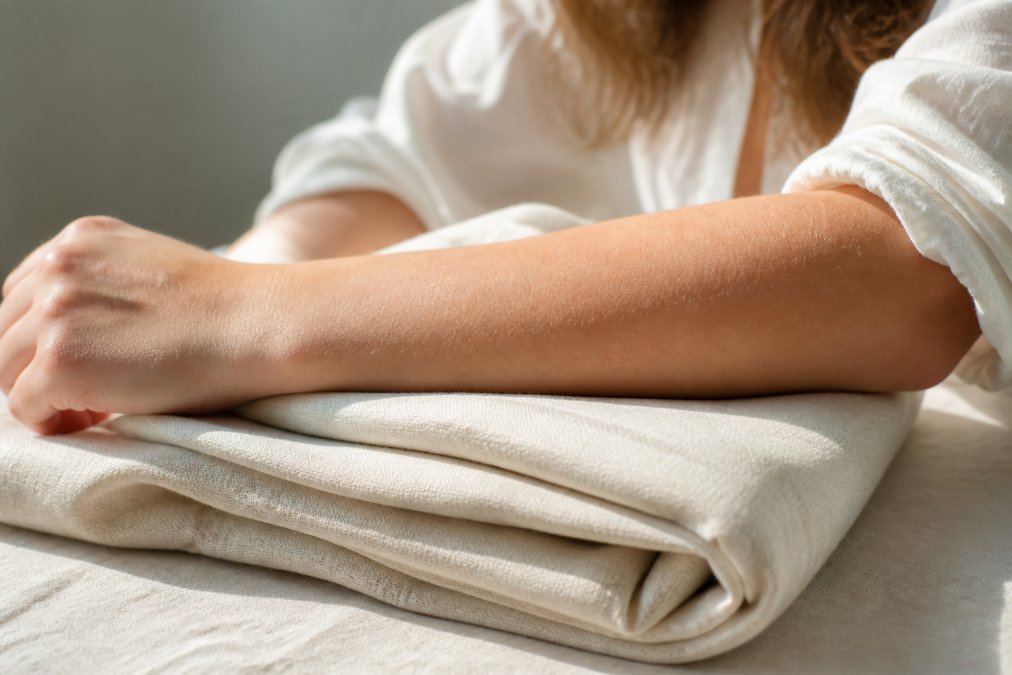
Quick Picks:
- Best Overall: Organic cotton, the dermatologist's default for reactive skin
- Best for Heat: Linen, the most breathable option on this list
- Best Sustainable Pick: TENCEL Lyocell, smooth and moisture-wicking
- Best Luxury: Silk, lightweight and friction-free
1. Organic Cotton: The Dermatologist's Standby
Organic cotton is the safest starting point for most people with sensitive skin because it is breathable, moisture-absorbing, and free of the chemical residues left by conventional processing. Dermatologists consistently recommend 100% cotton as the top choice for eczema-prone skin, according to Orbasics fabric guidance.
Pros: Soft against the skin, widely available, easy to wash, affordable. Cons: Holds moisture once saturated, wrinkles easily, slower to dry than synthetics.
Look for a loose weave or jersey knit rather than a tight poplin. Airflow matters more than thread count in summer heat.
2. Linen: Breathable and Naturally Cooling
Linen outperforms nearly every other natural fabric on airflow. The flax fiber structure creates tiny gaps that let heat escape, which is why it feels cool the moment it touches your skin.
Pros: Exceptional breathability, dries quickly, gets softer with each wash. Cons: Wrinkles heavily, feels stiff when new, costs more than basic cotton.
The one drawback is texture. If your skin reacts to friction, wash new linen two or three times before wearing it against bare skin.
3. TENCEL Lyocell: Smooth, Sustainable, and Skin-Friendly
TENCEL Lyocell is a wood-pulp fiber engineered to have an unusually smooth surface, which reduces the friction that triggers itching. Industry guides now rank it alongside cotton and silk as a top-tier choice for sensitive skin, per FiberCheck's 2026 fabric ranking.
Pros: Silky feel, excellent moisture management, sustainably produced. Cons: Pricier than cotton, can pill if washed aggressively.
4. Bamboo Viscose: Soft Against Reactive Skin
Bamboo viscose delivers a cashmere-like softness at a fraction of the price, and its moisture-wicking behavior keeps damp fabric off the skin. Current industry guidance places bamboo in the same tier as cotton and silk for sensitive skin.
Pros: Very soft, strong wicking, naturally odor-resistant. Cons: Viscose processing varies by manufacturer, so quality is inconsistent.
Check the label for the viscose process. Closed-loop production produces a cleaner fiber with fewer residual chemicals.
5. Silk: Lightweight Luxury for Hot Weather
Silk is the lightest natural fabric on this list and creates almost no friction against the skin. For anyone who reacts to texture, that smoothness is the entire point.
Alpaca Love No-Show Cotton Socks →
Pros: Featherweight, temperature-regulating, naturally smooth. Cons: Expensive, requires gentle washing, delicate over time.
Silk works best as a base layer under looser clothing rather than as a standalone summer fabric.
6. Hemp: Durable and Hypoallergenic
Hemp shares linen's breathability but holds up far longer. It resists UV damage, softens with age, and carries no known allergens.
Pros: Extremely durable, breathable, naturally antimicrobial. Cons: Rough when new, limited color options, heavier than linen.
If you dislike the break-in period, look for hemp blended with cotton or Lyocell.
| Fabric | Breathability | Moisture Wicking | Best For | Main Drawback |
|---|---|---|---|---|
| Organic Cotton | High | Moderate | Eczema-prone skin | Holds moisture |
| Linen | Very High | High | Hot, humid days | Wrinkles easily |
| TENCEL Lyocell | High | Very High | Sustainable shoppers | Higher cost |
| Bamboo Viscose | High | High | Softness seekers | Variable quality |
| Silk | Moderate | Moderate | Friction-sensitive skin | Delicate, expensive |
| Hemp | High | High | Long-term durability | Rough when new |
Is Alpaca Wool Itchy for Sensitive Skin?
Alpaca wool is generally not itchy for sensitive skin because it lacks lanolin, the waxy substance in sheep's wool that triggers most reactions, and its fibers have a smoother, less scaly surface. That distinction matters: the question of whether alpaca wool is itchy for sensitive skin comes down to fiber structure, not fiber category.
Traditional wool remains a genuine problem for many people with atopic dermatitis, and research from the National Center for Biotechnology Information confirms wool can worsen symptoms in sensitive individuals. Alpaca sits outside that pattern.
Where alpaca fits in summer is narrower than cotton or linen. It is a thermal fiber, so it belongs in socks, lightweight layers, and travel pieces rather than peak-heat shirts. For moisture-wicking fabrics for sensitive skin, alpaca's thermoregulating and odor-resistant properties make it a strong performer in footwear.
That is where Purely Alpaca's range earns its place. The BACKPACA Lightweight Hiker Alpaca Ankle Socks are built for warm-weather activity, with a ribbed knit across the top of the foot for breathability and a terry-loop sole for cushioning. The USA Made Alpaca Compression Socks use 75% alpaca with graduated 15-20 mmHg support, and the listing notes the fiber is free of lanolin and smoother than traditional wool.

A common mistake is buying one expensive piece and judging the whole fiber category from it. Test a single pair of socks first.
Summer skin reactions are frustrating because the fix is often simpler than people expect: change what touches your skin, and the itching usually follows. Purely Alpaca has specialized in alpaca fiber since 2002, and the catalog covers the pieces where that fiber actually helps in warm weather. Start with the No-Show Alpaca Socks for everyday wear or the Sports Ankle Active Alpaca Socks for training, both backed by free shipping on orders of $100 or more and hassle-free returns. Get started with Purely Alpaca and find out whether alpaca earns a permanent spot in your rotation.


Frequently Asked Questions
What is the most breathable fabric for sensitive skin?
Linen and organic cotton are the most breathable options for sensitive skin in summer. Linen's loose weave allows air to circulate freely, while cotton's natural fibers absorb moisture without trapping heat. Research from the National Center for Biotechnology Information (2021) confirms cotton is a preferred choice for atopic dermatitis because of its breathability and comfort. For active days, moisture-wicking fabrics for sensitive skin like alpaca blends also help regulate temperature and keep skin dry.
Is alpaca wool itchy for sensitive skin?
Alpaca wool is not typically itchy for sensitive skin because it lacks lanolin, the protein found in sheep's wool that often triggers irritation. The fibers are also smoother and finer than traditional wool. A 2021 NCBI study noted that certain wools can worsen atopic dermatitis, but alpaca's structure makes it a gentler option. If you have very reactive skin, start with a small item like the No-Show Alpaca Socks ($14.95) to test comfort before committing to larger pieces.
Which fabrics should people with eczema avoid in the summer?
Polyester, nylon, and acrylic are the main fabrics to avoid if you have eczema. These synthetic materials trap heat and moisture against the skin, which can trigger flares. The NCBI (2021) found that synthetic fibers like polyester and nylon can exacerbate atopic dermatitis symptoms. Instead, look for natural fabrics for eczema such as cotton, linen, TENCEL, or alpaca, which allow airflow and wick moisture away from the skin.
Is cotton or linen better for sensitive skin?
Both work well, but they serve different needs. Cotton is softer and more absorbent, making it ideal for everyday wear and eczema-prone skin. Linen is more breathable and dries faster, which helps in high humidity. A 2026 industry guide from Orbasics still ranks 100% cotton as the top dermatologist recommendation for sensitive skin. For summer, try cotton for casual wear and linen for hot, sticky days when airflow matters most.
Does bamboo fabric help with heat rash?
Bamboo viscose can help reduce heat rash because it wicks moisture and feels cool against the skin. Its fibers are smooth and round, so they cause less friction than rougher fabrics. Multiple 2025 industry guides rank bamboo alongside cotton and silk as a top-tier fabric for sensitive skin. However, bamboo alone won't prevent heat rash if the fit is tight or the fabric blend includes synthetic fibers. Choose loose cuts and high bamboo content for the best results.