


Table of Contents
- Why Alpaca Fiber Needs Special Care
- Hand Washing Alpaca Wool Sweaters: Step-by-Step
- Choosing the Best Detergent for Alpaca Wool
- How to Dry Alpaca Sweaters Without Shrinking
- Preventing Pilling on Alpaca Sweaters
- Stain Removal and Odor Treatment
- Machine Washing and Dry Cleaning: When It's Acceptable
- Storing Alpaca Wool Sweaters for Longevity
- Frequently Asked Questions
Last Updated: September 16, 2026
Why Alpaca Fiber Needs Special Care
Alpaca fiber is a natural protein fiber with a smooth, hollow structure that gives it warmth without weight, but that same structure makes harsh washing risky. Its scales are finer and flatter than sheep's wool, which is why alpaca feels softer against sensitive skin, yet hot water and agitation can still mat and lock the fibers together.
That is the core tension in alpaca care: the garment tolerates gentle handling better than almost any wool you own, but it punishes carelessness faster than most. Industry sources, including Paka Apparel's alpaca care guidance, consistently point to hand washing as the primary method for protecting fiber integrity. Machine washing is sometimes acceptable for sturdy items like socks at low temperatures, but a sweater deserves more caution.
At Purely Alpaca, we have shipped alpaca apparel since 2002, and the most common question we get is whether a sweater can survive a home wash without turning into a child's size. It can, if you treat water temperature, detergent, and drying as three separate decisions.
Hand Washing Alpaca Wool Sweaters: Step-by-Step
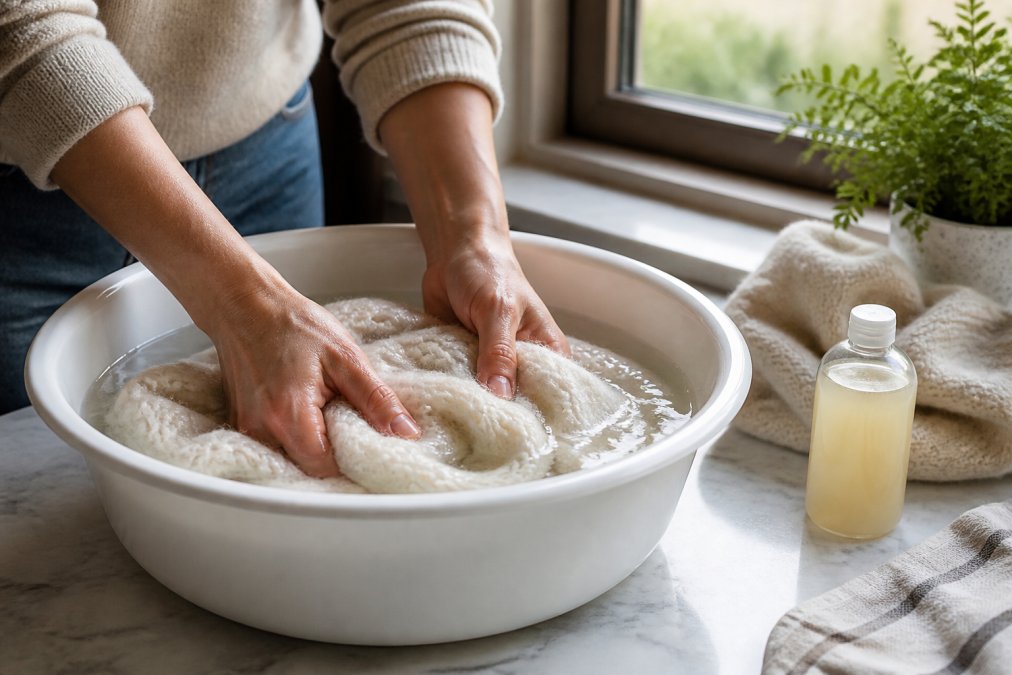
Hand washing is the safest way to clean an alpaca wool sweater, taking about 20 minutes of active work plus drying time. The method below protects the fiber while removing odors, light soil, and sweat.
What You'll Need Before You Start
Gather these items so you are not scrambling mid-wash:
- A clean basin or stopped sink
- Lukewarm water, roughly room temperature to the touch
- A pH neutral, enzyme-free detergent or a mild soap
- Two clean bath towels
- A flat drying surface or drying rack
The Washing Process
- Fill the basin with lukewarm water and add a small amount of gentle detergent. Swirl it in with your hand rather than creating suds.
- Submerge the sweater and soak for 10 to 15 minutes. Do not scrub, rub, or twist the fabric.
- Press gently with your palms to work water through the fibers, treating it like a delicate sponge.
- Lift the sweater out, drain the basin, and refill with clean lukewarm water.
- Rinse by pressing the sweater into the clean water, repeating until no soap remains.
- Press, never wring. Twisting is the fastest way to distort the shape.
Choosing the Best Detergent for Alpaca Wool
The best detergent for alpaca wool is a pH neutral, enzyme-free formula, or in a pinch, a mild soap like baby shampoo. Enzymes break down protein, and alpaca fiber is protein, so enzyme-based cleaners slowly eat away at the material you are trying to preserve.
Practitioners and care guides frequently recommend baby shampoo or a small amount of hair conditioner as stand-ins when wool-specific detergent is not on hand, a tip covered in this walkthrough on washing alpaca garments. The logic holds up: both are formulated for protein-based hair, not for dissolving grease off a dinner plate.
What most guides miss is the dosage problem: more detergent does not mean a cleaner sweater. Excess soap stays trapped in the dense fibers, and the residue attracts dirt and dulls the natural luster. Use roughly a teaspoon per basin of water, and if unsure, use less.
Avoid chlorine bleach entirely. It destroys protein fibers on contact and the damage is permanent.
How to Dry Alpaca Sweaters Without Shrinking
The safest way to dry an alpaca sweater is to lay it flat on a towel away from direct heat and sunlight, reshaping it while damp. Heat and gravity are the two forces that ruin a wet sweater.

Lay the sweater on a dry towel and roll the towel with the garment inside, pressing down along the roll to pull out excess moisture. Transfer it to a fresh dry towel or a mesh drying rack and pat it back into shape, paying attention to the shoulders, cuffs, and hem.
Never hang a wet alpaca sweater. Water weight will stretch the shoulders and lengthen the body, and that distortion often does not come back after drying. Never put it in a dryer either, even on low.
Flat Drying vs. Drying Rack: Which to Choose
Both methods work, but they solve different problems. A mesh rack lifts the sweater so air circulates underneath, speeding drying and preventing the damp-towel smell that develops when a garment sits on a wet layer. A towel on a flat surface is more forgiving for heavy or saturated sweaters because it supports the full weight of the wet fiber without letting the shoulders and hem sag through the mesh.
A practical rule: use a mesh rack for lighter crewnecks and cardigans, and the towel method for anything bulky or dripping wet.
How to Rescue an Accidentally Shrunken Sweater
Most guides stop at prevention. If a sweater has already shrunk or felted, a lukewarm soak with a small amount of hair conditioner can relax the fibers enough to gently re-stretch it. Fill a basin with lukewarm water, add about a teaspoon of conditioner, and submerge the sweater for 20 to 30 minutes. Do not agitate.
Preventing Pilling on Alpaca Sweaters
Pilling on alpaca sweaters comes from friction, not poor quality, and is manageable with the right habits. Short fibers work loose and tangle into small balls where the garment rubs against itself, a bag strap, or a seatbelt. Because alpaca's scales are finer and flatter than sheep's wool, the fiber slides against itself more easily, so a soft alpaca knit can pill faster than a coarser wool sweater even though it feels more luxurious.
How to Remove Pills Without Damaging the Fiber
When pills do form, remove them with a fabric shaver or a fine sweater comb, working in one direction with light pressure. Never pull pills off by hand, since that drags more fiber loose and enlarges the problem.
When Pilling Is a Sign of Something Else
A little pilling in the first few wears is normal and usually settles once the loose short fibers work their way out. Pilling that keeps returning across the whole garment, or appears after a single wash, often points to a different cause: detergent residue left in the fiber, a wash cycle that was too warm or agitated, or a blend with a shorter-staple fiber.
Stain Removal and Odor Treatment
Treat stains on alpaca immediately but gently, using cold water and a mild soap rather than rubbing. Blot from the outside inward with a clean cloth, apply a small amount of pH neutral detergent, and press it into the fabric with your fingertips. Rinse with cool water and lay flat to dry.
Machine Washing and Dry Cleaning: When It's Acceptable
Machine washing is acceptable only for sturdy alpaca items like socks, and only on a cold, delicate cycle with low spin. Some brands, including BellePaga's care recommendations, note that socks can handle a 30 degrees Celsius wash, which is roughly 86 degrees Fahrenheit.
| Situation | Best Method | Water Temp | Risk Level |
|---|---|---|---|
| Everyday sweater refresh | Air out overnight | None | None |
| Light soil or odor | Hand wash | Lukewarm | Low |
| Socks and sturdy knits | Delicate machine cycle | Cold | Moderate |
| Structured or heavily soiled | Dry cleaning | N/A | Low |
| Set-in grease stain | Cornstarch, then hand wash | Cool | Low |
Storing Alpaca Wool Sweaters for Longevity
Store clean alpaca sweaters folded, never hung, in a cool, dry place away from direct sunlight. Hanging stretches the shoulders over months of storage, and sunlight fades natural dyes.
Frequently Asked Questions
Can you machine wash an alpaca sweater?
Machine washing is risky for most alpaca wool sweaters because agitation causes fibers to lock and shrink. Some brands say socks can handle a delicate cycle at 86°F or lower, but for sweaters, hand washing remains the safest method. If you must use a machine, choose a wool-safe delicate cycle, cold water, and a mesh bag. Never use a spin cycle. Check the care label first, as some 100% baby alpaca pieces like the Classic Crew are dry clean only.
Does alpaca wool shrink when washed?
Yes, alpaca wool can shrink if washed in hot water, agitated aggressively, or dried with heat. The natural protein fibers in alpaca respond to temperature changes and friction by tightening, which causes felting and shrinkage. To avoid this, use lukewarm water under 86°F, never wring or twist the garment, and always lay it flat to air dry away from direct heat or sunlight.
What is the best detergent for alpaca fiber?
A pH-neutral, enzyme-free detergent designed for wool and delicates is the best choice for alpaca fiber. Avoid chlorine bleach, fabric softeners, and biological detergents that contain enzymes, as these break down the natural protein structure of the fiber. Some practitioners also recommend baby shampoo or hair conditioner as gentle alternatives. Whatever you choose, use a small amount and always test on a hidden area first.
How often should you wash alpaca wool?
Alpaca wool naturally resists odors and bacteria, so you only need to wash sweaters every 5 to 10 wears, or when visible stains appear. Between washes, air the garment outdoors in shade for a few hours to refresh it. For light odors without washing, spot-treat with a damp cloth and mild soap, then let it air dry. Overwashing shortens the life of the fiber and increases the risk of pilling.
Alpaca care rewards patience more than technique. The sweaters that last a decade are the ones washed rarely, dried flat, and stored folded, and none of that requires special equipment. If you want garments built to make that routine worthwhile, Purely Alpaca offers naturally warm, hypoallergenic sweaters with free shipping on orders of $100 or more and hassle-free returns. Shop all and find a piece worth taking care of.