





Table of Contents
- Why Summer Storage Matters for Alpaca Fiber
- How to Clean Alpaca Wool Before Storage
- Drying and Preparing Your Alpaca Garments
- Storing Alpaca Wool in Plastic vs. Cloth Containers
- Best Moth Repellent for Natural Fibers
- Environmental Conditions for Long-Term Storage
- Maintaining Garment Shape and Preventing Damage
- Conclusion
- Frequently Asked Questions
Last Updated: September 24, 2026
Why Summer Storage Matters for Alpaca Fiber
Alpaca fiber isn't like regular wool. It has microscopic air pockets that provide natural thermal regulation, which makes it perfect for winter wear, but also means it needs special care when you're not using it. Summer storage is where most people get it wrong. Good Karma Ranch's analysis of alpaca fiber properties shows that improper storage can damage the fiber's structure permanently.
Here's what happens: moths find their way into poorly stored alpaca items. Moisture builds up in sealed containers. Fiber gets compressed and loses its shape. By the time you pull out your favorite alpaca sweater in October, it's either damaged or smells like a closet.
The good news? Learning how to store alpaca wool summer is straightforward once you know the right steps. At Purely Alpaca, we've helped customers protect their investment. The techniques in this guide will keep your alpaca pieces in perfect condition until cold weather returns.
How to Clean Alpaca Wool Before Storage
You can't skip this step. Dirty alpaca items attract pests and develop odors during storage. According to Purely Alpaca's long-term storage guide, cleaning is the foundation of successful summer storage.
Here's how to clean alpaca before storing it:
- Check the care label first, Most alpaca items say hand wash or delicate cycle only
- Use cold water, Warm water can damage the fiber
- Add mild detergent, Use a wool-specific or gentle soap
- Soak for 10-15 minutes, Don't scrub or wring the garment
- Rinse thoroughly, Keep rinsing until the water runs clear
- Gently squeeze out water, Never twist or wring alpaca items
- Lay flat to dry, Never hang alpaca garments while wet
The key mistake people make is using hot water or regular laundry detergent. Both damage the delicate fiber structure. Cold water and a gentle touch preserve the softness that makes alpaca special.
Drying and Preparing Your Alpaca Garments
Drying takes patience, but it's essential before storage. Wet alpaca fiber is vulnerable to stretching and mildew. The drying process prepares your items for months in storage.
Proper drying technique:
- Lay flat on a clean towel, Spread the garment out completely
- Change the towel every 2-3 hours, This removes moisture faster
- Keep it away from direct sunlight, UV exposure fades color and weakens fiber
- Avoid heat sources, No radiators, heaters, or hair dryers
- Air dry completely, This takes 24-48 hours depending on thickness
- Check for dampness, Feel the center of thick items to confirm they're fully dry
Once your alpaca items are completely dry, they're ready for storage. This is the point where many people make a critical error: they fold items while they're still slightly damp or store them too quickly.
Understanding Vacuum Sealing Risks for Alpaca Fiber
Vacuum sealing is tempting because it saves space, but it poses specific risks to alpaca that differ from risks to synthetic fibers. Understanding these risks helps you decide whether vacuum sealing is appropriate for your storage timeline.
How vacuum sealing damages alpaca:
Alpaca fiber's insulating power comes from microscopic air pockets within each fiber strand. When you vacuum-seal alpaca, the compression forces these air pockets to collapse.
When vacuum sealing might be acceptable:
Safe alternatives to vacuum sealing:
Storing Alpaca Wool in Plastic vs. Cloth Containers
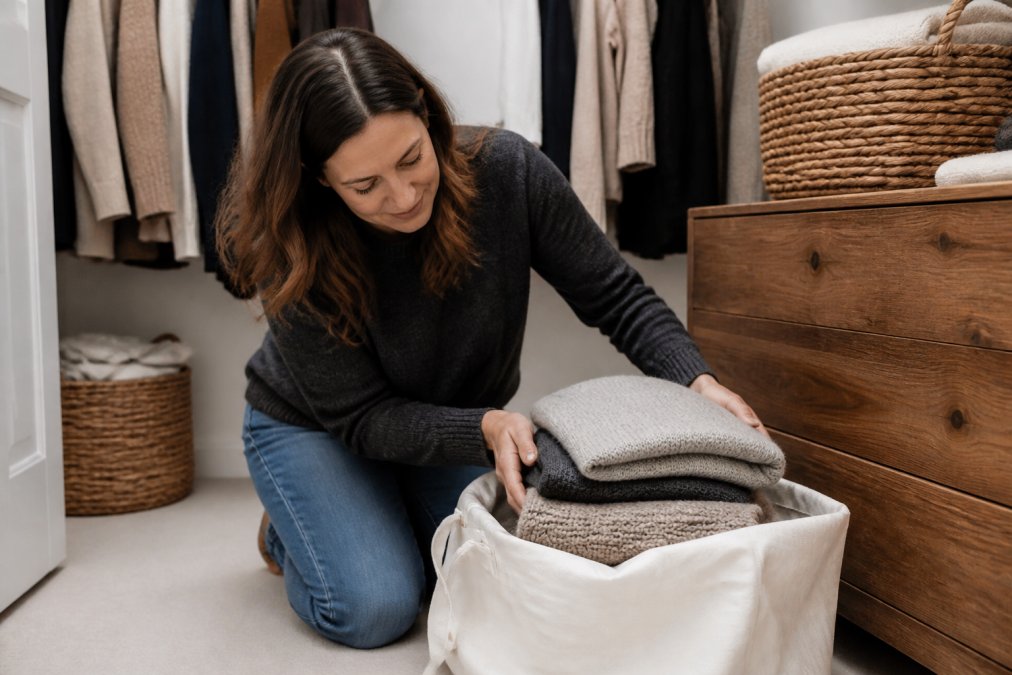
This choice matters more than most people realize, and the right answer depends on how long you're storing your alpaca items. The distinction between seasonal rotation and long-term archival storage changes which containers work best.
Storage Duration Determines Container Choice
Short-term seasonal rotation (2-8 weeks):
Wet Felted Alpaca Dryer Balls - Grey →
If you're storing alpaca items for a few weeks between seasons, say, from June through August, rigid plastic bins with tight-fitting lids can work if you include moisture control. The sealed environment protects against dust and pests during brief storage. However, you must add silica gel packets or a moisture absorber inside the bin and replace them weekly. Without active humidity control, plastic bins trap moisture and create the exact conditions moths prefer.
Long-term summer storage (3+ months):
Breathable Storage Options (Recommended for Summer)
- Cotton bags or cotton pillowcases, Most affordable and effective; look for natural, undyed fabric to prevent color transfer
- Cedar chests, Provide both breathability and natural pest deterrent; ideal if you have multiple alpaca pieces
- Acid-free tissue paper, For wrapping individual items inside breathable bags; prevents direct contact between garments
- Muslin storage bags, Tightly woven but still breathable; excellent for protecting against dust while allowing air flow
- Cotton-lined cardboard boxes, Use acid-free cardboard only; the cotton lining adds breathability
Containers to Avoid
- Plastic storage bins or bags, Trap moisture and create pest-friendly environments during long-term storage
- Vacuum-sealed containers, Remove all air circulation and compress fiber permanently
- Non-acid cardboard boxes, Acid in regular cardboard transfers to fiber and causes yellowing and brittleness
- Damp basements or attics, Environmental conditions override container choice; storage location matters as much as container type
- Airtight plastic boxes without humidity control, Even with silica gel, the risk of moisture pockets forming is high
Material-Specific Guidance
Cotton bags: These are your best budget option for most alpaca owners. When you choose cotton bags, look for natural, undyed fabric. Dyed cotton can transfer color to light-colored alpaca items, especially if any moisture gets trapped inside. Wash new cotton bags before use to remove any sizing or dyes that might bleed.
Best Moth Repellent for Natural Fibers
Moths are the biggest threat to stored alpaca wool. They eat through fiber at an alarming rate, and one infestation can destroy entire pieces. The solution isn't complicated, but it needs to be natural.
Natural moth repellents that work:
- Cedar blocks or cedar chips
- Lavender sachets
- Rosemary sprigs
- Dried cloves
- Camphor blocks (natural, not synthetic)
How to use them:
- Place a sachet in the bottom of your storage bag
- Wrap your alpaca item loosely with acid-free tissue
- Place another sachet on top
- Seal the bag (but leave it breathable, don't vacuum seal)
- Replace sachets every 6-8 weeks during storage
Environmental Conditions for Long-Term Storage
Where you store alpaca matters as much as how you store it. Temperature, humidity, and light all affect fiber quality during the off-season.
Ideal storage environment:
- Temperature: 60-70°F (cool, stable)
- Humidity: 30-50% (dry, not damp)
- Light: Dark or very dim (no direct sunlight)
- Ventilation: Good air circulation (no sealed spaces)
Avoid storing alpaca items:
- In plastic bins in unventilated spaces
- Near water pipes or HVAC systems
- In direct sunlight
- In damp basements
- In hot attics
- In garages (temperature swings are extreme)
Maintaining Garment Shape and Preventing Damage
Alpaca fiber is durable, but it can stretch or lose its shape if stored incorrectly. The way you fold and position items during storage determines how they look when you wear them again.
Proper folding technique:
- Lay the garment flat on a clean surface
- Fold in thirds lengthwise (don't roll it)
- Fold in half or thirds widthwise
- Place acid-free tissue between folds
- Store horizontally, not vertically
What to avoid:
- Hanging garments (causes stretching)
- Tight folding (creates permanent creases)
- Stacking heavy items on top (compresses fiber)
- Storing in cramped spaces (restricts air circulation)
| Storage Method | Best For | Risk Level | Breathability |
|---|---|---|---|
| Cotton bags with cedar | Most alpaca items | Low | High |
| Cedar chest | Multiple pieces | Low | High |
| Acid-free boxes | Delicate items | Medium | Medium |
| Plastic bins | Not recommended | High | Low |
| Vacuum-sealed bags | Not recommended | Critical | None |
Conclusion
When you store alpaca wool summer properly, you don't need expensive equipment or complicated systems. Clean your items, dry them completely, use breathable cotton storage bags, add natural moth repellents, and keep them in a cool, dry, dark closet. That's it.
Frequently Asked Questions
What is the best way to store alpaca wool to prevent moth damage?
Clean your alpaca items thoroughly before storage, then fold them loosely in breathable cotton bags or cedar chests. Use natural moth deterrents like cedar blocks, lavender, or rosemary instead of chemical repellents. Store in a cool, dark place away from direct sunlight and maintain humidity below 65 percent to prevent moisture buildup that attracts pests.
Should I store alpaca wool in plastic or breathable bags?
Choose breathable containers like cotton bags or cedar chests over plastic. Plastic traps moisture and creates conditions where moths and mildew thrive. Breathable materials allow airflow and prevent moisture buildup, which protects the fiber integrity of your alpaca garments. If you must use plastic temporarily, ensure it's only for short periods and include moisture-absorbing materials inside.
How do I clean alpaca wool before storing it for the season?
Hand wash your alpaca items in cool water with a gentle detergent designed for delicate fibers. Avoid the delicate cycle in your washing machine, as it can cause fiber distortion. Rinse thoroughly until all soap residue is gone, then gently squeeze out excess water without wringing. Lay flat to air dry completely before folding for storage. Cleaning before storage removes oils, dirt, and sweat that can attract moths and cause fiber damage during the summer months.
Can alpaca wool be put in the dryer?
No, machine drying can damage alpaca fiber and cause shrinkage. Always air dry your alpaca garments flat on a clean surface. If you need to speed up drying, use alpaca dryer balls like the Wet Felted USA Alpaca Dryer Balls ($29.95) in a low-heat setting with other delicate items, but never dry alpaca pieces alone on high heat. Flat drying preserves the garment silhouette and fiber integrity much better than tumble drying.