



Table of Contents
- Why Luxury Alpaca Gifts Stand Out This Winter
- Premium Alpaca Accessories and Wraps
- Alpaca vs Cashmere Warmth: What Makes Alpaca Superior
- How to Wash Alpaca Wool and Preserve Your Investment
Last Updated: August 13, 2026
Why Luxury Alpaca Gifts Stand Out This Winter
Luxury alpaca gifts solve a problem most retailers ignore: giving something genuinely rare and functionally superior. Alpaca fiber's hollow, air-filled structure traps heat more efficiently than wool while remaining breathable, delivering a warmth-to-weight ratio that outperforms cashmere and merino wool in cold climates.
At Purely Alpaca, a family-owned business with over two decades of experience, the principle is simple: alpaca fiber shouldn't require compromise. You get exceptional warmth without bulk, natural luxury without itch, and pieces designed to last decades.
Alpaca's versatility makes it ideal for any recipient. The fiber is naturally lanolin-free, making it perfect for people with sensitive skin. It's also moisture-wicking, performing even when wet, a quality cashmere lacks. This winter, luxury alpaca gifts work harder, last longer, and feel better than alternatives most people settle for.
Premium Alpaca Accessories and Wraps
The foundation of any luxury alpaca collection starts with functional accessories. The Purely Alpaca 100% Baby Alpaca Scarf ($57.95) represents the entry point to luxury alpaca gifting. At 71 inches long and weighing just 130 grams, this scarf delivers genuine warmth without bulk. Baby alpaca fiber measures around 20-22 micrometers, making it significantly finer and softer than adult alpaca.

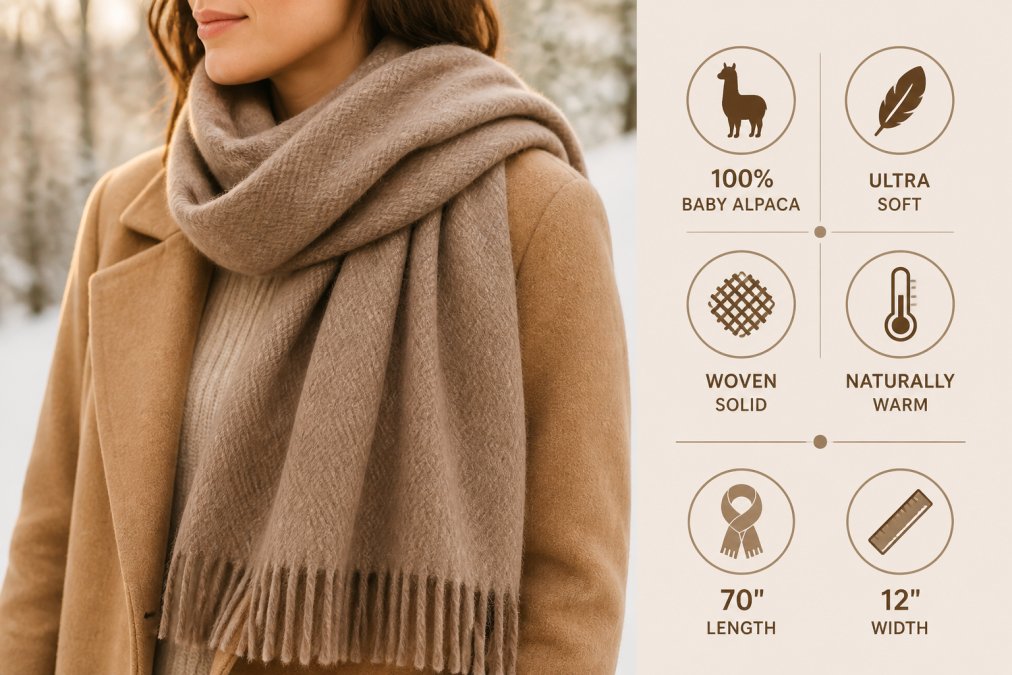
For artisan quality, the Awana Alpaca Pashminas ($89.95) are hand-knitted from Ecuador alpaca, combining 30% alpaca with 70% cotton for breathable, season-spanning wear. The 100% Baby Alpaca Woven Ruana ($209.95) functions as both scarf and shawl, with an open-front design ideal for layering.
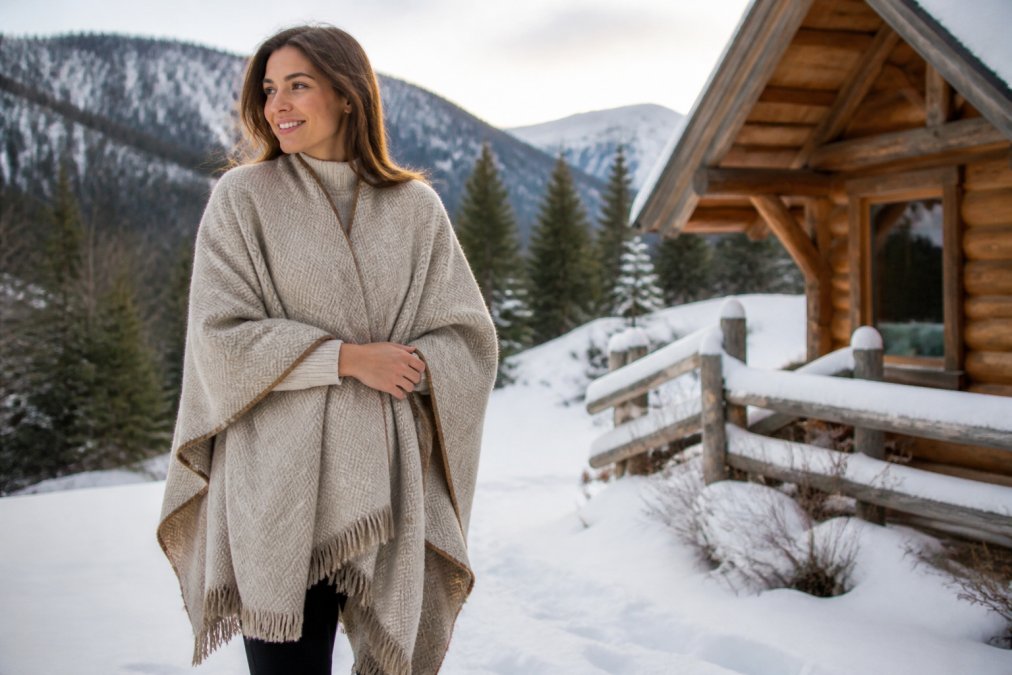
The Premium Classic Solid Alpaca Poncho ($329.95) steps into heirloom territory. Made from 100% baby alpaca and woven in Peru, this 50-by-70-inch piece weighs just 18.5 ounces, light enough to pack in a carry-on yet substantial enough for serious warmth. Buyers report ponchos become their most-used winter item after the first season.

For artisanal detail, the Floral Reversible Hand Made Embroidery Alpaca Ruana ($229.95) combines 50% baby alpaca with 50% acrylic and includes hand-embroidered details, offering two distinct looks in one reversible piece.

Alpaca vs Cashmere Warmth: What Makes Alpaca Superior
Alpaca wins on warmth-to-weight ratio. Cashmere fiber measures 14-19 micrometers; alpaca typically ranges 20-25 micrometers for adult fiber and 18-22 for baby alpaca. Despite being slightly coarser, alpaca's hollow core structure traps insulating air more effectively than cashmere's solid structure. An alpaca sweater provides more warmth than a cashmere sweater of identical weight without the bulk.
Cashmere resists pilling better than alpaca, but this advantage disappears with proper care. Alpaca's genuine advantage is moisture management: it naturally absorbs and releases moisture without feeling damp, while cashmere absorbs moisture but doesn't release it efficiently.
Durability favors alpaca. Cashmere demands dry cleaning or specialized hand washing. Alpaca tolerates the same care but can survive occasional machine washing on delicate cycles. Properly maintained alpaca garments maintain integrity through 50+ wash cycles, while cashmere typically requires professional care every 2-3 wears.
Luxury alpaca pieces cost 30-50% less than comparable cashmere items for equivalent warmth. For winter 2026 gift-giving, alpaca wins on nearly every practical metric.
| Characteristic | Alpaca | Cashmere |
|---|---|---|
| Warmth-to-weight ratio | Superior | Good |
| Moisture-wicking | Excellent | Fair |
| Pilling resistance | Moderate | Excellent |
| Care complexity | Simple | Complex |
| Price point | Moderate luxury | High luxury |
| Durability (years) | 10-20+ | 5-10 |
How to Wash Alpaca Wool and Preserve Your Investment
Alpaca is more forgiving than cashmere, but most people wash it wrong. The fundamental rule: alpaca fibers weaken when exposed to hot water and agitation simultaneously. Hot water plus scrubbing causes fibers to felt, permanently matting and shrinking the garment.
Hand washing is recommended. Fill a basin with lukewarm water (70-75°F) and add gentle cleanser for delicate fibers. Submerge the garment and soak 15-20 minutes without agitation. Gently squeeze soapy water through the fabric, never wring or rub. Rinse in clean lukewarm water 2-3 times until clear.
For drying, lay the garment flat on a clean towel away from direct heat or sunlight. Never hang alpaca sweaters; the weight causes stretching. Drying typically takes 24-48 hours.
Machine washing is possible on delicate cycles with cold water in a mesh laundry bag, but hand washing produces superior results with minimal time investment.
For storage, fold alpaca garments rather than hanging. Store in cool, dry places away from sunlight. Cedar blocks or lavender sachets provide natural moth protection. Use a fine-toothed comb to gently remove pills after 2-3 wears, before they accumulate.
Address stains immediately by blotting with a damp cloth using lukewarm water and gentle cleanser. For set-in stains, professional cleaning familiar with alpaca fiber is worth the investment.
Someone who invests in a luxury alpaca gift and follows these care guidelines will own a piece that improves with age, maintaining softness and warmth through decades.
Luxury alpaca gifts for winter 2026 represent a shift in how people think about seasonal giving. Purely Alpaca's collection, from accessible baby alpaca scarves to investment-grade pieces, offers options across every budget. Match the piece to the recipient's needs: outdoor enthusiasts need moisture-wicking performance, office workers benefit from packable wraps, and anyone with sensitive skin gains genuine relief from alpaca's hypoallergenic properties. Start with Purely Alpaca and explore their complete range of luxury alpaca gifts designed for lasting warmth and comfort.
Frequently Asked Questions
What makes luxury alpaca gifts better than regular wool options?
Luxury alpaca fiber is hypoallergenic, lanolin-free, and naturally softer than sheep's wool, making it ideal for sensitive skin. Baby alpaca, the finest grade, measures 20-24 microns in diameter, creating exceptional softness while maintaining superior warmth-to-weight ratio. Alpaca also resists pilling and lasts decades with proper care, making it a true heirloom investment.
How does alpaca compare to cashmere in warmth and durability?
Alpaca fiber contains hollow, air-filled strands with microscopic scales that interlock and trap insulating air, delivering warmth comparable to cashmere at a lighter weight. Alpaca is more durable and resistant to pilling than cashmere, and it maintains its shape better over time. For winter performance, alpaca's moisture-wicking properties keep you comfortable in variable conditions without the delicate handling cashmere requires.
I have sensitive skin, will alpaca fiber irritate me like regular wool does?
Alpaca is naturally hypoallergenic and contains virtually no lanolin, the waxy substance that triggers itching in many people with wool sensitivity. The smooth fiber structure doesn't irritate skin the way coarser wool does. Many customers with eczema and sensitive skin choose alpaca specifically because it's gentle against the skin while providing exceptional warmth without discomfort.
What is the best way to wash and care for alpaca wool?
Hand wash alpaca items in cool water with gentle, wool-specific shampoo, never hot water or regular detergent. Lay flat to dry, never hang or machine wash. For luxury pieces like vicuña scarves or premium sweaters, dry cleaning preserves the fiber's integrity and prevents shrinkage. Proper care prevents pilling and extends the life of your alpaca investment to decades of wear.
Are luxury alpaca gifts worth the higher price?
Premium alpaca pieces cost more upfront but outlast comparable cashmere or wool by years when cared for properly. Baby alpaca's softness, hypoallergenic properties, and resistance to pilling justify the investment. Heirloom-quality alpaca items become cherished gifts passed through generations, making the per-year cost of ownership lower than fast-fashion alternatives.
This article was written using GrandRanker