


Table of Contents
- Why Is My Alpaca Sweater Itchy
- Understanding Alpaca Fiber Structure and Softness
- How to Wash Alpaca Sweaters Properly
- Best Hair Conditioner for Wool Softening
- Chemical Softening Methods That Work
- Mechanical Methods and Post-Wash Maintenance
- Drying Techniques to Preserve Softness
- Frequently Asked Questions
Last Updated: September 29, 2026
Why Is My Alpaca Sweater Itchy
Alpaca sweaters are prized for their warmth and luxury feel, yet many people find them uncomfortable to wear. The scratchy sensation that makes you want to take off your new sweater isn't a sign of poor quality, learning how to soften scratchy alpaca wool sweaters is absolutely possible with the right methods.
The root cause comes down to fiber diameter. Alpaca fiber, like all natural protein fibers, has a structure with tiny scales on its surface. When these scales stand up or feel coarse against your skin, they create that irritating prickle. The good news: multiple proven methods can smooth those scales and make your alpaca sweater genuinely soft.
The techniques that work best combine chemical softening methods with proper care routines. You don't need expensive treatments or special equipment, most solutions use items you likely have at home.
Understanding Alpaca Fiber Structure and Softness
Alpaca fiber is a protein-based natural material, similar to wool and hair. Unlike synthetic fabrics, it has a natural cuticle structure that can feel coarse when the fibers aren't properly relaxed.
The fiber diameter matters significantly. Coarser alpaca fibers (those with a larger micron count) naturally feel scratchier than fine fibers. However, fiber diameter isn't the only factor determining comfort. How you treat the fiber after it's knitted into a sweater changes how it feels against your skin.
The key difference between scratchy and soft alpaca comes down to fiber relaxation. When fibers are tense or not fully relaxed, their surface feels rough. When they're smoothed and hydrated, they feel luxurious. Think of it like hair, wet, conditioned hair feels softer than dry, tangled hair, even if it's the same hair.
Several factors affect how your alpaca sweater feels:
- Fiber hydration: Dry fibers feel stiffer and scratchier
- Cuticle alignment: Smoothed scales feel softer than raised ones
- Fiber tension: Relaxed fibers drape better and feel gentler
- Washing method: Harsh washing can make fibers feel coarser
The good news is that each of these factors responds to specific treatments.
How to Wash Alpaca Sweaters Properly
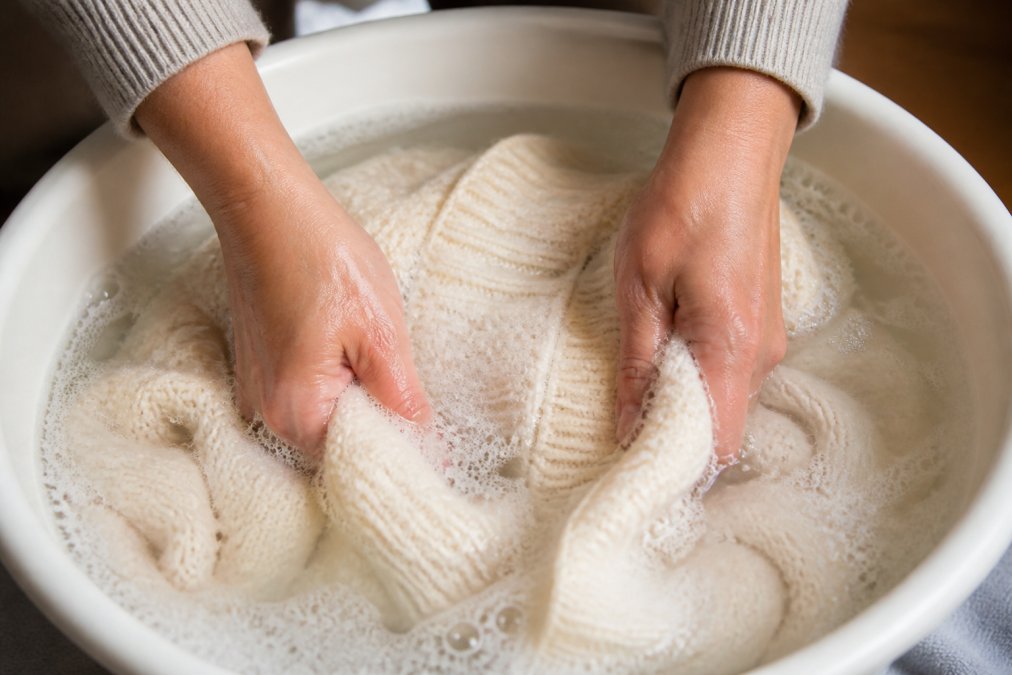
Proper washing is the foundation for maintaining softness. Most people wash alpaca the wrong way, which actually makes it scratchier. The right method takes about 15 minutes and uses cool water, gentle agitation, and careful rinsing.
Start by filling a basin with cool water, around 65-75°F is ideal. Hot water opens fiber cuticles and can cause felting, which locks fibers together and makes them feel rough and stiff.
Basic washing steps:
- Fill your basin with cool water
- Add wool wash detergent (see next section for best options)
- Submerge your sweater and let it soak for 15-20 minutes
- Gently squeeze soapy water through the fabric, do not scrub, wring, or agitate
- Drain and rinse with cool water 2-3 times until water runs clear
- Gently squeeze out excess water without wringing
- Lay flat to dry (covered in a clean towel if needed)
Choosing the Right Wool Wash Detergent
Not all detergents are created equal for alpaca fiber. Regular laundry detergent is too harsh, it strips natural oils and can damage the fiber structure. You need a wool wash detergent specifically formulated for protein fibers.
What makes wool wash different from regular detergent:
- pH-balanced formula: Keeps fiber cuticles calm instead of opening them
- Lanolin content: Adds natural conditioning and softness
- Gentle surfactants: Lift dirt without harsh scrubbing action
- No bleach or enzymes: These damage protein fibers
Step-by-Step Washing Process
The washing process matters as much as the product you use. Here's exactly how to wash your alpaca sweater to maximize softness:
Preparation (5 minutes):
- Fill a clean basin with cool water
- Add the recommended amount of wool wash (usually a capful or small squirt)
- Stir gently to distribute the detergent
- Check that the water feels cool, not cold
Soaking (15-20 minutes):
- Submerge your sweater completely
- Let it soak without moving it around
- This allows the detergent to penetrate fibers and begin relaxation
- Avoid pushing it down or agitating the water
Gentle Cleaning (3-5 minutes):
- Very gently squeeze the soapy water through the fabric
- Focus on areas that get the most wear (underarms, neckline)
- Never scrub, twist, or wring the sweater
- Support the weight of the sweater so it doesn't stretch
Rinsing (5-10 minutes):
- Drain the soapy water carefully
- Refill the basin with cool, clean water
- Gently squeeze clean water through the fabric
- Repeat the rinse 2-3 times until water runs completely clear
- This removes all soap residue that can make fibers feel stiff
Drying preparation (2 minutes):
- Gently squeeze out excess water, do not wring
- Lay the sweater flat on a clean towel
- Roll the towel to absorb more moisture if needed
- Then lay flat to air dry completely
Best Hair Conditioner for Wool Softening
One of the most effective and affordable ways to learn how to soften scratchy alpaca wool sweaters is using hair conditioner. Conditioner works on alpaca fiber the same way it works on hair, by smoothing the cuticle and adding moisture.
How to use conditioner for softening:
- Wash your sweater using the proper method described above
- Fill a basin with cool water
- Add 1-2 tablespoons of inexpensive hair conditioner (any brand works)
- Submerge your damp sweater and let it soak for 10-15 minutes
- Gently squeeze the conditioner through the fibers
- Rinse thoroughly with cool water until the water runs clear
- Lay flat to dry
Why conditioner works so well:
- Fills in gaps along the fiber cuticle
- Adds slip so fibers glide smoothly against skin
- Reduces static electricity that makes fibers feel prickly
- Provides lasting softness through multiple wears
- Costs just a few dollars per treatment
Chemical Softening Methods That Work
Beyond basic washing and conditioning, several chemical approaches can significantly reduce scratchiness. These methods work by chemically relaxing the fiber structure and smoothing the cuticle.
Vinegar Soak Technique
White vinegar is a time-tested method for softening alpaca and wool fibers. The acidity helps relax fiber cuticles and can reduce that scratchy feeling. This technique costs pennies and uses something most people have in their kitchen.
How to do a vinegar soak:
- Wash your sweater first using proper wool wash method
- Fill a basin with cool water
- Add 1-2 cups of white vinegar (the ratio is about 1 part vinegar to 8 parts water)
- Submerge your damp sweater completely
- Let it soak for 15-30 minutes
- Gently squeeze the vinegar solution through the fibers
- Rinse thoroughly with cool water until the vinegar smell is gone
- Lay flat to dry
Why vinegar helps:
- The acidity (pH around 2.5-3) helps relax fiber cuticles
- Removes soap residue that can make fibers feel stiff
- Reduces static electricity
- Costs almost nothing
- Works on all protein fibers (alpaca, wool, cashmere)
Fabric Conditioner Application
Fabric conditioner (the kind you use in washing machines) can also work for hand-washing softening. This method is simpler than vinegar and gives consistent results.
Fabric conditioner method:
- After washing your sweater, fill a basin with cool water
- Add 1-2 tablespoons of fabric conditioner
- Submerge your damp sweater
- Soak for 10-15 minutes
- Gently squeeze the conditioner through the fibers
- Rinse thoroughly with cool water until completely clear
- Lay flat to dry
Mechanical Methods and Post-Wash Maintenance
Beyond chemical treatments, mechanical methods can improve softness. These techniques physically smooth the fiber surface without adding chemicals.
Avoid these mechanical mistakes:
- Don't use a rough towel to dry (use soft cotton)
- Don't fold and store while damp (lay flat to dry first)
- Don't hang on hangers (causes stretching and stiffness)
- Don't store in plastic (traps moisture and can cause mildew)
Drying Techniques to Preserve Softness
How you dry your alpaca sweater is just as important as how you wash it. Improper drying can undo all the softening work you've done.
The flat-drying method is essential:
- After your final rinse, gently squeeze out excess water
- Lay the sweater on a clean, dry towel
- Smooth it into its proper shape
- Roll the towel loosely to absorb more moisture
- Unroll and lay the sweater flat on a fresh dry towel
- Place in a well-ventilated area away from direct heat
- Allow to air dry completely (usually 24-48 hours)
Positioning matters:
- Lay completely flat, not draped over a chair or hanger
- Keep away from direct sunlight (can fade colors)
- Avoid heat sources like radiators or vents
- Ensure air can circulate around the entire sweater
- Turn over halfway through drying if possible
Frequently Asked Questions
Can you use hair conditioner to soften alpaca wool?
Yes. Hair conditioner is one of the most effective methods to soften alpaca fiber. Apply it during the rinse phase after washing, let it sit for 10-15 minutes, then rinse thoroughly with cool water. The conditioner smooths the cuticle structure of the fiber, reducing the scratchy feeling.
Why does my alpaca sweater feel itchy?
Alpaca itchiness stems from several factors: fiber diameter (coarser fibers irritate sensitive skin more than fine ones), the cuticle structure of the protein fiber, and how the sweater was processed. Some alpaca fiber naturally has a larger micron count, making it inherently scratchier. Washing with harsh detergents and improper drying can worsen itchiness by roughening the fiber surface. Conditioning treatments and proper care can significantly reduce this sensation.
Is alpaca wool itchy to wear compared to other materials?
Alpaca fiber quality varies widely. High-quality alpaca with finer micron counts is typically less itchy than standard wool and comparable to cashmere. However, lower-grade alpaca can feel scratchy against sensitive skin. The key difference is that alpaca has a smoother cuticle structure than sheep's wool when properly processed, making it naturally less irritating. Conditioning and proper washing enhance this advantage, making premium alpaca feel luxuriously soft.
How do I prevent my alpaca sweater from pilling or becoming itchy over time?
Prevent pilling and itchiness by hand-washing with specialized wool wash (never regular detergent), using cool water, and avoiding the dryer. Store flat or folded to prevent stretching and fiber damage. Condition regularly with hair conditioner or fabric conditioner during washing. Minimize friction by wearing the sweater over a base layer if you have sensitive skin. Proper drying techniques, flat or on a mesh rack, preserve the fiber's integrity and maintain softness between washes.