


Table of Contents
- What Causes Sweater Pilling
- How to Wash Alpaca Sweaters at Home to Reduce Friction
- Best Fabric Shaver for Sweaters and Other Removal Tools
- How to Remove Pilling from Wool and Prevent It Recurring
Last Updated: August 17, 2026
What Causes Sweater Pilling
Sweater pilling happens when loose fibers on the garment's surface tangle together through friction and abrasion. When you wear, wash, or store a sweater improperly, fibers rub against each other and external surfaces, eventually balling up into small knots called "pills." 🧶
Even luxury garments pill when friction is high enough. Natural fibers like wool and alpaca are particularly susceptible because their structure traps loose fibers. Friction comes from three main sources: washing agitation, wearing and movement, and storage conditions.
How to Wash Alpaca Sweaters at Home to Reduce Friction
Washing technique is the single biggest factor in preventing pilling. Aggressive washing creates the friction that damages and loosens fibers.
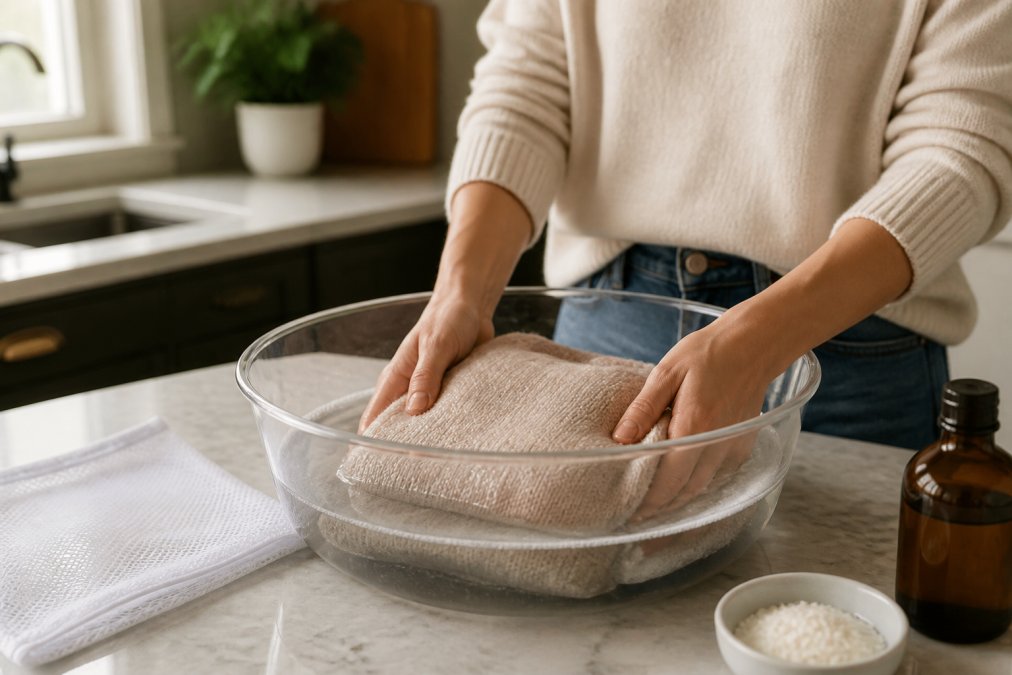
Hand washing is the gentlest approach. Fill a basin with cool water and add mild detergent for delicate fabrics. Submerge your sweater and soak for 10-15 minutes without agitation. Gently squeeze soapy water through the fabric, don't rub, wring, or scrub. Rinse in cool water using the same gentle squeezing method until the water runs clear.
If using a washing machine, select the delicate cycle with cold water and place your sweater in a mesh laundry bag to reduce friction against the drum. Use less detergent than normal, as excess soap requires more rinsing and increases friction.
Never use a tumble dryer. Instead, lay your sweater flat on a clean, dry towel or hang it on a padded hanger. If needed, gently roll it in a towel to absorb water, then lay it flat again.
Best Fabric Shaver for Sweaters and Other Removal Tools
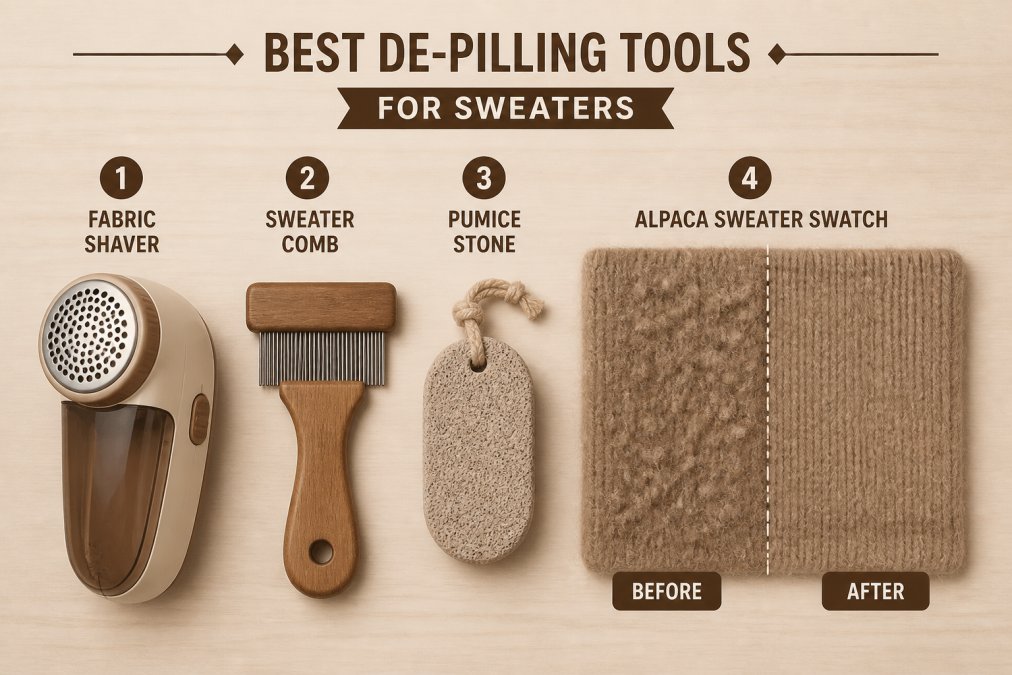
Once pilling starts, use the right tool to remove pills without damaging the underlying fabric.
An electric fabric shaver uses a rotating blade to trim pills while a mesh guard protects the garment. Move the shaver gently across the pilled area in one direction without pressing hard.
A sweater comb offers more control for delicate fabrics. The fine teeth catch and lift pills away from the surface. Comb gently in one direction, working small sections at a time. For alpaca sweaters specifically, a sweater comb is often the safest choice because alpaca fibers are delicate.
A pumice stone works for lighter pilling. Lightly rub the pilled area in circular motions to remove pills gently.
How to Remove Pilling from Wool and Prevent It Recurring
Removing existing pills is just the first step. Preventing them from returning requires addressing the root causes of friction.
Identify why pilling is happening. Is it from washing? Switch to hand washing or the delicate cycle in a mesh bag. From wearing? Wear a slip or base layer underneath. From storage? Fold sweaters instead of hanging them, and store them in breathable garment bags.
After removing pills, wash your sweater less frequently and use gentle techniques. Store it flat or folded, never crammed into tight spaces. Choose tightly woven fabrics with lower pilling risk, as they lock fibers in place better than loosely knit ones. High-quality natural fibers like alpaca have longer, stronger fibers that resist pilling better than cheap synthetics. According to textile care standards from the American Apparel & Footwear Association, proper fabric selection and care can reduce pilling by up to 80%.
For wool, hand wash in cool water, dry flat, and use a sweater comb for removal. Merino wool pills less than standard wool because the fibers are finer and more uniform.
Alpaca fiber's natural properties make it more resistant to pilling than many alternatives, though proper care remains essential.
The key to preventing pilling comes down to understanding friction. Every wash, wear, and storage choice either increases or decreases mechanical stress on your fibers. By choosing gentle washing methods, selecting quality fabrics, and using proper removal tools when needed, you can keep your sweaters looking new for years. Research from the Textile Exchange on natural fiber durability confirms that properly maintained natural fiber garments last significantly longer than those subjected to harsh care routines.
Start with prevention through careful washing and storage. When pills appear, remove them promptly with the right tool. The gentler your approach at every step, the longer your garment will maintain its appearance and comfort.
Frequently Asked Questions
Does pilling mean my sweater is low quality?
Pilling doesn't necessarily indicate poor quality. Even high-end knitwear can pill when fibers break and tangle on the surface due to friction. What matters is how the fabric responds to treatment. Quality sweaters made from natural fibers like alpaca resist pilling better than low-quality synthetic blends, and they recover their appearance once pills are removed. Proper care and washing techniques significantly reduce how much pilling occurs.
How do I wash sweaters to prevent pilling?
Wash sweaters inside out in cold water on a delicate cycle, or hand wash them gently. Use a mesh laundry bag to minimize friction against other garments. Choose mild detergents formulated for delicate fabrics rather than harsh chemicals that can weaken fibers. Air dry flat instead of tumble drying, which creates significant abrasion. These practices reduce fiber breakage and loose fibers that lead to pilling.
What's the safest way to remove existing pills without damaging the sweater?
A fabric shaver is the safest mechanical removal method, it cuts surface pills without cutting the underlying fabric. For delicate fibers, a sweater comb works gently by lifting pills away. Always test on an inconspicuous area first. Avoid razors or scissors, which can create holes. Never use chemical solvents unless specifically designed for your fabric type. After removal, proper washing and storage prevent pills from returning quickly.
Is pilling normal for alpaca wool?
Some pilling can occur with any natural fiber, including alpaca, especially in high-friction areas. However, quality alpaca fiber pills less frequently than lower-grade wool or synthetic blends because the fibers are longer and stronger. Alpaca's natural properties make it more pilling-resistant than merino wool. With proper care, cold water washing, delicate cycles, and appropriate drying, alpaca sweaters maintain their appearance far longer than standard knitwear.
Sweater pilling is frustrating, but it's preventable with the right approach. Purely Alpaca's alpaca fiber garments are engineered to resist pilling better than standard wool or synthetic alternatives, but they still require proper care. Shop our collection of durable, high-quality alpaca sweaters and discover how premium natural fiber can transform your winter wardrobe. With our hassle-free returns and free shipping on orders over $100, you can invest in quality pieces with confidence.
This article was written using GrandRanker