



Table of Contents
- Why Alpaca Socks Outperform Other Options for Cold Feet
- Top Alpaca Socks for Cold Feet: Product Comparison
- Alpaca vs Merino Wool Socks: What's the Real Difference
- How to Wash Alpaca Socks to Preserve Warmth and Durability
Last Updated: August 15, 2026
Why Alpaca Socks Outperform Other Options for Cold Feet
Alpaca fiber's hollow structure traps warm air while allowing moisture to escape, keeping feet dry and warm. The fiber is naturally hypoallergenic, ideal for people with eczema or wool sensitivity. At Purely Alpaca, we've sourced alpaca products since 2002. Customer feedback is consistent: alpaca socks stay warm where other socks fail due to superior thermal efficiency combined with breathability.
Quick Picks:
- Best Overall Warmth: Superwarm Heavy Extreme Alpaca Socks ($33.95), the thickest option for extreme cold
- Best All-Around Value: OutdoorAdventure Alpaca Sock ($29.95), heavyweight with reinforced heel and toe
- Best Budget Option: Copper Crew Alpaca Socks ($14.00), everyday warmth with copper-enhanced circulation support
- Best Insole Alternative: American Choice Alpaca Foot Warmers ($20.95), fits inside existing boots and shoes
Top Alpaca Socks for Cold Feet: Product Comparison
Choosing the right alpaca socks for cold feet depends on your use case, climate severity, and fit preferences.

1. Superwarm Heavy Extreme Alpaca Socks, Best for Extreme Cold ($33.95)
At 9.5 ounces per size large, these are designed for the coldest conditions. The thick sock wall with soft cushion terry interior is designed for the coldest conditions. The alpaca, microfiber, nylon, and Lycra blend maintains warmth even when wet. Customers report these perform in Arctic-level cold, and the terry cushioning prevents the clammy feeling that ruins other heavy socks. Machine washable and dryable.
Best for: Outdoor workers, winter hunters, extreme cold climates.

2. OutdoorAdventure Alpaca Sock, Best All-Around Pick ($29.95)

This top-selling model balances serious warmth with practical wearability. The shock-absorbing cushioning with gentle long calf fit holds without restriction. Reinforced heel and toe construction extends durability through seasons of hard use. The alpaca, microfiber, nylon, Lycra blend breathes while maintaining thermal efficiency.
Best for: Outdoor enthusiasts, hikers, hunters.
3. American Traveler Alpaca Sock, Best for Daily Wear ($24.95)
Made from 100% alpaca yarn knit onto a nylon frame for structural support, these are lighter weight but genuinely warm. The small dense soft terry loop interior provides cushioned comfort without bulk. Customers report wearing these daily in cold offices and during travel. The 100% alpaca construction means superior odor resistance.
Best for: Office workers, travelers, people seeking one sock that works across seasons.
4. Field Hiker Alpaca Socks, Best for Hiking Style ($24.95)
A 50% alpaca blend (41% acrylic, 8% nylon, 1% elastic) delivering hiking-specific performance. The medium weight and classic hiking aesthetic appeal to those wanting function without utilitarian appearance. The blend maintains warmth while acrylic adds durability and reduces pilling.
Best for: Hikers who care about aesthetics and proven outdoor performance.
5. American Choice Alpaca Foot Warmers (Insoles), Best for Boot Integration ($20.95)
These 100% alpaca felt insoles feature patented three-layer construction with alpaca batting sandwiched around burlap for stability. Roughly ¼-inch thick, they provide a warm barrier between your foot and cold ground. You keep your existing boots and just add warmth. Easy to trim with scissors to fit any shoe size.
Best for: People with existing boots they love, those wanting to add warmth to slippers.
6. Copper Crew Alpaca Socks, Best Budget Option ($14.00)
A crew-height everyday sock blending undyed alpaca (42%), organic cotton (40%), nylon (14%), copper (3%), and Lycra (1%). The copper fibers are treated with anti-microbial ion additive for odor resistance. Colorgrown fibers mean no chemical dyes, appealing to sensitive skin. Machine washable and dryable.
Best for: Budget-conscious buyers, people building a sock rotation.
| Sock Model | Price | Warmth Level | Best For | Key Feature |
|---|---|---|---|---|
| Superwarm Heavy Extreme | $33.95 | Extreme | Arctic conditions, outdoor work | |
| OutdoorAdventure | $29.95 | High | Hiking, hunting, active cold | Reinforced heel/toe, top seller |
| American Traveler | $24.95 | High | Daily wear, travel, all seasons | 100% alpaca, odor-resistant |
| Field Hiker | $24.95 | Medium-High | Hiking, style-conscious users | Classic hiking aesthetic |
| Copper Crew | $14.00 | Medium | Everyday wear, layering | Anti-microbial copper treatment |
| Alpaca Foot Warmers (Insoles) | $20.95 | Medium | Boot integration, slipper warmth | Fits existing footwear |
Alpaca vs Merino Wool Socks: What's the Real Difference
Both are natural fibers, but their performance profiles differ significantly. Merino wool irritates many people with sensitive skin because wool scales trigger inflammation in people with eczema or general sensitivity. Alpaca fiber has a smooth surface without scales, making it genuinely hypoallergenic.
For cold feet specifically, alpaca delivers superior thermal retention due to its hollow fiber structure, creating better insulation with less weight. Alpaca also outperforms merino in durability, fibers are stronger and more resistant to pilling. Quality merino socks run $25-40 per pair; Purely Alpaca's options range from $14-34.
For extreme cold (below 20°F), alpaca's hollow fiber wins.
How to Wash Alpaca Socks to Preserve Warmth and Durability
Proper care directly impacts how long your socks maintain thermal performance. Most damage comes from improper washing, not normal wear.
The Core Rule: Cool Water, Gentle Cycle, Low Heat
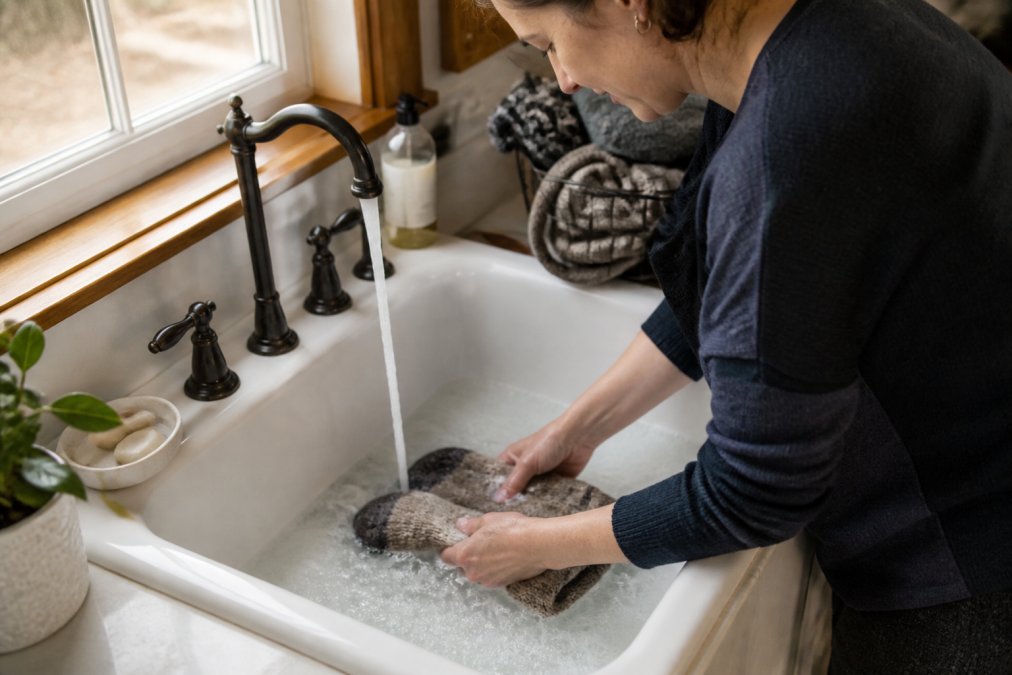
Turn socks inside out before washing to protect the outer surface. Use cool or lukewarm water; hot water breaks down alpaca fibers and causes shrinkage. Machine wash on a gentle cycle, or hand wash for premium pieces. Avoid fabric softeners and bleach, which compromise fiber integrity.
Drying Correctly
Most Purely Alpaca socks are machine-dryable on low heat for 10-15 minutes. For premium hand-knit pieces or 100% alpaca socks, air drying is safest. Never use high heat, this collapses the hollow fiber structure, reducing insulation permanently.
Frequency and Storage
Alpaca's natural odor resistance means you can wear socks 2-3 times before washing. Store in a cool, dry place and avoid plastic bags, which trap moisture.
Final Recommendation
Cold feet are a solvable problem. The right socks, specifically, best alpaca socks for cold feet, deliver measurable warmth improvement within days. Purely Alpaca's lineup covers every use case from extreme cold (Superwarm) to everyday wear (American Traveler) to budget-conscious buyers (Copper Crew).
Start with the OutdoorAdventure Alpaca Sock ($29.95) for proven all-around performance. Upgrade to the Superwarm ($33.95) if you live in extreme cold or work outdoors. Choose the American Traveler ($24.95) if you want one sock that works year-round.
Free shipping on orders over $100 makes it easy to build a rotation. Purely Alpaca's hassle-free returns mean you can test pairs risk-free. After more than two decades sourcing alpaca products, the team understands what cold feet need, and these socks deliver it.
Frequently Asked Questions
Are alpaca socks warmer than merino wool socks?
Alpaca socks deliver superior thermal regulation compared to merino wool. Alpaca fiber has a hollow structure that traps air more effectively, creating better insulation. Additionally, alpaca naturally resists moisture and odor without chemical treatments. While merino wool performs well, alpaca's fiber density and heat retention properties make it the stronger choice for extreme cold feet and prolonged outdoor use in harsh conditions.
How do you wash alpaca socks to maintain quality?
Hand wash alpaca socks in cool water with mild detergent or hair shampoo. Turn socks inside out before washing to protect the outer surface. Gently squeeze soapy water through the fibers without wringing or twisting. Rinse thoroughly in cool water until soap is gone. Roll socks in a towel to absorb excess moisture, then lay flat to air dry. Avoid machine drying and hot water, which can damage the fiber's heat retention properties and cause shrinkage.
What makes alpaca socks worth the higher price?
Alpaca socks cost more because the fiber delivers measurable performance: superior thermal regulation, natural moisture-wicking that keeps feet dry during activity, and durability that outlasts standard wool socks by years. The fiber is hypoallergenic, making it ideal for sensitive skin and eczema-prone individuals. Additionally, alpaca fiber resists odor naturally without chemical treatments, and socks maintain their warmth even when wet. For cold feet and outdoor use, the performance justification supports the investment.
What are the warmest socks for extreme cold?
The Superwarm Heavy Extreme Alpaca Socks ($33.95) are engineered for extreme cold, featuring 50% more insulation than competitor options and terry cushioning that provides circulation support. The OutdoorAdventure Alpaca Sock ($29.95) offers reinforced heel and toe construction with shock-absorbing cushion for active use in harsh conditions. Both use alpaca blended with microfiber for enhanced durability and breathability. For extreme cold, choose heavyweight options with terry cushioning and reinforced construction to maintain warmth during extended outdoor activities.
Will alpaca socks keep my feet warm if they get wet?
Yes, alpaca socks retain thermal efficiency even when wet, unlike cotton or standard wool. The hollow fiber structure and natural moisture-wicking properties allow alpaca to shed water while maintaining insulation. The fiber's composition prevents the sock from becoming heavy or clammy. This makes alpaca ideal for winter hiking, wet conditions, and outdoor work where moisture exposure is unavoidable. The breathability ensures feet stay warm without excessive sweat buildup.
This article was written using GrandRanker