



Table of Contents
- Alpaca Throw Blanket Sizes at a Glance
- Measure Your Space Before You Pick an Alpaca Throw Size
- Match the Size to the Spot: Sofa, Bed, or Chair
- How Alpaca Wool Blanket Benefits Shape Your Size Choice
- Size-to-Height Ratio and Weight-to-Size: Two Factors Most Guides Miss
- How to Style a Throw Blanket for Any Room
- Find Your Perfect Alpaca Throw
- Frequently Asked Questions
Last Updated: September 9, 2026
Alpaca Throw Blanket Sizes at a Glance
How to choose the right alpaca throw blanket size starts with understanding standard dimensions. Standard throws measure 50 x 60 inches for everyday lounging, while oversized throws measure 60 x 80 inches for full coverage Lola Blankets sizing guide. At Purely Alpaca, we have helped customers find the perfect fit since 2002, and matching dimensions to your space is the single most important decision you will make.

The question of how to choose the right alpaca throw blanket size comes down to three variables: where you plan to use it, who will be using it, and what level of coverage you expect. Most people overlook the second and third variables.
Measure Your Space Before You Pick an Alpaca Throw Size
Measure your sofa, bed, or chair before browsing products. A throw that drapes beautifully on a 72-inch sofa will look undersized on a 96-inch sectional, and the same applies in reverse for accent chairs.
Grab a tape measure and record three numbers: the width of your seating area, the depth from the back of the cushion to the front edge, and the height from the floor to the top of the backrest. The width matters most because a throw should overlap the seating surface by at least 6 inches on each side for a polished look. Industry guidance suggests that throw blanket size should be determined by intended use, with 50 x 60 inches serving as a common standard for general home comfort Aosom throw blanket selection guide.
For a standard three-seat sofa, choose a throw in the 50 x 60 to 60 x 70 inch range. For a loveseat or reading chair, a smaller throw around 50 x 60 inches provides ample coverage without overwhelming the furniture. Bed throws require the most generous dimensions, with premium options reaching 59 x 83 inches for full coverage across a queen mattress The New York Times Wirecutter best throw blankets.
Match the Size to the Spot: Sofa, Bed, or Chair
Different spots demand different throw dimensions, and this is where most sizing mistakes happen.
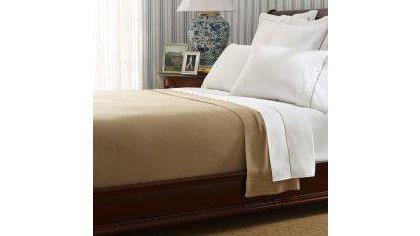
For sofas, the sweet spot is 50 x 60 inches for standard models and 60 x 70 inches for sectionals or deep-seat designs. The Aurora Knit Alpaca Throw measures 50 x 70 inches and weighs just 1.5 pounds, light enough to drape elegantly without slipping off the cushions.

Beds need larger dimensions, typically 60 x 80 inches or more, especially if you want to share the throw with a partner. Consumer feedback indicates that dimensions like 66 or 69 inches can feel "way too big" for single-person functional needs, suggesting that bigger is not always better depending on the intended application Consumer discussion on throw sizing. For a queen or king bed, consider the Alpaca Bed Blanket, which offers generous coverage with a smooth texture that works well for layering.
Accent chairs and reading nooks call for the smallest option, usually 50 x 60 inches. The Solid Color Alpaca Throw fits this role perfectly at 51 x 71 inches including fringes, providing enough coverage to curl up without excess fabric pooling on the floor.
How Alpaca Wool Blanket Benefits Shape Your Size Choice
Alpaca wool blanket benefits directly influence which size you should select because the fiber's properties change how a blanket feels at different dimensions. Alpaca fiber is naturally hypoallergenic since it lacks lanolin and the barbed structure found in sheep's wool, which prevents the itchiness that turns many people away from wool products Silk and Snow alpaca fiber guide. This means you can comfortably use a larger throw in direct contact with your skin without irritation.
The warmth-to-weight ratio of alpaca fiber is another critical factor. Premium alpaca throws are identified as a top-tier luxury choice due to their exceptional warmth-to-weight ratio and softness The 13 Best Throw Blankets of 2026. Because alpaca provides significant insulation without bulk, you can choose a larger size without worrying about the blanket becoming too heavy or cumbersome. Weight is cited as one of the most important factors for consumer selection to ensure portability and ease of use Maloca Alpaca sizing guidance.
High-quality alpaca throws should contain at least 80% alpaca fiber to deliver these benefits effectively Tuwi London quality standards. When you select a throw with 100% baby alpaca content, like the Solid Color Alpaca Throw, you get the finest micron count available, which translates to superior softness and thermal regulation. This fiber quality means a slightly smaller throw can perform as well as a larger blanket made from inferior materials, so prioritize fiber content alongside dimensions.
Here is how each fiber property changes the sizing calculus in practice:
Hypoallergenic and lanolin-free. Because alpaca does not trigger the same allergic reactions as sheep's wool, you can size up for full-body contact without worrying about skin irritation on your neck or arms.
Thermal regulation and breathability. Alpaca fibers have hollow cores that trap air for insulation while still allowing moisture vapor to escape. A larger alpaca throw in the 60 x 80 inch range will not cause you to overheat the way a synthetic or sheep's wool blanket of the same size might.
Lightweight warmth. Alpaca is roughly one-third the weight of sheep's wool at the same warmth level. The larger alpaca size remains easy to drape, fold, and carry.
Durability and pilling resistance. Alpaca fibers are stronger than sheep's wool and resist pilling better over time, supporting a larger throw for high-traffic areas.
Fiber content also affects drape. A 100% baby alpaca throw with a finer micron count (around 22-26 microns) drapes more fluidly and hugs the contours of a sofa or body. A coarser adult alpaca blend with higher nylon content, like the Aurora Knit at 89% alpaca and 11% nylon, holds its shape better.
Size-to-Height Ratio and Weight-to-Size: Two Factors Most Guides Miss
Most sizing guides ignore two factors that matter enormously in practice: your height and the blanket's weight relative to its size.
For the size-to-height ratio, a simple rule applies: the length of your throw should be at least 1.5 times your height for full-body coverage. Someone who is 5 feet 6 inches tall needs a throw of at least 82 inches, explaining why oversized throws measuring 60 x 80 inches have grown in popularity.
The weight-to-size ratio matters because a large blanket that feels like a lead weight will never get used. Alpaca's hollow fiber structure makes it significantly lighter than sheep's wool, which is why premium throws can offer generous dimensions without becoming unwieldy.
How to Style a Throw Blanket for Any Room
Learning how to style a throw blanket transforms it from a purely functional item into a design element that elevates your space.
For a casual, inviting look, fold the throw in thirds lengthwise and drape it over the back of your sofa at an angle. This works best with the Solid Color Alpaca Throw, whose clean edges and rich colors create a crisp accent line against neutral upholstery.
On beds, use the throw as a decorative layer at the foot, folded to about one-third of the bed's width. The striped Alpaca Bed Blanket adds pattern and texture while providing an extra layer for cold nights.

Consumer guidance for 2026 emphasizes that smaller alpaca throws are best suited for casual living room use, while larger dimensions are recommended for those who prefer to "burrito" or fully wrap themselves Forbes best wool blanket guide. Match your styling approach to both the size of your throw and the function you expect it to serve.
Most styling guides stop at generic folding instructions. What they miss is how blanket size changes the visual weight of a room. Here is a framework interior designers use:
Sectional sofas (90-120 inches wide). A 50 x 60 inch throw covers less than half the seating surface. Drape it over the chaise end or the corner seat rather than centering it. A 60 x 80 inch throw on a sectional should be folded in half lengthwise first, otherwise the excess fabric pools on the floor.
Loveseats and apartment sofas (50-70 inches wide). Here a 50 x 60 inch throw can cover the full width of the back cushions. Drape it symmetrically with both ends hanging evenly, or offset it by 15 degrees for a more relaxed look. The throw should not cover more than two-thirds of the backrest height.
Accent chairs and reading nooks. A 50 x 60 inch throw is proportionally large for a standard accent chair (typically 30-35 inches wide). Fold it into a tight rectangle and lay it across the back, or fold it into a square and place it on the seat cushion as a textural accent.
Visual weight and color blocking. The size of your throw determines how much visual weight it carries in a room. A 50 x 60 inch throw in a bold color acts as an accent piece; a 60 x 80 inch throw in the same color becomes a dominant design element.
The 45-degree drape rule. For a polished look on any furniture piece, drape the throw so its fold line sits at roughly a 45-degree angle from the corner of the sofa or chair. The angle breaks up the horizontal line of the furniture and adds depth.
Layering multiple throws. If you have both a 50 x 60 inch and a 60 x 80 inch alpaca throw, layer them on a large sectional. Place the larger throw folded over the back, and the smaller one loosely on the seat cushion at a perpendicular angle.
For a final check, step back 6-8 feet from the styled furniture piece. If the throw reads as a deliberate design choice from that distance, the styling works.
Find Your Perfect Alpaca Throw
Once you have measured your space and considered how you plan to use your throw, the selection becomes straightforward:
| Intended Use | Recommended Size | Best Purely Alpaca Option | Price |
|---|---|---|---|
| Reading chair or lap coverage | 50 x 60 inches | Solid Color Alpaca Throw (51 x 71 in) | $198.95 |
| Standard sofa or individual use | 50 x 70 inches | Aurora Knit Alpaca Throw | $219.95 |
| Bed layering or shared coverage | 60 x 80 inches | Alpaca Bed Blanket | $184.95 |
| Full-body "burrito" wrapping | 60 x 80 inches or larger | Alpaca Bed Blanket - Striped | $169.95 |
Purely Alpaca offers free shipping on orders of $100 or more, and our hassle-free returns mean you can try your throw in your actual space before committing.
The right alpaca throw blanket size balances coverage, proportion, and weight against your specific furniture and body. Measure first, match your dimensions to the intended spot, and prioritize fiber quality alongside size.
Choosing the right alpaca throw blanket size comes down to measuring your space, understanding how alpaca's lightweight warmth changes the equation, and being honest about whether you want solo or shared coverage. Purely Alpaca has specialized in premium alpaca products since 2002, offering throws that combine natural fiber luxury with functional design. Explore our collection to find the size that fits your home and your lifestyle.
Frequently Asked Questions
What is the perfect size for a throw blanket?
The perfect size depends on where you plan to use it. For a standard sofa, a 50 x 60 inch throw offers comfortable coverage for one person. If you want to share with a partner or fully wrap yourself, an oversized throw around 60 x 80 inches works better. Measure your sofa's seating area and your own height to find the right alpaca throw size for your needs.
How do I choose the right blanket size for a sofa versus a bed?
For a sofa, focus on the seating area width and your height when seated. A standard 50 x 60 inch throw drapes well over the back or arm. For a bed, consider layering: a smaller throw at the foot adds texture, while a larger 60 x 80 inch blanket provides full coverage. Measure the bed width to ensure the throw extends evenly on both sides.
Are alpaca throw blankets warmer than wool blankets?
Yes, alpaca fiber provides exceptional warmth without the bulk of sheep's wool. Alpaca fibers have a hollow core that traps heat effectively, making them ideal for cold climates. A high-quality alpaca throw delivers superior insulation while remaining lightweight and breathable, so you stay warm without overheating.
What are the downsides of alpaca wool?
The main downside is the higher price point compared to synthetic or sheep's wool blankets. Alpaca throws also require gentle care, typically hand washing or dry cleaning. Some people find the initial cost significant, but the durability and longevity of quality alpaca fiber often justify the investment over time.