



Last Updated: November 17, 2026
Quick Summary
To choose your alpaca poncho size, measure your shoulder width, arm span, and the drop from shoulder to target hem, then compare these to the garment's doubled width and length. Use body height as a first filter, and always remeasure over the bulkiest layer you plan to wear.
- Measure shoulder width across your back from one bony shoulder point to the other.
- Compare the doubled garment width to your arm span for full arm mobility.
- Under 5'3", a 24-28 inch garment length lands the hem around the hip.
- Layering adds bulk that pushes side seams out and makes the hem ride up.
- Hand wash in cool water and lay flat to dry to keep the fit intact.
Table of Contents
- Why Alpaca Poncho Sizing Works Differently
- Measuring for a Poncho Fit: Three Numbers That Matter
- A Poncho Size Chart Based on Body Height and Garment Length
- How Layering Changes the Size You Need
- Matching Drape and Weave to Your Body Proportions
- Alpaca Poncho Styling Tips for a Fit That Looks Intentional
- How to Wash Alpaca Wool Ponchos Without Shrinking the Fit
- Shop Purely Alpaca Ponchos in the Size You Measured
- Frequently Asked Questions
Why Alpaca Poncho Sizing Works Differently
Most clothing comes with a number: 8, 10, medium, large. An alpaca poncho does not work that way. This guide explains how to choose an alpaca poncho size without a single letter label to guide you.
Ponchos are cut as a single draped garment with no shoulders to pin and no sleeves to bind. That design is the appeal.
The fix is simpler than it sounds. You measure three things, compare them to garment numbers, and buy with confidence. Below, we walk through the exact method, a working size chart, and how layering shifts the math.
Measuring for a Poncho Fit: Three Numbers That Matter
Measuring for a poncho fit comes down to three numbers: your shoulder width, your arm span, and the vertical drop from shoulder to your target hem. Write these down before you shop. They matter more than any letter size on a tag.
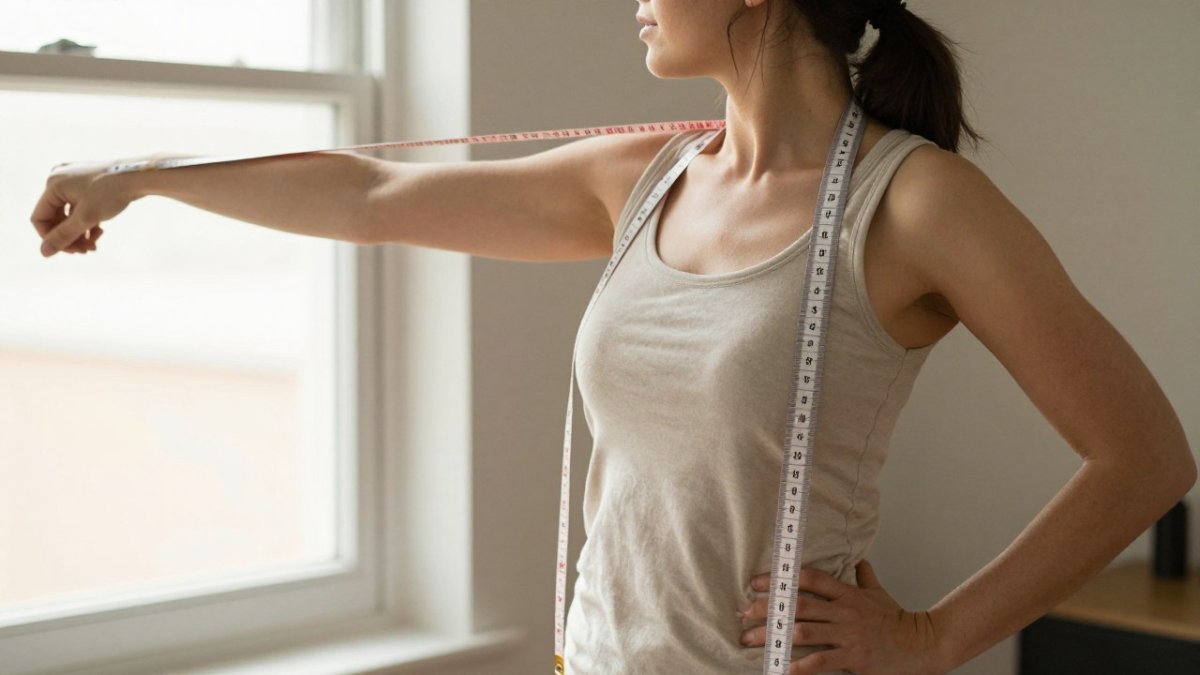
Here is how to take each one:
- Shoulder width: Measure straight across your back, from the bony point of one shoulder to the other.
- Arm span: Stand with arms out and measure fingertip to fingertip. A poncho's width must clear this for full arm mobility.
- Drop: Measure from the top of your shoulder straight down to where you want the hem to land: hip, mid-thigh, or knee.
A common mistake is measuring a jacket you already own instead of your body. Jackets add seam allowance. Ponchos drape.
Reading Garment Measurements Instead of Letter Sizes
Product listings usually give a garment width and a garment length. Width is measured flat, edge to edge, then doubled. Length runs from the neckline to the hem.
Compare doubled width to your arm span. Compare length to your drop measurement. If a listing gives only "one size fits all," treat that as a starting point, not a guarantee.
A Poncho Size Chart Based on Body Height and Garment Length
Use body height as your first filter, then confirm with garment length. Here is a practical chart for adult sizing based on where a poncho hem typically falls.
| Body Height | Suggested Garment Length | Hem Lands Around | Best For |
|---|---|---|---|
| Under 5'3" | 24-28 inches | Hip | Petite frames, avoids a swamped look |
| 5'3"-5'7" | 28-32 inches | Upper thigh | Most average builds |
| 5'8"-6'0" | 32-36 inches | Mid-thigh | Taller frames, balanced drape |
| Over 6'0" | 36+ inches | Lower thigh to knee | Full coverage, longer proportions |
Treat these as starting points. Body proportions matter as much as total height. A long torso shifts the hem down; short arms need a narrower width.
How Layering Changes the Size You Need
Layering changes both the width and the length you need, and it changes how the poncho moves with you. A poncho worn over a thin tee behaves differently than one worn over a chunky sweater or a coat, and the difference shows up in three places: the arm span clearance, the drape at the sides, and the hem position.
Start with the layer you plan to wear most often. Put it on, then retake your arm span and your drop measurement. That is your working number, not the measurement you took in a t-shirt.
Width: clearing the layer underneath
A poncho's width has to clear your arm span plus the thickness of the layer beneath it. A thin top adds almost nothing.
The width you need depends on how bulky the layer is, so measure while wearing it rather than relying on a fixed allowance. The number that matters is the one you measure while wearing the layer.
Watch out: a poncho sized only for bare-shoulder wear often feels tight the first cold morning you layer underneath, because the width was never there to begin with.
Length: why the hem rides up
The hem position shifts when you layer because the layer underneath adds thickness at the shoulder and chest. A hem that grazes your hip over a t-shirt may sit an inch or two higher over a thick fleece. If your target hem is mid-thigh, measure your drop over the bulkiest layer you plan to pair with the poncho, then buy to that number.
Arm openings and movement
Arm openings are where layering gets practical. A poncho with wide, open sides lets you reach, drive, and carry without the garment bunching at the elbow. A poncho with narrow or sewn arm openings keeps the drape in place but restricts reach once a bulky layer is underneath.
If you plan to layer over a coat, favor a wider opening or a cape-style cut with an open front. If you plan to wear the poncho as a top layer over a thin shirt, a narrower opening keeps the silhouette cleaner.
A quick layering check before you buy
- Put on the layer you will wear most often.
- Measure your arm span and your drop again.
- Compare the doubled garment width to your layered arm span.
- Compare the garment length to your layered drop.
- If the listing gives only "one size fits all," treat that as a starting point, not a guarantee.
Our rule of thumb: measure your drop while wearing the bulkiest layer you plan to pair with the poncho, then buy to that number.
Matching Drape and Weave to Your Body Proportions
Drape is how a fabric falls and moves on your body, and it depends on fiber, weave, and garment width. A heavier weave hangs straighter and adds visual bulk. A lighter, looser weave flows closer to the frame. The right choice depends on your proportions and how you want the poncho to read.
Alpaca fiber is naturally soft and warm. Purely Alpaca's ponchos use 80% alpaca and 20% acrylic, or a 50/50 alpaca-cotton blend in the Cape Wrap style.
Drape by body proportion
- Petite frames: A lighter, looser weave keeps the poncho from swallowing the frame. A structured weave in a long length can add visual weight below the waist.
- Tall frames: A fuller, higher-alpaca weave holds a longer length without collapsing, which keeps the hem where you measured it.
- Broad shoulders: A softer drape softens the shoulder line. A structured weave can emphasize width across the top.
- Narrow frames: A structured weave adds presence without overwhelming the frame, especially in a shorter length.
- Fuller proportions: A lighter drape that flows closer to the body reads cleaner than a heavy weave that stands away from the frame.
Reading drape from a product listing
Most listings do not use the word drape, so read the fiber blend and the garment width instead. A higher alpaca percentage usually means a fuller, more structured hand. A cotton blend usually means a lighter, softer fall. A wider garment width adds volume regardless of fiber, so compare the doubled width to your arm span before you decide.
Watch out: a structured weave in a wide garment can add bulk on a petite frame, while a soft weave in a narrow garment can cling where you want coverage.
Mobility and keeping the garment in place
Drape affects movement as much as looks. A softer, lighter poncho shifts with your arms and may need adjusting after you reach or walk. A structured weave stays put but can feel restrictive at the sides. If you need to reach, carry, or walk often, favor a wider arm opening and a moderate drape rather than the heaviest weave.
Broad shoulders? Choose a softer drape. Narrow frames? A structured weave adds presence without overwhelming.
Alpaca Poncho Styling Tips for a Fit That Looks Intentional
The styling rule that fixes most poncho outfits: pair the volume on top with a slim line below. A loose, draped poncho over slim jeans or fitted leggings reads deliberate. Over wide-leg pants, it reads shapeless.
A few more styling tips that hold up:
- Keep the neckline visible with a simple scoop or crew tee underneath.
- Use a belt at the waist to define shape when you want structure.
- Choose a hood for casual, outdoor wear; skip it for dressier occasions.
- Let one color from the poncho's pattern repeat in your shoes or bag.
For more outfit ideas by occasion, see our guide on how to style an alpaca poncho.
How to Wash Alpaca Wool Ponchos Without Shrinking the Fit
Hand washing in cool water is the safest way to keep an alpaca poncho's fit intact. Heat and agitation are what shrink wool, not water alone.
Follow these steps:
- Fill a basin with cool water and a gentle wool detergent.
- Submerge the poncho and soak for 5-10 minutes without wringing.
- Rinse in cool water of the same temperature.
- Press water out gently in a towel; never twist.
- Lay flat to dry, reshaping to the original measurements.
For the full method, read our step-by-step guide to washing alpaca sweaters at home.
Shop Purely Alpaca Ponchos in the Size You Measured
Now match your numbers to a real garment. Purely Alpaca has offered alpaca products since 2002. Each poncho below lists its fiber blend so you can compare it against the chart above.
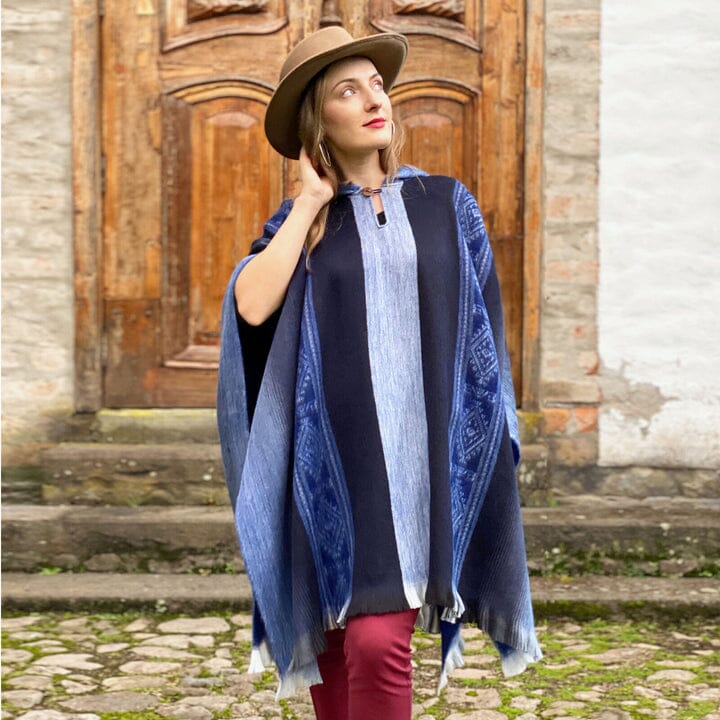
- Soft Blues Alpaca Poncho ($149.95): calming blues and grays, 80% alpaca. A good pick for average builds wanting a hip-to-thigh drop.
- Six Band Alpaca Poncho ($149.95): subtle color bands, 80% alpaca. Compare its length to your drop measurement before buying.
- Cape Wrap Solid Alpaca Poncho ($159.95): a lighter 50/50 alpaca-cotton blend with a softer drape for taller frames and fuller proportions.
If the fit is not right, our hassle-free returns make it easy to exchange. Free shipping applies on orders of $100 or more.
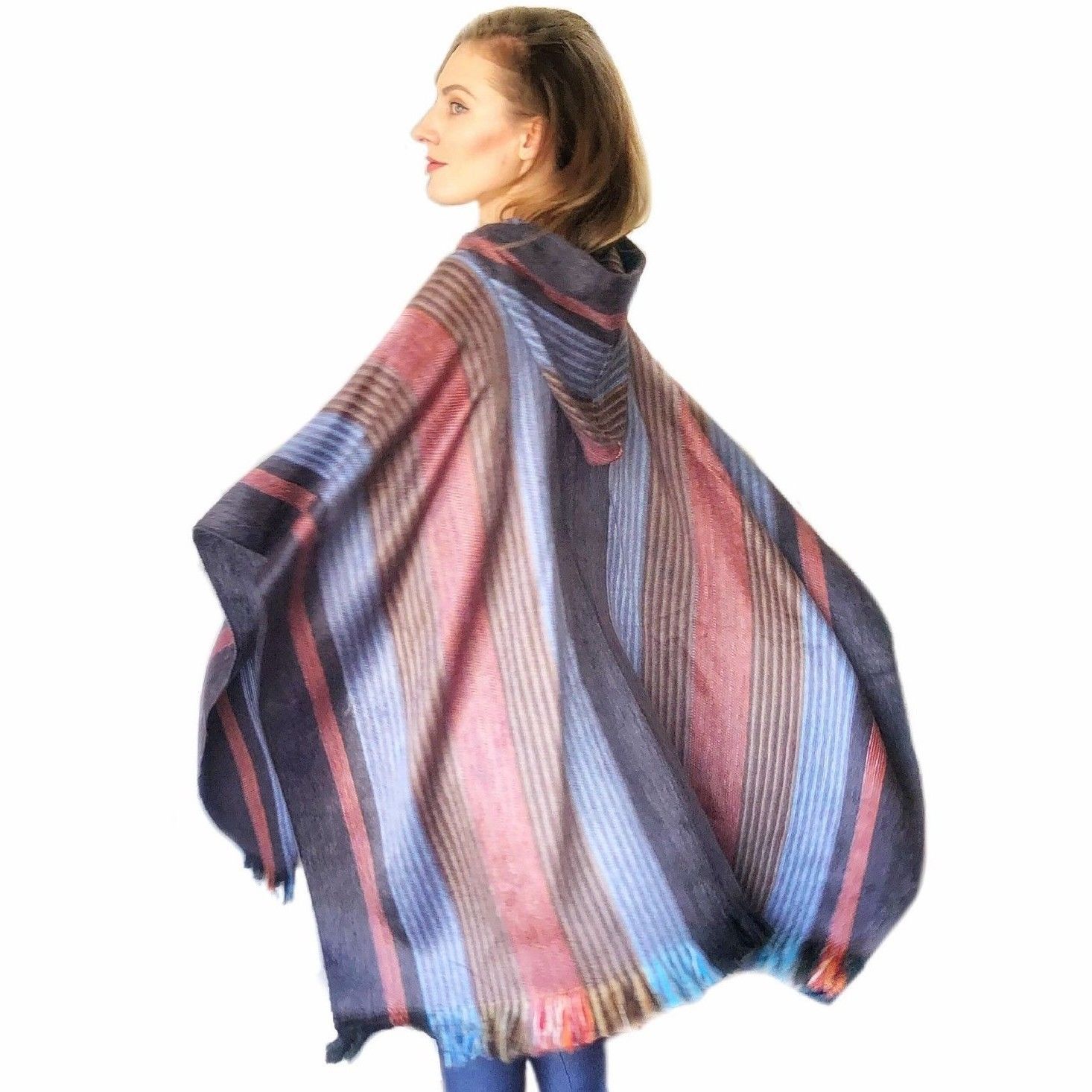
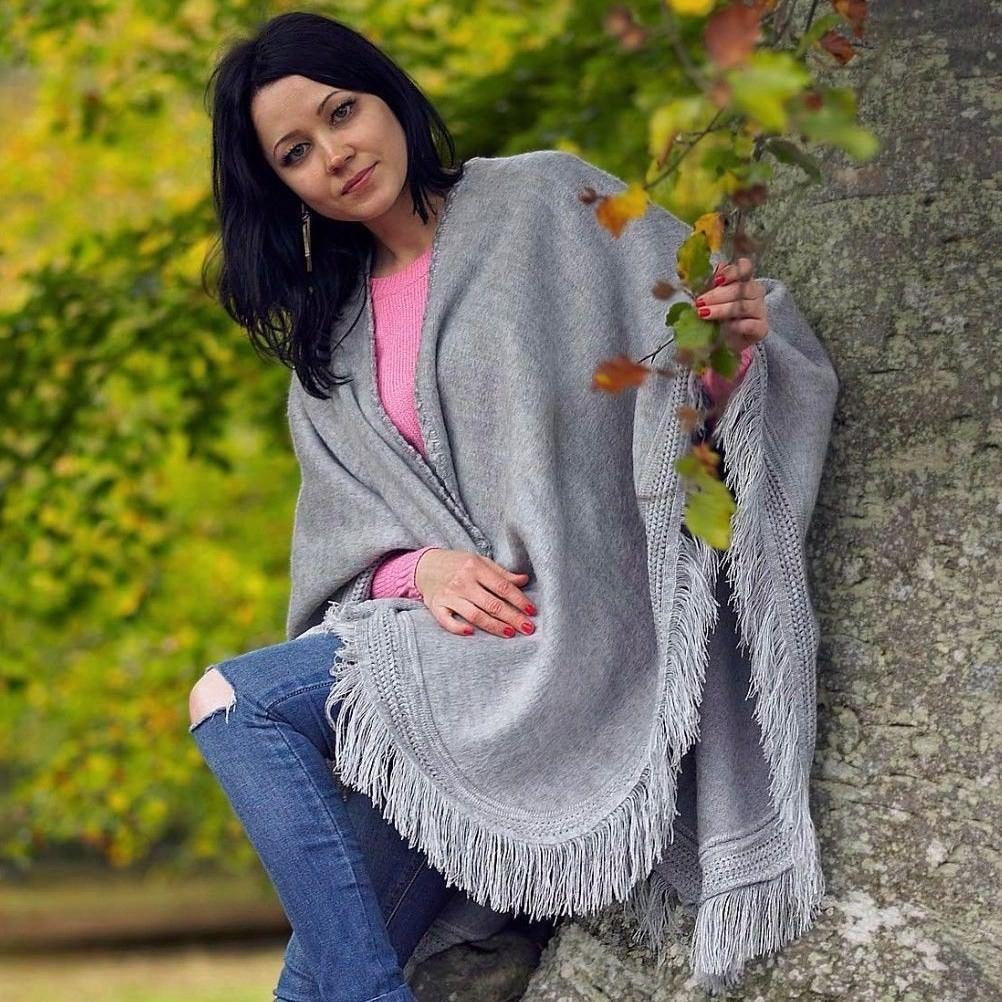
Getting the fit right takes ten minutes with a tape measure, and it saves a return. Measure your shoulder width, arm span, and drop, then shop with those numbers in hand. Purely Alpaca makes it simple with detailed garment measurements, natural alpaca fiber that drapes beautifully, and styles for every frame. Get started with Purely Alpaca and find a poncho that fits the way it should.
Frequently Asked Questions
Do alpaca ponchos follow standard clothing size charts?
Rarely. Most alpaca ponchos are cut as a loose fit with no set-in sleeves, so letter sizes tell you little. The numbers that decide whether a poncho works on you are garment width across the shoulders, garment length from shoulder to hem, and the arm opening. Ask for those measurements in inches before you buy, then compare them to your own shoulder width and the length you already know you like. A poncho labeled XL from one maker can measure smaller than a size M from another.
What size alpaca poncho should I get for my body type?
Start with height and where you want the hem to land. Petite wearers usually look best in hip-length or shorter ponchos with a narrower width, while taller wearers can carry thigh-length drapes and fuller widths without the fabric swallowing them. If you have broad shoulders or need room for arm movement, size up in width rather than length. The alpaca poncho size that fits is the one whose hem hits where you want it and whose width clears your shoulders by a few inches.
Will an alpaca poncho stretch or shrink over time?
It can relax slightly with wear, especially in a loose weave, and it will shrink if you machine wash in hot water or tumble dry. Hand wash in cool water with a gentle detergent, press the water out without wringing, and dry flat. Store folded rather than on a hanger so the shoulders do not stretch out of shape between seasons.
How do I return a poncho that does not fit?
Check the return window and condition rules before ordering, and keep tags attached until you have tried the poncho on over the layers you plan to wear. Purely Alpaca offers hassle-free returns, so if the length or width is off, you can send it back rather than live with a poor fit. Try it on indoors, away from pets and perfume, and note the garment measurements against your own so your next order is easier.
